
APC by Schneider Electric BK650EI vs APC by Schneider Electric BE650G1: Specification Comparison
Both the APC BK650EI and the APC BE650G1 are 650 VA standby UPS units from APC by Schneider Electric, placing them in the same capacity tier and topology class. The key divergence is voltage region: the BK650EI is designed for 230 V markets (Europe, Asia-Pacific, etc.) while the BE650G1 targets 120 V North American installations. This comparison evaluates runtime and load capacity, connectivity and outlets, and management interfaces to help buyers determine which unit fits their specific deployment environment.
In This Guide
Which unit delivers better runtime and usable power at load?
Both units share a 650 VA capacity rating. The BK650EI is rated at 400 W output, giving a VA-to-watt ratio of roughly 0.62. The BE650G1 is rated at 390 W, a ratio of approximately 0.60 — marginally lower usable real power.
Runtime figures are only provided for the BK650EI: 11.4 minutes at full load and 2.4 minutes at half load. The BE650G1 specs do not include published runtime figures, so no direct comparison can be made on this dimension. Buyers evaluating the BE650G1 for runtime-sensitive applications should consult APC's published runtime curves separately.
Both units use sealed lead-acid (VRLA) battery chemistry. The BK650EI specifies a 6-year battery life and an 8-hour typical recharge time. The BE650G1 lists a 24-hour recharge time — three times longer — which means a longer recovery window after a deep discharge event. Battery life for the BE650G1 is not stated in the provided specs.
How do the outlet counts, types, and connectivity options compare?
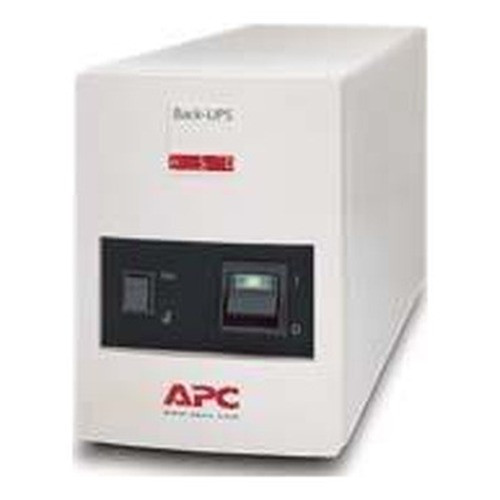
The BK650EI provides 6 outlets total, all IEC 60320 C13 type (3 battery-backed plus 2 additional C13, per the receptacle detail), with an IEC 320-C14 input plug — standard for 230 V rack and desktop equipment in international markets.
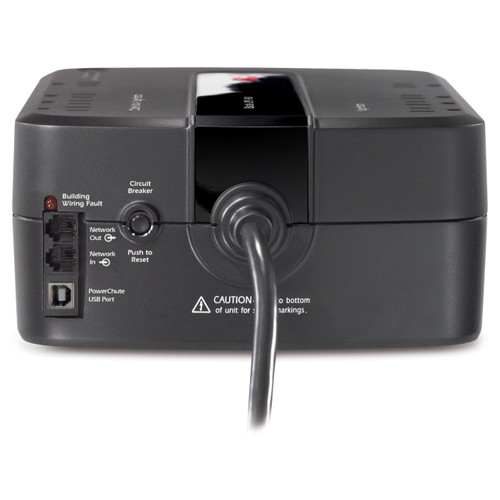
The BE650G1 provides 8 AC outlets, all NEMA 5-15R type, suited for standard North American plugs. This gives the BE650G1 a two-outlet advantage in raw outlet count. The BE650G1 also includes a surge energy rating of 340 J, which is not listed in the BK650EI specs.
For data-line connectivity, the BE650G1 includes 1 USB 2.0 port and 1 Ethernet (RJ-45) port. The BK650EI lists 1 management port (USB) and ships with a USB cable, but no Ethernet port is specified. The BE650G1's RJ-45 port adds network surge protection capability not present on the BK650EI.
What management, monitoring, and integration capabilities does each unit offer?
The BK650EI ships with a CD containing software and documentation, and includes a USB cable for PC connectivity. It provides audible alarms for on-battery and overload conditions, and front-panel status indicators for On Line, On Battery, Replace Battery, and Overload states. Automatic restart of loads after UPS shutdown is listed as a feature.
The BE650G1 specifies audible alarms limited to battery replacement notification per the provided specs. No status indicator details are listed. It includes 1 USB 2.0 port for host connectivity. No bundled software is mentioned in the provided specs.
The BE650G1's Ethernet RJ-45 port suggests potential network interface or surge-protection functionality, but the specs do not clarify whether it supports SNMP or network management — buyers should verify this with APC documentation. The BK650EI's explicit software bundle and multi-condition alarm set provide a more fully described management profile based solely on the specs provided.
The BK650EI specifies a noise level of — (not provided). The BE650G1 specifies 45 dB operating noise, which is useful for noise-sensitive environments such as open offices or home workspaces.
Which should you choose: the BK650EI or the BE650G1?
Our take: The BK650EI is the stronger choice when operating in 230 V regions and where documented runtime, battery longevity, and multi-condition alarm visibility are priorities. It delivers 400 W versus the BE650G1's 390 W, specifies a 6-year battery life versus no stated figure for the BE650G1, and recharges in 8 hours versus the BE650G1's 24 hours — a significant operational difference after deep discharge. Conversely, the BE650G1 is the only viable option for 120 V North American installations, offers 8 outlets versus 6, includes a 340 J surge energy rating not specified on the BK650EI, and adds an Ethernet RJ-45 port. The 45 dB noise rating on the BE650G1 also gives buyers concrete acoustic data the BK650EI specs do not provide. In summary: the BK650EI suits 230 V international deployments where fast recharge and documented runtime matter; the BE650G1 suits 120 V North American environments needing more outlets and network-port surge protection.
Side-by-Side Comparison
Spec-for-spec, from manufacturer data.
| Specification | APC by Schneider Electric BK650EI | APC by Schneider Electric BE650G1 |
|---|---|---|
| Capacity (VA) | 650 VA | 650 VA |
| Rated Output Power (W) | 400 W | 390 W |
| UPS Topology | Standby | Standby |
| Input / Output Voltage | 230 V AC | 120 V AC |
| Input Voltage Range | — | 90–140 V |
| Input Frequency | — | 50/60 Hz |
| Outlet Count | 6 (IEC 60320 C13) | 8 (NEMA 5-15R) |
| Surge Energy Rating | — | 340 J |
| USB Port | 1 (management) | 1 (USB 2.0) |
| Ethernet (RJ-45) Port | — | 1 |
| Battery Chemistry | Sealed Lead Acid | Sealed Lead Acid (VRLA) |
| Battery Recharge Time | 8 hours | 24 hours |
| Battery Life | 6 years | — |
| Runtime at Full Load | 11.4 minutes | — |
| Runtime at Half Load | 2.4 minutes | — |
| Audible Alarm Conditions | On Battery, Overload | Battery Replacement |
| Noise Level | — | 45 dB |
| Form Factor | Tower | — |
Frequently Asked Questions
Which should you choose: the BK650EI or the BE650G1?
The BK650EI is the stronger choice when operating in 230 V regions and where documented runtime, battery longevity, and multi-condition alarm visibility are priorities. It delivers 400 W versus the BE650G1's 390 W, specifies a 6-year battery life versus no stated figure for the BE650G1, and recharges in 8 hours versus the BE650G1's 24 hours — a significant operational difference after deep discharge. Conversely, the BE650G1 is the only viable option for 120 V North American installations, offers 8 outlets versus 6, includes a 340 J surge energy rating not specified on the BK650EI, and adds an Ethernet RJ-45 port. The 45 dB noise rating on the BE650G1 also gives buyers concrete acoustic data the BK650EI specs do not provide. In summary: the BK650EI suits 230 V international deployments where fast recharge and documented runtime matter; the BE650G1 suits 120 V North American environments needing more outlets and network-port surge protection.
Can I use the BK650EI or BE650G1 interchangeably in my country?
No. The BK650EI is rated for 230 V AC output with an IEC 320-C14 input, making it suitable for international markets including Europe and Asia-Pacific. The BE650G1 operates at 120 V with NEMA 5-15R outlets, designed exclusively for North American electrical infrastructure. Using either unit outside its rated voltage region is unsafe and not supported by the provided specifications.
Which UPS recovers faster after a power outage drains the battery?
Based on the provided specs, the BK650EI recharges in approximately 8 hours after a full discharge. The BE650G1 lists a 24-hour recharge time — three times longer. If rapid return to protected operation after extended outages is critical, the BK650EI has a clear advantage on this metric, though voltage compatibility must be confirmed first.
Does either unit support network management or remote monitoring?
The BK650EI includes a USB management port and bundled software (per package contents) but no Ethernet port is listed in its specs. The BE650G1 includes both a USB 2.0 port and an Ethernet RJ-45 port; however, the provided specs do not specify whether the RJ-45 port supports SNMP or network management software — buyers should verify this directly with APC before assuming network management capability.
More UPS Comparisons
- APC by Schneider Electric BK650EI vs APC by Schneider Electric BR650MI
- APC by Schneider Electric BE650G1 vs APC by Schneider Electric BR650MI
- APC by Schneider Electric BE650G1-LM vs APC by Schneider Electric BK650EI
- APC by Schneider Electric BE650G1-LM vs APC by Schneider Electric BE650G1
UPS Buying Guides
Get a Second Opinion on Your Camera Choice
Share your site layout, coverage goals, and budget. Our team will validate the camera selection, flag anything we would change, and recommend products that match the use case.