
APC by Schneider Electric BE500G3 vs APC by Schneider Electric SCL500RM1UC: Specification Comparison
Both the APC BE500G3 and the APC SCL500RM1UC are 500VA uninterruptible power supplies designed for small-load protection at 120V. The BE500G3 is a desktop/tower standby UPS aimed at home-office or single-workstation use, while the SCL500RM1UC is a 1U rack-mount, line-interactive unit targeting IT closets and small server environments. A buyer cross-shopping these is choosing between form factor, topology, and power delivery priorities within the same 500VA capacity tier.
In This Guide
- How do the two units compare on usable power output and voltage regulation?
- Which unit better fits rack deployments, and what connectivity and outlets does each provide?
- What do the specs reveal about battery performance, recharge, and runtime expectations?
- Which should you choose: the BE500G3 or the SCL500RM1UC?
- Side-by-Side Specs
- FAQ
How do the two units compare on usable power output and voltage regulation?
The BE500G3 delivers a rated maximum of 300W (500VA) from a standby topology, meaning it passes utility power directly and only switches to battery when a fault is detected. No AVR is specified for the BE500G3, and its output voltage range is listed as 0–500VAC, which is an unusually broad figure likely reflecting a datasheet catch-all rather than active regulation.
The SCL500RM1UC offers 400W (500VA) with a line-interactive topology and confirmed Automatic Voltage Regulation (AVR), holding output between 120V min and 120V max with ±5% regulation. Its input operating window spans 92V–139V, meaning it can correct browndowns and swells without switching to battery. For watt-sensitive loads or sites with frequent voltage fluctuations, the SCL500RM1UC's 400W ceiling and AVR provide a measurable edge over the BE500G3's 300W standby output.
Which unit better fits rack deployments, and what connectivity and outlets does each provide?
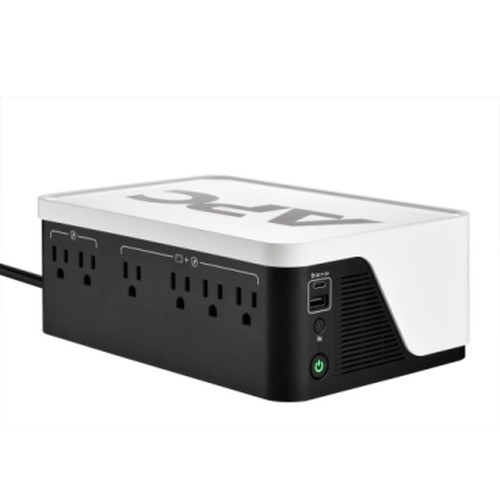
The BE500G3 is a desktop tower unit measuring 9.65 × 3.54 × 6.57 inches and weighing 7.185 lb. It provides six NEMA 5-15R outlets total: four with full battery-plus-surge protection and two with surge protection only. It adds a USB-A charging port (5VDC, 3A, 15W) and communicates with a host system via USB-B, enabling software-controlled graceful shutdown.
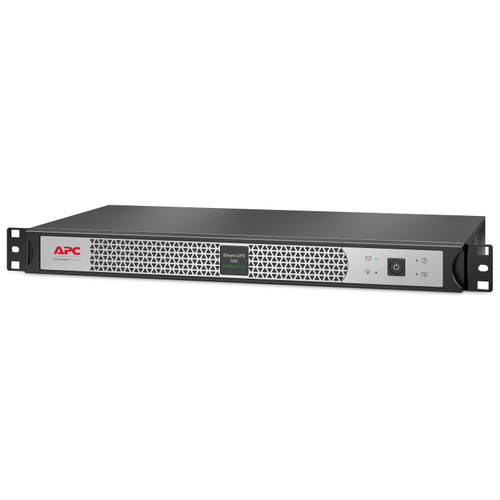
The SCL500RM1UC occupies 1U of rack space and is designed specifically for rack-mount environments. Its outlet count and outlet-level breakdown (battery-backed vs. surge-only) are not specified beyond 'NEMA 5-15R,' and no USB charging port or host-communication interface is listed in the provided specs. Installers integrating into a rack cabinet or AV rack will find the SCL500RM1UC's 1U profile directly relevant, while those needing desktop placement and USB device management should favor the BE500G3.
What do the specs reveal about battery performance, recharge, and runtime expectations?
The BE500G3 uses a sealed lead-acid battery with a rated recharge time of 10 hours. No runtime-versus-load curve is included in the provided specifications, but the 300W ceiling constrains the load at which runtime estimates would apply. Battery voltage is listed as 115V, which is consistent with a multi-cell internal pack. The transfer time from utility to battery is specified at less than 6ms.
The SCL500RM1UC specifies a transfer/response time of 6ms, matching the BE500G3's stated threshold. Battery chemistry, recharge time, and specific runtime data are not provided in the available SCL500RM1UC specifications. The line-interactive topology does reduce how often the SCL500RM1UC relies on battery power (AVR handles minor voltage deviations), which indirectly extends effective battery life in fluctuating-voltage environments. An audible alarm activates when the SCL500RM1UC switches to battery, a monitoring feature not mentioned for the BE500G3.
Which should you choose: the BE500G3 or the SCL500RM1UC?
Our take: The SCL500RM1UC is the stronger choice when the installation target is a rack environment requiring active voltage regulation and higher watt capacity. Its line-interactive topology with AVR sustains clean 120V output across a 92V–139V input window, avoiding unnecessary battery discharge during brownouts — a feature absent from the BE500G3's standby design. Its 400W output ceiling exceeds the BE500G3's 300W cap by 33%, meaningful when powering switches, small servers, or NVRs with variable draw. The 680J surge energy rating is also specified only for the SCL500RM1UC, giving it a documented surge suppression benchmark. Conversely, the BE500G3 is the more practical choice for a desktop or workstation context: its six-outlet layout with split battery/surge zones, USB-A charging port, USB-B host communication, 10-hour recharge spec, and compact tower form factor are all confirmed; equivalent connectivity data is absent from the SCL500RM1UC spec sheet.
Side-by-Side Comparison
Spec-for-spec, from manufacturer data.
| Specification | APC by Schneider Electric BE500G3 | APC by Schneider Electric SCL500RM1UC |
|---|---|---|
| Form Factor | Desktop/Tower | 1U Rack-Mount |
| UPS Topology | Standby (not specified as line-interactive) | Line-Interactive |
| Automatic Voltage Regulation (AVR) | — | Yes |
| Output Power (Watts) | 300 W | 400 W |
| Output Power (VA) | 500 VA | 500 VA |
| Nominal Input Voltage | 120 VAC | 120 VAC |
| Input Operating Range | — | 92 V – 139 V |
| Input Frequency | 50/60 Hz | 47/63 Hz |
| Output Voltage Regulation | — | ±5% |
| Transfer / Response Time | < 6 ms | 6 ms |
| Surge Energy Rating | — | 680 J |
| Total AC Outlets | 6x NEMA 5-15R | NEMA 5-15R (count not specified) |
| Battery-Backed Outlets | 4x NEMA 5-15R | — |
| Surge-Only Outlets | 2x NEMA 5-15R | — |
| USB Charging Port | 1x USB-A (5VDC, 3A, 15W) | — |
| Host Communications | USB-B | — |
| Battery Chemistry | Lead-Acid | — |
| Battery Recharge Time | 10 Hours | — |
| Audible Alarm | — | Yes (on battery) |
| Noise Level | — | 45 dB |
| Waveform | — | Sine |
| Certifications | CEC, ENERGY STAR, FCC | — |
| Unit Weight | 7.185 lb | — |
| Dimensions (W×H×D) | 9.65 × 3.54 × 6.57 in | — |
Frequently Asked Questions
Which should you choose: the BE500G3 or the SCL500RM1UC?
The SCL500RM1UC is the stronger choice when the installation target is a rack environment requiring active voltage regulation and higher watt capacity. Its line-interactive topology with AVR sustains clean 120V output across a 92V–139V input window, avoiding unnecessary battery discharge during brownouts — a feature absent from the BE500G3's standby design. Its 400W output ceiling exceeds the BE500G3's 300W cap by 33%, meaningful when powering switches, small servers, or NVRs with variable draw. The 680J surge energy rating is also specified only for the SCL500RM1UC, giving it a documented surge suppression benchmark. Conversely, the BE500G3 is the more practical choice for a desktop or workstation context: its six-outlet layout with split battery/surge zones, USB-A charging port, USB-B host communication, 10-hour recharge spec, and compact tower form factor are all confirmed; equivalent connectivity data is absent from the SCL500RM1UC spec sheet.
Is the BE500G3 or SCL500RM1UC better for protecting a small NVR or server in a rack?
The SCL500RM1UC is the purpose-built choice for rack installations. It occupies 1U, provides line-interactive topology with AVR to handle voltage fluctuations without depleting the battery, and delivers 400W versus the BE500G3's 300W — all relevant to NVR and server loads. The BE500G3 is a desktop tower unit with no rack-mount capability specified.
Does either UPS protect against brownouts without switching to battery?
Yes, but only the SCL500RM1UC. Its line-interactive topology with confirmed AVR regulates output voltage within its 92V–139V input operating range without drawing on battery reserves. The BE500G3 is a standby-topology unit; no AVR capability is specified, so voltage deviations outside normal tolerances would trigger a battery transfer.
Which unit offers more connectivity features for a desktop workstation setup?
The BE500G3 provides more documented connectivity for desktop use: six NEMA 5-15R outlets (four battery-backed, two surge-only), one USB-A charging port (5VDC, 3A), and a USB-B communications port for host shutdown software. The SCL500RM1UC's outlet count breakdown and any communications interfaces are not specified in the available data.
More UPS Comparisons
- Vertiv GXT5-500LVRT2UXL vs APC by Schneider Electric SUA500PDR-H
- Vertiv GXT5-500LVRT2UXL vs APC by Schneider Electric BE500G3
- Vertiv GXT5-500LVRT2UXL vs APC by Schneider Electric SCL500RM1UC
- Vertiv GXT5-500LVRT2UXL vs APC by Schneider Electric SCL500RMI1UC
- APC by Schneider Electric SUA500PDR-H vs Middle Atlantic S500R
- APC by Schneider Electric SUA500PDR-H vs APC by Schneider Electric BE500G3
UPS Buying Guides
Get a Second Opinion on Your Camera Choice
Share your site layout, coverage goals, and budget. Our team will validate the camera selection, flag anything we would change, and recommend products that match the use case.