
Allied Telesis IE340-20GP-980 vs Vivotek GEL-205A-260: Specification Comparison
Both the Allied Telesis AT-IE340-20GP-980 and the Vivotek AW-GEL-205A-260 are 20-port managed Gigabit PoE switches with 16 PoE-capable ports and identical 40 Gbps switching fabric, making them a legitimate cross-shop for security installers deploying IP cameras, access control, and VoIP endpoints. The key differentiators span form factor and deployment environment, PoE power architecture and per-port budgets, and Layer 2 management feature depth—each of which carries real operational weight depending on whether the installation is industrial edge or rack-mounted wiring closet.

In This Guide
- Which switch delivers more flexible PoE power, and to which ports?
- Which switch is better suited to harsh or space-constrained industrial environments?
- Which switch offers deeper Layer 2 network management for complex or segmented deployments?
- Which should you choose: the IE340-20GP-980 or the GEL-205A-260?
- Side-by-Side Specs
- FAQ
Which switch delivers more flexible PoE power, and to which ports?
The AT-IE340-20GP-980 provides a 240W total PoE budget distributed across all 16 copper ports. The spec sheet lists up to 30W per port (PoE+) and 15W per port (standard PoE), but does not specify any ports rated for IEEE 802.3bt (PoE++/90W) despite the product name containing 'PoE++'. Maximum per-port wattage at the 90W tier is not confirmed by the provided spec data—buyers should verify with Allied Telesis before connecting 802.3bt devices.
The AW-GEL-205A-260 posts a 260W total budget with a clearly tiered architecture: ports 1–4 deliver 90W each (IEEE 802.3bt), while ports 5–16 deliver up to 30W each (IEEE 802.3at). This gives installers four dedicated high-power ports for PTZ cameras, multi-radio APs, or 802.3bt access control panels, alongside 12 standard PoE+ ports. Per-port surge protection of 4KV is specified on every PoE port. The Vivotek unit also supports Extend PoE Mode, pushing PoE delivery up to 250 meters over copper—useful for remote cameras beyond the standard 100m Ethernet limit. The AT-IE340-20GP-980 does not list a comparable extended-reach mode.
Which switch is better suited to harsh or space-constrained industrial environments?
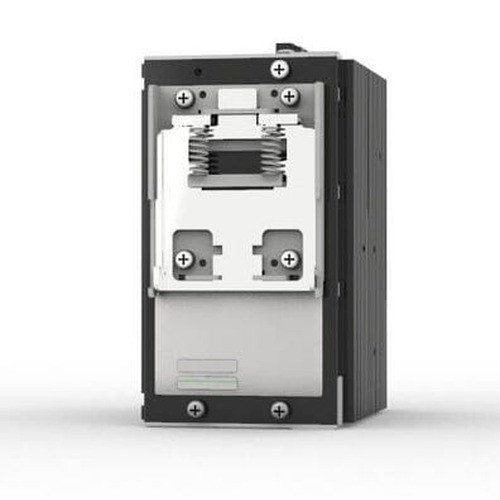
The AT-IE340-20GP-980 is purpose-built for industrial edge deployment. Its aluminum and sheet-metal enclosure is IP30-rated and entirely fanless, eliminating moving parts and noise—critical in dusty or vibration-prone environments. The DIN rail mount and compact 91 × 139 × 153 mm footprint (approximately 1U-equivalent but non-rack) allow installation inside control cabinets, junction boxes, or outdoor enclosures. DIN rail weight is 2.34 kg. Input voltage accepts a wide 18–57V DC range, enabling direct connection to 24V or 48V DC industrial power supplies or battery-backed systems without an AC/DC converter. No fan noise figure is listed because there is no fan.
The AW-GEL-205A-260 is a standard 1U rack-mount unit (440 × 210 × 44 mm) designed for wiring closets and server rooms. It draws 100–240V AC at 50–60 Hz, requiring standard mains power. A rack mount kit is included. Operating temperature range is 0°C to 50°C. The spec sheet does not specify an IP rating, fanless operation, or DIN rail mounting capability. Weight is 2.67 kg. For installations requiring AC mains, rack density, and a managed switch feature set, this form factor is conventional and straightforward; for outdoor cabinets or DC-powered industrial panels, it is not the appropriate choice.
Which switch offers deeper Layer 2 network management for complex or segmented deployments?
The AW-GEL-205A-260 spec sheet enumerates a detailed managed feature set: 802.1Q tag-based VLAN with 4,096 VLAN IDs, port-based VLAN, STP (802.1d) and RSTP (802.1w), Link Aggregation Control Protocol (LACP), CoS port-based/802.1p/DSCP QoS, loop protection, flow control, storm control, port-based mirroring, port isolation, bandwidth control, static MAC, and PoE-specific controls including PoE On/Off, PoE Auto Checking, and Non-Stop PoE. Buffer memory is 4.1 Mb with an 8K MAC address table and 9,216-byte jumbo frame support. This is a full Layer 2 managed feature set appropriate for segmented surveillance VLANs, QoS prioritization of video streams, and redundant uplink topologies.
The AT-IE340-20GP-980 spec sheet as provided does not list Layer 2 management features such as VLAN support, STP/RSTP, LACP, QoS tiers, port mirroring, MAC table size, buffer memory, or jumbo frame size. Buyers requiring confirmed managed-switch capabilities from the Allied Telesis unit should consult the full datasheet at /content/product-datasheets/AT-IE340-20GP-980.pdf or Allied Telesis directly before assuming feature parity. The forwarding rate of 29.7 Mpps and 40 Gbps fabric are specified, but management plane depth cannot be assessed from the data provided.
Which should you choose: the IE340-20GP-980 or the GEL-205A-260?
Our take: The AW-GEL-205A-260 is the stronger choice when the installation requires tiered high-power PoE, a fully documented managed Layer 2 feature set, and standard rack-mount deployment on AC mains. Concretely: it edges the PoE budget 260W vs 240W, it explicitly provides four 90W 802.3bt ports that the AT-IE340-20GP-980 spec does not confirm despite the 'PoE++' label, and it documents a complete managed feature set—4,096 VLANs, LACP, RSTP, three-tier QoS, port mirroring—none of which appear in the Allied Telesis spec data provided. The AT-IE340-20GP-980 is the stronger choice when the site demands an industrial enclosure: its IP30-rated fanless aluminum body, DIN rail mount, 91 × 139 × 153 mm footprint, and 18–57V DC wide-range input are purpose-built for control cabinets and harsh environments where the rack-mount, AC-only Vivotek unit is inappropriate. Platform qualifier: Allied Telesis suits DC-powered industrial edge; Vivotek suits managed wiring-closet and mixed-power camera deployments.
Side-by-Side Comparison
Spec-for-spec, from manufacturer data.
| Specification | Allied Telesis IE340-20GP-980 | Vivotek GEL-205A-260 |
|---|---|---|
| Total Ports | 20 | 20 |
| Gigabit PoE Copper Ports | 16 | 16 |
| Uplink SFP Ports | 4 (100/1000X) | 2 (100M/1G) |
| Additional RJ45 Uplinks | — | 2 |
| Switching Fabric | 40 Gbps | 40 Gbps |
| Forwarding Rate | 29.7 Mpps | — |
| Total PoE Power Budget | 240W | 260W |
| Max Per-Port PoE (High-Power Ports) | 30W (PoE+, confirmed) | 90W on ports 1–4 (802.3bt) |
| PoE Standards | 802.3af/at listed; 802.3bt not confirmed in spec | 802.3af / at / bt |
| PoE Surge Protection | — | 4KV per port |
| Extended PoE Reach | — | 250M (Extend PoE Mode) |
| VLAN Support | — | 802.1Q, 4096 IDs + port-based |
| STP / RSTP | — | 802.1d / 802.1w |
| QoS | — | CoS port / 802.1p / DSCP |
| MAC Table / Buffer | — / — | 8K / 4.1 Mb |
| Form Factor | DIN Rail, 91×139×153 mm | 1U Rack, 440×210×44 mm |
| Enclosure / IP Rating | Aluminum, IP30 | — |
| Cooling | Fanless | — |
| Power Input | 18–57V DC | 100–240V AC, 50–60 Hz |
| Max Power Consumption | 271W | 280W |
| Operating Temperature | — | 0°C ~ 50°C |
| Weight | 2.34 kg (DIN) / 2.23 kg (wall) | 2.67 kg |
| Warranty | — | 24 months |
Frequently Asked Questions
Which should you choose: the IE340-20GP-980 or the GEL-205A-260?
The AW-GEL-205A-260 is the stronger choice when the installation requires tiered high-power PoE, a fully documented managed Layer 2 feature set, and standard rack-mount deployment on AC mains. Concretely: it edges the PoE budget 260W vs 240W, it explicitly provides four 90W 802.3bt ports that the AT-IE340-20GP-980 spec does not confirm despite the 'PoE++' label, and it documents a complete managed feature set—4,096 VLANs, LACP, RSTP, three-tier QoS, port mirroring—none of which appear in the Allied Telesis spec data provided. The AT-IE340-20GP-980 is the stronger choice when the site demands an industrial enclosure: its IP30-rated fanless aluminum body, DIN rail mount, 91 × 139 × 153 mm footprint, and 18–57V DC wide-range input are purpose-built for control cabinets and harsh environments where the rack-mount, AC-only Vivotek unit is inappropriate. Platform qualifier: Allied Telesis suits DC-powered industrial edge; Vivotek suits managed wiring-closet and mixed-power camera deployments.
Can the AT-IE340-20GP-980 power 90W 802.3bt devices like high-end PTZ cameras?
The provided spec sheet lists the AT-IE340-20GP-980 as supporting PoE+ (30W) and PoE (15W) per port against a 240W budget, but does not explicitly confirm 90W 802.3bt output per port despite the 'PoE++' product name. The AW-GEL-205A-260 explicitly specifies 90W on ports 1–4 via 802.3bt. Buyers needing confirmed 90W-per-port delivery should verify the Allied Telesis datasheet directly before deploying high-draw PTZ or multi-radio devices on that unit.
Is the AT-IE340-20GP-980 or AW-GEL-205A-260 better for outdoor cabinet or industrial panel installations?
The AT-IE340-20GP-980 is specifically designed for this use case: DIN rail mount, IP30-rated fanless aluminum enclosure, compact 91 × 139 × 153 mm body, and 18–57V DC input that accepts industrial battery-backed or 24V/48V DC bus power without an additional converter. The AW-GEL-205A-260 is a 1U rack-mount unit requiring 100–240V AC mains, with no IP rating or DIN rail capability listed—making it unsuitable for industrial cabinet or harsh-environment deployment based on the specifications provided.
Which switch gives better control over camera VLANs and QoS for a multi-zone surveillance network?
Based on the provided specifications, the AW-GEL-205A-260 has a documented managed feature set including 802.1Q tag-based VLAN (4,096 IDs), port-based VLAN, STP/RSTP, LACP, three-tier CoS/QoS (port, 802.1p, DSCP), storm control, loop protection, port mirroring, and bandwidth control—all standard tools for segmenting camera zones and prioritizing video traffic. The AT-IE340-20GP-980 spec data provided does not enumerate equivalent Layer 2 management features; buyers should confirm VLAN and QoS support with Allied Telesis before deploying it in a managed multi-zone topology.
More Network Switch Comparisons
- Vivotek GEL-205A-260 vs TP-Link SL1218MP
- Vivotek GEL-205A-260 vs Allied Telesis AT-x530L-18GHXm-10
- Vivotek GEL-205A-260 vs Ubiquiti USW-LITE-16-POE
- Vivotek GEL-205A-260 vs Ubiquiti USW-16-POE
- TP-Link SL1218MP vs Allied Telesis AT-x530L-18GHXm-10
- TP-Link SL1218MP vs Ubiquiti USW-LITE-16-POE
Network Switch Buying Guides
Get a Second Opinion on Your Camera Choice
Share your site layout, coverage goals, and budget. Our team will validate the camera selection, flag anything we would change, and recommend products that match the use case.