
Aiphone IX-DVF-4A vs Aiphone IX-EA: Specification Comparison
Both the IX-DVF-4A and IX-EA are Aiphone IX-series IP video door stations designed for SIP-based access control deployments. They share the same camera sensor, video codec, and PoE power class, making them genuine cross-shop candidates. The key differentiator is scale and configuration: the IX-DVF-4A is a four-call, multi-directory unit with dual contact outputs and trigger inputs suited to larger entry points, while the IX-EA is a compact single-call surface-mount station aimed at simpler installations. Both target outdoor-rated, ONVIF-compatible IP intercom systems.

In This Guide
- How many call destinations and I/O points does each station support?
- Which station is rated for harsher environments and what are the physical differences?
- Which station offers broader network protocol and platform compatibility?
- Which should you choose: the IX-DVF-4A or the IX-EA?
- Side-by-Side Specs
- FAQ
How many call destinations and I/O points does each station support?
The IX-DVF-4A provides four labeled call buttons with individual directories, enabling direct calls to four separate destinations from a single door station — a meaningful capability in lobbies, multi-tenant entries, or facilities where visitors must self-select a department or resident. It also includes two contact outputs and two trigger inputs, allowing direct integration with electric strikes, maglocks, or third-party sensors without an intermediary relay module.
The IX-EA's specifications do not state a call button count, contact output count, or trigger input count. Buyers requiring multi-call or hardware I/O at the door cannot confirm those capabilities from the available spec data and should consult Aiphone documentation directly before specifying the IX-EA for those use cases.
Which station is rated for harsher environments and what are the physical differences?
The IX-DVF-4A carries an IP65 ingress-protection rating (dust-tight, water-jet resistant) and an IK08 impact rating, meaning it is tested to withstand 5-joule impacts — relevant for high-traffic or vandal-prone entry points. Its operating temperature range spans −40 °F to 140 °F, making it viable for extreme-cold climates such as northern outdoor vestibules or cold-storage facilities. Its footprint is 13-11/16" H × 7-3/16" W, reflecting the four-button panel layout.
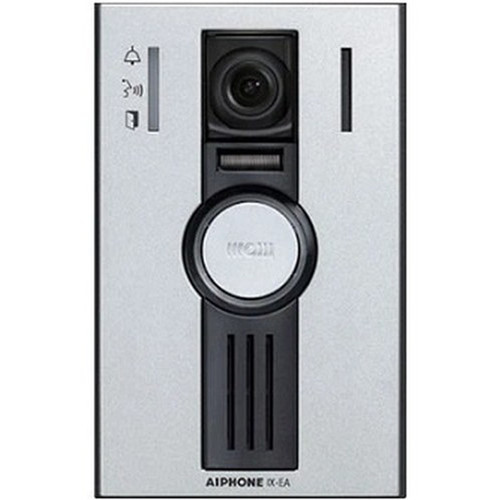
The IX-EA is rated for outdoor use with a minimum illumination matching the IX-DVF-4A at 5 lux. Its operating temperature is specified as 14 °F to 140 °F (−10 °C to 60 °C), a narrower cold-end tolerance than the IX-DVF-4A. No IP or IK rating is stated in the available specs. Its dimensions are 6-5/16" H × 3-15/16" W × 1-3/4" D — substantially smaller, consistent with a single-call form factor. The IX-DVF-4A's cold-weather and impact credentials are documentable from spec; the IX-EA's are not to the same degree.
Which station offers broader network protocol and platform compatibility?
The IX-DVF-4A publishes an explicit protocol stack: IPv4, IPv6, TCP, UDP, SIP, HTTP, HTTPS, RTSP, RTP, RTCP, IGMP, MLD, SMTP, SFTP, DHCP, NTP, and DNS. It is listed as SIP compliant and ONVIF Profile S compliant, and includes IEEE 802.1x port security for network access control. The audio codec list (G.711 and G.722) is also specified, with G.722 providing wideband audio quality over supported SIP endpoints. Camera tilt adjustment of +15°, 0°, or −8° is documented.
The IX-EA confirms ONVIF Profile S and RTSP compatibility, IEEE 802.1X port security, H.264/MJPEG video, and two-way audio. It does not list individual IP protocols, SIP compliance, or audio codec identifiers in the available spec data. Both stations use Cat-5e/6 cabling and PoE IEEE 802.3af class 0 power. Power draw for the IX-DVF-4A is 5.28 W; the IX-EA is rated 5.18 W maximum — a negligible difference at the PoE switch budget level.
Which should you choose: the IX-DVF-4A or the IX-EA?
Our take: The IX-DVF-4A is the stronger choice when the installation requires multiple call destinations, hardware I/O integration, extreme cold-weather operation, or documented vandal resistance. It specifies four call buttons with individual directories, two contact outputs, two trigger inputs, an operating floor of −40 °F versus the IX-EA's 14 °F, and an IK08 impact rating with IP65 sealing — none of which appear in the IX-EA's available spec data. The IX-DVF-4A also publishes a full protocol stack including SIP compliance and G.722 wideband audio. Conversely, the IX-EA's compact 6-5/16" × 3-15/16" footprint and surface-mount form factor suit single-call residential or small-office entries where panel size and simplified wiring matter more than multi-tenant capacity. Buyers specifying the IX-EA for I/O-dependent or sub-zero deployments should verify those parameters directly with Aiphone before committing.
Side-by-Side Comparison
Spec-for-spec, from manufacturer data.
| Specification | Aiphone IX-DVF-4A | Aiphone IX-EA |
|---|---|---|
| Camera Sensor | 1/3" CMOS | 1/3" CMOS |
| Camera Resolution | 1.23 megapixel | 1.23 megapixel |
| Min. Illumination | 5 lux | 5 lux |
| Video Codec | H.264/AVC, Motion JPEG | H.264/AVC, Motion JPEG |
| Audio Codec | G.711, G.722 | — |
| SIP Compliance | Yes | — |
| ONVIF Profile S | Yes | Yes |
| Power Source | PoE IEEE 802.3af class 0 or 24V DC | PoE IEEE 802.3af class 0 |
| Power Draw | 5.28W | 5.18W max |
| Call Buttons | 4 (labeled, individual directories) | — |
| Contact Outputs | 2 | — |
| Trigger Inputs | 2 | — |
| Operating Temperature | −40°F to 140°F | 14°F to 140°F |
| Ingress Protection | IP65 | — |
| Impact Rating | IK08 | — |
| Dimensions (H × W) | 13-11/16" H × 7-3/16" W | 6-5/16" H × 3-15/16" W × 1-3/4" D |
| Port Security | IEEE 802.1X | IEEE 802.1X |
| Mount Type | — | Surface-mount |
Frequently Asked Questions
Which should you choose: the IX-DVF-4A or the IX-EA?
The IX-DVF-4A is the stronger choice when the installation requires multiple call destinations, hardware I/O integration, extreme cold-weather operation, or documented vandal resistance. It specifies four call buttons with individual directories, two contact outputs, two trigger inputs, an operating floor of −40 °F versus the IX-EA's 14 °F, and an IK08 impact rating with IP65 sealing — none of which appear in the IX-EA's available spec data. The IX-DVF-4A also publishes a full protocol stack including SIP compliance and G.722 wideband audio. Conversely, the IX-EA's compact 6-5/16" × 3-15/16" footprint and surface-mount form factor suit single-call residential or small-office entries where panel size and simplified wiring matter more than multi-tenant capacity. Buyers specifying the IX-EA for I/O-dependent or sub-zero deployments should verify those parameters directly with Aiphone before committing.
Is the IX-DVF-4A or IX-EA better for a multi-tenant building with four units?
The IX-DVF-4A is the documented choice: it provides four labeled call buttons with individual directories, allowing each visitor to ring a specific tenant directly from one door station. The IX-EA's spec data does not specify a call button count, so multi-tenant support cannot be confirmed from available information.
Can either station work in below-zero outdoor temperatures?
The IX-DVF-4A is specified down to −40 °F, making it suitable for harsh northern climates. The IX-EA is specified to 14 °F (−10 °C) as its lower operating limit. If the installation site regularly drops below 14 °F, the IX-DVF-4A is the only option with a documented rating for that condition.
Do both stations work with third-party VMS platforms via ONVIF?
Both stations list ONVIF Profile S compatibility and RTSP support, which are the standard integration paths for third-party video management software. The IX-DVF-4A additionally specifies SIP compliance and a full protocol list. For VMS-only video integration, both are comparable; for SIP PBX interoperability, the IX-DVF-4A has the explicit documentation.
More Intercom Comparisons
- Hanwha TID-600R vs Aiphone IX-EA
- Hanwha TID-600R vs Axis A8207-VE
- Hanwha TID-600R vs Aiphone IX-DVF-6
- Hanwha TID-600R vs Aiphone JOS-1FW
- Aiphone IX-EA vs Axis A8207-VE
- Aiphone IX-EA vs 2N 01273-001
Intercom Buying Guides
Get a Second Opinion on Your Camera Choice
Share your site layout, coverage goals, and budget. Our team will validate the camera selection, flag anything we would change, and recommend products that match the use case.