
2N 03361-001 vs 2N 01274-001: Specification Comparison
Both the 2N IP Force 5MP (03361-001) and the 2N IP Verso Black Main Unit (01274-001) are wall-mounted IP video intercom door stations from the same manufacturer, each combining a camera, microphone, and wired PoE connection into a single entry-control unit. This comparison examines the three dimensions installers and IT buyers weigh most heavily when selecting between them: imaging and analytics capability, video compression and network load, and power requirements and physical expansion.
In This Guide
Which unit delivers stronger imaging and on-device analytics?
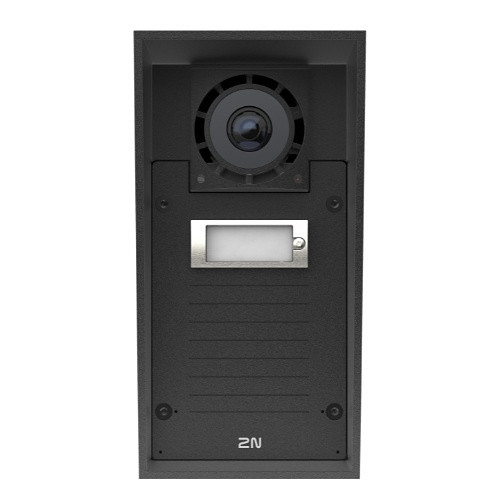
The 03361-001 IP Force specifies a 5MP sensor at 2592×1944 resolution and an ARTPEC-8 edge processor that enables three declared analytics functions: QR code reading, adaptive face zooming, and face detection — all running on-device without a server-side license. It also supports an optional wide-angle camera module and an optional numeric keypad module, extending its credential-capture capability at the door.
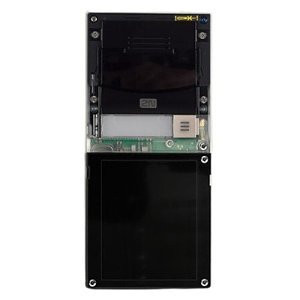
The 01274-001 IP Verso lists its camera as optional — the main unit ships with camera support but the camera itself is a separate module choice. No resolution figure is provided in the supplied specifications, and no on-device analytics are listed. The Verso's value proposition centers instead on its modular 2-position frame, which allows a second module (camera, keypad, card reader, etc.) to be added in the field without replacing the main unit.
For sites where the door station must independently verify identity via face detection or read QR-based credentials without additional software, the 03361-001 has documented capability; the 01274-001 does not list equivalent analytics in the provided specs.
How do the two units compare on video compression and network bandwidth demand?
The 01274-001 IP Verso specifies H.265 compression. The manufacturer's own card bullet states H.265 reduces bandwidth 40–60% versus H.264 for the same image quality, which is consistent with well-established codec performance data. It also confirms ONVIF compliance, supporting integration with any ONVIF-conformant VMS or NVR.
The 03361-001 IP Force lists H.264 and MJPEG as its compression formats. H.264 is a mature, widely supported codec but carries higher bitrate overhead than H.265 at equivalent quality. MJPEG is available for legacy system compatibility. No ONVIF compliance is stated in the provided specifications for the IP Force.
For bandwidth-constrained sites, multi-door deployments where aggregate stream load matters, or VMS ecosystems that leverage ONVIF discovery, the IP Verso's H.265 and ONVIF credentials are concrete advantages. For sites already standardized on H.264 pipelines or needing MJPEG fallback, the IP Force aligns directly.
What are the power requirements and physical expansion options for each unit?
The 03361-001 IP Force requires PoE+ (IEEE 802.3at), which delivers up to 30W. This is a higher power draw than standard PoE, meaning the supplying switch port or midspan injector must be 802.3at capable; standard 802.3af-only switches will not power it. The higher power budget supports the ARTPEC-8 processor and its edge AI workloads.
The 01274-001 IP Verso operates on standard PoE (IEEE 802.3af, up to 15.4W). This is compatible with a broader installed base of PoE switches without requiring port-by-port upgrade. The unit also carries an IK08 impact rating and notes Bluetooth Smart technology, neither of which is listed for the IP Force in the provided specifications.
On physical expansion, the IP Verso's 2-position modular frame (1 position reserved for additional modules) allows the installer to add capability post-installation. The IP Force supports optional wide-angle camera and keypad modules but no frame position count is specified. For sites with existing 802.3af infrastructure and a need for incremental module expansion, the IP Verso fits without switch upgrades; for sites already deploying 802.3at switches and prioritizing edge analytics, the IP Force's higher power draw is offset by its on-device capability.
Which should you choose: the 03361-001 or the 01274-001?
Our take: The 03361-001 is the stronger choice when on-device analytics — QR credential reading, adaptive face zooming, and face detection — are required without a server-side analytics license, and when the site infrastructure already supports PoE+ (802.3at) switches. Three concrete spec deltas define the tradeoff: the IP Force delivers a documented 5MP / 2592×1944 sensor with ARTPEC-8 edge processing versus the IP Verso's unspecified resolution; the IP Verso encodes in H.265 versus the IP Force's H.264, reducing bandwidth 40–60% per the manufacturer's own figure; and the IP Verso runs on standard 802.3af PoE while the IP Force demands 802.3at, requiring compatible switch infrastructure. Choose the 01274-001 IP Verso for bandwidth-sensitive or multi-door deployments on existing 802.3af switches, VMS environments leveraging ONVIF, or installations where the modular frame and IK08 impact rating matter more than edge AI.
Side-by-Side Comparison
Spec-for-spec, from manufacturer data.
| Specification | 2N 03361-001 | 2N 01274-001 |
|---|---|---|
| Product Type | Video Intercom | Main Unit with Camera |
| Form Factor | Wall-mounted video intercom | Wall-mounted IP intercom station |
| Camera Resolution | 5MP (2592×1944) | — |
| Processor | ARTPEC-8 | — |
| Video Compression | H.264 / MJPEG | H.265 |
| PoE Standard | PoE+ (802.3at) | PoE (802.3af) |
| Audio | Microphone supported | Built-in mic, two-way |
| ONVIF | — | Yes |
| Analytics | QR Reading, Face Detection, Adaptive Face Zooming | — |
| Impact Rating | — | IK08 |
| Bluetooth | — | Smart technology |
| Modular Frame Positions | — | 2 (1 reserved for expansion) |
| Optional Modules | Wide-angle camera, numeric keypad | Camera (optional) |
| Security Features | Tamper Detection, Secure Firmware Verification | — |
| Warranty | — | 3 years |
| Mount Type | Wall | Wall |
Frequently Asked Questions
Which should you choose: the 03361-001 or the 01274-001?
The 03361-001 is the stronger choice when on-device analytics — QR credential reading, adaptive face zooming, and face detection — are required without a server-side analytics license, and when the site infrastructure already supports PoE+ (802.3at) switches. Three concrete spec deltas define the tradeoff: the IP Force delivers a documented 5MP / 2592×1944 sensor with ARTPEC-8 edge processing versus the IP Verso's unspecified resolution; the IP Verso encodes in H.265 versus the IP Force's H.264, reducing bandwidth 40–60% per the manufacturer's own figure; and the IP Verso runs on standard 802.3af PoE while the IP Force demands 802.3at, requiring compatible switch infrastructure. Choose the 01274-001 IP Verso for bandwidth-sensitive or multi-door deployments on existing 802.3af switches, VMS environments leveraging ONVIF, or installations where the modular frame and IK08 impact rating matter more than edge AI.
Is the 03361-001 or 01274-001 better for a multi-door deployment where network bandwidth is a concern?
The 01274-001 IP Verso is better suited in that scenario. It encodes in H.265, which the manufacturer states reduces bandwidth 40–60% versus H.264. The IP Force (03361-001) uses H.264 and MJPEG. Across many simultaneous door streams, the H.265 advantage compounds meaningfully, reducing NVR storage and switch uplink load.
Can I power either unit from a standard 802.3af PoE switch, or do I need to upgrade?
The 01274-001 IP Verso operates on standard PoE (802.3af, up to 15.4W) and will work with the broad installed base of 802.3af switches. The 03361-001 IP Force requires PoE+ (802.3at, up to 30W); a switch port or midspan injector that supports only 802.3af will not power it. If upgrading switch infrastructure is not planned, the IP Verso is the compatible choice.
Which unit supports QR code credential reading and face detection at the door?
The 03361-001 IP Force lists QR code reading, adaptive face zooming, and face detection as on-device analytics powered by its ARTPEC-8 edge processor. The 01274-001 IP Verso does not list any analytics functions in the provided specifications. If credential verification or face-based access events at the door are a requirement, only the IP Force has documented support for those features.
More Intercom Comparisons
- Hanwha TID-600R vs Aiphone IX-EA
- Hanwha TID-600R vs Axis A8207-VE
- Hanwha TID-600R vs Aiphone IX-DVF-6
- Hanwha TID-600R vs Aiphone JOS-1FW
- Aiphone IX-EA vs Axis A8207-VE
- Aiphone IX-EA vs 2N 01273-001
Intercom Buying Guides
Get a Second Opinion on Your Camera Choice
Share your site layout, coverage goals, and budget. Our team will validate the camera selection, flag anything we would change, and recommend products that match the use case.