
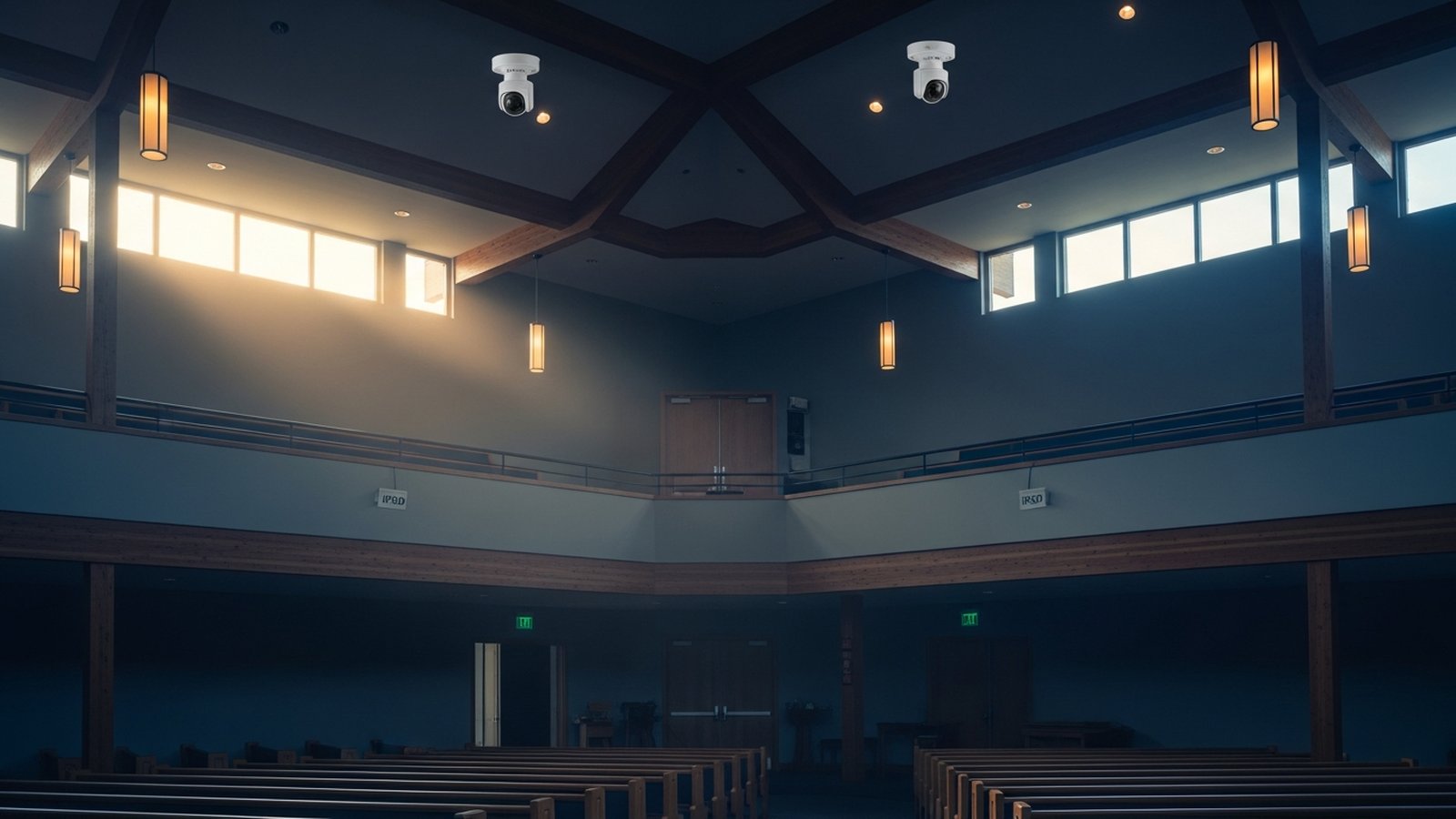
Church Camera Placement Guide: Sanctuary, Entries, and Childcare
Church camera placement has more constraints than most verticals. Sanctuary aesthetics, childcare boundaries, pastoral privacy, volunteer-team mobility, and evening-service safety all shape where cameras actually go. This guide walks through practical placement for churches of different sizes — with mount heights, angles, and the placement mistakes that commissioning reveals.
Bottom Line
Church camera placement follows simple rules per zone: sanctuary entry cameras mount outside the sanctuary doors at 9-10 feet; foyer cameras at 10-12 feet angled to capture faces entering; nursery corridor cameras cover the classroom doors from the hallway without pointing into classrooms; fellowship hall fisheyes mount at ceiling center; parking lot cameras at 12-15 feet on light-pole mounts covering drive lanes and walking paths.
Our team has commissioned church surveillance across congregations from 100 to 10,000 members. The placement rules below reflect what works in practice for volunteer-run facilities teams.
Best For
- Church facilities committees planning camera placement
- Volunteer safety teams verifying coverage before commissioning
- Integrators installing church surveillance
- Pastors reviewing the planned camera layout before approval
Not For
- Commercial or residential placement (different aesthetics and rules)
- Schools or daycares with specific regulatory compliance beyond church policy
In This Guide
Sanctuary and Foyer Placement
The sanctuary and foyer are the highest-sensitivity positions in a church. Placement rules:
Foyer primary: Mount at 10 to 12 feet on the side wall opposite the main entry, angled to capture faces of anyone entering. 4MP dome (QND-7082R), discreet white housing, 15 to 25 foot facial-identification range. This is the church equivalent of a lobby primary camera.
Foyer secondary (optional): Mount at 9 to 10 feet covering the welcome desk or visitor check-in area. Useful for the welcome-team workflow but not essential in smaller churches.
Sanctuary entry (outside the sanctuary): Mount at 9 to 10 feet on the foyer side of each sanctuary door, facing the door. Captures who is approaching the sanctuary after hours, during service breaks, or during non-service events. Do not face into the sanctuary.
Sanctuary interior: Default placement is none. The sanctuary is a worship-centered space that most churches explicitly exclude from camera coverage. Exceptions: larger churches with significant platform assets (instruments, AV equipment, projection systems) sometimes add a single camera at the back of the sanctuary facing the platform for theft-deterrence. This is a pastoral-team decision, not an integrator default.
Audio off. Regardless of placement, disable audio recording in sanctuary and foyer areas. Conversations at the welcome desk and prayer requests in the foyer are private and should not be recorded.
Nursery and Childcare Corridor Placement
Childcare camera placement has the strictest rules of any church position. The default is:
Classroom entries from the corridor: One camera per classroom door, mounted at 9 to 10 feet in the hallway, covering the door from the outside. Captures check-in and pickup without pointing into the classroom. QND-6010R works well at volume.
Check-in desk: One camera covering the check-in area and the sign-in/sign-out workflow. Mount at 9 feet, angled to cover both the workspace and the visitor side of the counter.
Classroom interiors: No cameras. This is near-universal across church childcare policies. Parents trust the childcare ministry not to surveil their children in the classroom.
Hallway end-to-end coverage: For long childcare corridors, one camera at each end covering the length of the hall. Captures anyone transiting through without waiting to see them at a classroom door.
Coordinate with children's ministry leadership. Do not finalize placement without sign-off from the ministry lead. Placement that looks reasonable technically may conflict with the ministry's workflow or parent-facing policies.
Fellowship Hall and Common Areas
Fellowship halls vary widely by church size. Placement depends on room size:
Small fellowship hall (under 50 seats): 1 to 2 fixed domes at the corners covering the main gathering area. QND-7082R or QND-6010R depending on the aesthetic preference.
Medium fellowship hall (50 to 100 seats): 2 to 3 fixed domes, or a single 360-degree fisheye at the ceiling center. The fisheye is often preferred for aesthetics and cost.
Large fellowship hall (100+ seats): One 360-degree fisheye (PNF-9010RV) at the ceiling center provides full-space coverage with fewer cable runs and less visible hardware than a cluster of fixed domes. One clearly-posed camera rather than 3-4 visible devices.
Kitchen and serving areas: One camera at the serving line entry if the church serves meals. Optional but useful for loss-prevention and food-safety documentation.
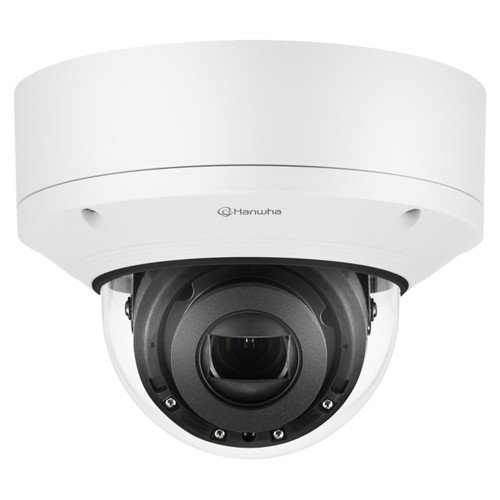
Youth-group areas: Vandal-rated housing (XND-6081RV) if youth-group activity creates occasional housing contact. Standard housing otherwise.
Offering Room and Counting Area
Offering security is one of the few interior-room positions where cameras are expected and beneficial. Placement:
Counting room: One camera mounted at 9 to 10 feet, angled to cover the counting surface and the safe or drop bag. QND-7082R gives sufficient detail for counting-process documentation. Position it so the camera has a clear view without counters blocking the angle.
Vestibule to counting room path: One camera in the hallway between the sanctuary and the counting room. Captures the offering transport without being visible to the congregation.
Safe or drop location: If the safe is in a separate location, one camera covering the path from the counting room to the safe.
Discreet placement. The offering-room cameras should not be visible to the congregation. The goal is quiet documentation of the counting and handling process, not visible surveillance that suggests the church does not trust its volunteers.
Parking Lot and Exterior Placement
Parking lot placement matters more for churches than for most commercial verticals because of evening-service safety. Rules:
Mount height: 12 to 15 feet on light-pole mounts. Higher mounts lose identification detail; lower mounts risk vandalism.
Angle: Along drive lanes and walking paths, not at individual parking stalls. Stall-by-stall coverage is rarely justified at church parking budgets.
Entry and exit points: One camera covering vehicle entry, one covering exit. For larger lots with multiple entry points, one per entry.
Main walking path from sanctuary to parking: One camera covering the primary walking route. This is the camera that supports evening-service volunteer safety monitoring.
Dark corners: One camera per dark corner where congregants park. These are the positions that matter most for elderly-congregant safety after evening events.
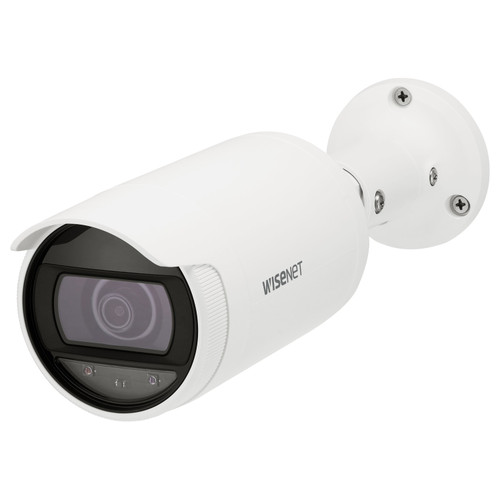
Trash, dumpster, and service areas: One outdoor bullet at each service area. Catches after-hours loitering, vandalism, and dumping incidents that first-draft proposals often miss.
Common Church Placement Mistakes
Cameras inside the sanctuary during worship. Highest-frequency mistake in first-draft proposals. Cover the sanctuary entries, not the interior.
Classroom-interior cameras. Near-universal church policy prohibits this. Cover the corridor doors instead.
Audio recording enabled in foyer. Private conversations and prayer requests occur here. Disable audio by default.
Industrial-aesthetic cameras in foyer. Black housings or obvious commercial bullet cameras break the church-aesthetic. Use discreet white domes in worship-facing positions.
Undercovered nursery corridor. Budget proposals sometimes cover only 1-2 classroom entries in a 6-classroom corridor. Cover them all; the incremental cost is low and the parental-trust benefit is high.
No parking-lot walking-path camera. Standard proposals cover parking entries but miss the walking path from sanctuary to parking. This is the highest-value camera for evening-service volunteer safety.
No camera at offering transport path. Counting-room coverage is common; the path from sanctuary to counting is often missed. Adding one camera here closes the loop.
Facing cameras into sunlight at covered entries. Many churches have covered entries with direct-sun exposure at sunrise or sunset. Use cameras with 120dB+ WDR at these positions; budget cameras lose faces in the glare.
Recommended Cameras by Church Position
Cameras matched to church placement scenarios. Discreet domes for foyer and sanctuary entry, budget for nursery corridor, fisheye for fellowship, vandal for youth areas, outdoor bullets for parking.
Hanwha
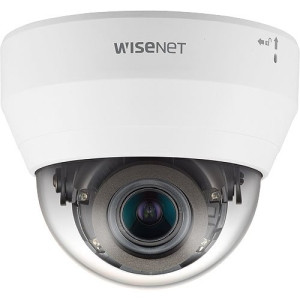
Hanwha QND-7082R 4MP Indoor IR Dome Camera
QND-7082R
4MP indoor IR dome for foyer primary and sanctuary entry positions. Discreet housing at 10-12 foot mount.
Hanwha
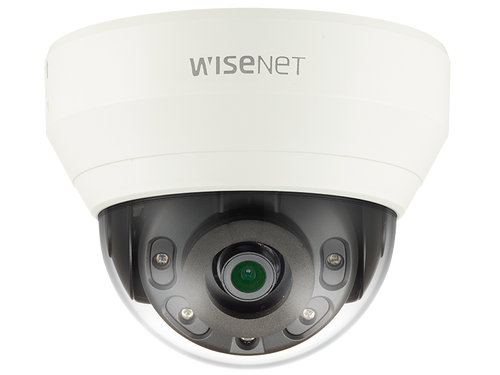
Hanwha QND-6010R 2MP Network IR Dome Camera
QND-6010R
Budget 2MP dome for high-count nursery corridor coverage. One per classroom door at 9-10 foot mount.
Hanwha
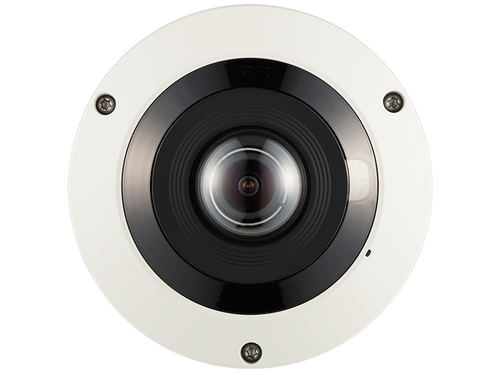
Hanwha PNF-9010RV 12MP 360˚ Fisheye Camera
PNF-9010RV
12MP fisheye at ceiling center of fellowship halls with 100+ seats. One clearly-posed camera.
Hanwha
Hanwha ANO-L7012R 4MP Wide-Angle Low Light Outdoor Bullet IP Camera
ANO-L7012R
Outdoor bullet on 12-15 foot light pole. Cover drive lanes, walking paths, and dark corners.
Axis
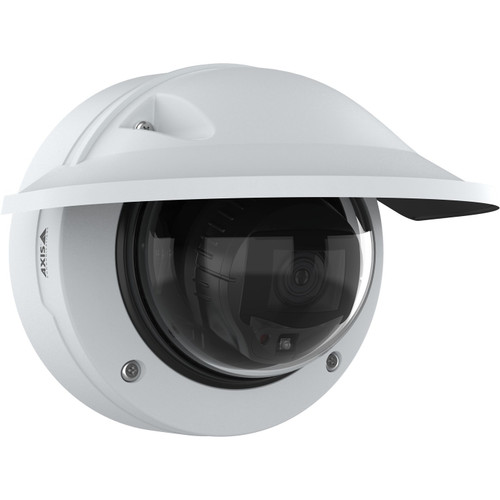
Axis P3277-LVE 5MP Outdoor AI IR Dome Camera - 03153-001
03153-001
Axis P3277-LVE for main church entry with mixed lighting. Lightfinder 2.0 handles covered-entry glare.
Hanwha
Hanwha XND-6081RV 2MP Vandal-Resistant Dome Camera
XND-6081RV
IK10 vandal-rated dome for youth-group areas with occasional housing contact.
Also Consider: Premium Offering AI, NVR Options
Upgrade the counting room to a 4K AI camera, and right-size the NVR to the congregation.
Hanwha
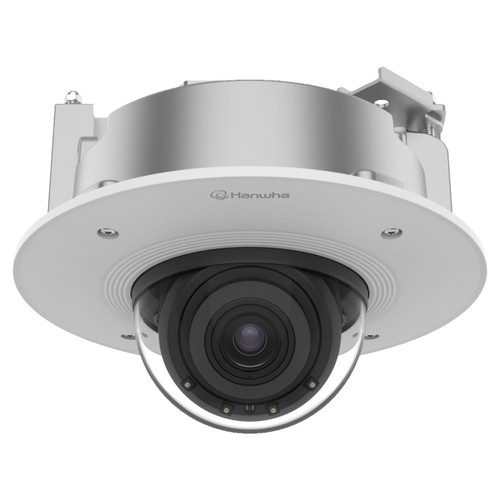
Hanwha PND-A9081RF 4K Indoor AI IR Dome IP Camera
PND-A9081RF
4K AI indoor dome for counting room. Higher detail for counting-process documentation.
Hanwha
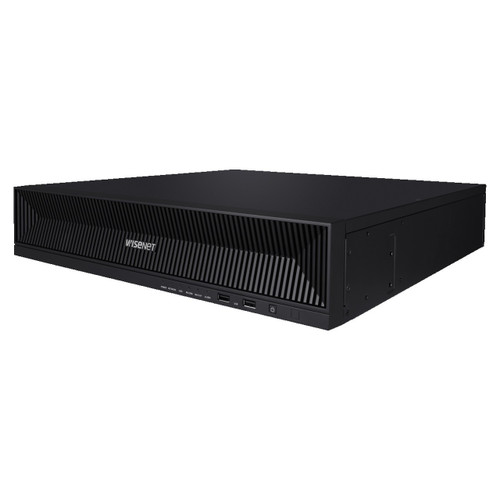
Hanwha XRN-1620B2 16-Channel 4K NVR
XRN-1620B2
16-channel 4K NVR for 150-500 member churches. Wisenet WAVE VMS for volunteer safety teams.
Hanwha
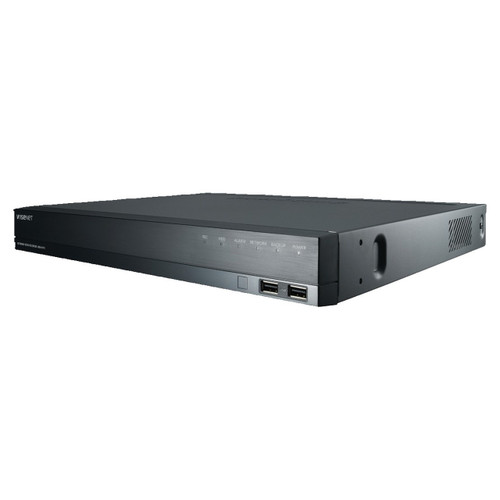
Hanwha XRN-820S 8-Channel 4K Network Video Recorder
XRN-820S
8-channel 4K NVR for churches under 150 members.
Frequently Asked Questions
At what height should I mount cameras in a church foyer?
10 to 12 feet for the foyer primary camera, 9 to 10 feet for sanctuary-entry cameras. Mount on side walls opposite the entry for angle purposes; avoid direct ceiling mounts that lose facial-detail at the door.
Where should nursery corridor cameras be placed?
9 to 10 feet in the hallway, one per classroom door, angled to cover the door without pointing into the classroom. Add one or two cameras covering the length of the corridor for end-to-end coverage. Coordinate placement with children's ministry leadership.
Should cameras be placed inside the sanctuary?
Default no. Cover the sanctuary entries from outside the doors. Larger churches sometimes add a single platform-side camera for asset protection; this is a pastoral decision, not an integrator default.
Where do I put the camera in a fellowship hall?
For large fellowship halls (100+ seats): one 360-degree fisheye at the ceiling center. For smaller halls: 1-2 fixed domes at corners covering the main gathering area.
How do I cover a parking lot for evening-service safety?
One camera per lot entry, one covering the main walking path from sanctuary to parking, one per dark corner. Mount at 12-15 feet on light-pole mounts; angle along drive lanes and walking paths.
What's the single most-missed camera in first-draft church proposals?
The camera covering the walking path from sanctuary to parking. Standard proposals cover parking entries but miss the walking path, which is the highest-value camera for evening-service volunteer safety monitoring.
Do church offering rooms need cameras?
Yes for loss-prevention and process-documentation purposes. One camera in the counting room covering the counting surface and safe, one camera covering the transport path from sanctuary to counting. Discreetly placed.
Can we use bullet cameras in a church foyer?
We recommend against it. Bullet cameras read as industrial in worship-facing positions. Use discreet white domes (QND-7082R) for foyer, sanctuary entry, and fellowship. Reserve bullets for outdoor and parking positions where aesthetic concerns are lower.
No Bots, Just Experts
No bots, just experts. Free pre-sales support for every customer — product questions, BOM quotes, compatibility checks, price confirmation — typically answered within one business day. Paid services available like full system design, remote installation, and more. Know what you need? Send us your BOM, free quote. Need camera placement designed from a floor plan? That is engineering work — $175 per hour, qty 1 = 1 hour. Typical single-site placement runs 3 to 4 hours. We scope the hours with you before you purchase. Hardware buyers get up to one hour ($175) credited back against their order as a thank-you.