
Best Church Security Camera Systems
Churches and houses of worship have surveillance needs that do not look like any commercial vertical. The congregation meets in a sanctuary that should feel worship-centered, not surveilled. The nursery and children's ministry have privacy concerns that outweigh most other camera considerations. The volunteer safety team is not on-site every day and needs mobile access from home. Parking lots empty out quickly after evening services, often with elderly congregants walking to their cars. This guide walks through the camera systems we recommend for churches of different sizes, with the reasoning behind each pick.
Bottom Line
For most churches, the right camera system is a small-to-mid-size Hanwha NVR (XRN-820S or XRN-1620B2) paired with a discreet mix of Hanwha Q-series indoor domes for sanctuary, lobby, and fellowship areas, a 360-degree fisheye in large fellowship halls, and outdoor bullets at the parking lot perimeter. Volunteer safety teams want the Wisenet WAVE mobile app; facilities committees want a system the church can manage without hiring an IT consultant every time something breaks.
Our team specifies camera systems for churches ranging from 150-member congregations to multi-campus networks. The recommendations below reflect what actually works for volunteer-run facilities teams and weekend-operations patterns.
Best For
- Church facilities committees speccing or refreshing a surveillance system
- Pastors and church leadership weighing safety investments alongside ministry budgets
- Volunteer safety teams at churches that want mobile footage access
- Multi-campus churches standardizing cameras across locations
- Churches responding to an incident (theft, vandalism, after-hours intrusion) that revealed camera gaps
Not For
- Residential surveillance or consumer doorbell cameras
- Commercial office buildings — see the office pillar guide
- Cannabis or regulated-retail — different compliance model
In This Guide
How Church Surveillance Differs from Commercial
Church surveillance has a set of priorities that do not appear in any other vertical. Understanding them is the difference between a system the church uses every week and a system that sits idle.
The sanctuary is not a coverage zone. Congregation members gathered for worship should not feel surveilled in that space. Most churches either exclude the sanctuary entirely or cover only the entry doors and the platform-side (for accidents during services and incident documentation, not congregation monitoring). This is a cultural priority, not a technical one, and it drives camera placement more than any other factor.
Childcare and children's ministry areas have the strictest requirements. Cameras here are not about loss prevention — they are about child safety, background-check verification, and parent confidence. Most churches cover the corridor entries to classrooms and the check-in area rather than the classroom interiors. Some require dual-person coverage policies that the cameras document. Placement should be coordinated with the children's ministry leadership, not set by the integrator.
Volunteer safety teams, not IT departments. Church facilities are typically run by a volunteer committee, not a full-time IT team. The camera system must be usable by someone who is not a surveillance professional, on a mobile app, on weekends and evenings. The VMS mobile app quality matters more than for most other verticals — Hanwha Wisenet WAVE and Milestone XProtect Mobile both work well here.
Parking lot safety at unusual hours. Evening services, mid-week events, youth group nights, and Saturday work days all create parking-lot activity outside standard business hours. Elderly congregants walking to cars after an evening Bible study are a safety concern that parking-lot cameras should actively support — not just document incidents, but give the safety team live visibility during the vulnerable interval.
Donation and offering security without visible surveillance. Offering counting rooms, vestibule transport from sanctuary to counting, and the path to the safe all need coverage for loss-prevention reasons, but the cameras should be discreet. The goal is quiet documentation, not visible surveillance that feels like the church does not trust the congregation.
Camera System Sizing by Congregation
The right camera count for a church depends on congregation size, campus footprint, and number of activity areas. General ranges:
| Church Size | Sanctuary Entries | Childcare/Nursery | Fellowship/Common | Parking Lot | Typical Total |
|---|---|---|---|---|---|
| Small (under 150 members) | 1-2 | 1-2 | 1-2 | 2-4 | 5-10 |
| Mid-size (150-500) | 2-3 | 2-4 | 2-4 | 3-6 | 9-17 |
| Large (500-1,500) | 3-5 | 3-6 | 4-8 | 4-10 | 14-29 |
| Megachurch (1,500-5,000) | 4-8 | 4-10 | 8-16 | 6-14 | 22-48 |
| Multi-campus (5,000+) | Per-campus | Per-campus | Per-campus | Per-campus | Multiply by campus count |
For small churches under 150 members, a 5-to-10 camera system on an 8-channel NVR (Hanwha XRN-820S) covers the essential positions: main entry, sanctuary entry, nursery hallway, fellowship area, parking lot primary, and perimeter. Most small churches can self-install or use a local integrator for around $4,000 to $8,000 all-in.
Mid-size churches (150 to 500 members) typically land on a 16-channel NVR (XRN-1620B2) with 10 to 16 cameras covering all the small-church positions plus additional sanctuary entry angles, fellowship-hall coverage, and a second parking-lot position. Budget $8,000 to $16,000.
Large and megachurches need 32+ channel systems, often multi-NVR deployments at larger campuses. These projects typically include professional integrator design, dedicated IT-department or contracted-IT oversight, and budget in the $25,000 to $100,000+ range.
Get a Church-Specific Camera Recommendation
No bots, just experts. Free pre-sales support for every customer — product questions, BOM quotes, compatibility checks. Paid services available like full system design, remote installation, and more. Need help designing the church system from scratch? Engineering time is $175/hour, qty 1 = 1 hour. Small-church designs (under 150 members) typically run 3-4 hours; mid-size churches 8-12 hours. We scope hours with you first. Hardware-buying churches get up to one hour ($175) credited back on their order.
Zones to Cover and Zones to Avoid
Main entry and lobby: 1 to 2 cameras covering the entry door and the first 20 to 30 feet of the welcome area. Cover face-in, not face-out — capture who is entering, not leaving.
Sanctuary entry (not interior): 1 camera per sanctuary door facing the outside of the door (so it captures anyone approaching the sanctuary, not anyone inside). The goal is after-hours security and incident documentation, not worship-service monitoring.
Platform-side of the sanctuary (optional, large churches only): Larger churches with significant asset value on the platform (instruments, video equipment, projection systems) sometimes add a single camera covering the platform from the back of the sanctuary for theft-deterrence purposes. This is a cultural decision that should involve the pastoral team.
Nursery and children's ministry corridor: 1 camera covering each classroom entry from the hallway, plus 1 camera at the check-in desk. Do not place cameras inside classrooms — most church childcare policies explicitly prohibit this.
Offering counting room: 1 camera inside the counting room (this is one of the few interior-room positions where coverage is expected and beneficial), angled to cover the counting surface and the safe or drop bag.
Fellowship hall and common areas: 1 to 2 cameras covering the main gathering area. For large fellowship halls (100+ seats), a 360-degree fisheye at the ceiling center provides full-space coverage without a cluster of fixed cameras.
Parking lot perimeter: 2 to 6 cameras depending on lot size. Cover entry/exit points, the path from the main entry to the parking area, and any dark corners. For large lots, a combination of outdoor bullets (ANO-L7012R) and wider-coverage domes works well.
Zones to avoid: Sanctuary interior during services, classroom interiors, bathrooms, pastor offices (unless explicitly requested by the pastor for counseling-session documentation), spaces used for anonymous prayer or confession.
Volunteer Safety Team and Remote Access
The people who actually use church surveillance — facilities committee members, volunteer safety teams, pastoral staff — are usually not on-premise. They are at home, at work, on the road. The camera system's remote-access capability determines whether the system gets used at all.
Key capabilities to specify:
Mobile app with role-based access. The volunteer safety team should see parking-lot and entry cameras during Sunday services and evening events; the facilities committee should see mechanical-room and after-hours entry cameras; the pastoral team should have access to the offering counting and safe cameras. Hanwha Wisenet WAVE and Milestone XProtect Mobile both support role-based permissions.
Push notifications for specific events. Door-opened events outside normal hours, motion in the parking lot after 10pm, motion in the sanctuary between services — all can trigger mobile push to the safety team. Tune notifications at commissioning so they generate signal, not noise.
Cloud-backed storage for critical footage. For churches concerned about on-premise theft of the NVR itself during a break-in, cloud backup of critical cameras (or at least the incident footage) is a small-cost addition that provides peace of mind.
Simple search and export. When an incident occurs, the facilities team needs to pull footage and hand it to police. The VMS export workflow should be straightforward enough that a volunteer can complete it without calling an integrator. Test this at commissioning with a non-technical volunteer.
Budget Planning for Churches
Church budgets for surveillance are tighter than commercial equivalents, but the same per-camera hardware costs apply. Savings typically come from smaller camera counts and self-managed installation rather than cheaper per-camera hardware.
Small church (5-10 cameras): $4,000 to $8,000 all-in, including cameras, NVR, cabling, and installation. Hanwha XRN-820S NVR plus 6 to 10 Hanwha Q-series cameras is a proven small-church package.
Mid-size church (10-17 cameras): $8,000 to $16,000 all-in. Hanwha XRN-1620B2 NVR plus 12 to 16 cameras mixed across indoor dome, outdoor bullet, and fisheye. Professional integrator install typical at this size.
Large church (17-29 cameras): $18,000 to $40,000 all-in. Multi-NVR or 32-channel NVR; professional integrator required for design and installation. VMS platform choice (Wisenet WAVE included, or step up to Milestone XProtect for multi-campus federation) matters more at this scale.
Megachurch (30+ cameras): $40,000 to $150,000+ all-in. Enterprise-grade design; multi-campus federation; often includes dedicated IT-department or contracted-IT oversight.
Financing and grant options: some churches fund surveillance through capital campaigns; others use restricted donations specifically for safety. Insurance carriers increasingly provide premium discounts (5 to 15 percent on the church policy) for documented surveillance coverage of specific positions. Check with your carrier before finalizing the spec.
Recommended Church Camera Systems
Hardware picks by church size. Small and mid-size churches can build complete systems from these components; larger churches will need additional specialty cameras beyond this lineup.
Hanwha
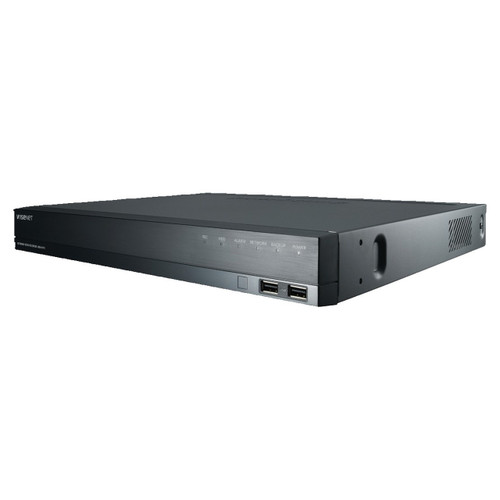
Hanwha XRN-820S 8-Channel 4K Network Video Recorder
XRN-820S
8-channel 4K NVR paired with 6 to 10 Hanwha Q-series cameras. Covers main entry, sanctuary door, nursery corridor, fellowship area, parking perimeter. Volunteer-team-manageable with Wisenet WAVE mobile app.
Hanwha
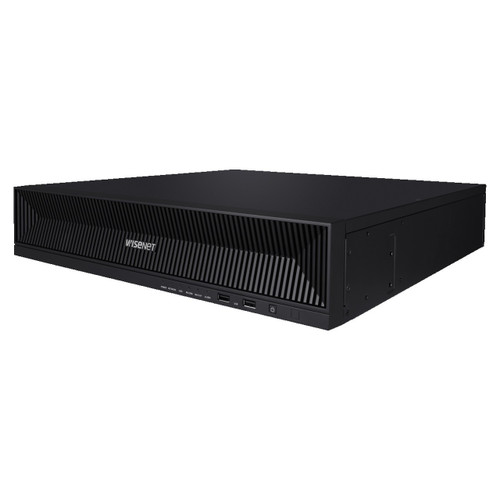
Hanwha XRN-1620B2 16-Channel 4K NVR
XRN-1620B2
16-channel 4K NVR for 12 to 16 camera deployments. Adds additional sanctuary entry angles, fellowship hall coverage, and a second parking position. Hanwha Wisenet WAVE VMS included.
Hanwha
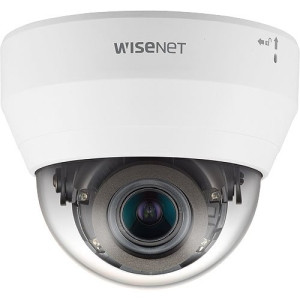
Hanwha QND-7082R 4MP Indoor IR Dome Camera
QND-7082R
4MP indoor IR dome. Discreet white housing disappears into drop ceiling; sufficient resolution for the entry and platform-side positions where identification matters. Church-volunteer-team friendly.
Hanwha
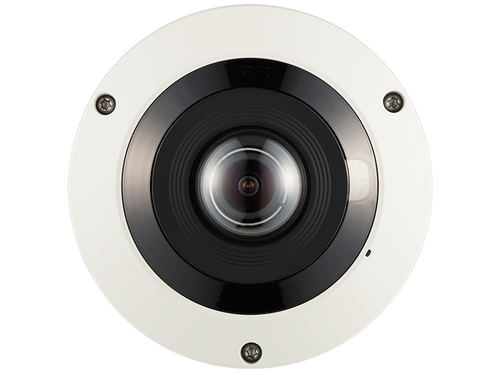
Hanwha PNF-9010RV 12MP 360˚ Fisheye Camera
PNF-9010RV
12MP 360-degree fisheye for fellowship halls over 100 seats. One clearly-posed camera replaces three to four fixed cameras; better for worship-space aesthetics.
Hanwha
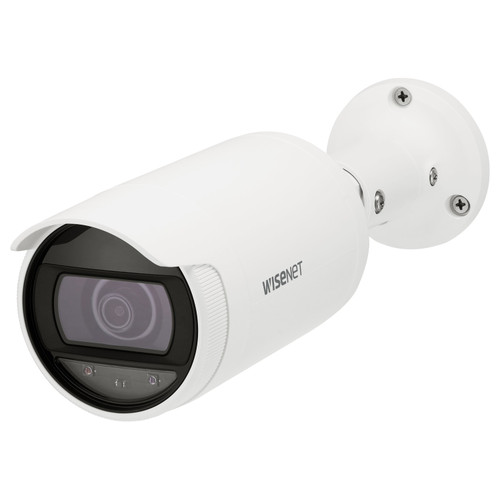
Hanwha ANO-L7012R 4MP Wide-Angle Low Light Outdoor Bullet IP Camera
ANO-L7012R
Outdoor bullet with low-light capability for evening-service parking lots. Wide-angle coverage; strong IR for after-sunset footage when volunteers walk to cars.
Hanwha
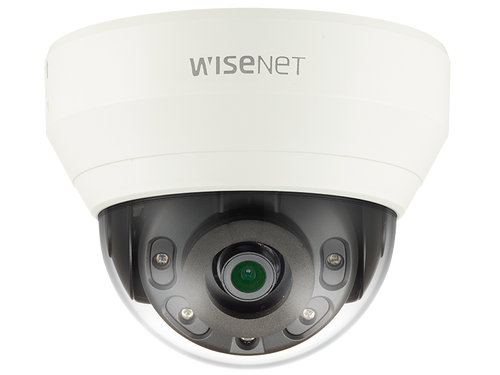
Hanwha QND-6010R 2MP Network IR Dome Camera
QND-6010R
Budget 2MP indoor IR dome for childcare hallway positions. Adequate resolution for entry-tracking; low cost lets churches cover multiple classroom entries without budget strain.
Also Consider: Premium Entry, Fellowship Vandal, Offering Room AI
Additional options for specific church positions where the defaults need an upgrade.
Axis
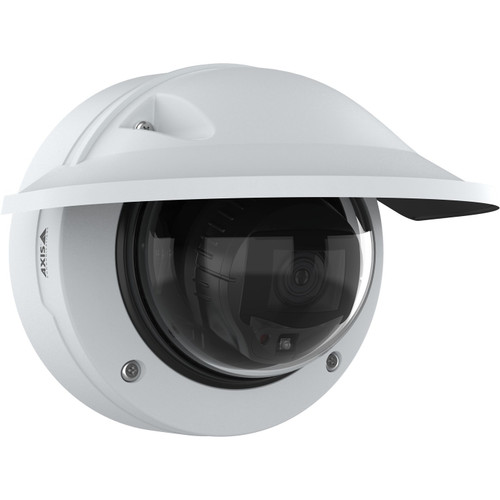
Axis P3277-LVE 5MP Outdoor AI IR Dome Camera - 03153-001
03153-001
Axis P3277-LVE 5MP AI outdoor dome for the main church entry. Handles mixed lighting at covered entries; Axis Companion app is church-volunteer friendly.
Hanwha
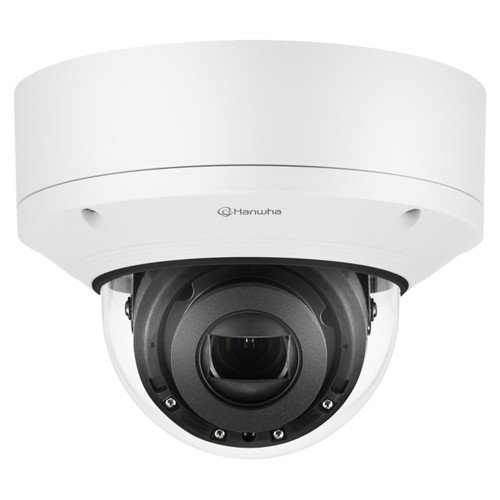
Hanwha XND-6081RV 2MP Vandal-Resistant Dome Camera
XND-6081RV
IK10 vandal-rated dome for fellowship halls with youth-group activity and occasional contact. Low-profile aesthetic.
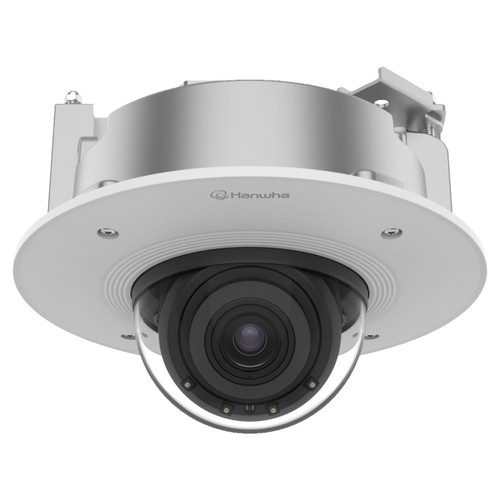
Hanwha
Hanwha PND-A9081RF 4K Indoor AI IR Dome IP Camera
PND-A9081RF
4K AI indoor dome for offering counting rooms and vault areas. Higher resolution for detailed footage of counting and safe-handling procedures.
Frequently Asked Questions
How many cameras does a typical mid-size church need?
A 150-to-500-member church typically runs 10 to 17 cameras: 2-3 at sanctuary entries, 2-4 in the childcare corridor, 2-4 in fellowship and common areas, 3-6 in the parking lot. Exact count depends on campus footprint and number of activity areas.
Should we put cameras inside the sanctuary?
Usually no. Cover the sanctuary entries (outside the doors) rather than the interior. Most churches treat the sanctuary as a worship-centered space that should not feel surveilled. Exceptions: very large churches sometimes add a single platform-side camera for asset protection; this is a pastoral decision.
Can we put cameras in the nursery or children's ministry rooms?
Generally no. Cover the corridor entries to classrooms and the check-in area, but do not place cameras inside classrooms. Most church childcare policies explicitly prohibit in-room cameras, and parent trust on this issue is fragile.
What's the best camera system for a small church?
For churches under 150 members, a Hanwha XRN-820S 8-channel NVR paired with 6-10 Hanwha Q-series cameras is the right starting package. Covers main entry, sanctuary door, nursery corridor, fellowship, and parking perimeter. All-in cost $4,000 to $8,000.
How does the volunteer safety team see the cameras on a phone?
Through the VMS mobile app. Hanwha Wisenet WAVE (iOS and Android) is our default for churches — role-based access lets you grant volunteers access to parking-lot and entry cameras during services without granting access to offices or offering rooms. Push notifications for after-hours events are a common configuration.
Do churches need NDAA-compliant cameras?
Usually not, unless the church has federal-contractor tenants (unusual) or is on federally-funded property (also unusual). Most churches choose cameras on the merit of aesthetics, mobile-app quality, and budget rather than compliance. Hanwha and Axis are both NDAA-compliant if it matters to your specific situation.
Can our facilities committee install the cameras ourselves?
Small churches sometimes self-install to save on labor costs. Mid-size and larger churches typically benefit from a professional integrator for the NVR and VMS setup; the cable-plant work can often be done by volunteers to save money. The hybrid approach is common.
How long should we retain church camera footage?
30 days is the standard baseline. 60 to 90 days if the church has had recurring security incidents or if the insurance carrier requires longer retention. Most church NVRs support 30-to-60-day retention out of the box without storage upgrades.
No Bots, Just Experts
No bots, just experts. Free pre-sales support for every customer — product questions, BOM quotes, compatibility checks, price confirmation — typically answered within one business day. Paid services available like full system design, remote installation, and more. Got a list of products? Free BOM quote. Need help figuring out what to buy? Buy engineering time by the hour — $175/hour, qty 1 = 1 hour. Tell us about your project, we scope how many hours it needs, you purchase that quantity. Hardware buyers get up to one hour ($175) credited back against their order as a thank-you.