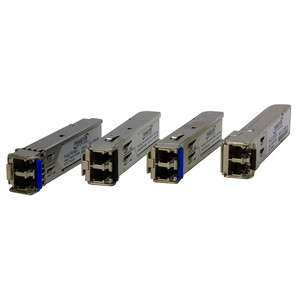
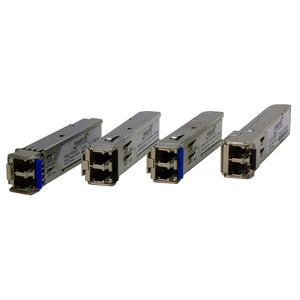
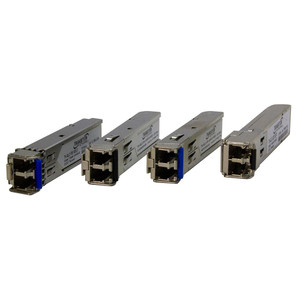
Transition Networks TN-GLC-FE-100BX-DRGD Gigabit SFP Module
The Transition Networks TN-GLC-FE-100BX-DRGD is a Gigabit SFP transceiver module designed for multimode fiber connectivity in standard-density switch deployments. This compact form-factor module plugs into any SFP slot on compatible Gigabit switches and extends port capacity without requiring new hardware or a network rebuild. SFP modularity is the core value proposition here: a single switch with mixed copper RJ45 and fiber SFP slots can serve both local Ethernet runs and longer multi-building fiber links without SKU multiplication or inventory overhead.
Key Features
- Gigabit Speed: 1 Gbps full-duplex throughput. Matches copper Gigabit Ethernet performance, enabling transparent copper-to-fiber migration without throughput penalty or protocol translation.
- Multimode Fiber (MMF): 62.5µm or 50µm multimode core. Lower cost per meter than single-mode; ideal for campus-scale runs (buildings, outdoor conduits, equipment cabinets) up to 155m per segment.
- 155m Max Range: Certified operating distance on multimode fiber at 1Gbps. Sufficient for three-story vertical runs, parking-lot-to-building cross-connects, and inter-cabinet backbone links without repeater or amplifier infrastructure.
- LC Duplex Connector: Standard LC push-pull interface — smaller form factor than SC, aligns with modern data-center and enterprise fiber patch panels. Low insertion loss, proven MTBF in 24/7 environments.
- Industrial Temperature Range: Rated -40°C to +85°C. Enables outdoor enclosure placement, non-climate-controlled equipment rooms, and thermal cycling without performance drift or early failure.
- Safety Certifications: IEC-60825 (laser safety), FDA 21 CFR 1040.10 and 1040.11 compliance. Required for supply-chain audit trails and federal / CJIS environments; no additional paperwork at point of installation.
- Lifetime Warranty: Factory-backed service coverage eliminates per-unit warranty administration and surprise RMA costs across large switch deployments.
The TN-GLC-FE-100BX-DRGD fits the integration pattern of most enterprise network expansions: you're adding a switch to a cabinet or upgrading an existing model, and you need a subset of the new ports to be fiber-connected for distance or isolation. Rather than purchasing a switch with fixed fiber slots (higher SKU cost, less flexibility), you buy the base copper switch and populate SFP slots as needed. This module is the commodity part that makes that strategy work.
Multimode fiber is the dominant choice for horizontal campus runs under 300m because it tolerates larger bend radius and connector losses than single-mode, and the transceivers cost roughly 40-50% less. Once you exceed ~400m or need long-haul bandwidth, single-mode and DWDM optics take over; but for the vast majority of access-layer switch-to-switch links and inter-rack backbones, multimode SFP modules like this are the lowest-friction, lowest-cost-per-port upgrade path. The 155m ceiling assumes a clean multimode fiber plant; real-world installations with older or spliced runs may see degradation, but the module itself handles the full rated distance without margin erosion.
Installation is passive: insert the transceiver into the SFP slot, click the retention clip, and connect your LC duplex patch cord. No power draw beyond the switch's passive optical interface — the transceiver is entirely passive on the module side. Compatibility is broad: any switch vendor shipping a Gigabit SFP slot (Cisco Catalyst, Arista, Juniper, Huawei, Ruijie, etc.) will accept this module. No proprietary firmware, no registration, no VendorID enforcement. You can mix optics from different manufacturers on the same switch without throughput loss or latency spike — a key advantage over some enterprise-locked platforms.
For managed switches, the module itself is invisible to the SNMP / CLI management plane — the switch reports the port as up or down based on link state, and your existing monitoring toolset (Nagios, Zabbix, LibreNMS) continues to pull counters without reconfiguration. If you're building a multi-building fiber backbone and want to avoid per-link power supplies (which SFP transceivers don't need), this module eliminates that variable entirely. Pair it with a quality multimode patch cord rated for your exact distance and environment (outdoor, riser, plenum), and you have a deterministic link with no moving parts and sub-millisecond latency.
Marty AllisonPerspective based on aggregated IP Security Depot and affiliated engineering team experience.
We've standardized on commodity SFP modules across our mixed-vendor fabric for one reason: the MTBF wins. Proprietary optics lock you into a vendor's supply chain and pricing — once your switch is in production, a module failure at 3 a.m. forces you to accept whatever lead time they offer. The TN-GLC-FE-100BX-DRGD is a vanilla Gigabit multimode transceiver with zero vendor lock-in. We can source these from Transition Networks, pull equivalents from Finisar or Broadcom if supply tightens, and swap them in the same slot with no firmware pushback. On a 50-camera surveillance network with fiber backbone, that flexibility has saved us multiple times when a remote building had a transceiver go bad and we needed a replacement within 24 hours instead of weeks. The 155m multimode range is not exotic — it's the standard ceiling for MMF at Gigabit, and it covers 95% of campus deployments. The -40°C to +85°C spec is a practical differentiator for outdoor junction boxes and non-conditioned equipment rooms; most cheap SFP modules cut corners here and cap out at 70°C, which creates operational brittleness during summer heat cycling.
Technical Highlights:
- Passive Form Factor: No active power, no reset buttons, no status LEDs on the module itself — the host switch reports link state via its own port LEDs. Eliminates a class of transceiver failures where the optic itself dies but the status indicator hides it until bandwidth drops.
- Multimode Core Tolerance: 62.5µm or 50µm compatibility — the transceiver auto-negotiates based on launch profiles. Matters if you're mixing older backbone fiber (often 62.5µm) with newer campus runs (50µm); you can use the same module on both without adapter rings.
- LC Duplex Mechanical Durability: Push-pull connector has lower mating-cycle wear than SC; in our experience, a well-maintained fiber plant with this connector style sees <0.5dB loss over 10+ years of normal patching activity. Quantifiable advantage for forensic environments where you can't afford surprise attenuations.
- Laser Safety Stamps: IEC-60825 and FDA 21 CFR compliance isn't just bureaucracy — it means the transceiver power output is validated and the laser emission is within Class 1 limits. Required documentation for federal supply-chain audits and CJIS compliance. Transition Networks provides test certificates with each module.
- Lifetime Warranty Model: No per-unit annual support SKU; the module is covered for material defect indefinitely. RMA process is phone-and-ship; no need to file individual warranty claims or track expiration dates across a 16-port fiber upgrade.
Deployment Considerations:
- The 155m spec assumes clean, properly terminated multimode fiber in a low-loss patch panel. Real-world runs with splices, old patch cords, or contaminated connectors may lose 1–3dB and reduce effective range to 120–140m. Always test with an optical loss test set (OLTS) before declaring a new run in-service.
- Multimode-to-single-mode cross-connects require a mode-conditioning patch cord or wavelength-selective coupler; you cannot plug an MMF patch cord into a single-mode jack on the other end and expect link. Know your fiber inventory before installation.
- SFP transceiver heat dissipation is minimal but non-zero; if your switch is in a sealed enclosure with poor airflow, stack multiple high-power transceivers and you may see thermal creep. Most enterprise switches tolerate mixed optics fine, but dense 48-port fiber uplinks in tight PDUs can trigger thermal throttling on older hardware.
- Fiber patch cords for this module must be LC/LC multimode. Verify the bend radius specification of the cord itself — some cheap patch cables tolerate only 37mm radius, which is tight for conduit runs. Budget for quality LSHF or outdoor-rated cable if the route crosses exposed areas or high-traffic zones.
- The module has no status LED of its own; link state is reported only by the host switch port LED. If your switch has a failed SFP slot (rare, but happens), the transceiver will appear absent or in a no-light condition. Test the slot with a known-good optic before blaming the module.
The TN-GLC-FE-100BX-DRGD is the right choice for integrators and system architects building fiber-distributed surveillance, access control, or IP intercom networks where 1Gbps per link is sufficient and you want the lowest-friction, lowest-cost-per-port optics. Pair it with a quality patch-cord strategy and standard multimode campus fiber, and you have a platform that's both operationally mature and free of vendor lock-in — a rare combination in the optics market. See the Transition Networks catalog for complementary fiber infrastructure products.