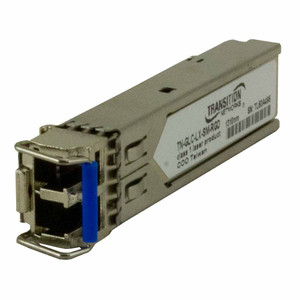
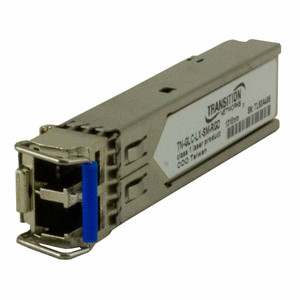
Transition Networks TN-GLC-LHX-SM-RGD Gigabit SFP Transceiver Module
Overview
The Transition Networks TN-GLC-LHX-SM-RGD is a gigabit-speed SFP (Small Form-Factor Pluggable) transceiver module engineered for single-mode fiber deployments. This module installs directly into any compatible SFP-equipped gigabit switch slot, extending network reach across campus backbones and wide-area network segments without the cost and complexity of dedicated long-haul optics. Single-mode fiber carries signals over distances measured in kilometers rather than meters — a fundamental difference when bridging buildings, linking remote facilities, or connecting distributed security infrastructure across an enterprise campus.
Key Features
- Gigabit Throughput (1000 Mbps): Delivers full gigabit line-rate performance, so video streams, data transfers, and control traffic move without compression or protocol degradation. No bandwidth bottleneck at the fiber link itself.
- Single-Mode Fiber Compatibility: Designed to work with standard single-mode fiber cabling (SM fiber), the baseline for enterprise and telecom deployments. Single-mode means narrower light paths and much longer reach than multimode — typically 10 km to 40+ km depending on wavelength and equipment pairing, versus 500m for multimode.
- Standards-Based Transceiver: Conforms to SFP MSA (Multi-Source Agreement) gigabit specifications, ensuring broad compatibility with third-party switches, network appliances, and carrier-grade infrastructure — not locked into a single vendor ecosystem.
- Hot-Pluggable Design: Install or replace the TN-GLC-LHX-SM-RGD without powering down the switch. Minimal operational disruption when scaling or troubleshooting fiber segments.
- Compact Form Factor: Small pluggable module occupies one SFP slot; no external power supply, no separate rack space required. Ideal for space-constrained network cabinets where every port matters.
- Transition Networks Integration: Direct compatibility with Transition Networks switch platforms and proven interoperability with standards-compliant gigabit SFP slots across major vendors — verify your switch's SFP compatibility before ordering.
Integration and Deployment Considerations
The TN-GLC-LHX-SM-RGD integrates into any switch or network appliance with available gigabit SFP ports. Single-mode fiber requires clean connectors and proper cable management; dirty or bent fiber signals degrade rapidly. Typical deployments include campus network backbone links (building-to-building), disaster recovery site connectivity, and remote camera network extension where fiber immunity to electrical interference and bandwidth efficiency justify the investment compared to copper Ethernet runs.
Before deploying, confirm that your switch supports standards-based SFP modules and that your fiber plant is single-mode rather than multimode (a simple visual or data sheet check). Pair this transceiver with matching fiber-end transceivers on the remote side; mismatched fiber types or wavelengths will result in zero link establishment.
When to Choose a Different Model
If your distance requirement is under 100 meters and fiber installation cost is a barrier, consider multimode SFP transceivers for the same switch slot — they cost less and are sufficient for in-building runs. If you need wavelength options (e.g., tunable wavelength for wavelength-division multiplexing), consult the broader Transition Networks catalog for specialized optical modules. For extremely long distances (40+ km), carrier-grade CWDM or DWDM optics may be more cost-effective despite higher upfront cost.
Frequently Asked Questions
Q: Does the TN-GLC-LHX-SM-RGD require a separate power supply?
A: No. The module draws power directly from the host switch's SFP port. No external power, no additional cabling.
Q: What fiber connectors does this transceiver support?
A: The TN-GLC-LHX-SM-RGD ships with standard LC connectors, the de facto standard for SFP modules. Ensure your fiber plant uses LC-terminated single-mode cable.
Q: Can I mix this transceiver with multimode fiber?
A: No. Single-mode transceivers are optimized for single-mode fiber only. Using multimode fiber will result in link failure or severe degradation. Verify your cabling is single-mode before installation.
Q: What is the typical operating range of this module?
A: Single-mode fiber SFP modules typically support 10–40 km depending on wavelength and other equipment specifications. Consult the full datasheet for exact range specifications under your deployment conditions.
Q: Is the TN-GLC-LHX-SM-RGD compatible with all gigabit switches?
A: The module follows SFP MSA standards, so it works with most gigabit SFP-equipped switches. However, verify your switch's SFP compatibility documentation before ordering. Some vendors restrict third-party optics; check your switch manual.
Q: Can I install this module myself?
A: Yes, SFP modules are field-installable. Power down the port (or use hot-swap if supported), align and push the module firmly into the SFP slot until it clicks, then enable the port. No special tools required.
Ted PerryPerspective based on aggregated IP Security Depot and affiliated engineering team experience.
The TN-GLC-LHX-SM-RGD solves a common fiber integration problem: you've got a switch with open SFP slots and single-mode fiber backbone already in place, but you don't have matched optics. This transceiver is your bridge. It's a straightforward gigabit single-mode SFP module — no surprises, no exotic wavelengths, no licensing. It plugs in, it works, and it carries full-rate traffic across long fiber runs without the cost of dedicated carrier-grade long-haul gear.
Technical Highlights:
- Gigabit (1000 Mbps) throughput: No bandwidth throttling at the transceiver — you get the full line rate the switch can deliver. Real advantage for camera backhaul, NVR replication, or data center extension where every megabit matters.
- Single-mode fiber reach (10–40+ km): Single-mode fiber lets you span much longer distances than multimode. A 20 km campus backbone run becomes practical without repeaters or extenders, which translates to fewer active devices and simpler troubleshooting.
- SFP MSA compliance: Standards-based design means broad switch compatibility. You're not betting the deployment on a single vendor's ecosystem — the TN-GLC-LHX-SM-RGD works with most gigabit switches that have SFP slots, provided you verify compatibility first.
Deployment Considerations:
- Fiber connectors and cleanliness matter. Single-mode fiber is less forgiving of dirty connectors or macro-bends than multimode. A speck of dust or a kinked cable can kill the link. Budget for proper fiber termination and inspection tools if you're extending an existing plant.
- Verify your switch actually supports third-party SFP modules before ordering. Some enterprise switches lock optics to the OEM vendor only; check the switch manual's SFP compatibility list. This is a real gotcha and can cost a re-order cycle if missed.
Deploy the TN-GLC-LHX-SM-RGD in campus backbone and WAN links where single-mode fiber is already in place — security camera network extension, multi-site failover links, or remote facility bridging. It's not flashy, but it's exactly what you need when a standard SFP slot and a fiber run are the infrastructure you've already built.