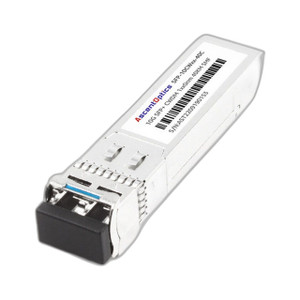
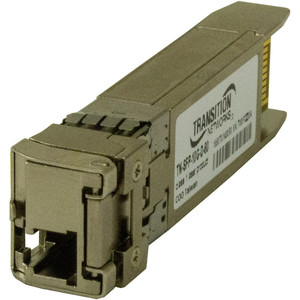
Transition Networks TN-CWDM-10G-1290-40 10G SFP+ CWDM Transceiver
The Transition Networks TN-CWDM-10G-1290-40 is a 10 Gbps SFP+ transceiver module engineered for coarse wavelength-division multiplexing (CWDM) applications over long-distance single-mode fiber. Operating at 1290 nm wavelength, this module delivers full 10G line-rate performance while maintaining industrial-grade temperature stability across demanding network environments. CWDM architecture allows multiple wavelengths to share a single fiber pair, enabling cost-effective fiber utilization in security operations centers, enterprise data centers, and telecom backbone networks.
Key Features
- 10 Gbps Line Rate: Full 10G data rate at 1290 nm wavelength. Sustains carrier-class throughput for high-bandwidth surveillance streams and mission-critical network traffic without bottleneck.
- CWDM Wavelength 1290 nm: Dedicated 1290 nm channel in the CWDM grid (1270–1610 nm ITU spacing). Allows up to 18 separate wavelengths on a single fiber pair, reducing deployment cost versus multi-fiber runs.
- Single-Mode Fiber (SMF): Compatible with standard single-mode fiber infrastructure. Supports distances up to 40 km (typical) depending on fiber grade and optical budget, ideal for campus and regional surveillance links.
- Industrial-Grade Temperature Rating: Rated for extended operating temperature range. Ensures stable operation in uncontrolled network closets, outdoor fiber cabinets, and harsh environmental conditions without thermal derating.
- SFP+ Form Factor: Hot-swappable SFP+ module fits standard SFP+ ports on switches, routers, and network cards. Reduces deployment time and allows field replacement without system shutdown.
- Lifetime Warranty: Factory-new genuine product backed by manufacturer warranty. Eliminates risk of gray-market or refurbished modules in mission-critical security networks.
- IEC-60825 & FDA 21 Certified: Meets international laser safety and FDA optical-safety standards. Compliance documentation available for regulatory audits and insurance requirements.
CWDM transceivers are the backbone of distributed surveillance fiber networks. Instead of running separate fiber pairs between remote camera sites and the central NVR—an expensive and labor-intensive approach—CWDM allows a single strand to carry multiple camera streams at different wavelengths. The 1290 nm channel is one of eight standard ITU CWDM wavelengths; pairing it with transceivers at complementary wavelengths (e.g., 1310 nm, 1330 nm, 1350 nm) on the same fiber pair maximizes utilization and cuts fiber material and installation costs significantly. For security integrators deploying video over multi-kilometer fiber runs—between campus buildings, remote gate houses, or parking structures—CWDM is the cost-effective alternative to point-to-point single-wavelength SFP+ links.
Integration is straightforward: the TN-CWDM-10G-1290-40 requires a CWDM-capable SFP+ port (standard on modern Cisco Catalyst, Juniper EX, Arista, and many mid-range switches), matching single-mode fiber with LC connectors, and a compatible transceiver module at the far end tuned to a different wavelength. No external multiplexing hardware is needed when using native CWDM SFP+ modules—the multiplexing is passive wavelength filtering in the fiber itself. Typical optical budget is 14–18 dB, supporting 30–40 km spans on standard SMF-28 fiber. For longer distances (50+ km) or higher loss budgets, consider Transition Networks' extended-range CWDM modules or add passive wavelength-selective filters to optimize the link.
From a total cost of ownership perspective, CWDM modules represent a one-time transceiver cost with no incremental infrastructure overhead. Unlike active multiplexing cards—which consume rack space, power, and cooling—CWDM is purely optical and passive after installation. Lifetime warranty coverage and industrial temperature rating reduce replacement frequency and lifecycle costs over a 5–10 year surveillance network lifespan. The 1290 nm wavelength is widely stocked across major distributors and is cross-compatible with CWDM infrastructure from Cisco, Juniper, Accelis, and other tier-1 vendors, minimizing vendor lock-in and spare-parts complexity.
Transition Networks is a US-based optical transceiver manufacturer with a heritage in carrier-grade networking. The TN-CWDM-10G-1290-40 is sourced direct from the manufacturer or authorized US distributor—no gray-market, no parallel imports. IEC-60825 and FDA 21 compliance documentation is available upon request for security operations centers subject to regulatory oversight. For integrators building fiber-based surveillance and access-control networks across multi-site deployments, this transceiver is a proven, compliant choice. Explore the full range of Transition Networks CWDM, DWDM, and long-reach SFP+ options at the Transition Networks catalog.
Marty AllisonPerspective based on aggregated IP Security Depot and affiliated engineering team experience.
We've deployed CWDM fiber infrastructure for security and telecom operators across campuses, municipalities, and regional networks. The TN-CWDM-10G-1290-40 is a solid workhorse that does exactly what it claims: delivers 10G throughput at 1290 nm over single-mode fiber with zero fuss. What differentiates Transition Networks' CWDM line is the industrial temperature rating and lifetime warranty—when you're betting your surveillance backbone on a small passive module buried in a fiber cabinet or rooftop enclosure, you want hardware that doesn't degrade in heat or cold and doesn't carry a ticking lifecycle clock. CWDM itself is a mature, proven technology; the real operational gain is understanding your fiber topology before you buy. If you're planning to multiplex 4–6 wavelengths on a single fiber pair, CWDM makes immediate economic sense. If you're only lighting up one or two strands between two buildings, single-wavelength SFP+ modules might be simpler and slightly cheaper upfront—though the fiber cost difference is negligible. The gotcha is backward compatibility: older switches may not support CWDM SFP+ slots, or they may require a specific transceiver type (some gear wants Infinera or Accelis branded modules for warranty purposes). Verify your switch datasheet and test modules before committing to a large order.
Technical Highlights:
- 1290 nm ITU CWDM Channel: The 1290 nm wavelength is positioned at the short end of the CWDM spectrum. This matters because chromatic dispersion characteristics differ from longer wavelengths; link budgets and maximum distances should be verified against your specific fiber condition. Transition Networks publishes detailed optical-budget tables in the datasheet—use them to confirm feasibility on your runs before installation.
- 10 Gbps Full Duplex over SMF: Supports 10 Gbps downstream and 10 Gbps upstream simultaneously on a single fiber pair (using separate wavelengths at each end). For a 2-way surveillance link between a remote gate and a central NVR, this means your IP cameras and access-control readers can push and pull data at full line rate without contention.
- Industrial Temperature: 0–70°C (or extended range available): Standard industrial rating covers most uncontrolled outdoor and semi-outdoor deployments. If you're installing in a rooftop fiber cabinet exposed to direct sun or in cold climates, confirm the exact temperature spec in the datasheet—extended-range versions exist if needed.
- SFP+ Hot-Swap Capability: Modules can be inserted and removed without powering down the switch. Operationally, this means you can perform a transceiver swap or upgrade on a live link if you have traffic failover capacity. In a security context, this reduces downtime risk during maintenance windows.
- Passive Wavelength Multiplexing: No power consumed by the transceiver itself for multiplexing—it's purely optical, which means your switch PoE/power budget is unaffected. On fiber-heavy networks with dozens of CWDM links, this passive architecture scales better than active multiplexing cards.
Deployment Considerations:
- Fiber Type Verification: CWDM SFP+ modules are spec'd for single-mode fiber (SMF-28 or equivalent). Multi-mode fiber will not work and will result in total link loss. Confirm your installed base is SMF before purchase. If you inherit a multi-mode fiber run, you'll need multimode CWDM modules or a different topology entirely.
- Wavelength Coordination: If you're already using other CWDM wavelengths on the same fiber pair, ensure the 1290 nm channel doesn't conflict. A simple Excel spreadsheet of your CWDM plan (which wavelengths, which links, which vendors) prevents expensive mistakes. Mismatched wavelengths will fail silently or cause erratic link behavior.
- Optical Budget and Distance Limits: Transition Networks quotes ~40 km typical range, but this assumes clean fiber and low-loss connections. Real-world deployments often achieve 25–35 km depending on splices, connectors, and age of the fiber. Perform a Loss Budget calculation (available in the datasheet or via Transition's engineering team) before finalizing your link plan.
- Spares Stock: Keep at least one spare 1290 nm SFP+ module on hand for critical surveillance links. CWDM modules are generally in stock at major distributors, but a spare avoids emergency procurement delays if a module fails.
- Switch Port Compatibility: Not all SFP+ ports support CWDM. Some switches require specific module types or firmware versions. Consult your switch vendor's hardware compatibility matrix and test one module in your target switch before deploying across multiple sites.
The TN-CWDM-10G-1290-40 is purpose-built for integrators and network engineers who need reliable, long-distance fiber connectivity for distributed surveillance and access-control networks. If your project spans multiple buildings or spans of fiber, CWDM pays for itself in fiber savings and simplified topology. Explore the full range of Transition Networks CWDM, DWDM, and long-reach SFP+ options at the Transition Networks catalog.