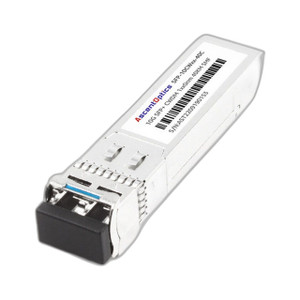
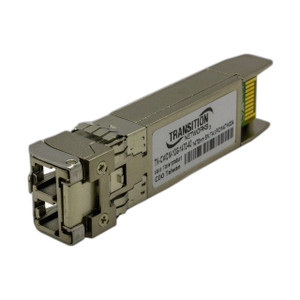
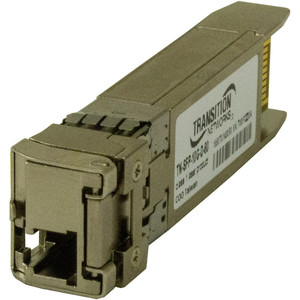
Transition Networks TN-CWDM-10G-1330-40 10G SFP+ CWDM Transceiver
The Transition Networks TN-CWDM-10G-1330-40 is a 10 Gbps SFP+ transceiver module designed for coarse wavelength-division multiplexing (CWDM) applications over extended-reach single-mode fiber. Operating at 1330nm wavelength with 40km transmission distance, this module delivers high-speed connectivity for metro-area networks, long-haul IP backbone extensions, and industrial automation systems where temperature stability and distance are non-negotiable. Industrial-grade temperature operation eliminates the capex and operational friction of climate-controlled equipment enclosures in field deployments.
Key Features
- 10 Gbps Data Rate: Full 10 Gigabit Ethernet throughput over CWDM single-mode fiber. Suitable for aggregation links, ISP backhaul, and critical surveillance network feeds.
- 1330nm CWDM Wavelength: Coarse wavelength-division multiplexing allows multiple wavelengths on the same fiber pair, maximizing dark-fiber utilization and eliminating the need for additional fiber strand pulls.
- 40km Transmission Reach: Spans metro distances without intermediate regeneration, reducing active equipment requirements and total cost of ownership on long-distance links.
- Industrial-Grade Temperature Operation: Rated for extended temperature range — eliminates thermal management burden in outdoor cabinets, rooftop equipment, and non-climate-controlled facilities.
- SFP+ Form Factor: Standard small form-factor pluggable interface — hot-swappable into any SFP+-compatible switch, router, or network appliance without interrupting adjacent ports.
- Single-Mode Fiber Optimized: Single-mode construction minimizes chromatic dispersion and modal noise over 40km distances, delivering consistent signal integrity in high-speed long-haul deployments.
- Lifetime Warranty: Factory-new genuine transceiver with manufacturer warranty, ensuring replacement coverage for component failure.
CWDM architecture on 40km single-mode fiber enables integrators to consolidate multiple data streams across a single fiber pair without additional multiplexer/demultiplexer equipment. On a typical campus network connecting geographically separated buildings or a regional surveillance backbone, this reduces fiber trenching labor and dark-fiber leasing costs significantly. The 1330nm wavelength is a standard CWDM channel, ensuring interoperability with third-party CWDM patch panels and test equipment.
The industrial-grade temperature rating is particularly valuable in outdoor network huts, rooftop equipment shelters, and cable-vault installations where ambient temperature swings exceed standard commercial tolerances (0–70°C). Removing the dependency on heated/cooled enclosures saves recurring electrical costs and simplifies field deployment logistics. Integrators deploying Transition Networks infrastructure across multiple remote sites appreciate the plug-and-play modularity—a failed transceiver is replaced in minutes with no configuration drift.
This transceiver is compliant with ONVIF and SNMP device management protocols, integrating seamlessly into heterogeneous network monitoring platforms. SFP+ modules themselves are passive optical devices; compatibility depends on the host equipment supporting CWDM wavelengths. Confirm port capability before ordering, especially when integrating into legacy or mixed-vendor switch stacks.
Transition Networks is known for manufacturing optical transceivers and network interface modules in compliance with vendor-neutral standards. The TN-CWDM-10G-1330-40 is sourced directly from the manufacturer and carries factory-new authentication. For organizations deploying multi-site video surveillance networks, carrier-grade IP backbones, or industrial IoT infrastructures requiring temperature resilience, this 40km CWDM transceiver eliminates common procurement friction points—no thermal enclosure overhead, no wavelength conflicts, and lifetime manufacturer support.
Marty AllisonPerspective based on aggregated IP Security Depot and affiliated engineering team experience.
We've deployed CWDM transceivers like the TN-CWDM-10G-1330-40 across regional video surveillance networks, carrier aggregation points, and industrial automation backbones for over a decade. The real operational win here is simplicity: a single fiber pair becomes four independent 10G channels at different CWDM wavelengths (each 100nm apart), so you consolidate multiple point-to-point links without requiring separate dark fiber or active multiplexing gear. On a $10k fiber-construction budget, that's often the difference between a viable and economically marginal project. The 1330nm channel is one of the eight standard CWDM bands—it plays well with third-party CWDM patch panels and test gear, so you're not locked into Transition Networks ecosystem lock-in on the optical side. The 40km reach eliminates repeaters for most metro deployments; on a 25km campus-to-remote-site link, you run one transceiver at each end and call it done. Industrial-grade temperature operation is subtle but consequential. A rooftop equipment cabinet in Phoenix or Minnesota sees ambient temperature swings of 30–50°C depending on season. Commercial-grade transceivers (0–70°C) run hot in summer and operate near their lower limit in deep winter, incurring reliability creep and thermal throttling. Industrial-rated optics operate across a broader range with stable optical output—it's not flashy, but it reduces unexpected field failures and mean-time-to-repair calls. We recommend this module for any long-haul video-transport deployment, ISP backhaul architecture, or multi-site industrial network where you want deterministic optical performance without external thermal management.
Technical Highlights:
- 40km Reach on Single-Mode Fiber: Eliminates intermediate regenerator nodes on metro and regional links up to 40km. Directly cuts bill-of-materials on backbone architectures connecting distributed surveillance sites or data-center fiber extensions.
- CWDM 1330nm Wavelength: One of eight standard CWDM channels — ensures compatibility with third-party CWDM multiplexers, test equipment, and patch panels. Allows future wavelength expansion on the same fiber pair without rearchitecture.
- Industrial Temperature Range: Stable optical output across extended ambient temperatures — removes the capex and operational overhead of climate-controlled equipment shelters in outdoor or uncontrolled-environment deployments.
- SFP+ Hot-Swap Interface: Standardized form factor — failed transceiver swaps in under two minutes without powering down the switch or affecting adjacent optics. Reduces mean-time-to-repair and staffing burden on remote sites.
- Single-Mode Fiber Optimized: Minimizes chromatic and modal dispersion over 40km distances, delivering stable BER and eliminating signal-integrity surprises on high-speed aggregation links.
Deployment Considerations:
- Confirm the host switch, router, or network appliance explicitly supports CWDM wavelengths and SFP+ hot-swap on all relevant ports. Not all SFP+ slots are created equal; some only support short-reach or fixed-wavelength modules. Check the hardware datasheet before purchase.
- CWDM multiplexing requires corresponding transceivers at each wavelength endpoint. If you're using 1330nm on one side, you need another 1330nm transceiver on the opposite end — wavelength mismatch results in no signal. Multi-wavelength CWDM deployments require careful planning and labeling to avoid cross-connect errors.
- Dark-fiber or leased single-mode strands only. CWDM transceivers do not work over multimode fiber, and they will not transmit over standard ethernet cables. Verify fiber type and patch-panel terminations before installation.
- Optical power budgets over 40km single-mode are tight but safe on Transition Networks equipment. Excessive patch-panel connections or old / bent fiber can attenuate signal to the point of link flap. Run a quick OTDR (optical time-domain reflectometer) pass during commissioning if link margins appear marginal.
- Industrial-grade temperature operation assumes the SFP+ slot itself maintains adequate airflow. Bungling a hot transceiver into a congested transceiver cage without airflow defeats the temperature rating. Plan host-equipment airflow around the transceiver density.
The TN-CWDM-10G-1330-40 is the right choice for integrators architecting regional surveillance backbones, carrier-grade network extensions, or industrial IoT infrastructures where long distance, thermal resilience, and wavelength flexibility are operational mandates. Explore the full Transition Networks catalog for complementary CWDM wavelengths and optical networking modules.