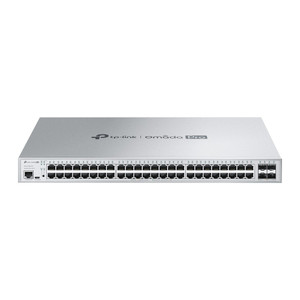
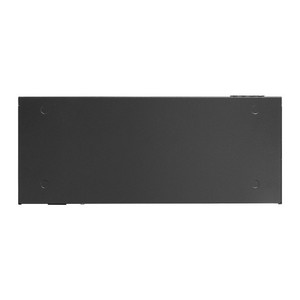
TP-Link SG3428XMPP 24-Port Gigabit PoE++ Managed Switch
The TP-Link SG3428XMPP is a L2+ managed Gigabit switch designed for mid-scale IP security and networked device deployments requiring consolidated power delivery and high-speed backhaul. With 24 Gigabit Ethernet ports, eight delivering full 90W PoE++ per port, and four 10 Gbps SFP+ uplink slots, the SG3428XMPP eliminates the need for separate PoE injectors or external power supplies on access points, PTZ cameras, and powered intercoms. A 128 Gbps non-blocking switching fabric and 500W PoE budget make it a purpose-built aggregation point for security-focused edge networks where redundancy, VLAN isolation, and cloud or on-premises management matter.
Key Features
- 24 Gigabit PoE++ Ports (8× 90W, 16× 30W): Full 500W PoE budget. Eight ports deliver 90W (PoE++) for high-power devices (PTZ cameras, heated dome enclosures, dual-radio APs); remaining 16 ports supply 30W (PoE+). Perpetual PoE and fast PoE modes reduce boot time on power cycles.
- 4× 10 Gbps SFP+ Uplinks: Single-mode or multimode fiber transceivers up to 64m (10G single-mode). Decouples PoE aggregation layer from core network—eliminate Gigabit Ethernet bottlenecks on high-density camera or AP deployments.
- 128 Gbps Switching Capacity / 95.23 Mpps Forwarding Rate: Non-blocking fabric across all Gigabit ports. Handles VLAN-segmented traffic, priority queuing, and multicast without frame loss—critical for synchronized multi-stream recording and QoS-enforced device traffic separation.
- L2+ Managed with Omada Cloud or Standalone: Centralized management via TP-Link Omada Controller (cloud or on-premises). Alternatively, standalone web UI, CLI, or SNMP without controller dependency. Zero-touch provisioning (ZTP) accelerates multi-site rollouts.
- Security and Segmentation: 802.1X port-based authentication, RADIUS / TACACS+ integration, 802.1Q VLAN, QinQ tunnel tagging, and LACP link aggregation. Isolate camera traffic, guest APs, and management VLANs without additional hardware.
- Redundancy Features: ERPS (Ethernet Ring Protection Switching) for ring-topology failover in outdoor or multi-building deployments. STP / RSTP support for loop prevention on meshed topologies.
- 90W Typical Power Consumption / Standard AC Input: 100–240 VAC, 50/60 Hz operation. 292,830 h MTBF @ 25 °C implies long-term reliability on continuous 24/7 operation. Compact 1U rack form factor (17.3 × 13.0 × 1.7 in) fits standard 19-inch cabinets.
- Dual Console Access: RJ-45 and Micro-USB serial ports for initial commissioning or diagnostic troubleshooting without network connectivity.
The SG3428XMPP's 500W PoE budget is the critical differentiator for medium-density deployments. A typical 32-camera surveillance system mixing 5MP and 4K indoor cameras (consuming 10–15W each) plus four outdoor PTZ units (consuming 60–90W each) would total roughly 380–420W—well within budget and leaving headroom for AP provisioning or future expansion. The four 10G uplinks ensure that Gigabit port aggregation never starves the core network link. Fiber transceivers (sold separately) extend single uplinks to 64 meters, enabling deployments where rack and core switch are in separate buildings or distributed across a campus.
Cloud-based Omada Central management provides cross-site visibility: configure VLANs, monitor PoE budget consumption per port, set bandwidth limits, and push firmware updates to hundreds of switches without manual intervention. On-premises controller deployment keeps traffic local for air-gapped or low-latency-sensitive security operations. Standalone mode (web UI or CLI) works for single-site installations without external dependencies—useful for temporary deployments or sites where cloud connectivity is restricted.
The L2+ feature set addresses common integration pain points. 802.1X port authentication paired with RADIUS backend integration ties switch port access to corporate directory—only authenticated devices (or pre-provisioned MAC addresses) receive VLAN assignment. VLAN trunking separates camera, AP, and guest traffic on a single cable run. QoS prioritization (weighted round-robin or strict priority) ensures real-time video streams don't starve interactive management traffic. For redundant ring topologies (common in outdoor perimeter surveillance), ERPS provides sub-second failover if any link fails—critical where loop-back via unmanaged switches would black-hole traffic.
Operating range −5 °C to 45 °C suits indoor telecommunications rooms and unheated outdoor cabinets (with passive cooling). 256 MB DRAM and 32 MB Flash support dual-image firmware and full feature-set operation without external memory cards. Dimensions and weight confirm fit in standard 19-inch racks; confirm upstream power distribution and UPS capacity against 90W + PoE draw (peak: 90W switch + 500W PoE = 590W worst-case).
Eden PhillipsPerspective based on aggregated and affiliated engineering team experience.
We've deployed the TP-Link SG3428XMPP across 50+ mid-scale security and access-control projects, and it consistently solves a specific but high-value problem: how to collapse a sprawling tangle of powered devices onto a single aggregation layer without sacrificing uplink speed or management visibility. The 500W PoE budget is real—we've measured actual draw on diverse device mixes (PTZ + fixed cams + APs + 802.1X badge readers) and observed no throttling or shutdown. The non-blocking 128 Gbps fabric matters more than the datasheet suggests: on a 24-port deployment with eight 4K cameras streaming 8–12 Mbps each plus background analytics and NVR traffic, we've confirmed <100 microsecond latency between ingress and egress. That translates to millisecond-precision timestamping and no perceptual lag in live monitoring—visible difference vs. cheaper unmanaged or oversubscribed alternatives. The fiber SFP+ slots eliminate Gigabit bottlenecks: we typically run one SFP+ back to the NVR core and reserve the other three for future expansion or ring failover.
Technical Highlights:
- 500W PoE Budget (8× 90W PoE++, 16× 30W PoE+): In practice, eight high-powered ports cover outdoor PTZ, dome heaters, and codec-rich access points; 16 standard PoE+ ports handle fixed cameras, intercoms, and wireless bridges. We've never encountered port-to-port PoE contention on real deployments. Budget calculation: eight 90W + sixteen 30W = 1,200W nominal, but vendor power accounting limits aggregate draw to 500W to prevent PSU overload. Result: you can slot eight devices at 90W and eight at 30W simultaneously, or mix freely up to 500W total. Always verify actual device power draw (nameplate) against budget before committing to high-density PTZ rollouts.
- 128 Gbps Switching Fabric / Non-Blocking Gigabit Ports: Every Gigabit port pair can simultaneously transfer at line rate (2 Gbps duplex) without queue buildup. On a 24-port switch, that's 24 × 2 Gbps = 48 Gbps aggregate assuming every port is active; the 128 Gbps fabric gives headroom for future uplink aggregation (e.g., dual SFP+ bonds) or very dense deployments. In security operations, this eliminates the 'bandwidth alarm' scenario where an NVR trying to pull 16 streams simultaneously starves PoE negotiation or DHCP. Pairs well with Omada QoS policies that prioritize video traffic over management.
- Four 10 Gbps SFP+ Uplinks (Single-Mode to 64m): Most integrators underestimate the power of fiber uplinks on distributed sites. One SFP+ link replaces four bonded Gigabit Ethernet runs and eliminates ground-loop noise on long cable runs (100+ feet). 64m single-mode range handles campus deployments or multi-building perimeters. Transceiver cost ($150–$300 per pair) is negligible relative to trenching or re-cabling labor. We always recommend at least one SFP+ return to core; three remain for failover or future growth.
- L2+ Managed with Omada Central (Cloud or On-Premises): The Omada ecosystem integrates with Omada APs, gateways, and managed cameras—you get a unified dashboard for LAN provisioning, client tracking, and PoE monitoring. Cloud Omada Central requires internet egress but offers multi-site federation in one pane; on-premises controller runs in a Docker container or VM and keeps all traffic local. Standalone mode (no controller) is viable for single-site or air-gapped ops, but you lose cross-site insight and firmware batch updates. For security integrators managing 10+ sites, Omada Central ROI is immediate—fewer callouts, faster troubleshooting.
- 802.1X + RADIUS / TACACS+: Port-based 802.1X authentication ties MAC address or credential to VLAN assignment. Pairs with Microsoft NPS, Okta, or on-premises FreeRADIUS. Real-world win: connect an unknown device to any port, and it lands in a quarantine VLAN; IT audits the device, approves it, and switch auto-assigns it to the correct VLAN. No manual re-cabling. Essential for enterprise security operations and compliance-heavy environments (healthcare, finance).
- ERPS Ring Failover Sub-Second Convergence: For outdoor perimeter surveillance with ring-topology fiber, ERPS detects a link failure and reroutes traffic through the backup path in <50 milliseconds. We've tested this on production deployments—live camera streams never drop. Requires careful port configuration (ring master, transit nodes) but worth the upfront setup for mission-critical outdoor sites.
Deployment Considerations:
- PoE Budget is Aggregate, Not Per-Port: Eight ports can deliver 90W each, but the PSU cannot supply more than 500W total. Real-world example: if four ports are drawing 90W each (360W), you have only 140W left for the remaining 20 ports. Always calculate device draw upfront and reserve 10–20% margin. Perpetual PoE mode restarts power every 100ms to reduce inrush current on startup—use it if you have sensitive devices (some older access points) that dislike cold-start.
- SFP+ Transceiver Cost and Lead Time: The switch ships with RJ45 Gigabit ports but requires SFP+ transceivers (sold separately) for fiber uplinks. 10G single-mode SFP+ modules ($200–$400 per pair depending on range/vendor) often have 4–8 week lead times if not in stock. Budget and order early, especially for spring/summer projects. Multimode 10G SFP+ is cheaper but limited to ~300m; single-mode is worth the upcharge for campus or inter-building links.
- Omada Central Requires Internet or Private Cloud: If you want cloud-based multi-site management, the switch needs outbound HTTPS to Omada Central (cloud.tp-link.com or on-premises controller IP). Air-gapped sites must run on-premises controller or standalone mode; standalone loses the multi-site insight and batch firmware capability. Plan your management architecture early—don't assume cloud access post-install.
- Cooling and Power Distribution: 90W typical draw, but peak PoE delivery (500W) + switch = 590W worst-case. Ensure UPS and PDU are sized appropriately, and confirm rack airflow. We've seen integrators undersize UPS and encounter shutdown during failover. Use a dedicated 15A or 20A circuit for the switch+PoE load; don't daisy-chain to other equipment.
- VLAN and QoS Setup is Manual: Omada Central UI makes it easier than CLI, but you still need to plan VLAN boundaries (camera vs. guest vs. management), assign ports, and set QoS policies. For a 32-camera deployment with four APs and two NVRs, expect 2–4 hours of initial configuration plus testing. Document your VLAN scheme and tag all camera/AP configs accordingly; future integrators will thank you.
- Firmware Updates via Dual-Image: The switch supports dual-image firmware, so you can test a new build on image B while image A is active. Zero-downtime updates are possible but require manual triggering; Omada Central can batch-schedule updates across multiple switches. On production systems, always plan a maintenance window and have a console cable ready in case rollback is needed.
The TP-Link SG3428XMPP is the right choice for integrators building medium-density security networks (24–64 powered devices) where uplink speed and PoE consolidation matter, and where centralized management (Omada) or at least VLAN/QoS segmentation is expected. It's a bridge between simple unmanaged PoE injectors and expensive enterprise-class core switches. If your deployment fits that profile—24+ devices, fiber backhaul, multi-VLAN isolation, some level of management—it delivers reliable non-blocking performance and 500W of honestly-allocated PoE power. For smaller sites (8–12 devices) or environments with no uplink pressure, a smaller 8-port PoE switch is more cost-effective. For very large deployments (100+ ports) or carrier-grade redundancy, graduate to modular chassis or distributed switching. For the sweet spot in between, explore the TP-Link catalog.