
Zebra DS9308 vs Zebra DS9908: Specification Comparison
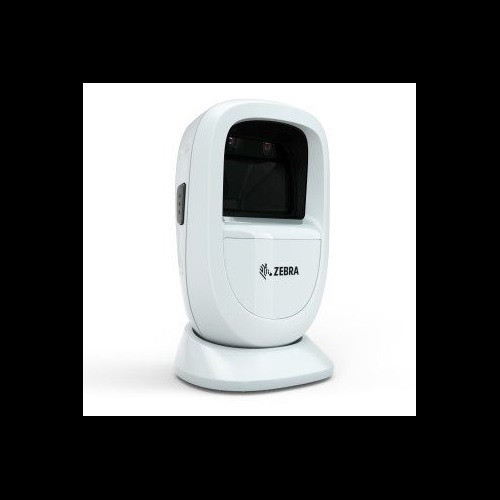
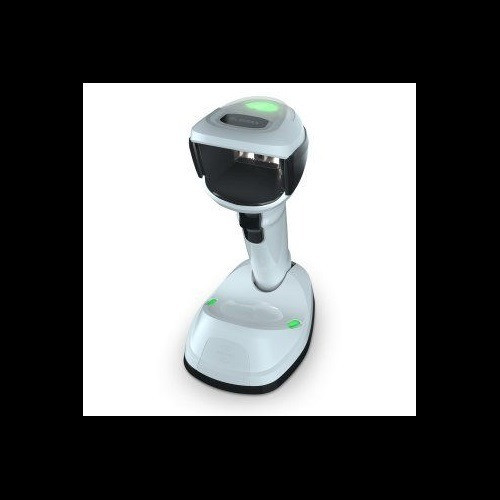
Both the Zebra DS9308 and DS9908 are corded, presentation-style area imager barcode scanners designed for hands-free, countertop scanning environments — the same device class a retail, hospitality, or healthcare buyer would place at a point-of-sale or check-in station. The DS9308 is specified as a Standard Range model in Alpine White; the DS9908 is specified as a High Density model, also in Alpine White, with an optional RFID-capable variant (DS9908R). This comparison evaluates scanning performance, physical and environmental durability, and interface/symbology breadth across both units.
In This Guide
- Which scanner delivers better throughput and broader barcode format support?
- How do the two units compare on physical ruggedness and operating environment ratings?
- Which unit offers broader host interface and platform integration options?
- Which should you choose: the DS9308 or the DS9908?
- Side-by-Side Specs
- FAQ
Which scanner delivers better throughput and broader barcode format support?
Swipe speed is a direct throughput indicator for high-volume presentation scanning. The DS9908 is rated up to 240 in./610 cm per second — double the DS9308's rated maximum of 120 in./305 cm per second. For cashiers processing large volumes of items quickly, this difference is operationally significant.
Both units share the same image sensor resolution (1280 x 800 pixels), identical minimum element width of 3 mil (Code 39), and the same skew, pitch, and roll tolerances (±60°, ±60°, 0°–360°). Field of view is marginally wider on the DS9308 at 52° H x 33° V versus 48° H x 30.6° V on the DS9908.
Symbology support diverges substantially. The DS9308 covers 1D, OCR-A/B/MICR, and Digimarc (on select models), but its spec sheet lists no 2D symbologies. The DS9908 explicitly lists a full 2D suite — PDF417, DataMatrix, QR Code, Aztec, MaxiCode, Han Xin, Micro QR, Postal Codes, and more — plus OCR including US Currency. Buyers who must scan mobile wallet codes, loyalty app barcodes, or pharmaceutical DataMatrix labels should note the DS9908's documented 2D capability; the DS9308 spec does not confirm 2D support.
The DS9908 variant also supports UHF RFID (EPC Class 1 Gen2, EPC Gen2 V2, ISO-18000-63) at 0 to +25 dBm output across regional frequency ranges, a capability entirely absent from the DS9308 spec.
How do the two units compare on physical ruggedness and operating environment ratings?
Both scanners share an IP52 environmental sealing rating (DS9908 base unit only — the DS9908R variant drops to IP42), identical operating temperature range (32°F–122°F / 0°C–50°C), identical storage temperature range (-40°F–158°F / -40°C–70°C), and identical humidity tolerance (5%–95% RH non-condensing).
Drop resistance is equivalent for the base units: both DS9308 and DS9908 are specified to withstand multiple drops at 5.0 ft./1.5 m to concrete. The DS9908R variant is rated to a lower 4.0 ft./1.2 m. Tumble resistance favors the DS9908/DS9908R at 2,000 tumbles versus the DS9308's 1,000 tumbles in the same 0.5 m tumbler — twice the rated tumble endurance.
Ambient light immunity is virtually identical: DS9308 specifies 0–107,700 Lux; DS9908 specifies 0–107,600 Lux. ESD immunity is the same for air discharge (±15 KV) on both; the DS9908 spec explicitly lists ±8 KV Direct in addition to ±8 KV Indirect, while the DS9308 spec lists only ±8 KV Indirect — a minor spec documentation difference.
The DS9908 is a physically larger and heavier unit: 8.0 in. H x 3.7 in. W x 5.2 in. D and 11.6 oz./330 g versus the DS9308's 5.7 in. H x 3.4 in. W x 3.3 in. D and 11.2 oz./318 g. Countertop footprint is therefore meaningfully larger for the DS9908.
Which unit offers broader host interface and platform integration options?
Host interface support is nearly identical. Both units support USB, RS232, Keyboard Wedge, and TGCS (IBM) 46xx over RS485. The DS9908 spec designates its USB as 'USB Certified'; the DS9308 spec does not use that designation. Neither spec lists differences in Ethernet, Bluetooth, or Wi-Fi — both are corded-only designs per the provided specifications.
The DS9308 spec explicitly lists support for over 90 international keyboards, which is not stated in the DS9908 spec. The DS9308 also lists supported graphics formats (Bitmap, JPEG, TIFF) and image quality output (109 PPI on an A6-sized document), neither of which appears in the DS9908 spec — relevant for document imaging or ID-scanning workflows.
Power requirements are identical (4.5–5.5 VDC input). Operating current differs slightly: DS9308 draws 335 mA in presentation mode versus the DS9908's 356 mA typical. Standby current favors the DS9908 significantly — 70 mA typical versus the DS9308's 135 mA in presentation mode — a relevant consideration in always-on retail environments where energy consumption or heat accumulation over many hours matters.
Regulatory compliance is documented for the DS9308 (EN 50581:2012, RoHS, IEC 62368-1, FCC Part 15B); the DS9908 spec does not enumerate regulatory certifications in the provided data. The DS9308 spec also states a 3-year warranty; no warranty term is listed in the DS9908 spec as provided.
Which should you choose: the DS9308 or the DS9908?
Our take: The DS9908 is the stronger choice when throughput, 2D barcode support, or UHF RFID capability are operational requirements. Its swipe speed of 240 in./sec is double the DS9308's 120 in./sec, its documented 2D symbology suite (QR, DataMatrix, PDF417, and others) addresses mobile-wallet and pharmaceutical scanning that the DS9308 spec does not confirm, and the DS9908R variant adds EPC Gen2 UHF RFID — a capability the DS9308 entirely lacks. The DS9908 also offers lower standby current (70 mA vs. 135 mA). Conversely, the DS9308 is the appropriate choice for constrained countertop footprints, document-image capture workflows (Bitmap/JPEG/TIFF output, 109 PPI rated), or deployments requiring documented international keyboard breadth (90+) and explicit regulatory compliance listings. Buyers running high-volume 1D-only retail lanes will find the DS9908's throughput advantage meaningful; those running compact kiosks or document-capture stations may prefer the DS9308's smaller form factor and imaging specs.
Side-by-Side Comparison
Spec-for-spec, from manufacturer data.
| Specification | Zebra DS9308 | Zebra DS9908 |
|---|---|---|
| Scanner Class | Presentation Area Imager, Standard Range | Presentation Area Imager, High Density |
| Form Factor | Corded | Corded |
| Dimensions (H x W x D) | 5.7 x 3.4 x 3.3 in. | 8.0 x 3.7 x 5.2 in. (DS9908); 8.0 x 3.9 x 5.75 in. (DS9908R) |
| Weight | 11.2 oz. / 318 g | 11.6 oz. / 330 g (DS9908); 14.8 oz. / 420 g (DS9908R) |
| Image Sensor Resolution | 1280 x 800 pixels | 1280 x 800 pixels |
| Field of View | 52° H x 33° V nominal | 48° H x 30.6° V nominal |
| Swipe Speed | Up to 120 in./305 cm per second | Up to 240 in./610 cm per second |
| Minimum Element Width | 3 mil (Code 39) | 3 mil (Code 39) |
| 1D Symbologies | Code 39, 128, 93, Codabar, Code 11, MSI Plessey, UPC/EAN, I 2 of 5, Korean 3 of 5, GS1 DataBar, Base 32 | Code 39, 128, 93, Codabar, Code 11, MSI Plessey, UPC/EAN, I 2 of 5, Korean 3 of 5, GS1 DataBar, Base 32 |
| 2D Symbologies | — | PDF417, Micro PDF417, Composite, TLC-39, Aztec, DataMatrix, MaxiCode, QR Code, Micro QR, Han Xin, Postal Codes |
| OCR Support | OCR-A, OCR-B, MICR | OCR-A, OCR-B, MICR, US Currency |
| RFID | — | EPC Class 1 Gen2, EPC Gen2 V2, ISO-18000-63 (DS9908R variant); 0 to +25 dBm; 902-928 MHz (US) |
| Host Interfaces | USB, RS232, Keyboard Wedge, TGCS IBM 46xx RS485 | USB Certified, RS232, Keyboard Wedge, TGCS IBM 46xx RS485 |
| Operating Current | 335 mA (Presentation mode) | 356 mA (typical) |
| Standby Current | 135 mA (Presentation mode) | 70 mA (typical) |
| Environmental Sealing | IP52 | IP52 (DS9908); IP42 (DS9908R) |
| Drop Specification | 5.0 ft./1.5 m to concrete | 5.0 ft./1.5 m (DS9908); 4.0 ft./1.2 m (DS9908R) |
| Tumble Specification | 1,000 tumbles at 0.5 m | 2,000 tumbles at 0.5 m |
| Input Voltage | 4.5 to 5.5 VDC | 4.5 to 5.5 VDC |
| Operating Temperature | 32°F to 122°F / 0°C to 50°C | 32°F to 122°F / 0°C to 50°C |
| Warranty | 3 years | — |
Frequently Asked Questions
Which should you choose: the DS9308 or the DS9908?
The DS9908 is the stronger choice when throughput, 2D barcode support, or UHF RFID capability are operational requirements. Its swipe speed of 240 in./sec is double the DS9308's 120 in./sec, its documented 2D symbology suite (QR, DataMatrix, PDF417, and others) addresses mobile-wallet and pharmaceutical scanning that the DS9308 spec does not confirm, and the DS9908R variant adds EPC Gen2 UHF RFID — a capability the DS9308 entirely lacks. The DS9908 also offers lower standby current (70 mA vs. 135 mA). Conversely, the DS9308 is the appropriate choice for constrained countertop footprints, document-image capture workflows (Bitmap/JPEG/TIFF output, 109 PPI rated), or deployments requiring documented international keyboard breadth (90+) and explicit regulatory compliance listings. Buyers running high-volume 1D-only retail lanes will find the DS9908's throughput advantage meaningful; those running compact kiosks or document-capture stations may prefer the DS9308's smaller form factor and imaging specs.
Can the DS9908 scan QR codes and 2D barcodes from mobile screens?
Based on the provided specifications, yes — the DS9908 explicitly lists 2D symbologies including QR Code, Micro QR, DataMatrix, PDF417, Aztec, MaxiCode, and Postal Codes. The DS9308 specification as provided does not list any 2D symbologies; buyers who require 2D or mobile-wallet scanning should not assume DS9308 2D capability from the supplied spec data.
Is the DS9908 a direct drop-in replacement for the DS9308 at an existing USB POS station?
Both scanners share the same host interfaces (USB, RS232, Keyboard Wedge, TGCS IBM 46xx over RS485) and the same input voltage range (4.5–5.5 VDC), so the interface connection is compatible. However, the DS9908 has a significantly larger physical footprint (8.0 in. H x 5.2 in. D vs. 5.7 in. H x 3.3 in. D), so countertop space must be verified. Driver or firmware configuration for the expanded symbology set may also require attention.
Which scanner is better suited for a high-volume checkout lane processing hundreds of items per hour?
The DS9908 is better specified for high-volume throughput. Its swipe speed rating of 240 in./610 cm per second is double the DS9308's rated 120 in./305 cm per second, and it is rated for 2,000 tumbles versus the DS9308's 1,000 — indicating a more robust design for sustained heavy use. Its lower standby current (70 mA vs. 135 mA) is also advantageous in always-on lane environments.
More Barcode Scanner Comparisons
- Zebra DS9308 vs Datalogic M3410-010200-00403
- Zebra DS9308 vs Datalogic M3410-010210-00403
- Zebra DS9308 vs Datalogic M3450-010310-21104
- Zebra DS9308 vs Datalogic M3410-010210-00604
- Zebra DS9308 vs Zebra DS9308
- Datalogic M3410-010200-00403 vs Zebra DS9908
Barcode Scanner Buying Guides
Get a Second Opinion on Your Camera Choice
Share your site layout, coverage goals, and budget. Our team will validate the camera selection, flag anything we would change, and recommend products that match the use case.