
Zebra DS9308 vs Datalogic M3410-010210-00403: Specification Comparison
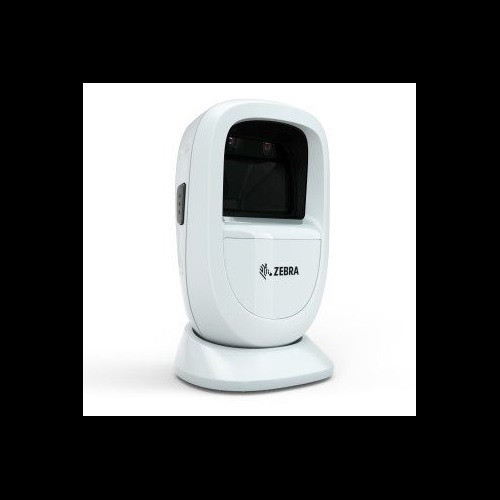
Both the Zebra DS9308 and the Datalogic Magellan 3410VSi (M3410-010210-00403) are presentation-style barcode scanners designed for stationary, hands-free scanning at point-of-sale or service counters. The DS9308 is a horizontal presentation area imager with a broad 1D/2D/OCR feature set, while the M3410VSi is a vertical-format 1D/2D area imager targeting compact counter environments. Buyers evaluating either unit are comparing form factor, symbology coverage, interface flexibility, and environmental durability for retail or light-commercial POS deployments.
In This Guide
- Which scanner covers more symbology types and delivers stronger imaging capability?
- How do the two scanners differ in physical design, connectivity, and host compatibility?
- Which unit is rated for a more demanding physical and operating environment?
- Which should you choose: the DS9308 or the M3410-010210-00403?
- Side-by-Side Specs
- FAQ
Which scanner covers more symbology types and delivers stronger imaging capability?
The Zebra DS9308 provides a substantially broader symbology set. On the 1D side it explicitly lists Code 39, Code 128, Code 93, Codabar/NW7, Code 11, MSI Plessey, UPC/EAN, I 2 of 5, Korean 3 of 5, GS1 DataBar, and Base 32. It also adds OCR-A, OCR-B, and MICR optical character recognition — capabilities absent from the Datalogic specification — and notes Digimarc availability on specific models. The DS9308 sensor resolution is documented at 1280 x 800 pixels with a 52° H x 33° V field of view, a minimum element resolution of 3 mil (Code 39), and swipe speed up to 120 in./305 cm per second. Image output is supported in Bitmap, JPEG, or TIFF at 109 PPI on an A6-sized document.
The Datalogic M3410VSi specifies 2D scan capability and lists QR Code, Data Matrix, and PDF417 as its documented 2D symbologies; 1D symbology coverage is stated only generically ('1D/2D area imager') with no explicit symbol list, sensor resolution, field of view, or swipe-speed figure provided in the supplied specifications. Buyers requiring verified 1D breadth, OCR, or known imaging metrics will find the DS9308 specification more complete.
How do the two scanners differ in physical design, connectivity, and host compatibility?
The DS9308 uses a horizontal presentation form factor measuring 5.7 in. H x 3.4 in. W x 3.3 in. D and weighing 11.2 oz. (318 g). Its interface list is notably wider: USB, RS-232, Keyboard Wedge, and TGCS (IBM) 46xx over RS-485, with support for over 90 international keyboard layouts. The aiming pattern uses a circular 617 nm amber LED and 660 nm Hyper Red illumination.
The Datalogic M3410VSi adopts a vertical presentation form factor — 152 x 137 x 94 mm (6.0 x 5.4 x 3.7 in.) — and weighs approximately 350 g (0.77 lb) per the normalized specification, or 1.3 lb per a secondary field, creating a minor data inconsistency in the supplied specs. Connectivity is limited to USB and RS-232; Keyboard Wedge and RS-485/IBM 46xx are not listed. The vertical footprint is positioned for tight counter spaces. Aiming pattern, illumination wavelength, and keyboard localization data are not specified for the M3410VSi.
Which unit is rated for a more demanding physical and operating environment?
Both scanners carry an IP52 environmental sealing rating, indicating equivalent protection against dust ingress and drip water. The DS9308 operating temperature is documented at 0 °C to 50 °C (32 °F to 122 °F), storage at -40 °C to 70 °C, and humidity at 5% to 95% RH non-condensing. It is specified to withstand multiple drops from 5.0 ft. (1.5 m) to concrete and 1,000 tumbles in a 0.5 m tumbler. Electrostatic discharge immunity is rated at ±15 kV Air and ±8 kV indirect. Ambient light tolerance spans 0 to 107,700 Lux. Regulatory compliance includes EN 50581:2012, RoHS 2011/65/EU, IEC 62368-1, and FCC Part 15B.
The Datalogic M3410VSi shares the IP52 rating but provides no operating or storage temperature range, no humidity rating, no drop or tumble specification, no ESD immunity figure, no ambient light tolerance, and no regulatory compliance list in the supplied specifications. On durability and environmental documentation alone, the DS9308 provides a significantly more complete and verifiable picture.
Which should you choose: the DS9308 or the M3410-010210-00403?
Our take: The DS9308 is the stronger choice when verified symbology breadth, documented imaging metrics, and a fully specified operating envelope are required. Concretely: the DS9308 lists 11 explicit 1D symbologies plus OCR-A/OCR-B/MICR versus the M3410VSi's undisclosed 1D list and three named 2D types; the DS9308 sensor is documented at 1280 x 800 pixels with a 52° x 33° FOV while the M3410VSi provides no sensor or FOV data; and the DS9308 adds Keyboard Wedge and IBM 46xx RS-485 host interfaces absent from the M3410VSi. The M3410VSi's vertical form factor may suit a space-constrained counter where a smaller footprint matters and USB/RS-232-only connectivity is acceptable, but buyers cannot fully evaluate its imaging performance or environmental suitability from the available specification. The DS9308 is better suited to mixed-symbology retail, OCR/check-processing, or legacy-POS environments with IBM 46xx infrastructure.
Side-by-Side Comparison
Spec-for-spec, from manufacturer data.
| Specification | Zebra DS9308 | Datalogic M3410-010210-00403 |
|---|---|---|
| Form Factor | Horizontal Presentation | Vertical Presentation |
| Scan Engine | 2D Area Imager | 2D Area Imager |
| Dimensions | 5.7 in. H x 3.4 in. W x 3.3 in. D | 6.0 x 5.4 x 3.7 in. (152 x 137 x 94 mm) |
| Weight | 11.2 oz. / 318 g | 350 g (0.77 lb) per normalized spec |
| 1D Symbologies | Code 39, 128, 93, Codabar, Code 11, MSI, UPC/EAN, I 2 of 5, Korean 3 of 5, GS1 DataBar, Base 32 | Not individually specified |
| 2D Symbologies | Not listed in provided specs | QR Code, Data Matrix, PDF417 |
| OCR Support | OCR-A, OCR-B, MICR | — |
| Sensor Resolution | 1280 x 800 pixels | — |
| Field of View | 52° H x 33° V | — |
| Swipe Speed | Up to 120 in. / 305 cm per second | — |
| Interfaces | USB, RS-232, Keyboard Wedge, IBM 46xx (RS-485) | USB, RS-232 |
| IP Rating | IP52 | IP52 |
| Operating Temperature | 0 °C to 50 °C (32 °F to 122 °F) | — |
| Drop Specification | 5.0 ft. / 1.5 m to concrete (multiple drops) | — |
| ESD Immunity | ±15 kV Air / ±8 kV indirect | — |
| Warranty | 3 Years | 3-Year Limited Warranty |
Frequently Asked Questions
Which should you choose: the DS9308 or the M3410-010210-00403?
The DS9308 is the stronger choice when verified symbology breadth, documented imaging metrics, and a fully specified operating envelope are required. Concretely: the DS9308 lists 11 explicit 1D symbologies plus OCR-A/OCR-B/MICR versus the M3410VSi's undisclosed 1D list and three named 2D types; the DS9308 sensor is documented at 1280 x 800 pixels with a 52° x 33° FOV while the M3410VSi provides no sensor or FOV data; and the DS9308 adds Keyboard Wedge and IBM 46xx RS-485 host interfaces absent from the M3410VSi. The M3410VSi's vertical form factor may suit a space-constrained counter where a smaller footprint matters and USB/RS-232-only connectivity is acceptable, but buyers cannot fully evaluate its imaging performance or environmental suitability from the available specification. The DS9308 is better suited to mixed-symbology retail, OCR/check-processing, or legacy-POS environments with IBM 46xx infrastructure.
Does either scanner support OCR for check or ID document reading?
Yes — the Zebra DS9308 explicitly lists OCR-A, OCR-B, and MICR in its symbology specification, making it suitable for check processing and document scanning use cases. The Datalogic M3410VSi specification does not mention OCR or MICR capability.
Which unit fits a tighter counter space?
The Datalogic M3410VSi is designed specifically for compact footprints in a vertical presentation format at 152 x 137 x 94 mm (6.0 x 5.4 x 3.7 in.). The Zebra DS9308 uses a horizontal presentation layout at 5.7 in. H x 3.4 in. W x 3.3 in. D. Depending on counter orientation, the M3410VSi's vertical design may occupy less horizontal counter real estate.
Can either scanner connect to an older IBM 46xx POS terminal?
Only the Zebra DS9308 lists TGCS (IBM) 46xx over RS-485 as a supported host interface. The Datalogic M3410VSi specification documents USB and RS-232 only; RS-485 or IBM 46xx compatibility is not stated.
More Barcode Scanner Comparisons
- Zebra DS9308 vs Datalogic M3410-010200-00403
- Zebra DS9308 vs Datalogic M3450-010310-21104
- Zebra DS9308 vs Datalogic M3410-010210-00604
- Zebra DS9308 vs Zebra DS9308
- Zebra DS9308 vs Zebra DS9908
- Datalogic M3410-010200-00403 vs Zebra DS9908
Barcode Scanner Buying Guides
Get a Second Opinion on Your Camera Choice
Share your site layout, coverage goals, and budget. Our team will validate the camera selection, flag anything we would change, and recommend products that match the use case.