
Zebra DS9308-DL00004ZCNA vs Datalogic M3450-010310-21104: Specification Comparison
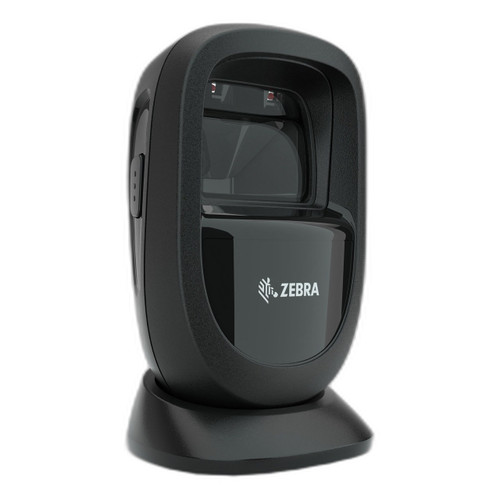
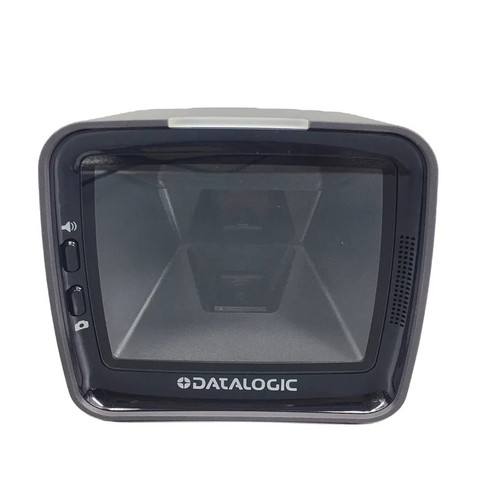
Both the Zebra DS9308-DL00004ZCNA and the Datalogic Magellan 3450VSi (M3450-010310-21104) are wired presentation-class barcode scanners designed for stationary, hands-free operation at point-of-sale and retail checkout counters. Each reads 1D and 2D symbologies via an area imager and connects via USB. The comparison centers on symbology breadth, physical durability and environmental ratings, connectivity options, and physical form factor — the primary decision axes for procurement teams evaluating countertop scanners for checkout or inventory environments.
In This Guide
- Which scanner reads a broader range of barcodes and how do their scan engines compare?
- How do the two scanners compare on drop tolerance, ingress protection, and operating environment?
- What connectivity interfaces and physical characteristics differentiate the two scanners for installation and integration?
- Which should you choose: the DS9308-DL00004ZCNA or the M3450-010310-21104?
- Side-by-Side Specs
- FAQ
Which scanner reads a broader range of barcodes and how do their scan engines compare?
Both scanners operate as 1D/2D area imagers. The Zebra DS9308-DL00004ZCNA is specified as a single-pass scanner supporting Code 128, Code 39, UPC, EAN, QR Code, Data Matrix, and PDF417 — seven distinct symbology families. The Datalogic M3450-010310-21104 is specified with an omnidirectional scan pattern and supports a wider symbology set: Code 128, Code 39, UPC, EAN, GS1 DataBar, QR Code, Data Matrix, PDF417, Aztec, and Maxicode — ten distinct symbology families. The Datalogic adds GS1 DataBar, Aztec, and Maxicode, which are relevant for healthcare, airline boarding, and parcel/logistics barcodes. The Zebra is described as single-pass; the Datalogic is described as omnidirectional, which can reduce presentation angle requirements at a busy checkout lane. Neither datasheet specifies a scan rate (scans-per-second) in the provided specs, so decode speed cannot be compared on a numeric basis.
How do the two scanners compare on drop tolerance, ingress protection, and operating environment?
The Zebra DS9308-DL00004ZCNA carries an IP52 ingress protection rating — dust protection against limited solid particle ingress (level 2 of 6) and protection against vertically dripping water (level 2 of 8) — and has been drop-tested to 1.5 m. Its operating temperature range is 0°C to 50°C (32°F to 122°F) and storage temperature is −40°C to 70°C (−40°F to 158°F). Input voltage is specified as 4.5–5.5 VDC host-powered via USB.
The Datalogic M3450-010310-21104 provides no IP rating, no drop rating, and no operating or storage temperature range in the supplied specifications. Without these values, a direct environmental durability comparison cannot be made. Buyers deploying in environments with dust, humidity, or spill exposure — such as grocery checkout or warehouse receiving — have a quantified durability baseline only for the Zebra.
What connectivity interfaces and physical characteristics differentiate the two scanners for installation and integration?
The Zebra DS9308-DL00004ZCNA connects via wired USB only (host-powered, 4.5–5.5 VDC) and outputs data in a DL parsing format suited for POS and inventory systems. Its form factor is described as a presentation-style countertop scanner. It weighs 11.2 oz (318 g). Mount options listed include wall, recessed, and rack.
The Datalogic M3450-010310-21104 offers both USB and RS-232 interfaces, providing an integration path for legacy POS terminals that lack USB or require serial communication — a meaningful advantage in mixed or older infrastructure. Its physical dimensions are specified at 152 × 137 × 94 mm (6.0 × 5.4 × 3.7 in) and it weighs 1.32 lb (599 g), making it approximately 88% heavier than the Zebra. The Datalogic is described as a vertical presentation design optimized for on-counter placement. Mount options listed include wall only. Warranty is 3-year limited for the Datalogic versus 1-year for the Zebra — a concrete total-cost-of-ownership differentiator.
Which should you choose: the DS9308-DL00004ZCNA or the M3450-010310-21104?
Our take: The M3450-010310-21104 is the stronger choice when symbology breadth, legacy serial connectivity, and a longer warranty are the primary buying criteria; the DS9308-DL00004ZCNA is the stronger choice when environmental durability is a documented requirement. The Datalogic supports ten symbology families versus the Zebra's seven — adding GS1 DataBar, Aztec, and Maxicode — and includes RS-232 alongside USB, which extends compatibility to older POS terminals. Its 3-year limited warranty contrasts with the Zebra's 1-year coverage, reducing lifecycle support cost. The Zebra, however, is the only model with a specified IP52 ingress rating and a documented 1.5 m drop tolerance, and it is substantially lighter at 318 g versus 599 g. For clean retail countertop environments with modern USB POS systems, the Datalogic's wider symbology set and longer warranty favor it. For deployments with dust, moisture, or physical handling risk, the Zebra's rated durability is the deciding factor.
Side-by-Side Comparison
Spec-for-spec, from manufacturer data.
| Specification | Zebra DS9308-DL00004ZCNA | Datalogic M3450-010310-21104 |
|---|---|---|
| Product Type | Presentation Scanner | Vertical Presentation Scanner |
| Series / Family | DS9300 Series | Magellan 3450VSi |
| Scan Engine | 1D/2D Area Imager | 1D/2D Area Imager |
| Scan Pattern | Single-pass | Omnidirectional |
| Symbologies — 1D | Code 128, Code 39, UPC, EAN | Code 128, Code 39, UPC, EAN, GS1 DataBar |
| Symbologies — 2D | QR Code, Data Matrix, PDF417 | QR Code, Data Matrix, PDF417, Aztec, Maxicode |
| Total Symbology Families | 7 | 10 |
| Connectivity | USB (host-powered) | USB, RS-232 |
| Input Voltage | 4.5–5.5 VDC host-powered | — |
| IP Rating | IP52 | — |
| Drop Rating | 1.5 m | — |
| Operating Temperature | 0°C to 50°C (32°F to 122°F) | — |
| Storage Temperature | −40°C to 70°C (−40°F to 158°F) | — |
| Weight | 11.2 oz / 318 g | 1.32 lb / 599 g |
| Dimensions | — | 152 × 137 × 94 mm (6.0 × 5.4 × 3.7 in) |
| Warranty | 1-year | 3-year limited |
Frequently Asked Questions
Which should you choose: the DS9308-DL00004ZCNA or the M3450-010310-21104?
The M3450-010310-21104 is the stronger choice when symbology breadth, legacy serial connectivity, and a longer warranty are the primary buying criteria; the DS9308-DL00004ZCNA is the stronger choice when environmental durability is a documented requirement. The Datalogic supports ten symbology families versus the Zebra's seven — adding GS1 DataBar, Aztec, and Maxicode — and includes RS-232 alongside USB, which extends compatibility to older POS terminals. Its 3-year limited warranty contrasts with the Zebra's 1-year coverage, reducing lifecycle support cost. The Zebra, however, is the only model with a specified IP52 ingress rating and a documented 1.5 m drop tolerance, and it is substantially lighter at 318 g versus 599 g. For clean retail countertop environments with modern USB POS systems, the Datalogic's wider symbology set and longer warranty favor it. For deployments with dust, moisture, or physical handling risk, the Zebra's rated durability is the deciding factor.
Is the DS9308-DL00004ZCNA or M3450-010310-21104 better for a grocery or pharmacy checkout lane that scans GS1 DataBar coupons?
The Datalogic M3450-010310-21104 is the better fit for that use case. Its specified symbology set explicitly includes GS1 DataBar, which is used on produce, variable-weight items, and coupons in grocery and pharmacy environments. The Zebra DS9308-DL00004ZCNA's provided specifications do not list GS1 DataBar support.
Which scanner works with older RS-232 serial POS terminals?
Only the Datalogic M3450-010310-21104 lists RS-232 as a supported interface in its specifications. The Zebra DS9308-DL00004ZCNA is specified as USB-only (host-powered). If your POS system requires a serial connection, the Datalogic is the only option of the two.
Which scanner has better protection against spills and dust in a warehouse or food-service environment?
The Zebra DS9308-DL00004ZCNA is the only model with a documented ingress protection rating (IP52) and a drop-test result (1.5 m) in the provided specifications. The Datalogic M3450-010310-21104 has no IP rating or drop rating listed in its supplied specs, so its suitability for wet or dusty environments cannot be confirmed from available data.
More Barcode Scanner Comparisons
- Zebra DS9308 vs Datalogic M3410-010200-00403
- Zebra DS9308 vs Datalogic M3410-010210-00403
- Zebra DS9308 vs Datalogic M3450-010310-21104
- Zebra DS9308 vs Datalogic M3410-010210-00604
- Zebra DS9308 vs Zebra DS9308
- Zebra DS9308 vs Zebra DS9908
Barcode Scanner Buying Guides
Get a Second Opinion on Your Camera Choice
Share your site layout, coverage goals, and budget. Our team will validate the camera selection, flag anything we would change, and recommend products that match the use case.