
Zebra DS3608-SR vs Zebra DS3608: Specification Comparison
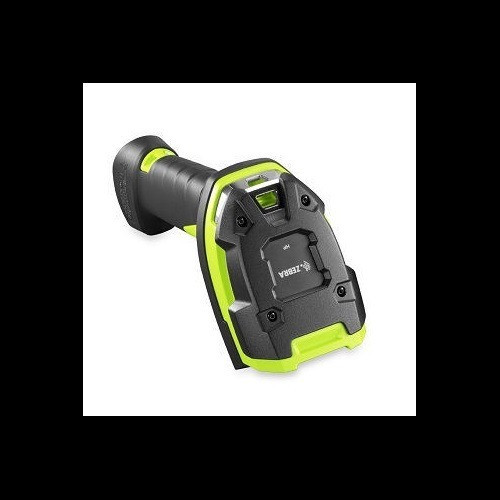
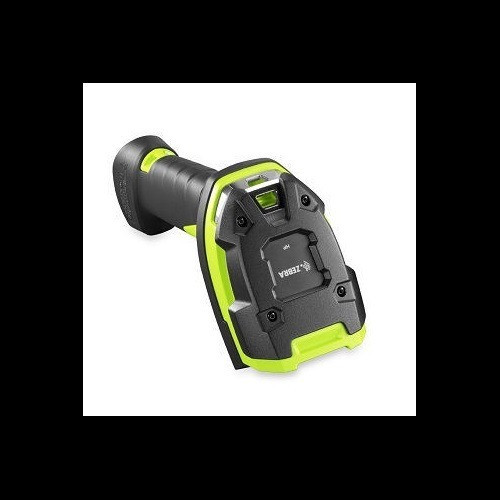
Both products are Zebra DS3608-series corded 2D area-imager industrial barcode scanners sharing the same DS3608-SR/DS3678-SR platform. The DS3608-SR00CC3VTNA is a Standard Range, TAA-compliant variant marketed for government and regulated procurement, while the DS3608-HD20003VZWW is a High Density variant with an added vibration user-indicator and industrial-green colorway. This comparison evaluates scan performance, environmental ruggedness, and interface/compliance differences to help buyers choose the right optical variant for their application.
In This Guide
- How do scan range, density optimization, and symbology support compare between these two variants?
- Are there meaningful differences in drop, seal, temperature, or electrical protection ratings between these two scanners?
- Which variant is better suited for TAA-regulated procurement, and do their interface and regulatory certifications differ?
- Which should you choose: the DS3608-SR or the DS3608?
- Side-by-Side Specs
- FAQ
How do scan range, density optimization, and symbology support compare between these two variants?
Both scanners share the same 1,280 × 800-pixel image sensor, 42° horizontal × 28° vertical field of view, Hyper Red 660 nm LED illumination, and identical decode range tables: Code 128 at 5 mil reads 1.3–6.7 in., at 20 mil reads 2.8–28.0 in., and at 40 mil reads 1.7–60 in.; DataMatrix at 7.5 mil reads 1.9–6.0 in. and at 10.0 mil reads 1.4–8.6 in. Minimum print contrast is 15% on both.
The key optical distinction is in the model designation itself. The DS3608-SR00CC3VTNA is a Standard Range (SR) variant optimized for typical warehouse and retail scan distances. The DS3608-HD20003VZWW is a High Density (HD) variant, designed for reading small, tightly packed barcodes — such as those on PCBs, medical devices, or small parts — at close range. Despite sharing the same decode-range numbers in these provided specs, the HD designation signals a different lens configuration tuned for fine-pitch symbologies.
Both units support an identical 1D symbology set: Code 39, Code 128, Code 93, Codabar/NW7, Code 11, MSI Plessey, UPC/EAN, I 2 of 5, Korean 3 of 5, GS1 DataBar, and Base 32. Neither spec sheet lists 2D symbologies (e.g., QR Code, PDF417, DataMatrix decode capability by name) beyond the DataMatrix decode range figures provided. The DS3608-HD adds an explicit vibration feedback user indicator (direct decode indicator, LEDs, beeper, vibration) per its spec; the DS3608-SR spec does not list user indicators.
Are there meaningful differences in drop, seal, temperature, or electrical protection ratings between these two scanners?
Both units are rated identically for mechanical and environmental ruggedness. Drop resistance is 8.0 ft. (2.4 m) to concrete, multiple impacts. Tumble specification is 5,000 tumbles at 3.3 ft. (1 m). Scanner sealing is IP65 and IP67 on both; cradle sealing is IP65 on both. ESD protection is ±25 kV air discharge, ±10 kV direct discharge, and ±10 kV indirect discharge on both.
Operating temperature ranges are identical: corded operation from -30 °C to 50 °C, cordless from -20 °C to 50 °C, and storage from -40 °C to 70 °C. Humidity tolerance is 5%–95% condensing on both. The DS3608-HD spec presents these figures in dual Fahrenheit/Celsius notation while the DS3608-SR spec uses Celsius only — the actual rated values are the same.
Power characteristics are also identical: host input 4.5–5.5 VDC, external input 11.4–12.6 VDC, operating current 340 mA typical, standby 100 mA typical. Corded weight is 305 g and cordless is 407 g on both. Corded dimensions differ slightly: SR is 18.5 cm H × 7.6 cm W × 13.2 cm D; HD is 7.3 in. H × 3.0 in. W × 5.2 in. D (≈18.5 cm × 7.6 cm × 13.2 cm) — effectively the same chassis.
Which variant is better suited for TAA-regulated procurement, and do their interface and regulatory certifications differ?
The DS3608-SR00CC3VTNA carries explicit TAA (Trade Agreements Act) compliance, making it the required choice for U.S. federal government purchases and contracts subject to FAR/DFARS requirements. The DS3608-HD20003VZWW spec does not list TAA compliance; buyers in regulated federal procurement must use the SR variant.
Host interfaces are identical on both: USB, RS232, and Keyboard Wedge. Bluetooth radio specifications match: Class 1, Version 4.0 LE, serial port and HID profiles, Classic Bluetooth at 3 Mbit/s and Low Energy at 1 Mbit/s. The SR spec explicitly lists cordless Bluetooth range for both Class 1 (up to 300 ft./100 m) and Class 2 (up to 30 ft./10 m); the HD spec lists only Class 1 range (up to 300 ft./100 m) — Class 2 range is not stated in the HD spec.
Regulatory certifications are substantively the same across both — RoHS EN 50581:2012, electrical safety EN/IEC/UL 60950-1, LED safety IEC/EN 62471, EMI/RFI EN 55022/55024/EN 61000 series, medical EN/IEC 60601-1-2, FCC 47 CFR Part 15 Class B, and ICES-003 Class B. The HD spec breaks EMI/RFI into more granular line items with specific amendment versions (e.g., EN 55022:2010/AC:2011, EN 61000-3-3:2013), while the SR spec lists the same standards in grouped form — no substantive certification difference is indicated. Both carry a 3-year warranty.
Which should you choose: the DS3608-SR or the DS3608?
Our take: The DS3608-SR is the stronger choice when TAA-compliant procurement is required or when scan distances beyond close-range fine-pitch applications are the primary use case. Three concrete spec deltas matter: (1) TAA compliance is stated on the SR and absent from the HD spec, making the SR mandatory for U.S. federal contracts; (2) the HD variant adds a vibration user-indicator not listed on the SR, which aids operator feedback in loud environments; (3) the HD designation signals a lens tuned for high-density, close-range symbologies (e.g., small PCB or medical labels), while the SR is optimized for standard warehouse distances — though the provided decode-range tables are identical for both. Ruggedness (IP65/IP67, 8-ft. drop, -30 °C to 50 °C), power, interfaces, and warranty are spec-identical. Choose the SR for government or regulated-industry deployments; choose the HD for manufacturing lines or applications scanning small, dense codes at short range.
Side-by-Side Comparison
Spec-for-spec, from manufacturer data.
| Specification | Zebra DS3608-SR | Zebra DS3608 |
|---|---|---|
| Model Variant | Standard Range (SR) — TAA | High Density (HD) |
| SKU | DS3608-SR00CC3VTNA | DS3608-HD20003VZWW |
| TAA Compliance | Yes (stated in spec) | Not stated in spec |
| Scanner Series | DS3608-SR/DS3678-SR | DS3608-SR/DS3678-SR |
| Image Sensor | 1,280 × 800 pixels | 1,280 × 800 pixels |
| Field of View (H × V) | 42° × 28° | 42° × 28° |
| Illumination | Hyper Red 660 nm LED | Hyper Red 660 nm LED |
| User Indicators | Not listed in spec | Decode indicator; LEDs; beeper; vibration |
| Host Interfaces | USB, RS232, Keyboard Wedge | USB, RS232, Keyboard Wedge |
| Bluetooth Version | Class 1, v4.0 LE | Class 1, v4.0 LE |
| Bluetooth Range (Class 1) | Up to 300 ft. (100 m) | Up to 300 ft. (100 m) |
| Bluetooth Range (Class 2) | Up to 30 ft. (10 m) | Not stated in spec |
| Drop Rating | 8.0 ft. (2.4 m) to concrete, multiple | 8.0 ft. (2.4 m) to concrete, multiple |
| Sealing (Scanner) | IP65 and IP67 | IP65 and IP67 |
| Operating Temp (Corded) | -30 °C to 50 °C | -30 °C to 50 °C |
| Warranty | 3 years | 3 years |
Frequently Asked Questions
Which should you choose: the DS3608-SR or the DS3608?
The DS3608-SR is the stronger choice when TAA-compliant procurement is required or when scan distances beyond close-range fine-pitch applications are the primary use case. Three concrete spec deltas matter: (1) TAA compliance is stated on the SR and absent from the HD spec, making the SR mandatory for U.S. federal contracts; (2) the HD variant adds a vibration user-indicator not listed on the SR, which aids operator feedback in loud environments; (3) the HD designation signals a lens tuned for high-density, close-range symbologies (e.g., small PCB or medical labels), while the SR is optimized for standard warehouse distances — though the provided decode-range tables are identical for both. Ruggedness (IP65/IP67, 8-ft. drop, -30 °C to 50 °C), power, interfaces, and warranty are spec-identical. Choose the SR for government or regulated-industry deployments; choose the HD for manufacturing lines or applications scanning small, dense codes at short range.
Is either scanner required for U.S. federal government purchases?
Yes. The DS3608-SR00CC3VTNA is explicitly listed as TAA compliant in its specifications, which is required for U.S. federal procurement under FAR/DFARS. The DS3608-HD20003VZWW does not list TAA compliance in the provided specs, so it should not be assumed compliant for regulated government contracts without further verification from Zebra.
Can both scanners be used cordlessly, and is battery performance the same?
Yes. Both scanners support cordless operation using the same PowerPrecision+ 3,100 mAh Li-Ion rechargeable battery, rated for 70,000+ scans per full charge. Both share the same cordless weight (407 g), the same Bluetooth Class 1 radio with up to 300 ft. (100 m) range, and the same operating temperature cordless range of -20 °C to 50 °C.
Which scanner is better for reading barcodes on small parts or PCBs?
The DS3608-HD20003VZWW (High Density variant) is the appropriate choice. The HD designation indicates a lens configuration optimized for reading small, tightly-pitched barcodes at close range, typical of electronics manufacturing, medical device labeling, or small-component tracking. The DS3608-SR (Standard Range) is designed for typical scan distances in warehousing and retail. Note that the decode-range tables in the provided specifications are identical for both models; the optical differentiation is reflected in the model variant designation rather than the spec tables as supplied.
More Barcode Scanner Comparisons
- Zebra DS8108 vs Datalogic GBT4600-HC-BTK1-HP
- Zebra DS8108 vs Datalogic GD4590-HCK10-HDR-B
- Zebra DS8108 vs Honeywell 1202G-2USB-5BF-N
- Zebra DS8108 vs Datalogic GBT4500-BK-BTK1DRA
- Zebra DS8108 vs Zebra DS3608
- Zebra DS8108 vs Zebra LI3608
Barcode Scanner Buying Guides
Get a Second Opinion on Your Camera Choice
Share your site layout, coverage goals, and budget. Our team will validate the camera selection, flag anything we would change, and recommend products that match the use case.