
Zebra DS8108 vs Honeywell 1202G-2USB-5BF-N: Specification Comparison
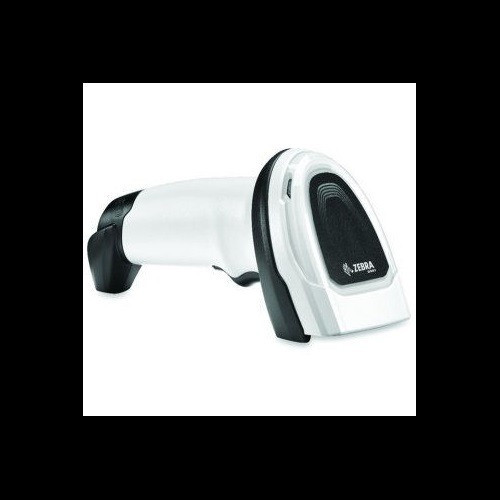
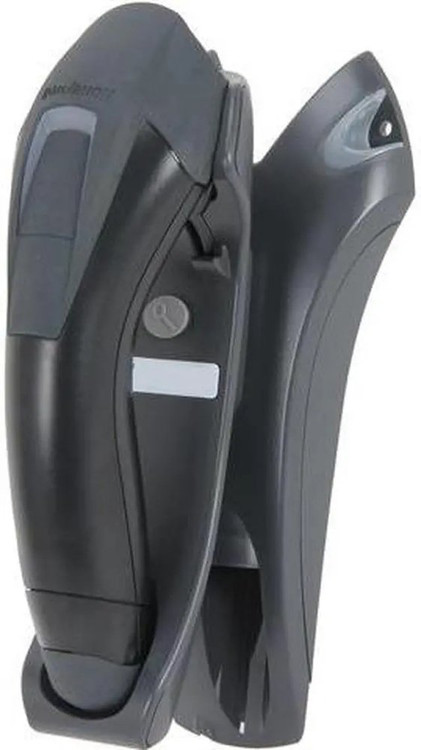
Both the Zebra DS8108 and the Honeywell Xenon XP 1952g (1202G-2USB-5BF-N) are handheld area-imager barcode scanners supporting 1D and 2D symbologies with wireless Bluetooth connectivity, targeting retail, light industrial, and general-purpose scanning environments. This comparison evaluates their durability and environmental ratings, wireless performance and power specifications, and symbology breadth and decode capabilities — the three axes most relevant to buyers choosing between cordless handheld scanners for enterprise or point-of-sale deployments.
In This Guide
- Which scanner is built tougher for demanding scan environments?
- How do the two scanners compare on Bluetooth version, range, battery life, and power draw?
- Which unit offers broader symbology support and more advanced decode features?
- Which should you choose: the DS8108 or the 1202G-2USB-5BF-N?
- Side-by-Side Specs
- FAQ
Which scanner is built tougher for demanding scan environments?
The Honeywell 1202G-2USB-5BF-N carries an IP65 rating, providing full dust ingress protection and protection against low-pressure water jets. It is drop-rated to 2.0 m (6.5 ft) to concrete. The Zebra DS8108 is rated IP42 — partial dust protection and protection against vertically dripping water only — and is drop-rated to 6.0 ft (1.8 m) to concrete. The DS8108 adds a tumble specification of 2,000 tumbles at 1.5 ft (0.5 m), which the Honeywell spec sheet does not provide.
On sealing and ingress protection, the Honeywell 1202G-2USB-5BF-N is meaningfully more rugged: IP65 versus IP42 is a substantial gap in both dust and moisture resistance. Drop height is effectively equivalent — 2.0 m versus 1.8 m — with the Honeywell holding a slight edge. Buyers in wet or dusty environments (warehouses, food distribution, outdoor receiving docks) will find the 1202G-2USB-5BF-N's IP65 seal more appropriate. The DS8108's ESD discharge ratings (+/-15 KV Air, +/-8 KV Direct, +/-8 KV Indirect) are specified explicitly; no equivalent ESD spec is provided for the Honeywell unit.
Operating temperature range is identical for both: 0°C to 50°C (32°F to 122°F). The DS8108 specifies a storage range of -40°C to 70°C; the Honeywell lists -20°C to 60°C, giving the Zebra a wider cold-storage envelope.
How do the two scanners compare on Bluetooth version, range, battery life, and power draw?
The Zebra DS8108 uses Bluetooth 4.0 with BLE (Class 1), with a rated wireless range of 330 ft (100 m) at Class 1. The Honeywell 1202G-2USB-5BF-N uses Bluetooth 4.2 with a rated working range of 2.5 to 50.8 cm (1 to 20 in). Note that the Honeywell's stated 'working range' appears to describe scan decode distance, not Bluetooth radio range — the Bluetooth transmission range for the 1202G-2USB-5BF-N is not specified in the provided data.
Battery performance is fully specified only for the DS8108: 2,500 mAh Li-Ion, 65,000 scans per charge, 83 hours operating time per full charge, and a charge time of 7 hours 45 minutes via USB. No battery capacity, scan-count, or charge-time data is provided for the Honeywell 1202G-2USB-5BF-N.
Input voltage for the DS8108 cordless cradle is 4.7–5.5 VDC (5V) or 10.8–13.2 VDC (12V); corded operating current is 450 mA typical. The Honeywell unit specifies 5V +/- 5% input voltage and a weight of 125 g (4.4 oz). The DS8108 corded weight is 5.4 oz (154 g); cordless is 8.3 oz (235.3 g). The Honeywell is lighter in the hand if used in a configuration comparable to the DS8108 corded mode.
Which unit offers broader symbology support and more advanced decode features?
The Zebra DS8108 provides an extensive, explicitly enumerated 1D symbology list: Code 39, Code 128, Code 93, Codabar/NW7, Code 11, MSI Plessey, UPC/EAN, I 2 of 5, Korean 3 of 5, GS1 DataBar, and Base 32. It also supports Digimarc digital watermark decoding. The DS8108 spec includes driver's license (DL) parsing capability, as indicated in the product name. Image sensor resolution is 1,280 x 960 pixels with a 48° H x 37° V field of view, a minimum element resolution of 3.0 mil (Code 39), and minimum print contrast of 16%. Image output formats (Bitmap, JPEG, TIFF) and image quality of 109 PPI on A4 are also specified.
The Honeywell 1202G-2USB-5BF-N lists symbology support for EAN, UPC, Code 128, Code 39, QR Code, and Data Matrix — a narrower enumerated set. No image sensor resolution, field of view, minimum element size, or image capture capability is provided in the available specifications. No DL parsing or digital watermark feature is noted.
For deployments requiring comprehensive 1D coverage (GS1 DataBar, Codabar, Code 93, I 2 of 5), ID document scanning, or image capture workflows, the DS8108's published spec is substantially more detailed and broader. For standard retail 1D/2D scanning (EAN/UPC/QR/Data Matrix/Code 128), both units cover the core set, though the Honeywell's full symbology list is not exhaustively enumerated in the provided data.
Which should you choose: the DS8108 or the 1202G-2USB-5BF-N?
Our take: The DS8108 is the stronger choice when symbology breadth, DL parsing, image capture, and detailed battery life data are primary requirements; the 1202G-2USB-5BF-N is the stronger choice when ingress protection is the deciding factor. Key spec deltas: the Honeywell's IP65 versus the Zebra's IP42 is a clear durability advantage in wet or dusty environments; the DS8108's 330 ft (100 m) Bluetooth Class 1 range versus the Honeywell's unspecified radio range gives the Zebra a documented wireless reach advantage; and the DS8108's 2,500 mAh battery rated at 65,000 scans per charge has no equivalent published figure for the Honeywell. Buyers deploying in light retail or clean environments with heavy mobile use will benefit from the DS8108's documented battery endurance and extended symbology support. Buyers in warehouses or environments with moisture or dust exposure should weight the Honeywell's IP65 rating heavily, noting that its full battery and radio range specs are not provided in the available data.
Side-by-Side Comparison
Spec-for-spec, from manufacturer data.
| Specification | Zebra DS8108 | Honeywell 1202G-2USB-5BF-N |
|---|---|---|
| Scan Type | Area Imager (1D/2D) | Area Imager (1D/2D) |
| IP Rating | IP42 | IP65 |
| Drop Rating | 6.0 ft (1.8 m) to concrete | 2.0 m (6.5 ft) to concrete |
| Tumble Specification | 2,000 tumbles at 0.5 m | — |
| Bluetooth Version | 4.0 with BLE, Class 1 | 4.2 |
| Bluetooth Range | 330 ft (100 m) Class 1 | Not specified |
| Battery Capacity | 2,500 mAh Li-Ion | — |
| Scans Per Charge | 65,000 | — |
| Operating Time Per Charge | 83 hours | — |
| Weight (cordless/handheld) | 8.3 oz (235.3 g) cordless | 4.4 oz (125 g) |
| Operating Temperature | 0°C to 50°C (32°F to 122°F) | 0°C to 50°C (32°F to 122°F) |
| Storage Temperature | -40°C to 70°C | -20°C to 60°C |
| Image Sensor Resolution | 1,280 x 960 pixels | — |
| Field of View | 48° H x 37° V | — |
| DL Parsing | Yes | — |
| Symbologies (1D) | Code 39, Code 128, Code 93, Codabar/NW7, Code 11, MSI Plessey, UPC/EAN, I 2 of 5, Korean 3 of 5, GS1 DataBar, Base 32 | EAN, UPC, Code 128, Code 39 |
| Symbologies (2D) | Not enumerated in provided specs | QR Code, Data Matrix |
| Host Interfaces | USB, RS232, Keyboard Wedge, TGCS (IBM) 46xx over RS485 | Bluetooth 4.2, USB |
| Warranty | — | 3 years |
Frequently Asked Questions
Which should you choose: the DS8108 or the 1202G-2USB-5BF-N?
The DS8108 is the stronger choice when symbology breadth, DL parsing, image capture, and detailed battery life data are primary requirements; the 1202G-2USB-5BF-N is the stronger choice when ingress protection is the deciding factor. Key spec deltas: the Honeywell's IP65 versus the Zebra's IP42 is a clear durability advantage in wet or dusty environments; the DS8108's 330 ft (100 m) Bluetooth Class 1 range versus the Honeywell's unspecified radio range gives the Zebra a documented wireless reach advantage; and the DS8108's 2,500 mAh battery rated at 65,000 scans per charge has no equivalent published figure for the Honeywell. Buyers deploying in light retail or clean environments with heavy mobile use will benefit from the DS8108's documented battery endurance and extended symbology support. Buyers in warehouses or environments with moisture or dust exposure should weight the Honeywell's IP65 rating heavily, noting that its full battery and radio range specs are not provided in the available data.
Is the DS8108 or the 1202G-2USB-5BF-N better for a wet or dusty warehouse environment?
Based on the provided specifications, the Honeywell 1202G-2USB-5BF-N is better suited to wet or dusty environments. It carries an IP65 rating, which means full dust-tight protection and resistance to low-pressure water jets. The Zebra DS8108 is rated IP42 — partial dust protection only, with no meaningful liquid ingress resistance. If exposure to moisture or airborne particles is a real operational condition, the IP65-rated Honeywell unit is the documented choice.
Which scanner will last longer on a single charge during a full shift?
Only the Zebra DS8108 provides battery endurance data in the supplied specifications: 2,500 mAh Li-Ion, rated at 65,000 scans per charge and 83 hours of operating time per full charge. No battery capacity, scan count per charge, or shift-endurance figure is available for the Honeywell 1202G-2USB-5BF-N. Buyers requiring a documented per-shift battery commitment cannot make a like-for-like comparison on this dimension from the available data.
Can either scanner read driver's licenses or capture document images?
Yes — the Zebra DS8108 is explicitly specified with DL (driver's license) parsing capability and supports image capture in Bitmap, JPEG, and TIFF formats at 109 PPI on an A4 document, with a 1,280 x 960 pixel image sensor. The Honeywell 1202G-2USB-5BF-N's provided specifications do not include any DL parsing capability or image capture format support. For age-verification, ID scanning, or document imaging workflows, the DS8108 is the only unit with those features documented in the supplied data.
More Barcode Scanner Comparisons
- Zebra DS8108 vs Datalogic GBT4600-HC-BTK1-HP
- Zebra DS8108 vs Datalogic GD4590-HCK10-HDR-B
- Zebra DS8108 vs Datalogic GBT4500-BK-BTK1DRA
- Zebra DS8108 vs Zebra DS3608
- Zebra DS8108 vs Zebra LI3608
- Zebra DS3608 vs Datalogic GBT4600-HC-BTK1-HP
Barcode Scanner Buying Guides
Get a Second Opinion on Your Camera Choice
Share your site layout, coverage goals, and budget. Our team will validate the camera selection, flag anything we would change, and recommend products that match the use case.