
Zebra DS8108 vs Zebra DS3608: Specification Comparison
Both the Zebra DS8108 and DS3608 are corded 2D area-imager barcode scanners from Zebra's enterprise portfolio, making them directly cross-shoppable for buyers evaluating a handheld scanner upgrade. The DS8108 targets light-duty retail and office environments with its compact Nova White form factor and DL-parsing capability, while the DS3608 is purpose-built for demanding industrial and warehouse settings with its ruggedized green housing and vibration-alert feedback. This comparison covers durability and sealing, scanning performance and optics, and power and interface compatibility.
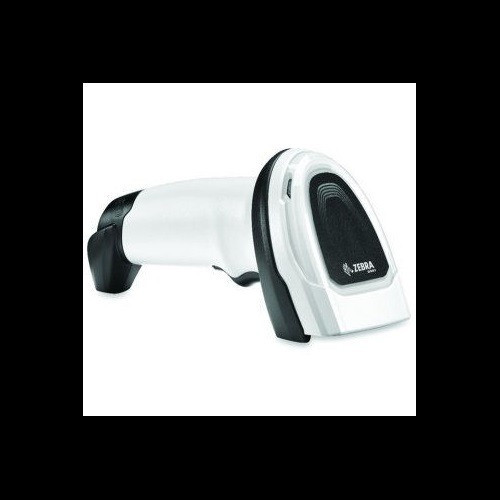
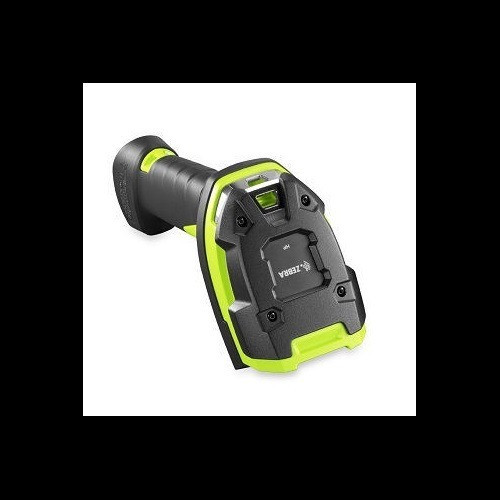
In This Guide
- Which scanner is built to survive harsher physical environments?
- How do the optics, sensor, and decode range compare for scan accuracy and versatility?
- What are the power requirements, battery performance, and host interface options for each scanner?
- Which should you choose: the DS8108 or the DS3608?
- Side-by-Side Specs
- FAQ
Which scanner is built to survive harsher physical environments?
The DS3608 is significantly more ruggedized than the DS8108. The DS3608 withstands multiple 8.0 ft. (2.4 m) drops to concrete and 5,000 tumbles at 3.3 ft. (1 m), and carries IP65 and IP67 sealing ratings on the scanner body plus IP65 on the cradle. Its ESD tolerance is ±25 KV air discharge and ±10 KV direct/indirect discharge. It also carries EN 61000-6-2 heavy industrial EMI/RFI immunity certification and is rated for corded operation down to -22°F (-30°C).
The DS8108, by contrast, is rated for a single 6.0 ft. (1.8 m) drop to concrete and 2,000 tumbles at 1.5 ft. (0.5 m). Its IP sealing is IP42, which offers only basic dust and drip protection — no protection against water jets or immersion. ESD tolerance is ±15 KV air and ±8 KV direct/indirect discharge. Operating temperature for the DS8108 starts at 32°F (0°C), compared to -22°F (-30°C) for the DS3608 corded. Both share the same upper operating limit of 122°F (50°C) and storage range of -40°F to 158°F.
For environments with wash-downs, dust exposure, heavy vibration, extreme cold, or frequent drops — such as warehouses, manufacturing floors, or dock operations — the DS3608's IP65/67 sealing, higher drop rating, greater tumble count, and wider cold-temperature range represent a meaningful hardware advantage over the DS8108's light-duty IP42 profile.
How do the optics, sensor, and decode range compare for scan accuracy and versatility?
The DS8108 uses a 1,280 x 960-pixel image sensor with a 48° horizontal by 37° vertical field of view, a circular 617 nm amber LED aiming pattern, and dual 645 nm red illumination LEDs. Its minimum print contrast is 16% MRD and its minimum element resolution is 3.0 mil on Code 39. It supports graphics format capture (Bitmap, JPEG, TIFF) at 109 PPI on an A4 document and includes Digimarc digital watermark decoding. No decode range distances are specified in the provided specifications.
The DS3608 uses a 1,280 x 800-pixel sensor with a narrower 42° horizontal by 28° vertical field of view — consistent with its High Density designation — and a single hyper red 660 nm LED for illumination. Its minimum print contrast is 15% MRD, slightly lower than the DS8108. Specific decode ranges are documented: Code 128 at 5 mil reads from 1.3–6.7 in., at 20 mil from 2.8–28.0 in., and at 40 mil from 1.7–60 in. Datamatrix at 7.5 mil reads 1.9–6.0 in. and at 10 mil reads 1.4–8.6 in. The DS3608 also provides user vibration feedback on decode, which the DS8108 does not list.
Both scanners share identical 1D symbology decode support across Code 39, Code 128, Code 93, Codabar/NW7, Code 11, MSI Plessey, UPC/EAN, I 2 of 5, Korean 3 of 5, GS1 DataBar, and Base 32. The DS8108 adds Digimarc watermark support and image capture capabilities not listed for the DS3608. The DS3608 provides explicit decode range data and a vibration indicator, neither of which appears in the DS8108 specifications.
What are the power requirements, battery performance, and host interface options for each scanner?
The DS8108 in corded mode draws 450 mA typical at 4.5–5.5 VDC. In cordless mode, its Li-Ion Power Precision+ battery is rated at 2,500 mAh, delivering 65,000 scans or 83 hours per charge, with a 7 hr 45 min USB charge time. The DS8108 supports Bluetooth 4.0 with BLE, Class 1, at up to 330 ft. (100 m) range. It supports FIPS 140-2 security compliance and over 90 international keyboard layouts. Host interfaces include USB, RS232, Keyboard Wedge, and TGCS (IBM) 46xx over RS485.
The DS3608 draws only 340 mA typical operating current (100 mA standby) at 4.5–5.5 VDC host-powered or 11.4–12.6 VDC external. Its PowerPrecision+ battery is rated at 3,100 mAh with 70,000+ scans per charge — a larger capacity than the DS8108's 2,500 mAh and higher scan count. The DS3608's Bluetooth 4.0 (LE) Class 1 radio reaches up to 300 ft. (100 m). Host interfaces are USB, RS232, and Keyboard Wedge — the DS3608 does not list RS485/TGCS IBM 46xx support. No FIPS security compliance or multi-keyboard layout count is specified for the DS3608.
The DS8108's corded operating current is higher (450 mA vs. 340 mA), meaning it draws more power from the host. For cordless deployments, the DS3608 offers a larger battery (3,100 mAh vs. 2,500 mAh) and higher rated scan count (70,000+ vs. 65,000). Buyers requiring IBM 46xx/TGCS RS485 support or FIPS 140-2 compliance should note these are listed only for the DS8108.
Which should you choose: the DS8108 or the DS3608?
Our take: The DS3608 is the stronger choice when the deployment environment demands rugged, all-weather durability and high-density barcode reads in industrial or warehouse settings. Its IP65/IP67 sealing versus the DS8108's IP42 rating represents a fundamental difference in ingress protection suited to wash-down or dusty environments. The DS3608 also survives 8.0 ft. drops versus the DS8108's 6.0 ft., endures 5,000 tumbles versus 2,000, and operates in corded mode down to -22°F versus the DS8108's 32°F floor. Its 3,100 mAh battery outpaces the DS8108's 2,500 mAh for longer shift coverage. Conversely, the DS8108 is the appropriate choice for light-duty retail or office use where DL parsing, image capture (Bitmap/JPEG/TIFF at 109 PPI), Digimarc watermark decoding, IBM 46xx RS485 interface support, FIPS 140-2 security compliance, and a wider 48° x 37° field of view are priorities. Platform or application interface requirements — particularly IBM 46xx and FIPS — should be confirmed before selection.
Side-by-Side Comparison
Spec-for-spec, from manufacturer data.
| Specification | Zebra DS8108 | Zebra DS3608 |
|---|---|---|
| Form Factor / Target Use | Light-duty retail/office | Industrial/warehouse |
| Dimensions (Corded) | 6.6 x 2.6 x 4.2 in. | 7.3 x 3.0 x 5.2 in. |
| Weight (Corded) | 5.4 oz. (154 g) | 10.8 oz. (305 g) |
| IP Sealing | IP42 | IP65 and IP67 (scanner); IP65 (cradle) |
| Drop Rating | 6.0 ft. (1.8 m) to concrete | Multiple 8.0 ft. (2.4 m) to concrete |
| Tumble Specification | 2,000 tumbles at 1.5 ft. (0.5 m) | 5,000 tumbles at 3.3 ft. (1.0 m) |
| Operating Temp (Corded, Low) | 32°F (0°C) | -22°F (-30°C) |
| ESD Air Discharge | ±15 KV | ±25 KV |
| Image Sensor | 1,280 x 960 pixels | 1,280 x 800 pixels |
| Field of View | 48° H x 37° V | 42° H x 28° V |
| Minimum Print Contrast | 16% MRD | 15% MRD |
| Battery Capacity (Cordless) | 2,500 mAh | 3,100 mAh |
| Scans per Charge | 65,000 | 70,000+ |
| Operating Current (Corded) | 450 mA typical | 340 mA typical |
| Host Interfaces | USB, RS232, Keyboard Wedge, RS485 (IBM 46xx) | USB, RS232, Keyboard Wedge |
| FIPS 140-2 Compliance | Yes | — |
| Vibration Decode Indicator | — | Yes |
| Digimarc / Image Capture | Yes (Bitmap, JPEG, TIFF; 109 PPI) | — |
| Warranty | — | 3 years |
Frequently Asked Questions
Which should you choose: the DS8108 or the DS3608?
The DS3608 is the stronger choice when the deployment environment demands rugged, all-weather durability and high-density barcode reads in industrial or warehouse settings. Its IP65/IP67 sealing versus the DS8108's IP42 rating represents a fundamental difference in ingress protection suited to wash-down or dusty environments. The DS3608 also survives 8.0 ft. drops versus the DS8108's 6.0 ft., endures 5,000 tumbles versus 2,000, and operates in corded mode down to -22°F versus the DS8108's 32°F floor. Its 3,100 mAh battery outpaces the DS8108's 2,500 mAh for longer shift coverage. Conversely, the DS8108 is the appropriate choice for light-duty retail or office use where DL parsing, image capture (Bitmap/JPEG/TIFF at 109 PPI), Digimarc watermark decoding, IBM 46xx RS485 interface support, FIPS 140-2 security compliance, and a wider 48° x 37° field of view are priorities. Platform or application interface requirements — particularly IBM 46xx and FIPS — should be confirmed before selection.
Is the DS8108 or DS3608 better for a warehouse or manufacturing floor?
Based on the provided specifications, the DS3608 is designed for industrial environments. It carries IP65 and IP67 sealing (versus IP42 on the DS8108), withstands 8.0 ft. drops to concrete (versus 6.0 ft.), endures 5,000 tumbles at 3.3 ft. (versus 2,000 at 1.5 ft.), and is rated for corded operation down to -22°F (-30°C) versus the DS8108's 32°F (0°C) lower limit. It also holds EN 61000-6-2 heavy industrial EMI/RFI immunity certification, which the DS8108 does not list.
Which scanner has better battery life for all-day cordless use?
The DS3608 specifies a 3,100 mAh PowerPrecision+ Li-Ion battery rated for 70,000+ scans per charge. The DS8108 specifies a 2,500 mAh Li-Ion Power Precision+ battery rated for 65,000 scans or 83 hours per full charge. The DS3608 has the larger battery capacity and higher rated scan count; the DS8108 provides an hours-based runtime figure that the DS3608 specifications do not include.
Does either scanner support IBM point-of-sale or FIPS security requirements?
Yes, but only the DS8108 lists these features in its specifications. The DS8108 supports TGCS (IBM) 46xx over RS485 as a host interface and is listed as compliant with FIPS 140-2. The DS3608 specifications list USB, RS232, and Keyboard Wedge interfaces only, and do not reference FIPS 140-2 compliance.
More Barcode Scanner Comparisons
- Zebra DS8108 vs Datalogic GBT4600-HC-BTK1-HP
- Zebra DS8108 vs Datalogic GD4590-HCK10-HDR-B
- Zebra DS8108 vs Honeywell 1202G-2USB-5BF-N
- Zebra DS8108 vs Datalogic GBT4500-BK-BTK1DRA
- Zebra DS8108 vs Zebra LI3608
- Zebra DS3608 vs Datalogic GBT4600-HC-BTK1-HP
Barcode Scanner Buying Guides
Get a Second Opinion on Your Camera Choice
Share your site layout, coverage goals, and budget. Our team will validate the camera selection, flag anything we would change, and recommend products that match the use case.