
Zebra DS8108 vs Zebra LI3608: Specification Comparison
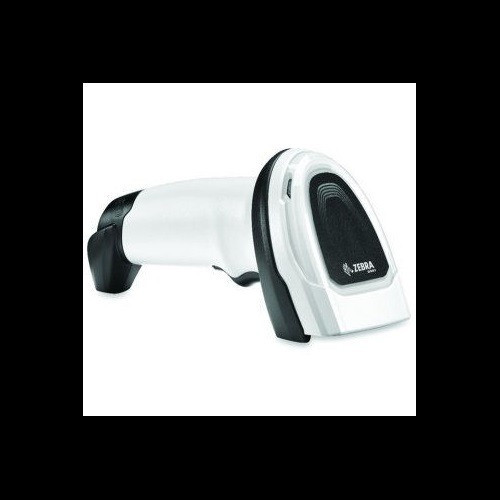
The Zebra DS8108 and LI3608 are both corded handheld barcode scanners targeting enterprise and industrial environments, but they represent fundamentally different scanning technologies: the DS8108 is a 2D area imager capable of reading both 1D and 2D barcodes plus images, while the LI3608 is a 1D linear imager limited to 1D symbologies. A buyer cross-shopping these is typically weighing 2D versatility and DL parsing against ruggedized 1D-only performance, making them a legitimate but technology-differentiated comparison within the scanner category.
In This Guide
- What scanning technology and decode capabilities does each scanner offer?
- Which scanner is built tougher and for what operating environments?
- How do the two scanners compare on battery life, wireless connectivity, and host interface support?
- Which should you choose: the DS8108 or the LI3608?
- Side-by-Side Specs
- FAQ
What scanning technology and decode capabilities does each scanner offer?
The DS8108 uses a 2D area imager with a 1,280 x 960 pixel sensor and a 48° H x 37° V field of view, enabling it to read all common 1D symbologies, 2D codes (implied by 'Area Imager' designation and DL Parsing feature), capture images in Bitmap, JPEG, or TIFF formats at 109 PPI on an A4 document, and decode Digimarc digital watermarks. It also includes driver's license parsing capability as indicated by the 'DL Parsing' model designation. Minimum element resolution is 3.0 mil for Code 39.
The LI3608 uses a 1D linear imager with a 1,500-pixel sensor and a 35° field of view. It decodes only 1D symbologies—Code 39, Code 128, Code 93, Codabar/NW7, Code 11, MSI Plessey, UPC/EAN, I 2 of 5, Korean 3 of 5, GS1 DataBar, and Base 32—identical in 1D coverage to the DS8108. No 2D decode, image capture, DL parsing, or digital watermark capability is listed in the provided specifications. Decode range data is provided: Code 39 at 7.5 mil reaches 1.5–19.0 in., and UPC at 13 mil reaches 1.0–31.0 in.
For applications requiring 2D barcode reading, image capture, or DL/ID document parsing, the DS8108 is the only option of the two. For pure 1D throughput in environments where 2D is never needed, the LI3608's linear engine is purpose-built and its decode range figures are explicitly specified, while the DS8108's range figures are absent from the provided specs.
Which scanner is built tougher and for what operating environments?
The LI3608 is the significantly more ruggedized device across every measured durability dimension. It withstands multiple 8.0 ft. (2.4 m) drops to concrete versus the DS8108's single 6.0 ft. (1.8 m) drop rating. Tumble resistance is 5,000 tumbles at 3.3 ft. (1 m) for the LI3608 compared to 2,000 tumbles at 1.5 ft. (0.5 m) for the DS8108. IP sealing on the LI3608 reaches IP65 and IP67 (scanner body), with the FLB cradle rated IP65; the DS8108 is rated only IP42.
ESD tolerance also favors the LI3608: ±25 KV air discharge and ±10 KV direct/indirect discharge per EN61000-4-2, versus ±15 KV air and ±8 KV direct/indirect for the DS8108. Ambient light immunity is higher on the LI3608 at 0–10,037 foot-candles (108,000 lux) versus 0–9,000 foot-candles (96,840 lux) for the DS8108.
The LI3608 also adds heavy industrial EMI/RFI immunity certification (EN 61000-6-2) and medical electrical equipment compliance (EN 60601-1-2), which are absent from the DS8108's listed certifications. Corded operating temperature for the LI3608 extends to -22° F (-30° C) versus 32° F (0° C) for the DS8108, making the LI3608 suitable for cold storage environments. The LI3608 includes a stated 3-year warranty; no warranty term is provided in the DS8108 specifications.
How do the two scanners compare on battery life, wireless connectivity, and host interface support?
Both scanners share Bluetooth 4.0 Class 1 radios with a stated range of up to 300–330 ft. (100 m). The LI3608 additionally specifies a data rate of 3 Mbit/s (2.1 Mbit/s) for Classic Bluetooth; no data rate is listed for the DS8108. Both support BLE.
Battery capacity favors the LI3608: 3,100 mAh Li-Ion (PowerPrecision+) delivering 70,000+ scans per charge, compared to the DS8108's 2,500 mAh Li-Ion (Power Precision+) delivering 65,000 scans and 83 hours of operating time per charge. Charge time for the DS8108 is 7 hours 45 minutes via USB; no charge time is specified for the LI3608.
On host interfaces, the DS8108 supports USB, RS232, Keyboard Wedge, and TGCS (IBM) 46xx over RS485, plus over 90 international keyboards and FIPS 140-2 security compliance. The LI3608 supports USB, RS232, and Keyboard Wedge but does not list IBM 46xx/RS485 support, keyboard count, or FIPS 140-2 compliance in the provided specifications. The DS8108's FIPS 140-2 certification and broader interface support may be relevant for retail POS, government, or regulated-industry deployments.
Which should you choose: the DS8108 or the LI3608?
Our take: The DS8108 is the stronger choice when the application requires 2D barcode reading, image capture, driver's license parsing, or FIPS 140-2 security compliance, while the LI3608 is the stronger choice when the deployment environment demands maximum physical ruggedness and extended cold-temperature operation. The LI3608's IP65/IP67 sealing vastly outclasses the DS8108's IP42 rating, its 8.0 ft. drop spec exceeds the DS8108's 6.0 ft., and its corded operating floor of -22° F (-30° C) versus the DS8108's 32° F (0° C) qualifies it for freezer and outdoor industrial use. The DS8108 counters with 2D area imaging, DL parsing, IBM 46xx interface support, and FIPS 140-2 compliance absent from the LI3608 spec sheet. Choose the DS8108 for retail, healthcare, or government 2D/ID workflows; choose the LI3608 for warehousing, manufacturing, or cold-chain 1D-only environments where daily abuse and liquid ingress are primary concerns.
Side-by-Side Comparison
Spec-for-spec, from manufacturer data.
| Specification | Zebra DS8108 | Zebra LI3608 |
|---|---|---|
| Scanner Type | 2D Area Imager | 1D Linear Imager |
| 2D Decode Capability | Yes (area imager) | No (linear imager only) |
| DL / ID Parsing | Yes | — |
| Image Sensor | 1,280 x 960 pixels | 1,500 pixels (linear) |
| Field of View | 48° H x 37° V | 35° |
| IP Sealing | IP42 | IP65 and IP67 |
| Drop Specification | 6.0 ft. (1.8 m) to concrete | Multiple 8.0 ft. (2.4 m) to concrete |
| Tumble Specification | 2,000 tumbles @ 1.5 ft. (0.5 m) | 5,000 tumbles @ 3.3 ft. (1.0 m) |
| ESD Air Discharge | ±15 KV | ±25 KV |
| Operating Temp (Corded) | 32° to 122° F (0° to 50° C) | -22° to 122° F (-30° to 50° C) |
| Battery Capacity | 2,500 mAh Li-Ion | 3,100 mAh Li-Ion |
| Scans Per Charge | 65,000 | 70,000+ |
| Bluetooth Version / Class | v4.0 with BLE, Class 1 | v4.0 (LE), Class 1 |
| Bluetooth Range (Class 1) | 330 ft. (100 m) | Up to 300 ft. (100 m) |
| Supported Interfaces | USB, RS232, Keyboard Wedge, IBM 46xx/RS485 | USB, RS232, Keyboard Wedge |
| FIPS 140-2 Compliance | Yes | — |
| Stated Warranty | — | 3 years |
| Ambient Light Immunity | 0–9,000 fc / 96,840 lux | 0–10,037 fc / 108,000 lux |
Frequently Asked Questions
Which should you choose: the DS8108 or the LI3608?
The DS8108 is the stronger choice when the application requires 2D barcode reading, image capture, driver's license parsing, or FIPS 140-2 security compliance, while the LI3608 is the stronger choice when the deployment environment demands maximum physical ruggedness and extended cold-temperature operation. The LI3608's IP65/IP67 sealing vastly outclasses the DS8108's IP42 rating, its 8.0 ft. drop spec exceeds the DS8108's 6.0 ft., and its corded operating floor of -22° F (-30° C) versus the DS8108's 32° F (0° C) qualifies it for freezer and outdoor industrial use. The DS8108 counters with 2D area imaging, DL parsing, IBM 46xx interface support, and FIPS 140-2 compliance absent from the LI3608 spec sheet. Choose the DS8108 for retail, healthcare, or government 2D/ID workflows; choose the LI3608 for warehousing, manufacturing, or cold-chain 1D-only environments where daily abuse and liquid ingress are primary concerns.
Can the LI3608 read QR codes or 2D barcodes like the DS8108?
No. Based on the provided specifications, the LI3608 is a linear imager limited to 1D symbologies. The DS8108 is a 2D area imager and, per its product name and sensor (1,280 x 960 pixels), is capable of reading 2D codes. No 2D decode capability is listed for the LI3608.
Which scanner is better suited for a cold storage or outdoor industrial environment?
The LI3608. Its corded operating temperature starts at -22° F (-30° C) versus the DS8108's 32° F (0° C) lower limit, it is sealed to IP65/IP67 versus the DS8108's IP42, and it carries heavy industrial EMI/RFI immunity certification (EN 61000-6-2) not listed for the DS8108. Both share the same upper operating limit of 122° F (50° C).
Is the DS8108 or LI3608 better for a high-volume retail or pharmacy checkout where driver's license scanning is required?
The DS8108. It explicitly includes DL Parsing capability in its model designation and specification set, supports FIPS 140-2 security compliance, and adds IBM 46xx over RS485 interface support for legacy retail POS systems. None of these features appear in the LI3608's provided specifications.
More Barcode Scanner Comparisons
- Zebra DS8108 vs Datalogic GBT4600-HC-BTK1-HP
- Zebra DS8108 vs Datalogic GD4590-HCK10-HDR-B
- Zebra DS8108 vs Honeywell 1202G-2USB-5BF-N
- Zebra DS8108 vs Datalogic GBT4500-BK-BTK1DRA
- Zebra DS8108 vs Zebra DS3608
- Zebra DS3608 vs Datalogic GBT4600-HC-BTK1-HP
Barcode Scanner Buying Guides
Get a Second Opinion on Your Camera Choice
Share your site layout, coverage goals, and budget. Our team will validate the camera selection, flag anything we would change, and recommend products that match the use case.