
Wasp WRS100SBR vs Wasp WLR8950: Specification Comparison
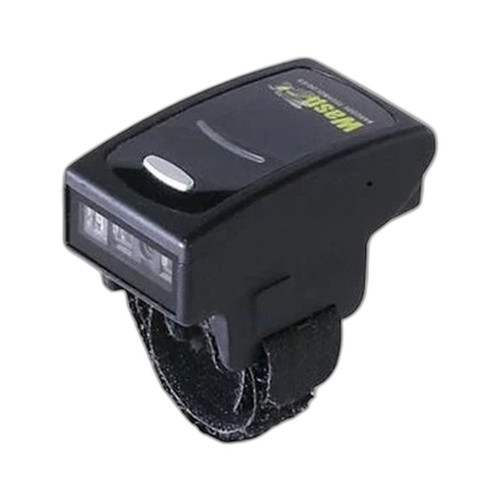
Both products are Wasp-branded barcode scanners targeting warehouse and logistics environments, but they occupy meaningfully different positions: the WRS100SBR is a wearable, wireless ring-mount scanner supporting 1D and 2D symbologies over Bluetooth 4.1 and USB, while the WLR8950 is a corded, hands-on CCD linear scanner connected via USB only. A buyer would cross-shop these when evaluating hands-free mobility versus tethered simplicity for receiving, picking, or point-of-scan workflows at the bench or dock.

In This Guide
- Does the scanner need to be wireless, or is a corded USB connection sufficient?
- Which scanner handles the required barcode types and scan distances for the workflow?
- How do the two scanners compare on durability, power requirements, and environmental protection?
- Which should you choose: the WRS100SBR or the WLR8950?
- Side-by-Side Specs
- FAQ
Does the scanner need to be wireless, or is a corded USB connection sufficient?
The WRS100SBR provides dual connectivity via Bluetooth 4.1 (Class 2) and USB HID/VCP, enabling untethered operation across iOS, Android, and Windows Mobile platforms. Its ring-mount form factor keeps both hands free during pick-and-pack or receiving tasks. Onboard memory of 2 MB stores up to 20,000 barcodes, providing a buffer if the Bluetooth link drops.
The WLR8950 connects exclusively via USB and operates as a plug-and-play HID device, requiring no serial configuration. There is no wireless capability and no onboard memory specified. It suits fixed workstations, shipping desks, or WMS terminals where the operator remains stationary and a cable is not a constraint.
Which scanner handles the required barcode types and scan distances for the workflow?
The WRS100SBR uses a scan engine rated at 400 scans/sec and supports both 1D and 2D symbologies, including UPC-A, UPC-E, EAN-8, EAN-13, and Industrial 2 of 5. Its physical dimensions are 27.6 × 46.2 × 26.8 mm and it weighs 20.5 g (0.72 oz), consistent with a compact ring-mount wearable. No scan range distance is specified in the provided data.
The WLR8950 uses a CCD engine — meaning no moving parts — rated at 230–450 scans/sec and provides an explicit scan range: 80–100 mm at 4 mil resolution (Code 39) and 80–125 mm at 5 mil (Code 39). CCD engines are reliable for linear 1D codes in close-proximity scanning but the provided specs do not confirm 2D capability. Symbology breadth beyond Code 39 is not detailed in the supplied specification data.
How do the two scanners compare on durability, power requirements, and environmental protection?
The WRS100SBR carries an IP42 ingress protection rating (protected against solid objects >1 mm; protected against dripping water), is constructed from PC+ABS material, and is powered by an integrated 3.7 V, 200 mAh Li-Polymer rechargeable battery. These characteristics make it suitable for light-industrial environments with incidental moisture exposure.
The WLR8950 specification data provided does not include an IP rating, housing material, or power source details beyond USB bus power (implied by USB-only connectivity). Buyers requiring rated environmental protection or needing to operate away from a power source cannot confirm those parameters from the available WLR8950 specs and should consult the product datasheet directly.
Which should you choose: the WRS100SBR or the WLR8950?
Our take: The WRS100SBR is the stronger choice when operator mobility, hands-free scanning, and 2D barcode support are required. It delivers Bluetooth 4.1 wireless connectivity absent from the WLR8950, supports both 1D and 2D symbologies versus the WLR8950's confirmed 1D CCD engine, and provides an IP42 environmental rating and a rechargeable battery — neither of which is confirmed in the WLR8950's available specifications. The WLR8950's CCD engine offers a documented scan range of 80–125 mm with no moving parts and a scan rate up to 450 scans/sec, making it a reliable, low-maintenance option for fixed, USB-tethered workstations where only 1D codes are processed. Platform teams standardized on USB HID plug-and-play with no wireless infrastructure will find the WLR8950 simpler to deploy; operations requiring untethered mobility across a warehouse floor or multi-platform mobile support should select the WRS100SBR.
Side-by-Side Comparison
Spec-for-spec, from manufacturer data.
| Specification | Wasp WRS100SBR | Wasp WLR8950 |
|---|---|---|
| Form Factor | Wearable ring mount | Handheld corded |
| Connectivity | Bluetooth 4.1 (Class 2), USB HID, USB VCP | USB only |
| Wireless | Yes — Bluetooth 4.1 | No |
| Scan Engine | Not specified | CCD (no moving parts) |
| Symbologies | 1D and 2D (UPC-A/E, EAN-8/13, I 2of5, and others) | 1D confirmed; 2D not specified |
| Scan Rate | 400 scans/sec | 230–450 scans/sec |
| Scan Range | — | 80–100 mm @ 4 mil; 80–125 mm @ 5 mil (Code 39) |
| Onboard Memory | 2 MB (up to 20,000 barcodes) | — |
| IP Rating | IP42 | — |
| Power Source | 3.7 V, 200 mAh Li-Polymer rechargeable battery | USB bus power (implied; not explicitly stated) |
| Housing Material | PC+ABS | — |
| Weight | 20.5 g (0.72 oz) | — |
| Dimensions | 27.6 × 46.2 × 26.8 mm | — |
| Display | LCD | — |
| Compatible Platforms | iOS, Android, Windows Mobile (via Bluetooth) | USB HID host systems |
| Color | Black | — |
Frequently Asked Questions
Which should you choose: the WRS100SBR or the WLR8950?
The WRS100SBR is the stronger choice when operator mobility, hands-free scanning, and 2D barcode support are required. It delivers Bluetooth 4.1 wireless connectivity absent from the WLR8950, supports both 1D and 2D symbologies versus the WLR8950's confirmed 1D CCD engine, and provides an IP42 environmental rating and a rechargeable battery — neither of which is confirmed in the WLR8950's available specifications. The WLR8950's CCD engine offers a documented scan range of 80–125 mm with no moving parts and a scan rate up to 450 scans/sec, making it a reliable, low-maintenance option for fixed, USB-tethered workstations where only 1D codes are processed. Platform teams standardized on USB HID plug-and-play with no wireless infrastructure will find the WLR8950 simpler to deploy; operations requiring untethered mobility across a warehouse floor or multi-platform mobile support should select the WRS100SBR.
Can either scanner read QR codes or DataMatrix for modern shipping labels?
The WRS100SBR explicitly supports 1D and 2D barcode symbologies, making it capable of reading QR codes, DataMatrix, and similar 2D formats. The WLR8950 uses a CCD engine and the provided specifications confirm only 1D Code 39 scan range data; 2D capability is not stated in the available spec data, so buyers should verify against the full WLR8950 datasheet before assuming 2D support.
Which scanner is better suited for a warehouse where workers move between pick locations?
The WRS100SBR is the appropriate choice for mobile picking environments. Its Bluetooth 4.1 ring-mount design keeps both hands free and eliminates cable tethering, and its 2 MB onboard memory buffer (up to 20,000 barcodes) protects against data loss if wireless coverage is intermittent. The WLR8950 is USB-only with no stated onboard memory, limiting it to fixed scanning stations.
Is the WLR8950 easier to set up and integrate with an existing WMS terminal?
For a fixed USB workstation, the WLR8950's USB plug-and-play HID mode requires no serial configuration and should integrate immediately with most WMS terminals without driver installation. The WRS100SBR also supports USB HID mode but adds Bluetooth pairing steps when used wirelessly. If the deployment is a stationary desk or receiving counter with a USB port, the WLR8950 offers a simpler out-of-box setup.
More Barcode Scanner Comparisons
- Zebra DS8108-SR vs Zebra DS8108-SR
- Zebra DS8108-SR vs Zebra DS8108-HC
- Datalogic 931061345 vs Datalogic 931024111-00053
- Datalogic 931061335 vs Datalogic 931061345
- Datalogic 931061335 vs Datalogic 931024111-00053
- Datalogic 957022201-00053 vs Datalogic 931061345
Barcode Scanner Buying Guides
Get a Second Opinion on Your Camera Choice
Share your site layout, coverage goals, and budget. Our team will validate the camera selection, flag anything we would change, and recommend products that match the use case.