
Vertiv PSI5-3000RT120LI vs Vertiv PSI5-3000SRT120LI: Specification Comparison
Both the PSI5-3000RT120LI and PSI5-3000SRT120LI are Vertiv Liebert PSI5 lithium-ion, line-interactive UPS units rated at 3000VA/2700W for 120V environments. They share the same topology, input/output voltage ranges, battery chemistry, and safety certifications, making them genuine cross-shop candidates for installers selecting a rack/tower UPS for IT closets, network rooms, or edge deployments. The comparison centers on physical form factor, outlet count, and efficiency — the three dimensions that most often drive the final purchase decision in this class.
In This Guide
Which model fits your rack space and depth constraints?
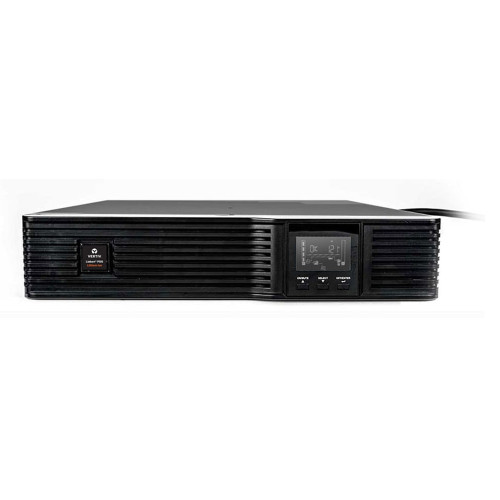
The PSI5-3000RT120LI occupies 2U of rack space (3.38 in tall) and extends 24.8 in deep, making it a standard-depth unit that requires a full-depth rack or cabinet. Its width of 17.24 in is identical to the SRT variant.
The PSI5-3000SRT120LI is a 3U unit at 5.14 in tall but is explicitly designated 'short depth,' measuring only 16.92 in deep — nearly 8 inches shallower than the RT model. This makes it the clear choice for shallow-depth wall-mount enclosures, two-post open frames, or telco-style racks where a 24.8 in chassis simply will not fit.
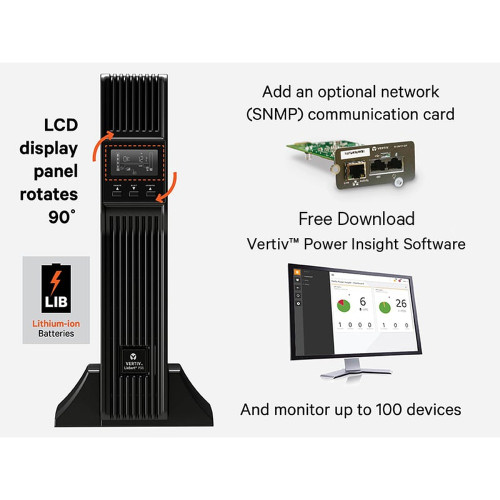
Weight differs modestly: the RT model is 53.6 lbs versus the SRT at 56 lbs. Both ship in rack/tower convertible form with a rotatable LCD display.
Which model delivers more protected outlets and higher efficiency?
Outlet count is a meaningful differentiator. The PSI5-3000RT120LI provides 6 x 5-20R receptacles plus 1 x L5-30R hardwire outlet — seven total protected outlets. The PSI5-3000SRT120LI provides 9 x 5-20R receptacles plus 1 x L5-30R — ten total protected outlets. For deployments with more devices to protect, the SRT variant reduces the need for additional PDUs.
Efficiency at full load differs slightly. The RT model is rated at 0.984 (98.4%) while the SRT model is rated at 0.981 (98.1%). Both figures represent high-efficiency operation consistent with modern lithium-ion line-interactive designs, but the RT edges the SRT by 0.3 percentage points — a marginal difference in real-world energy cost.
Both models output pure sinewave on battery and share identical output voltage options: 120VAC default, user-selectable to 100/110/115/125VAC.
Are management, integration, and serviceability options the same across both models?
Both units offer an identical management interface stack: USB port, EPO (Emergency Power Off) connector, and an optional Liebert IntelliSlot UNITY communications card slot enabling SNMP and web-based management. Neither model ships with the SNMP card standard — it is an optional add-on for both.
Serviceability is identical: both feature front-access hot-swappable battery kits, allowing battery replacement without pulling the unit from the rack — a critical operational requirement for 24/7 installations.
Certifications and compliance listings are identical across both models: UN38.3 (lithium battery transport), UL 1778, c-UL-us Listed, NOM, and FCC Part 15 Class B. No compliance advantage exists for either unit.
Which should you choose: the PSI5-3000RT120LI or the PSI5-3000SRT120LI?
Our take: The PSI5-3000RT120LI is the stronger choice when rack depth is available and peak efficiency is the priority, while the PSI5-3000SRT120LI is the correct selection when physical depth is constrained or outlet count matters. Three concrete spec deltas drive the decision: (1) depth — 24.8 in vs. 16.92 in, nearly an 8-inch difference that is disqualifying in shallow enclosures; (2) protected outlets — 6 x 5-20R on the RT versus 9 x 5-20R on the SRT, giving the SRT three additional NEMA 5-20R receptacles without an add-on PDU; (3) efficiency — 98.4% on the RT versus 98.1% on the SRT, a 0.3-point advantage that is negligible at this wattage. For standard IT rooms with full-depth racks and fewer than seven devices, the RT is a compact 2U solution. For wall-mount or shallow two-post rack environments, or anywhere nine outlets are needed natively, the SRT is the appropriate fit.
Side-by-Side Comparison
Spec-for-spec, from manufacturer data.
| Specification | Vertiv PSI5-3000RT120LI | Vertiv PSI5-3000SRT120LI |
|---|---|---|
| SKU | PSI5-3000RT120LI | PSI5-3000SRT120LI |
| Power Rating | 3000VA / 2700W | 3000VA / 2700W |
| Topology | Line-interactive (AVR) | Line-interactive (AVR) |
| Battery Chemistry | Lithium-ion | Lithium-ion |
| Height | 3.38 in (2U) | 5.14 in (3U) |
| Width | 17.24 in | 17.24 in |
| Depth | 24.8 in | 16.92 in |
| Weight | 53.6 lbs | 56 lbs |
| Efficiency (rated) | 0.984 (98.4%) | 0.981 (98.1%) |
| NEMA 5-20R Outlets | 6 | 9 |
| L5-30R Outlets | 1 | 1 |
| Input Connector | L5-30P | L5-30P |
| Input Voltage Range | 75–146VAC (nominal 120VAC) | 75–146VAC (nominal 120VAC) |
| Output Voltage Options | 120VAC default; 100/110/115/125VAC selectable | 120VAC default; 100/110/115/125VAC selectable |
| Output Waveform | Pure sinewave on battery | Pure sinewave on battery |
| Management Interfaces | USB, EPO, optional IntelliSlot UNITY (SNMP/web) | USB, EPO, optional IntelliSlot UNITY (SNMP/web) |
| Battery Service | Front-access hot-swappable | Front-access hot-swappable |
| Operating Temperature | 32°–104°F (0°–40°C) | 32°–104°F (0°–40°C) |
| Certifications | UN38.3, UL 1778, c-UL-us, NOM, FCC Part 15 Class B | UN38.3, UL 1778, c-UL-us, NOM, FCC Part 15 Class B |
Frequently Asked Questions
Which should you choose: the PSI5-3000RT120LI or the PSI5-3000SRT120LI?
The PSI5-3000RT120LI is the stronger choice when rack depth is available and peak efficiency is the priority, while the PSI5-3000SRT120LI is the correct selection when physical depth is constrained or outlet count matters. Three concrete spec deltas drive the decision: (1) depth — 24.8 in vs. 16.92 in, nearly an 8-inch difference that is disqualifying in shallow enclosures; (2) protected outlets — 6 x 5-20R on the RT versus 9 x 5-20R on the SRT, giving the SRT three additional NEMA 5-20R receptacles without an add-on PDU; (3) efficiency — 98.4% on the RT versus 98.1% on the SRT, a 0.3-point advantage that is negligible at this wattage. For standard IT rooms with full-depth racks and fewer than seven devices, the RT is a compact 2U solution. For wall-mount or shallow two-post rack environments, or anywhere nine outlets are needed natively, the SRT is the appropriate fit.
Can I install either model in a shallow-depth wall-mount rack?
Only the PSI5-3000SRT120LI is designed for shallow-depth installations, with a specified depth of 16.92 in. The PSI5-3000RT120LI requires 24.8 in of depth, which exceeds the usable depth of most wall-mount enclosures and shallow two-post racks. If depth is a constraint, the SRT variant is the only option between these two.
Is the PSI5-3000RT120LI or PSI5-3000SRT120LI better for protecting more devices without a separate PDU?
The PSI5-3000SRT120LI provides 9 x 5-20R outlets versus 6 x 5-20R on the RT model — three additional NEMA 5-20R receptacles. Both also include one L5-30R outlet. If you need to protect nine or more 5-20 devices from a single UPS without adding a separate PDU, the SRT is the better fit based on the published specifications.
Do both models support SNMP monitoring for integration into a network management platform?
Yes, both the PSI5-3000RT120LI and PSI5-3000SRT120LI support SNMP and web-based management, but only when equipped with the optional Liebert IntelliSlot UNITY communications card — which is not included standard with either unit. Both also provide a USB interface as a standard local management option. Neither model has a spec advantage in this area.
More UPS Comparisons
- APC by Schneider Electric SMT3000RMI2U vs Vertiv GXT5-3000LVRT2UXL
- APC by Schneider Electric SMT3000RMI2U vs Panduit U03N11L
- APC by Schneider Electric SMT3000RMI2U vs Panduit U03N12L
- APC by Schneider Electric SMT3000RMI2U vs Panduit U03S12V
- APC by Schneider Electric SMT3000RMI2U vs APC by Schneider Electric SRT3000XLT
- APC by Schneider Electric SMT3000RMI2U vs APC by Schneider Electric SRT3000XLW-IEC
UPS Buying Guides
Get a Second Opinion on Your Camera Choice
Share your site layout, coverage goals, and budget. Our team will validate the camera selection, flag anything we would change, and recommend products that match the use case.