
Vertiv GXT5-6KL630RT5UXLN vs CyberPower OL6KRTHW: Specification Comparison
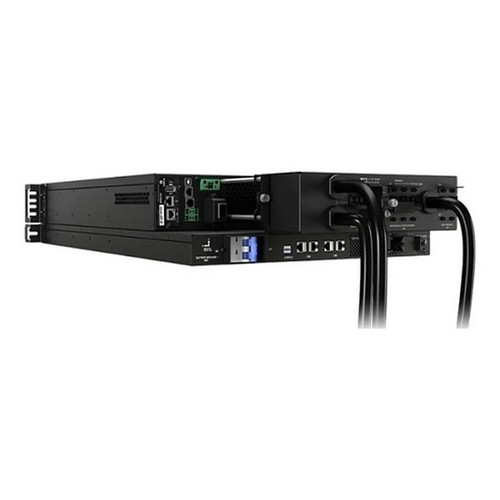
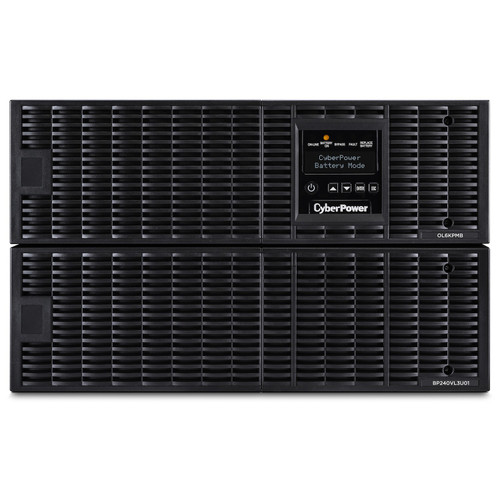
Both the Vertiv GXT5-6KL630RT5UXLN and the CyberPower OL6KRTHW are 6 kVA rack-mount, online double-conversion UPS units aimed at data centers, server rooms, and critical infrastructure deployments. The comparison examines power capacity and efficiency, input/output flexibility and wiring, and management integration — the three axes that most directly determine fit for IT and physical-security installers selecting a runtime-critical power platform at this capacity tier.
In This Guide
- How do the two units compare on actual power delivery and efficiency?
- Which unit offers greater flexibility in input voltage range, output receptacles, and wiring configurations?
- What remote monitoring, protocol support, and management interfaces does each unit provide?
- Which should you choose: the GXT5-6KL630RT5UXLN or the OL6KRTHW?
- Side-by-Side Specs
- FAQ
How do the two units compare on actual power delivery and efficiency?
The Vertiv GXT5-6KL630RT5UXLN is rated 4,900 VA / 4,600 W despite its 6 kVA nameplate marketing, because it carries a power factor of approximately 0.94. The CyberPower OL6KRTHW is rated 6,000 VA / 6,000 W with a true unity power factor (PF = 1.0), meaning every volt-ampere translates directly to a usable watt — a meaningful advantage for modern server and switching hardware that presents near-unity loads.
On efficiency, the Vertiv specifies up to 98% in Active ECO Mode and up to 95% in full online double-conversion mode. The CyberPower spec sheet does not list an efficiency figure. Buyers who need a certified efficiency benchmark — particularly for ENERGY STAR compliance — should note that the Vertiv GXT5 carries ENERGY STAR 2.0 certification; no equivalent listing is cited in the CyberPower specs provided.
Output voltage THD is stated for the CyberPower at ≤5% with a 3:1 crest factor; the Vertiv spec sheet does not publish a THD figure. Noise floor is 65 dB for the CyberPower; the Vertiv does not specify an acoustic rating in the provided data.
Which unit offers greater flexibility in input voltage range, output receptacles, and wiring configurations?
The Vertiv GXT5-6KL630RT5UXLN is purpose-built for North American 208 V branch circuits: it accepts 175–280 VAC on an L6-30P input plug and delivers four output receptacles — two L6-20R and two L6-30R — all on a 200/208/220/230/240 VAC user-configurable output. This makes it well-suited for dedicated 208 V PDU environments in colocation and enterprise server rooms where L6-series locking connectors are standard.
The CyberPower OL6KRTHW presents a wider voltage window on paper: 120–280 VAC input and 120–240 VAC output, with a stated input frequency acceptance of 40–70 Hz. However, the CyberPower spec sheet does not enumerate specific receptacle types or outlet counts for this model, which limits a direct wiring comparison. Installers must confirm connector and outlet details directly with the manufacturer before specifying.
The Vertiv unit's output configurability (five selectable voltage steps) provides flexibility across international equipment mixes on a single UPS, while the CyberPower's broader input voltage floor — reaching down to 120 V — could support mixed-voltage environments or locations where dedicated 208 V feeds are unavailable. Neither unit's spec sheet addresses external battery expansion connector details in a directly comparable way, though Vertiv notes an external battery connector is present.
What remote monitoring, protocol support, and management interfaces does each unit provide?
The Vertiv GXT5-6KL630RT5UXLN ships with a factory pre-installed Vertiv RDU101 SNMP/Webcard, enabling SNMP and web-based management out of the box with no additional card purchase required. It also exposes USB, RS-485, RS-232, a terminal block, and an external battery connector interface. A full-color graphic LCD with gravity-sensing orientation (auto-rotates for rack or tower use) supports local configuration and status monitoring. Out-of-band serial management is explicitly noted.
The CyberPower OL6KRTHW spec sheet does not enumerate management interfaces, network card availability, LCD or display type, or communication protocols in the data provided. Buyers requiring SNMP, web management, or specific serial interfaces must verify those capabilities independently against CyberPower's full datasheet before finalizing a specification.
For deployments where unified power management, DCIM integration, or remote alarming is mandatory — common in physical-security NVR/server closets and colocation environments — the Vertiv's pre-installed SNMP card represents a concrete, documented capability versus an unspecified one for the CyberPower at this stage of comparison.
Which should you choose: the GXT5-6KL630RT5UXLN or the OL6KRTHW?
Our take: The GXT5-6KL630RT5UXLN is the stronger choice when a 208 V locking-connector infrastructure, factory SNMP management, and a certified efficiency benchmark are non-negotiable. Three concrete spec deltas support this: first, the Vertiv ships with a pre-installed RDU101 SNMP/Webcard — the CyberPower provides no equivalent management interface in the specs provided; second, the Vertiv carries ENERGY STAR 2.0 certification at up to 98% ECO-mode efficiency — the CyberPower lists neither; third, the Vertiv's four output receptacles (2× L6-20R, 2× L6-30R) are fully specified, whereas the CyberPower's outlet configuration is absent from its spec sheet. However, the CyberPower's unity power factor (PF = 1.0, 6,000 W true output) outdelivers the Vertiv's 4,600 W on high-density, near-unity loads. The CyberPower's broader input range (120–280 VAC) also suits mixed-voltage sites. Specify the CyberPower only after confirming outlet types, management options, and efficiency ratings directly with the manufacturer.
Side-by-Side Comparison
Spec-for-spec, from manufacturer data.
| Specification | Vertiv GXT5-6KL630RT5UXLN | CyberPower OL6KRTHW |
|---|---|---|
| Topology | Online double-conversion | Online double-conversion |
| Power Rating (VA) | 4,900 VA | 6,000 VA |
| Power Rating (W) | 4,600 W | 6,000 W |
| Output Power Factor | ~0.94 (implied) | 1.0 |
| Input Voltage Range | 175–280 VAC | 120–280 VAC |
| Input Plug | L6-30P | Not specified |
| Output Voltage (configurable) | 200/208/220/230/240 VAC | 120–240 VAC |
| Output Receptacles | 2× L6-20R, 2× L6-30R | Not specified |
| Efficiency (online mode) | Up to 95% | — |
| Efficiency (ECO mode) | Up to 98% | — |
| Output Voltage THD | — | ≤5% |
| Noise Level | — | 65 dB |
| Network Management | Factory SNMP/Webcard (RDU101) included | Not specified |
| Other Interfaces | USB, RS-485, RS-232, terminal block | Not specified |
| Certifications | ENERGY STAR 2.0, UL1778, c-UL, RoHS2, REACH | Not specified |
| Weight | 149.1 lb | — |
Frequently Asked Questions
Which should you choose: the GXT5-6KL630RT5UXLN or the OL6KRTHW?
The GXT5-6KL630RT5UXLN is the stronger choice when a 208 V locking-connector infrastructure, factory SNMP management, and a certified efficiency benchmark are non-negotiable. Three concrete spec deltas support this: first, the Vertiv ships with a pre-installed RDU101 SNMP/Webcard — the CyberPower provides no equivalent management interface in the specs provided; second, the Vertiv carries ENERGY STAR 2.0 certification at up to 98% ECO-mode efficiency — the CyberPower lists neither; third, the Vertiv's four output receptacles (2× L6-20R, 2× L6-30R) are fully specified, whereas the CyberPower's outlet configuration is absent from its spec sheet. However, the CyberPower's unity power factor (PF = 1.0, 6,000 W true output) outdelivers the Vertiv's 4,600 W on high-density, near-unity loads. The CyberPower's broader input range (120–280 VAC) also suits mixed-voltage sites. Specify the CyberPower only after confirming outlet types, management options, and efficiency ratings directly with the manufacturer.
Which UPS actually delivers more usable watts — the GXT5-6KL630RT5UXLN or the OL6KRTHW?
The CyberPower OL6KRTHW delivers more usable watts: its unity power factor (PF = 1.0) means all 6,000 VA equals 6,000 W of real power. The Vertiv GXT5-6KL630RT5UXLN is rated 4,600 W despite its 6 kVA label, due to a power factor of approximately 0.94. For loads that present near-unity power factors — modern servers and switching equipment — the CyberPower provides roughly 30% more usable wattage.
Does either UPS include network management out of the box, or do I need to buy an add-on card?
The Vertiv GXT5-6KL630RT5UXLN includes a factory pre-installed Vertiv RDU101 SNMP/Webcard, so SNMP and web management are available immediately with no additional purchase. The CyberPower OL6KRTHW spec sheet does not specify whether a network management card is included or available as an option — that must be confirmed with CyberPower before purchase.
Is the GXT5-6KL630RT5UXLN or OL6KRTHW better suited for non-208 V or international equipment mixes?
The CyberPower OL6KRTHW has a wider stated input voltage range (120–280 VAC) versus the Vertiv's 175–280 VAC, giving it more flexibility for sites without a dedicated 208 V feed. The Vertiv does offer user-configurable output voltages (200/208/220/230/240 VAC), which supports international equipment on its outputs, but its L6-30P input plug is specific to North American 208 V branch circuits. If the supply side cannot guarantee a 208 V feed, the CyberPower's lower input floor is an advantage — subject to confirming its outlet and management specs.
More UPS Comparisons
- APC by Schneider Electric SYH6K6RMT vs CyberPower OL6KRTHW
- APC by Schneider Electric SYH6K6RMT vs CyberPower OL6KRTHD
- APC by Schneider Electric SYH6K6RMT vs Vertiv GXT5-6000MVRT4UXLN
- APC by Schneider Electric SYH6K6RMT vs Vertiv GXT5-6KL630RT5UXLN
- APC by Schneider Electric SYH6K6RMT vs APC by Schneider Electric SYH6K6RMI
- APC by Schneider Electric SYH6K6RMT vs APC by Schneider Electric SYH6K6RMT-TF3
UPS Buying Guides
Get a Second Opinion on Your Camera Choice
Share your site layout, coverage goals, and budget. Our team will validate the camera selection, flag anything we would change, and recommend products that match the use case.