
Vertiv GXT5-6KL630RT5UXLN vs CyberPower OL6KRTHD: Specification Comparison
Both the Vertiv GXT5-6KL630RT5UXLN and the CyberPower OL6KRTHD are rack-mount, online double-conversion UPS units in the 6 kVA class, targeting data centers, server rooms, and critical infrastructure installations that require true sine-wave output and zero transfer time. The comparison covers power capacity and efficiency, physical and environmental characteristics, and connectivity and management capabilities — the three axes installers and IT buyers weigh when selecting a UPS at this power tier.
In This Guide
- Which unit delivers more usable power and runs more efficiently under load?
- How do the two units compare on physical footprint, weight, and operating environment?
- Which unit offers broader connectivity and remote management options out of the box?
- Which should you choose: the GXT5-6KL630RT5UXLN or the OL6KRTHD?
- Side-by-Side Specs
- FAQ
Which unit delivers more usable power and runs more efficiently under load?
The CyberPower OL6KRTHD is rated at 6,000 VA / 6,000 W with a true unity power factor (PF1), meaning every VA translates directly to a watt of usable load capacity. The Vertiv GXT5-6KL630RT5UXLN is rated at 4,900 VA / 4,600 W despite its 6 KVA nameplate designation — a result of its 0.94 effective power factor. For watt-limited loads (the norm in modern server environments), the CyberPower delivers approximately 30% more real-power headroom (6,000 W vs 4,600 W).
On efficiency, the Vertiv GXT5 specifies up to 98% in Active ECO Mode and up to 95% in on-line double-conversion mode. The CyberPower OL6KRTHD does not provide a published efficiency figure in the supplied specifications. Buyers prioritizing TCO via reduced heat and energy cost have a documented data point only for the Vertiv. The CyberPower does specify output voltage THD ≤5% and a 3:1 crest factor, supporting non-linear loads; Vertiv does not publish equivalent THD or crest factor figures in the provided specs.
Input power factor for the CyberPower is 0.99 (near unity), which reduces stress on upstream circuits. Vertiv does not specify input power factor in the provided data.
How do the two units compare on physical footprint, weight, and operating environment?
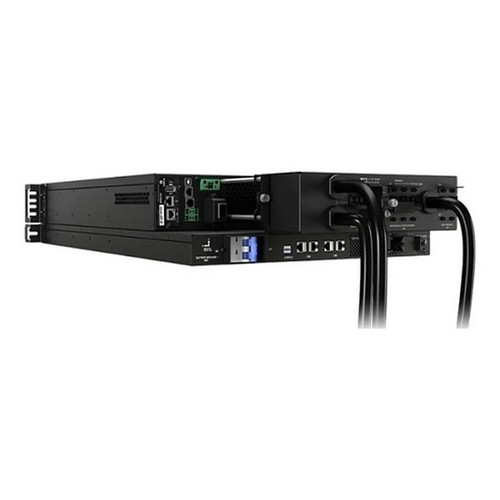
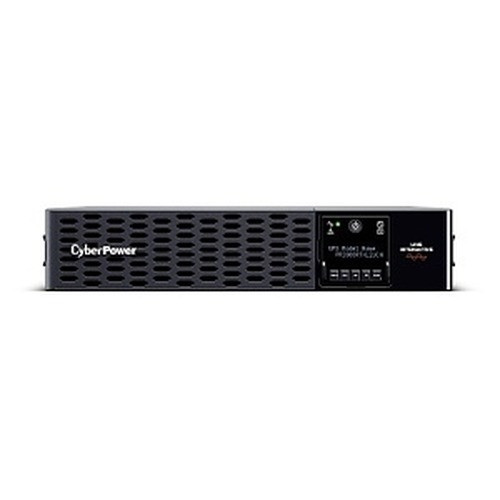
The Vertiv GXT5-6KL630RT5UXLN occupies 5U of rack space (as indicated by the '5U' in the model designation) and measures 8.5 in H × 16.9 in W × 23.6 in D, weighing 149.1 lb. The CyberPower OL6KRTHD is specified as a 2U form factor per its product description. Physical dimensions and weight for the CyberPower are not provided in the supplied specifications.
The Vertiv unit specifies an operating temperature range of +32 to +104 °F (0 to +40 °C). The CyberPower OL6KRTHD does not include an operating temperature range in the provided specifications. For deployments in environments with elevated ambient temperatures — edge locations, IDF closets, or facilities without precision cooling — the Vertiv's documented thermal envelope offers a confirmed boundary; the CyberPower's boundary is unknown from the supplied data.
The CyberPower specifies an audible noise level of 65 dB — a relevant figure for shared spaces or noise-sensitive installations. Vertiv does not publish a noise level in the provided specifications. The CyberPower also confirms EMI/RFI filtering and surge protection as discrete features; Vertiv does not explicitly list these in the provided specs, though they are standard in on-line double-conversion designs.
Which unit offers broader connectivity and remote management options out of the box?
The Vertiv GXT5-6KL630RT5UXLN ships with a factory pre-installed Vertiv RDU101 SNMP/Webcard, enabling SNMP and web-based management without an add-on card purchase. Additional interfaces include USB, RS485, RS232, a terminal block, and an external battery connector. The front panel features a full-color graphic LCD with gravity-sensing orientation, which adjusts display orientation for rack or tower installation.
The CyberPower OL6KRTHD product description references 'Rmcard' (remote management card), suggesting management card capability, but the supplied specifications do not detail which interfaces, protocols, or management software are included in the base unit. No SNMP, web, RS232, or USB interface specs are present in the provided data. Buyers integrating into a monitored infrastructure will need to verify CyberPower's management card model and licensing independently.
The Vertiv unit supports SNMP and web management out of the box and provides serial out-of-band management — directly relevant for NOC integration and automated shutdown clients. The CyberPower's management capabilities cannot be fully assessed from the supplied specifications alone.
Which should you choose: the GXT5-6KL630RT5UXLN or the OL6KRTHD?
Our take: The OL6KRTHD is the stronger choice when maximum real-power output is the primary requirement: its unity power factor (PF1) delivers 6,000 W versus the GXT5-6KL630RT5UXLN's 4,600 W — a 30% difference that matters in dense server deployments where watt-limited loads are the norm. The GXT5-6KL630RT5UXLN leads on three documented dimensions: it specifies up to 98% efficiency in ECO mode and 95% in on-line mode (CyberPower efficiency is not published in the supplied specs), it includes a factory-installed SNMP/Webcard with USB, RS485, and RS232 out of the box (CyberPower management interfaces are unspecified in the supplied data), and it documents a confirmed 0–40 °C operating range (CyberPower's is absent). Choose the CyberPower OL6KRTHD for high-density compute loads where watt capacity drives the decision; choose the Vertiv GXT5-6KL630RT5UXLN for managed infrastructure environments where day-one SNMP integration, documented efficiency, and a confirmed thermal envelope are non-negotiable.
Side-by-Side Comparison
Spec-for-spec, from manufacturer data.
| Specification | Vertiv GXT5-6KL630RT5UXLN | CyberPower OL6KRTHD |
|---|---|---|
| UPS Topology | On-line double conversion | On-line double conversion |
| VA Rating | 4,900 VA | 6,000 VA |
| Watt Rating | 4,600 W | 6,000 W |
| Output Power Factor | 0.94 (derived) | 1.0 (PF1) |
| Input Power Factor | — | 0.99 |
| Input Voltage (nominal) | 208 VAC | Not specified in supplied specs |
| Input Voltage Range | 175–280 VAC | 120–280 V |
| Output Voltage Options | 200/208/220/230/240 VAC (configurable) | 120–240 V |
| Output Frequency | — | 50/60 Hz |
| Efficiency (on-line mode) | Up to 95% | — |
| Efficiency (ECO mode) | Up to 98% | — |
| Output Voltage THD | — | ≤5% |
| Crest Factor | — | 3:1 |
| Form Factor | 5U rack/tower | 2U rack |
| Weight | 149.1 lb | — |
| Dimensions (H × W × D) | 8.5 × 16.9 × 23.6 in | — |
| Operating Temperature | +32 to +104 °F (0 to +40 °C) | — |
| Noise Level | — | 65 dB |
| Input Connector | L6-30P | — |
| Output Receptacles | 2× L6-20R, 2× L6-30R | — |
| Management Interfaces | SNMP/Webcard (factory installed), USB, RS485, RS232, terminal block | Rmcard referenced; interfaces not specified in supplied specs |
| Protocols | SNMP, web, serial out-of-band | — |
| Display | Full-color graphic LCD with gravity-sensing orientation | — |
| Certifications | ENERGY STAR 2.0, UL1778, c-UL, RoHS2, REACH | — |
| Warranty | — | 3 years (per product description) |
| EMI/RFI Filtering | — | Yes |
| Surge Protection | — | Yes |
Frequently Asked Questions
Which should you choose: the GXT5-6KL630RT5UXLN or the OL6KRTHD?
The OL6KRTHD is the stronger choice when maximum real-power output is the primary requirement: its unity power factor (PF1) delivers 6,000 W versus the GXT5-6KL630RT5UXLN's 4,600 W — a 30% difference that matters in dense server deployments where watt-limited loads are the norm. The GXT5-6KL630RT5UXLN leads on three documented dimensions: it specifies up to 98% efficiency in ECO mode and 95% in on-line mode (CyberPower efficiency is not published in the supplied specs), it includes a factory-installed SNMP/Webcard with USB, RS485, and RS232 out of the box (CyberPower management interfaces are unspecified in the supplied data), and it documents a confirmed 0–40 °C operating range (CyberPower's is absent). Choose the CyberPower OL6KRTHD for high-density compute loads where watt capacity drives the decision; choose the Vertiv GXT5-6KL630RT5UXLN for managed infrastructure environments where day-one SNMP integration, documented efficiency, and a confirmed thermal envelope are non-negotiable.
Is the GXT5-6KL630RT5UXLN or OL6KRTHD better for powering modern high-density servers?
For watt-limited modern server loads, the CyberPower OL6KRTHD has a significant advantage: its unity power factor (PF1) means all 6,000 VA translate to 6,000 W of usable power. The Vertiv GXT5-6KL630RT5UXLN is rated at 4,600 W from its 4,900 VA capacity. If your aggregate server wattage exceeds 4,600 W, the Vertiv will be undersized; the CyberPower provides 30% more real-power headroom at the same kVA class.
Which unit is easier to integrate into a monitored data center or NOC environment?
The Vertiv GXT5-6KL630RT5UXLN ships with a factory-installed RDU101 SNMP/Webcard plus USB, RS485, RS232, and a terminal block — ready for network monitoring and automated shutdown clients on day one with no add-on purchases. The CyberPower OL6KRTHD's management interfaces and protocols are not detailed in the supplied specifications, so buyers should verify card model, included software, and licensing with CyberPower before assuming equivalent out-of-box manageability.
Do these two units use the same input and output wiring, and are they interchangeable in an existing rack?
No — the wiring configurations differ. The Vertiv GXT5-6KL630RT5UXLN uses an L6-30P input plug and provides 2× L6-20R and 2× L6-30R output receptacles, designed for 208 V circuits with a typical input of 208 VAC (range 175–280 VAC). The CyberPower OL6KRTHD specifies a wider input voltage window of 120–280 V and an output range of 120–240 V, and the product description references 200–240 V hardwired input; specific input/output connector types are not listed in the supplied specs. Confirm wiring and receptacle compatibility with your existing PDUs and circuits before substituting one for the other.
More UPS Comparisons
- APC by Schneider Electric SYH6K6RMT vs CyberPower OL6KRTHW
- APC by Schneider Electric SYH6K6RMT vs CyberPower OL6KRTHD
- APC by Schneider Electric SYH6K6RMT vs Vertiv GXT5-6000MVRT4UXLN
- APC by Schneider Electric SYH6K6RMT vs Vertiv GXT5-6KL630RT5UXLN
- APC by Schneider Electric SYH6K6RMT vs APC by Schneider Electric SYH6K6RMI
- APC by Schneider Electric SYH6K6RMT vs APC by Schneider Electric SYH6K6RMT-TF3
UPS Buying Guides
Get a Second Opinion on Your Camera Choice
Share your site layout, coverage goals, and budget. Our team will validate the camera selection, flag anything we would change, and recommend products that match the use case.