
Vertiv GXT5-3000LVRT2UXL vs Vertiv PSI5-3000RT120LI: Specification Comparison
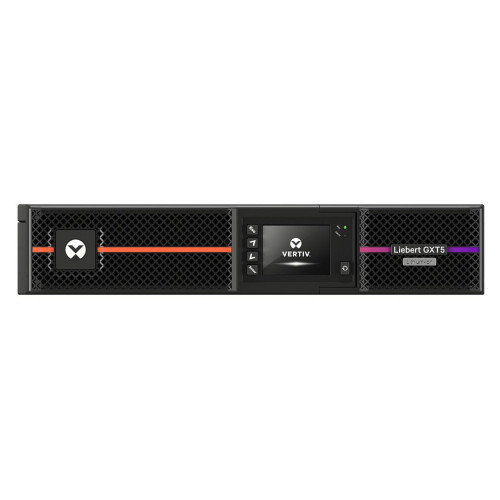
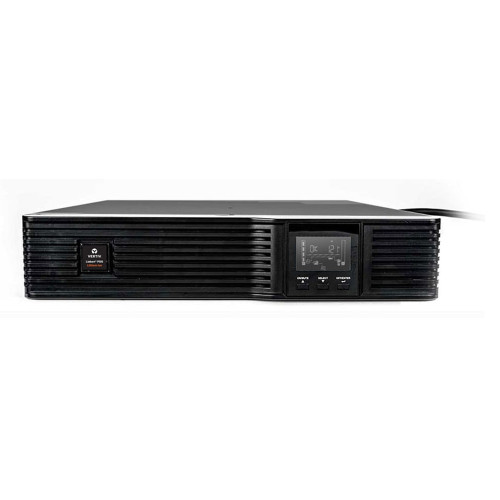
Both units are 3000VA / 2700W rack-convertible UPS systems from Vertiv's Liebert line, sharing identical VA/W ratings, 120V input, L5-30P plugs, and a 7-outlet output strip (1× L5-30R + 6× 5-20R). A buyer choosing between them is weighing fundamentally different protection topologies — online double-conversion (GXT5-3000LVRT2UXL) versus line-interactive with AVR (PSI5-3000RT120LI) — and two different battery chemistries, VRLA versus lithium-ion, at the same power class.
In This Guide
- Which unit delivers stronger power conditioning and how do the two topologies differ in real-world protection?
- How do the battery technologies compare in runtime scalability, weight, and field serviceability?
- Which unit offers broader management integration, and how do the compliance certifications differ?
- Which should you choose: the GXT5-3000LVRT2UXL or the PSI5-3000RT120LI?
- Side-by-Side Specs
- FAQ
Which unit delivers stronger power conditioning and how do the two topologies differ in real-world protection?
The GXT5-3000LVRT2UXL uses online double-conversion topology: load power is continuously regenerated from the inverter, yielding zero transfer time to battery and ±3% output voltage regulation at ±0.1 Hz frequency accuracy in battery mode. This isolates connected equipment from every input anomaly — sags, surges, frequency drift, and brownouts — without any switchover event.
The PSI5-3000RT120LI is line-interactive with automatic voltage regulation. It corrects voltage in-range (75–146V AC input versus the GXT5's 60–150V) without switching to battery, but a genuine power failure requires a transfer event. Output is pure sinewave on battery, matching the GXT5 in waveform quality, but transfer time is not specified in the provided data.
For sensitive network infrastructure, medical-adjacent loads, or any equipment intolerant of micro-interruptions, the GXT5's zero-transfer online architecture is the more conservative specification. The PSI5's line-interactive design suits environments where full double-conversion overhead is unnecessary and runtime efficiency is prioritized.
How do the battery technologies compare in runtime scalability, weight, and field serviceability?
The GXT5-3000LVRT2UXL uses VRLA (valve-regulated lead-acid) batteries described as hot-swappable, with runtime scalable via external battery cabinets (EBCs). Recharge time is specified at approximately 3 hours to 90%. Battery monitoring includes temperature-compensated charging and end-of-life detection. No standalone runtime figure at a specific load is provided in the specs.
The PSI5-3000RT120LI uses lithium-ion chemistry, a key differentiator. Lithium-ion typically offers longer service life, reduced weight, and faster recharge compared to VRLA at equivalent capacity. The PSI5 weighs 53.6 lbs versus the GXT5's 66 lbs — a 12.4 lb (18.8%) reduction, meaningful in dense rack environments. Front-access hot-swappable battery kits are specified. No EBC scalability option is mentioned in the provided specs for the PSI5.
Installers prioritizing long battery service intervals and lower replacement cost of ownership should weigh lithium-ion's lifecycle advantage in the PSI5. Installers needing runtime scalability via bolt-on EBCs should note that only the GXT5 spec explicitly supports external cabinets.
Which unit offers broader management integration, and how do the compliance certifications differ?
The GXT5-3000LVRT2UXL provides USB and RS-232 serial interfaces standard, with an optional Intellislot card slot supporting SNMP, Modbus, and BACnet network protocols. It is compatible with Vertiv Environet and Network UPS Tools (NUT) open-source software. An Emergency Power Off (EPO) input and programmable load-segmented outlet groups with independent control are specified. Certifications include TAA compliance, Energy Star 2.0, UL 1778, and FCC Part 15 Class A.
The PSI5-3000RT120LI provides USB and an EPO connector standard, with an optional Liebert IntelliSlot UNITY card enabling SNMP and web management. The rotatable LCD supports flexible rack or tower orientation. Certifications listed are UN38.3 (lithium battery transport), UL 1778, c-UL-us, NOM (Mexico), FCC Part 15 Class B, and no TAA compliance is stated in the provided specs.
The GXT5 carries TAA compliance and Energy Star 2.0 certification, relevant for U.S. federal procurement and energy-rebate programs. The PSI5 adds UN38.3 (required for lithium-ion shipping compliance) and NOM (Canadian/Mexican market listings). The GXT5's Modbus and BACnet support broadens integration with building management systems beyond standard IT SNMP environments.
Which should you choose: the GXT5-3000LVRT2UXL or the PSI5-3000RT120LI?
Our take: The GXT5-3000LVRT2UXL is the stronger choice when zero transfer time, TAA-mandated procurement, or building-management protocol support (Modbus, BACnet) is required. Its online double-conversion topology versus the PSI5's line-interactive design is the decisive architectural difference for sensitive loads. The GXT5 also supports runtime scalability via external battery cabinets — a spec absent from the PSI5's provided data. Conversely, the PSI5-3000RT120LI's lithium-ion chemistry yields a 12.4 lb weight advantage (53.6 vs. 66 lbs), longer expected battery service life, and an FCC Class B emissions rating (vs. Class A on the GXT5), making it preferable for office-adjacent deployments with strict RF requirements and for operators prioritizing reduced battery replacement overhead. TAA-required buyers must select the GXT5; lithium-ion lifecycle buyers with line-interactive-adequate loads should evaluate the PSI5.
Side-by-Side Comparison
Spec-for-spec, from manufacturer data.
| Specification | Vertiv GXT5-3000LVRT2UXL | Vertiv PSI5-3000RT120LI |
|---|---|---|
| Topology | Online Double-Conversion | Line-Interactive (AVR) |
| Capacity | 3000VA / 2700W | 3000VA / 2700W |
| Power Factor | 0.9 | 0.9 (implied; 2700W ÷ 3000VA) |
| Battery Chemistry | VRLA (lead-acid) | Lithium-Ion |
| Transfer Time | Zero (online) | Not specified |
| Input Voltage Range | 60–150V AC | 75–146V AC |
| Output Voltage Options | 110/115/120/125VAC user-selectable | 100/110/115/120/125VAC user-selectable |
| Output Waveform | Pure Sinewave | Pure Sinewave (on battery) |
| Outlets | 1× L5-30R, 6× 5-20R (7 total) | 1× L5-30R, 6× 5-20R (7 total) |
| Runtime Scalability | Yes — external battery cabinets (EBCs) | Not specified |
| Standard Interfaces | USB, RS-232 Serial, EPO | USB, EPO |
| Network Management | Optional Intellislot (SNMP, Modbus, BACnet) | Optional IntelliSlot UNITY (SNMP, web) |
| Weight | 66 lbs (30 kg) | 53.6 lbs |
| Dimensions (H×W×D in) | 3.4 × 16.9 × 21.3 | 3.38 × 17.24 × 24.8 |
| Certifications | TAA, Energy Star 2.0, UL 1778, FCC Class A | UN38.3, UL 1778, c-UL-us, NOM, FCC Class B |
| Warranty | 3-year advanced replacement | Not specified in provided data |
Frequently Asked Questions
Which should you choose: the GXT5-3000LVRT2UXL or the PSI5-3000RT120LI?
The GXT5-3000LVRT2UXL is the stronger choice when zero transfer time, TAA-mandated procurement, or building-management protocol support (Modbus, BACnet) is required. Its online double-conversion topology versus the PSI5's line-interactive design is the decisive architectural difference for sensitive loads. The GXT5 also supports runtime scalability via external battery cabinets — a spec absent from the PSI5's provided data. Conversely, the PSI5-3000RT120LI's lithium-ion chemistry yields a 12.4 lb weight advantage (53.6 vs. 66 lbs), longer expected battery service life, and an FCC Class B emissions rating (vs. Class A on the GXT5), making it preferable for office-adjacent deployments with strict RF requirements and for operators prioritizing reduced battery replacement overhead. TAA-required buyers must select the GXT5; lithium-ion lifecycle buyers with line-interactive-adequate loads should evaluate the PSI5.
Is the GXT5-3000LVRT2UXL or PSI5-3000RT120LI better for a federal government installation?
The GXT5-3000LVRT2UXL is the only one of the two that specifies TAA compliance, which is typically required for U.S. federal procurement under the Trade Agreements Act. The PSI5-3000RT120LI does not list TAA compliance in its provided specifications, so it cannot be confirmed as eligible for TAA-restricted contracts.
Which UPS will last longer between battery replacements?
The PSI5-3000RT120LI uses lithium-ion batteries, which generally deliver a longer service life than the VRLA (lead-acid) batteries in the GXT5-3000LVRT2UXL — often two to three times longer in comparable deployments. However, the provided specs do not state a rated cycle count or calendar life for either model, so a definitive numerical comparison cannot be made from the data given.
Can I expand runtime beyond the internal batteries on either unit?
The GXT5-3000LVRT2UXL explicitly supports runtime scalability through external battery cabinets (EBCs). The PSI5-3000RT120LI's provided specifications do not mention an external battery cabinet option, so EBC compatibility cannot be confirmed for that model.
More UPS Comparisons
- APC by Schneider Electric SMT3000RMI2U vs Vertiv GXT5-3000LVRT2UXL
- APC by Schneider Electric SMT3000RMI2U vs Panduit U03N11L
- APC by Schneider Electric SMT3000RMI2U vs Panduit U03N12L
- APC by Schneider Electric SMT3000RMI2U vs Panduit U03S12V
- APC by Schneider Electric SMT3000RMI2U vs APC by Schneider Electric SRT3000XLT
- APC by Schneider Electric SMT3000RMI2U vs APC by Schneider Electric SRT3000XLW-IEC
UPS Buying Guides
Get a Second Opinion on Your Camera Choice
Share your site layout, coverage goals, and budget. Our team will validate the camera selection, flag anything we would change, and recommend products that match the use case.