
Unitech SL220-VMU0G0-SG-Z3 vs Unitech MS838-2UCB0S-5G: Specification Comparison
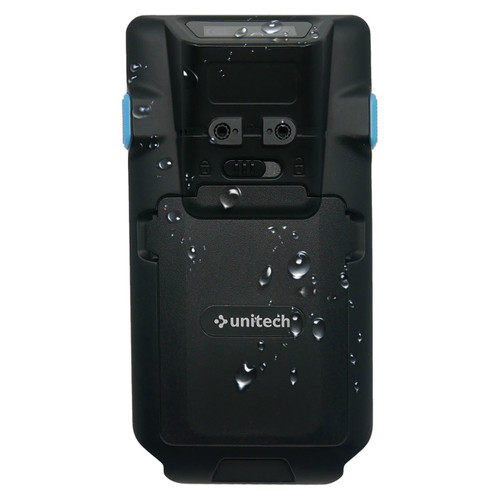
Both the Unitech SL220-VMU0G0-SG-Z3 and the Unitech MS838-2UCB0S-5G are corded 2D barcode scanners in handheld form factors, targeting warehouse, logistics, and retail environments. The SL220 is a compact, lightweight USB-C scanner with an integrated 1150 mAh battery and IP65 sealing. The MS838 is a larger, heavier presentation-capable scanner with a 2D CMOS imager, dual interface (USB and RS-232), a rated 1.5 m drop spec, and IP52 ingress protection. Both decode the same core 1D and 2D symbology families, making them genuine cross-shop candidates for wired 2D scanning deployments.
In This Guide
- Which scanner offers better environmental and drop protection for harsh deployment sites?
- Which scanner delivers broader symbology coverage and faster throughput for mixed-barcode workflows?
- Which scanner better fits the physical, power, and connectivity requirements of the target installation?
- Which should you choose: the SL220-VMU0G0-SG-Z3 or the MS838-2UCB0S-5G?
- Side-by-Side Specs
- FAQ
Which scanner offers better environmental and drop protection for harsh deployment sites?
The SL220-VMU0G0-SG-Z3 carries an IP65 rating, meaning it is fully dust-tight and protected against low-pressure water jets from any direction — a meaningful step above the MS838-2UCB0S-5G's IP52 rating, which covers dust protection against limited ingress and splash water only. For wash-down areas, outdoor receiving docks, or environments with active moisture exposure, the SL220's IP65 designation provides a materially higher level of protection.
Drop survivability favors the MS838-2UCB0S-5G: its spec sheet lists a 1.5 m concrete drop rating. No equivalent drop specification is provided in the SL220-VMU0G0-SG-Z3 data. Buyers who prioritize fall tolerance — common in high-traffic pick-and-pack or retail checkout environments — will find the MS838's documented drop rating a concrete advantage where the SL220 offers no stated equivalent.
Which scanner delivers broader symbology coverage and faster throughput for mixed-barcode workflows?
Both scanners use 2D area imagers and decode the same core groups: QR Code, Micro QR (MS838 only), Data Matrix, Aztec Code, PDF417, Micro PDF417, Code 128, Code 39, UPC-A, UPC-E, EAN-13, EAN-8, Codabar, Interleaved 2 of 5, Code 93, and GS1 DataBar variants. The SL220-VMU0G0-SG-Z3 adds Chinese Sensible (Han Xin), Grid Matrix, and Dot Code to its 2D symbology list — relevant for import/export workflows involving Chinese logistics barcodes. The MS838-2UCB0S-5G adds Micro QR, Code 32, Industrial 2 of 5, and GS1 Databar Limited/Expanded to its 1D/2D list.
The MS838-2UCB0S-5G specifies a scan rate of 60 scans per second and an omnidirectional pattern with ±60° skew, ±60° pitch, and 0–360° roll tolerance. The SL220-VMU0G0-SG-Z3's spec lists omnidirectional scanning but does not specify a numeric scan rate. The MS838 sensor is defined as a 640×480 CMOS imager; the SL220 is described as a 2D area imager without a resolution figure provided.
Which scanner better fits the physical, power, and connectivity requirements of the target installation?
The SL220-VMU0G0-SG-Z3 is substantially smaller and lighter: 125 × 64 × 27 mm at 102 g, with an integrated 1150 mAh battery and a USB-C interface. Its battery enables use in tethered or brief untethered scenarios; the package includes a USB-C adaptor without a power cord. The cradle dimensions are listed as 142 × 96 × 95 mm. The operating system compatibility note (iOS 15 or later) and the two scan-key keypad suggest this scanner is also paired with mobile device workflows.
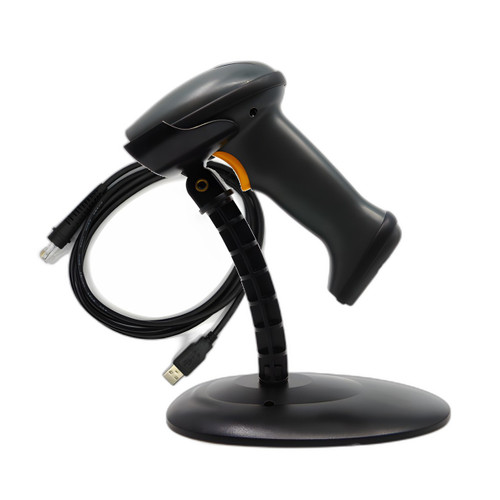
The MS838-2UCB0S-5G is physically larger — 174 × 72 × 96 mm at 245 g — and heavier by 143 g. It supports two wired interfaces, USB and RS-232, making it compatible with legacy POS terminals and industrial controllers that lack USB. No battery is included or specified; it is a purely corded device. An optional hands-free stand is noted in the package contents, supporting fixed-mount presentation-mode deployments. No RS-232 or legacy interface is available on the SL220.
Which should you choose: the SL220-VMU0G0-SG-Z3 or the MS838-2UCB0S-5G?
Our take: The SL220-VMU0G0-SG-Z3 is the stronger choice when the deployment demands high ingress protection, ultra-compact ergonomics, or integration with iOS-based mobile workflows. Its IP65 rating exceeds the MS838's IP52 by a full tier, its 102 g weight and USB-C interface suit prolonged handheld use, and its 1150 mAh battery adds power flexibility the MS838 lacks entirely. The MS838-2UCB0S-5G is the better fit when the site has legacy RS-232 infrastructure, requires a documented 1.5 m concrete drop rating, benefits from a 60 scans/sec rated throughput, or uses fixed-mount presentation scanning via the optional stand — none of which the SL220's spec sheet addresses. Choose the SL220 for wash-down or moisture-exposed environments and mobile-paired operation; choose the MS838 for legacy-interface POS lanes, high-drop-risk countertop deployments, or where a rated scan speed is a procurement requirement.
Side-by-Side Comparison
Spec-for-spec, from manufacturer data.
| Specification | Unitech SL220-VMU0G0-SG-Z3 | Unitech MS838-2UCB0S-5G |
|---|---|---|
| MPN | SL220-VMU0G0-SG-Z3 | MS838-2UCB0S-5G |
| Product Type | 2D Wired Barcode Scanner | 2D Wired Barcode Scanner |
| Scan Engine | 2D Area Imager | 2D CMOS Imager (640×480) |
| Scan Pattern | Omnidirectional | Omnidirectional (±60° skew, ±60° pitch, 0–360° roll) |
| Scan Rate | — | 60 scans/sec |
| IP Rating | IP65 | IP52 |
| Drop Specification | — | 1.5 m onto concrete |
| Interface | USB-C | USB; RS-232 |
| Battery | 1150 mAh (integrated) | — |
| Weight | 102 g | 245 g |
| Dimensions | 125 × 64 × 27 mm | 174 × 72 × 96 mm |
| Form Factor | Handheld | Handheld / Presentation |
| 2D Symbologies | QR, Micro QR, Data Matrix, Aztec, PDF417, MicroPDF417, Han Xin, Grid Matrix, Dot Code, Codablock A/F, MaxiCode | QR, Micro QR, Data Matrix, Aztec, PDF417, Micro PDF417 |
| 1D Symbologies | Code 128, Code 39, UPC-A/E, EAN-13/8, Codabar, Code 11, Code 93, I 2 of 5, Matrix 2 of 5, MSI, GS1 DataBar, IATA | Code 128, Code 39, Code 32, UPC-A/E, EAN-13/8, Codabar, I 2 of 5, Code 93, GS1-128, GS1 Databar variants, Matrix 2 of 5, Code 11, Industrial 2 of 5 |
| Package Includes | Scanner, battery pack, USB-C adaptor (no power cord) | Scanner, interface cable, optional hands-free stand |
| Warranty | 3-year / 5-day ground repair | Manufacturer warranty (term not specified in provided specs) |
Frequently Asked Questions
Which should you choose: the SL220-VMU0G0-SG-Z3 or the MS838-2UCB0S-5G?
The SL220-VMU0G0-SG-Z3 is the stronger choice when the deployment demands high ingress protection, ultra-compact ergonomics, or integration with iOS-based mobile workflows. Its IP65 rating exceeds the MS838's IP52 by a full tier, its 102 g weight and USB-C interface suit prolonged handheld use, and its 1150 mAh battery adds power flexibility the MS838 lacks entirely. The MS838-2UCB0S-5G is the better fit when the site has legacy RS-232 infrastructure, requires a documented 1.5 m concrete drop rating, benefits from a 60 scans/sec rated throughput, or uses fixed-mount presentation scanning via the optional stand — none of which the SL220's spec sheet addresses. Choose the SL220 for wash-down or moisture-exposed environments and mobile-paired operation; choose the MS838 for legacy-interface POS lanes, high-drop-risk countertop deployments, or where a rated scan speed is a procurement requirement.
Is the SL220-VMU0G0-SG-Z3 or MS838-2UCB0S-5G better suited for wet or dusty warehouse environments?
The SL220-VMU0G0-SG-Z3 is better suited: its IP65 rating means it is fully dust-tight and resists water jets from any direction. The MS838-2UCB0S-5G is rated IP52, which covers only limited dust ingress and splash protection — adequate for most dry warehouse floors but not for wash-down or high-moisture zones.
Can either scanner connect to an older RS-232 point-of-sale terminal?
Only the MS838-2UCB0S-5G supports RS-232 in addition to USB. The SL220-VMU0G0-SG-Z3 is USB-C only. If your POS or industrial controller requires an RS-232 serial connection, the MS838 is the only option of the two.
Which scanner is lighter and easier to use for full-shift handheld scanning?
The SL220-VMU0G0-SG-Z3 weighs 102 g versus the MS838-2UCB0S-5G at 245 g — a difference of 143 g. For associates scanning continuously across an eight-hour shift, the SL220's lighter body and smaller 125 × 64 × 27 mm footprint will generally reduce fatigue. The MS838's larger size is more typical of fixed-mount or counter-top presentation scanning.
More Barcode Scanner Comparisons
- Zebra DS8108 vs Datalogic GBT4600-HC-BTK1-HP
- Zebra DS8108 vs Datalogic GD4590-HCK10-HDR-B
- Zebra DS8108 vs Honeywell 1202G-2USB-5BF-N
- Zebra DS8108 vs Datalogic GBT4500-BK-BTK1DRA
- Zebra DS8108 vs Zebra DS3608
- Zebra DS8108 vs Zebra LI3608
Barcode Scanner Buying Guides
Get a Second Opinion on Your Camera Choice
Share your site layout, coverage goals, and budget. Our team will validate the camera selection, flag anything we would change, and recommend products that match the use case.