
Ubiquiti UX7 vs Ubiquiti U7-LR-US: Specification Comparison
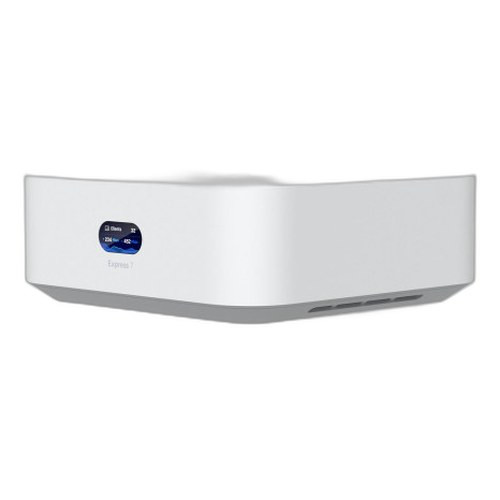
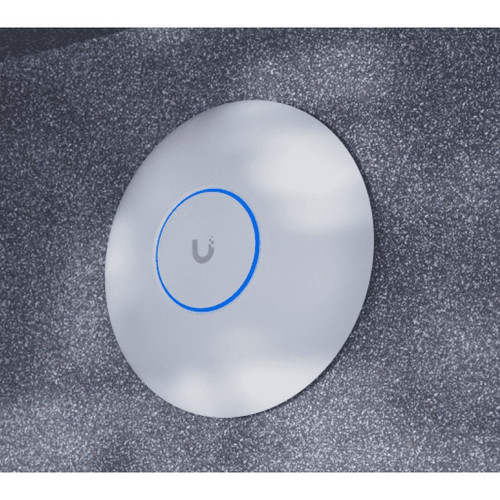
The UX7 and U7-LR-US are both Ubiquiti WiFi 7 (802.11be) wireless devices managed under the UniFi ecosystem, but they occupy different functional roles: the UX7 is a cloud gateway that integrates routing, security inspection, and tri-band WiFi 7 radios into a single desktop unit, while the U7-LR-US is a dedicated ceiling-mount access point powered by PoE. Buyers evaluating these two are typically deciding between an all-in-one gateway-plus-AP solution and a standalone AP that pairs with a separate gateway or controller.
In This Guide
- How do the WAN/LAN connectivity and wireless throughput specs differ between the UX7 and U7-LR-US?
- What are the power requirements, mounting options, and operating environment ratings for each unit?
- How do device management, supported user capacity, and ecosystem compatibility compare?
- Which should you choose: the UX7 or the U7-LR-US?
- Side-by-Side Specs
- FAQ
How do the WAN/LAN connectivity and wireless throughput specs differ between the UX7 and U7-LR-US?
The UX7 provides a 10 GbE WAN port and a 2.5 GbE LAN port, making it a routing device capable of terminating a 10 Gbps fiber uplink. Its IDS/IPS engine is rated at 2.3 Gbps of inline threat-inspection throughput. Its tri-band WiFi 7 radio stack is specified at 5.7 Gbps on 6 GHz, 4.3 Gbps on 5 GHz, and 688 Mbps on 2.4 GHz.
The U7-LR-US is a pure access point with a single 2.5 GbE RJ45 uplink port and no WAN or routing capability. Its wireless spec lists 5 spatial streams across 2.4 GHz and 5 GHz bands; a 6 GHz band and aggregate radio throughput figures are not provided in the available specifications. The U7-LR-US has no IDS/IPS or firewall function.
For sites where WAN termination and inline security inspection are required at a single device, the UX7 is the only option of the two. The U7-LR-US requires a separate gateway upstream and contributes only the RF layer.
What are the power requirements, mounting options, and operating environment ratings for each unit?
The UX7 is powered by USB Type-C (5V DC, 5A, adapter included) and consumes 22W. It is specified for desktop or wall-mount deployment and carries an operating temperature range of -10 to 40°C (14 to 104°F). Its enclosure is polycarbonate and it weighs 422 g (14.9 oz).
The U7-LR-US is powered by PoE 802.3af (42.5–57V DC) and consumes 14W — eliminating the need for a local power outlet. It is designed for ceiling or wall mounting via a plastic mounting plate. Its enclosure combines polycarbonate and aluminum alloy, and it is rated -30 to 50°C (-22 to 122°F), a substantially wider thermal envelope than the UX7. Weight is specified at 3.55 lb.
The U7-LR-US is better suited to unheated spaces, warehouses, and outdoor-adjacent environments given its broader temperature tolerance. The UX7's USB-C power dependency means it must be placed near a power outlet or adapter, while the U7-LR-US draws power directly from the network cable.
How do device management, supported user capacity, and ecosystem compatibility compare?
The UX7 integrates the UniFi Application Suite natively and is specified to support 30+ simultaneous users and up to 300 connected devices. It also includes Bluetooth and supports Application-Aware Layer 7 Firewall functionality. The processor is a quad-core ARM Cortex-A53 at 1.5 GHz.
The U7-LR-US lists Ethernet as its management interface and is compatible with the UniFi ecosystem. Specific concurrent user or device-count figures are not provided in the available specifications. It is NDAA compliant, a compliance status not stated in the UX7 specifications.
Both units share CE, FCC, and IC certifications. The UX7 functions as a self-contained controller and gateway, reducing the infrastructure footprint for small branches. The U7-LR-US is intended to operate under a separate UniFi controller or gateway and is better positioned for scale-out deployments where RF coverage must be distributed across multiple ceiling-mounted APs.
Which should you choose: the UX7 or the U7-LR-US?
Our take: The UX7 is the stronger choice when a site needs a single device to handle 10 GbE WAN termination, IDS/IPS inspection at 2.3 Gbps, and WiFi 7 coverage without a separate gateway. Its tri-band radio stack (5.7/4.3/0.688 Gbps) and support for up to 300 connected devices make it appropriate for high-density branches with a fiber uplink. The U7-LR-US, by contrast, is a dedicated access point rated for a wider temperature range (-30 to 50°C vs. -10 to 40°C), draws only 14W over standard 802.3af PoE, and carries NDAA compliance — a status not confirmed for the UX7. Choose the U7-LR-US when routing and security functions already exist upstream, ceiling-mount PoE deployment is preferred, or NDAA compliance is a procurement requirement. The two units are not substitutes; they are complementary layers in a UniFi stack.
Side-by-Side Comparison
Spec-for-spec, from manufacturer data.
| Specification | Ubiquiti UX7 | Ubiquiti U7-LR-US |
|---|---|---|
| Device Role | Cloud Gateway + WiFi 7 AP | WiFi 7 Access Point (AP only) |
| WiFi Standard | 802.11a/b/g/n/ac/ax/be (WiFi 6/6E/7) | 802.11a/b/g/n/ac/ax/be (WiFi 7) |
| Frequency Bands | 2.4 GHz, 5 GHz, 6 GHz (tri-band) | 2.4 GHz, 5 GHz (dual-band) |
| Spatial Streams | — | 5 |
| Max Wireless Throughput (6 GHz) | 5.7 Gbps | — |
| Max Wireless Throughput (5 GHz) | 4.3 Gbps | — |
| WAN Port | 1x 10 GbE | — |
| LAN / Uplink Port | 1x 2.5 GbE | 1x 2.5 GbE RJ45 |
| IDS/IPS Throughput | 2.3 Gbps | — |
| Power Input | USB-C 5V DC/5A (adapter included) | PoE 802.3af, 42.5–57V DC |
| Power Consumption | 22W | 14W |
| Operating Temperature | -10 to 40°C (14 to 104°F) | -30 to 50°C (-22 to 122°F) |
| Mount Type | Desktop / Wall | Ceiling / Wall |
| Max Connected Devices | 300 | — |
| NDAA Compliant | — | Yes |
| Certifications | CE, FCC, IC | CE, FCC, IC |
Frequently Asked Questions
Which should you choose: the UX7 or the U7-LR-US?
The UX7 is the stronger choice when a site needs a single device to handle 10 GbE WAN termination, IDS/IPS inspection at 2.3 Gbps, and WiFi 7 coverage without a separate gateway. Its tri-band radio stack (5.7/4.3/0.688 Gbps) and support for up to 300 connected devices make it appropriate for high-density branches with a fiber uplink. The U7-LR-US, by contrast, is a dedicated access point rated for a wider temperature range (-30 to 50°C vs. -10 to 40°C), draws only 14W over standard 802.3af PoE, and carries NDAA compliance — a status not confirmed for the UX7. Choose the U7-LR-US when routing and security functions already exist upstream, ceiling-mount PoE deployment is preferred, or NDAA compliance is a procurement requirement. The two units are not substitutes; they are complementary layers in a UniFi stack.
Can the U7-LR-US replace the UX7 as my primary gateway?
No. The U7-LR-US is a pure access point with a single 2.5 GbE PoE uplink and no WAN port, routing engine, or IDS/IPS capability. It requires a separate gateway or router upstream. The UX7 provides a 10 GbE WAN port and 2.3 Gbps IDS/IPS throughput as an integrated gateway.
Which unit is better for a warehouse or outdoor-adjacent installation?
The U7-LR-US is rated -30 to 50°C (-22 to 122°F), which covers unheated or outdoor-adjacent spaces. The UX7 is rated only -10 to 40°C (14 to 104°F) and requires a USB-C power adapter, making it less suitable for harsh thermal environments.
Is either device NDAA compliant?
NDAA compliance is specified for the U7-LR-US. The available specifications for the UX7 do not state NDAA compliance status. Buyers with federal or NDAA-restricted procurement requirements should verify UX7 compliance directly with Ubiquiti before specifying it.
Get a Second Opinion on Your Camera Choice
Share your site layout, coverage goals, and budget. Our team will validate the camera selection, flag anything we would change, and recommend products that match the use case.