
Ubiquiti U7-LR-US vs NETGEAR WBE710-100NAS: Specification Comparison
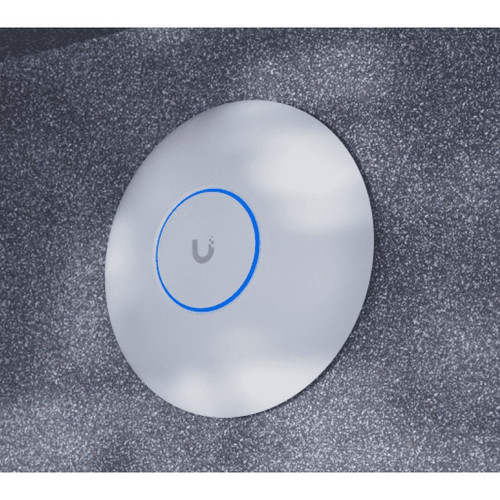
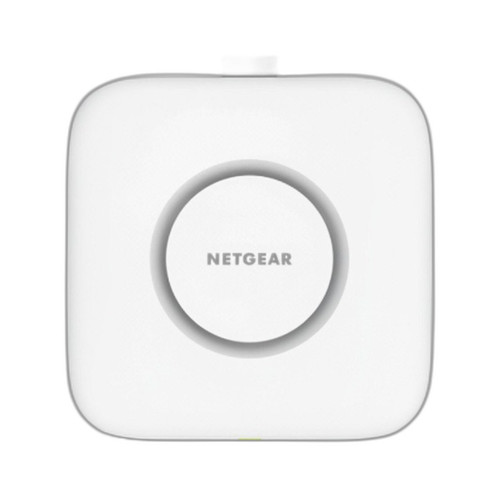
Both the Ubiquiti U7-LR-US and the NETGEAR WBE710-100NAS are WiFi 7 (802.11be) ceiling- and wall-mount access points aimed at enterprise and commercial installations. This comparison examines the three dimensions most likely to drive a purchasing decision between them: radio capability and throughput, power input requirements and physical deployment, and management approach and standards compatibility. Spec data for the NETGEAR unit contains several inconsistent or placeholder field values (e.g., 'Product Type: Switch', 'Ports: 96'), which are treated as data-entry errors; only internally coherent spec fields are cited.
In This Guide
- Which access point delivers more wireless throughput and how do their radio configurations differ?
- What are the PoE power requirements, form factor, and environmental ratings for each unit?
- How is each access point managed, and what ecosystem or software dependencies does each introduce?
- Which should you choose: the U7-LR-US or the WBE710-100NAS?
- Side-by-Side Specs
- FAQ
Which access point delivers more wireless throughput and how do their radio configurations differ?
The Ubiquiti U7-LR-US is a dual-band WiFi 7 (802.11be) access point operating on 2.4 GHz and 5 GHz, with 5 spatial streams and backward compatibility with 802.11a/b/g/n/ac/ax/be. No aggregate throughput figure is stated in the provided specs; the antenna gain field reads 'Gbps (BW160)', which appears to be a data-entry artifact rather than a valid dBi value.
The NETGEAR WBE710-100NAS is specified as a tri-band WiFi 7 (802.11be) access point with a stated aggregate wireless throughput of 9.4 Gbps. Its antenna gain is listed as 4.1 / 4.6 dBi. A third radio band (typically 6 GHz in tri-band WiFi 7 designs) would provide an additional high-capacity channel unavailable on the dual-band U7-LR-US, though the specific band frequencies are not enumerated in the provided specs.
On radio capability, the NETGEAR unit's tri-band configuration and the concrete 9.4 Gbps aggregate figure represent a meaningful spec advantage over the U7-LR-US as documented. The Ubiquiti unit's 5 spatial streams and BW160 support are relevant for high-density dual-band deployments, but no equivalent aggregate throughput number is available to make a direct numerical comparison.
What are the PoE power requirements, form factor, and environmental ratings for each unit?
The Ubiquiti U7-LR-US is powered by PoE 802.3af at 42.5–57 V DC with a maximum consumption of 14 W. This is the lowest common PoE standard, meaning it is compatible with a wide range of existing PoE switches and injectors without requiring infrastructure upgrades. Its physical dimensions are Ø175.7 × 43 mm (Ø6.9 × 1.7 in), it weighs 3.55 lb, and its enclosure is polycarbonate with aluminum alloy. It carries an operating temperature rating of −30 to 50 °C, supports ceiling and wall mounting via a plastic mounting plate, and holds CE, FCC, and IC certifications. It is listed as NDAA compliant.
The NETGEAR WBE710-100NAS requires PoE++ (802.3bt) input via a 2.5 GbE port. PoE++ delivers up to 90 W and is required here, meaning existing 802.3af/at infrastructure will not power this unit without an upgrade to 802.3bt-capable switches or injectors. Its enclosure is plastic and it supports wall and ceiling mounting. The operating temperature field reads 'Industrial' without a specific degree range in the provided specs. No weight, physical dimensions, certifications, or NDAA compliance status are provided in the available spec data.
The U7-LR-US has a clear infrastructure-compatibility advantage for sites with existing 802.3af PoE switches. The WBE710-100NAS's 802.3bt requirement increases switch and cabling costs in retrofit scenarios. The U7-LR-US also provides a precise environmental rating (−30 to 50 °C) and NDAA compliance confirmation, neither of which is available for the NETGEAR unit from the provided specs.
How is each access point managed, and what ecosystem or software dependencies does each introduce?
The Ubiquiti U7-LR-US integrates into the UniFi ecosystem (referenced via package contents listing the 'UniFi U7 Long-Range Access Point'). Management is via the Ethernet interface, consistent with UniFi controller-based management (cloud or on-premises). This creates a dependency on Ubiquiti's UniFi Network platform for full feature access, including configuration, monitoring, and firmware updates. The unit is backward-compatible with 802.11a/b/g/n/ac/ax/be clients.
The NETGEAR WBE710-100NAS is listed in the provided specs as 'Unmanaged' with 'Bandwidth Management enabled.' This is an unusual combination for a WiFi 7 enterprise access point and may reflect a data-entry inconsistency. No controller platform, cloud management service, or dedicated management software is identified in the available specs. The 'Managed: Unmanaged' classification, if accurate, would imply limited per-unit configuration capability relative to controller-managed alternatives.
The U7-LR-US's management story is clearer from the provided specs, though it binds the buyer to the UniFi platform. The WBE710-100NAS management classification is internally inconsistent in the spec sheet provided, making it impossible to draw a reliable conclusion about its management capabilities from the available data alone. Buyers requiring ecosystem portability or multi-vendor NMS integration should verify NETGEAR's management requirements directly against the product datasheet before specifying.
Which should you choose: the U7-LR-US or the WBE710-100NAS?
Our take: The U7-LR-US is the stronger choice when PoE infrastructure is limited to 802.3af switches and NDAA compliance is a requirement. It draws only 14 W over 802.3af, operates across a validated −30 to 50 °C range, and carries confirmed CE/FCC/IC/NDAA credentials — none of which are available in the WBE710-100NAS spec data provided. The WBE710-100NAS holds a documented advantage on wireless capacity: its tri-band WiFi 7 configuration and stated 9.4 Gbps aggregate throughput exceed what the dual-band U7-LR-US spec sheet substantiates, and its 4.1/4.6 dBi antenna gain values are cleanly documented where the Ubiquiti sheet's antenna field is corrupt. However, the WBE710-100NAS requires 802.3bt PoE++ infrastructure, adds switch upgrade cost in retrofit sites, and its management classification is internally contradictory in the supplied data. Specify the WBE710-100NAS only after verifying management software requirements and confirming 802.3bt switch availability at the site.
Side-by-Side Comparison
Spec-for-spec, from manufacturer data.
| Specification | Ubiquiti U7-LR-US | NETGEAR WBE710-100NAS |
|---|---|---|
| WiFi Standard | WiFi 7 (802.11be) | WiFi 7 (802.11be) |
| Radio Bands | Dual-band (2.4 GHz & 5 GHz) | Tri-band (specific frequencies not listed in specs) |
| Spatial Streams | 5 | — |
| Aggregate Throughput | — (not stated in specs) | 9.4 Gbps |
| Antenna Gain | — (field corrupt in specs) | 4.1 / 4.6 dBi |
| PoE Standard | 802.3af | 802.3bt (PoE++) |
| Uplink Port | 1× 2.5 GbE RJ45 | 1× 2.5 GbE |
| Power Consumption | 14 W max | — (not stated in specs) |
| Voltage Range | 42.5–57 V DC | — (not stated in specs) |
| Mounting | Ceiling, Wall | Wall, Ceiling |
| Dimensions | Ø175.7 × 43 mm (Ø6.9 × 1.7 in) | — (not stated in specs) |
| Weight | 3.55 lb | — (not stated in specs) |
| Enclosure | Polycarbonate, aluminum alloy | Plastic |
| Operating Temperature | -30 to 50 °C (-22 to 122 °F) | Listed as 'Industrial'; no °C range provided |
| Certifications | CE, FCC, IC | — (not stated in specs) |
| NDAA Compliant | Yes | — (not stated in specs) |
| Warranty | Manufacturer Warranty (duration not stated) | 5 years |
| Management | UniFi controller (Ethernet) | Listed as 'Unmanaged' in specs (inconsistent with AP product type) |
| Backward Compatibility | 802.11a/b/g/n/ac/ax/be | — (not stated in specs) |
| Country of Origin | CN | — (not stated in specs) |
Frequently Asked Questions
Which should you choose: the U7-LR-US or the WBE710-100NAS?
The U7-LR-US is the stronger choice when PoE infrastructure is limited to 802.3af switches and NDAA compliance is a requirement. It draws only 14 W over 802.3af, operates across a validated −30 to 50 °C range, and carries confirmed CE/FCC/IC/NDAA credentials — none of which are available in the WBE710-100NAS spec data provided. The WBE710-100NAS holds a documented advantage on wireless capacity: its tri-band WiFi 7 configuration and stated 9.4 Gbps aggregate throughput exceed what the dual-band U7-LR-US spec sheet substantiates, and its 4.1/4.6 dBi antenna gain values are cleanly documented where the Ubiquiti sheet's antenna field is corrupt. However, the WBE710-100NAS requires 802.3bt PoE++ infrastructure, adds switch upgrade cost in retrofit sites, and its management classification is internally contradictory in the supplied data. Specify the WBE710-100NAS only after verifying management software requirements and confirming 802.3bt switch availability at the site.
Can I power the U7-LR-US or WBE710-100NAS from my existing PoE switch?
The U7-LR-US requires standard PoE (802.3af) at up to 14 W, which is supported by the vast majority of PoE switches already deployed in enterprise environments. The WBE710-100NAS requires PoE++ (802.3bt), which delivers significantly more power but is only available on newer or purpose-specified switches. If your existing infrastructure is 802.3af or 802.3at, the U7-LR-US will work without any switch changes; the WBE710-100NAS will not.
Is the U7-LR-US or WBE710-100NAS better for high-density wireless throughput?
Based on the provided specs, the WBE710-100NAS states a concrete 9.4 Gbps aggregate wireless throughput and a tri-band WiFi 7 radio — attributes that favor high-density or high-throughput environments. The U7-LR-US is dual-band with 5 spatial streams and BW160 support, but no aggregate throughput figure is provided in its spec sheet. If maximum wireless capacity is the primary criterion, the WBE710-100NAS's documented numbers are stronger, though buyers should independently verify those figures against NETGEAR's published datasheet.
Which access point is appropriate for government or federally regulated deployments?
The U7-LR-US is listed as NDAA compliant and holds CE, FCC, and IC certifications, making it documentably suitable for federally regulated or government-adjacent deployments where NDAA compliance is mandated. The WBE710-100NAS spec data provided includes no NDAA compliance declaration or equivalent certification detail. Buyers subject to NDAA or similar procurement regulations should not specify the WBE710-100NAS without independently confirming compliance status with NETGEAR.
Get a Second Opinion on Your Camera Choice
Share your site layout, coverage goals, and budget. Our team will validate the camera selection, flag anything we would change, and recommend products that match the use case.