
Ubiquiti U7-LR-US vs NETGEAR WBE750-100NAS: Specification Comparison
Both the Ubiquiti U7-LR-US and NETGEAR WBE750-100NAS are Wi-Fi 7 (802.11be) ceiling/wall-mount access points targeting enterprise and high-density wireless deployments. This comparison examines the three dimensions that most directly affect purchasing decisions for this product class: wireless performance and radio architecture, uplink connectivity and power requirements, and management platform with environmental suitability. Buyers cross-shopping these units are typically evaluating throughput capacity, backhaul bandwidth, PoE power budget, and how each AP integrates into an existing network management ecosystem.
In This Guide
- Which AP delivers more wireless throughput and how do their radio architectures differ?
- How do the uplink port speed and PoE power requirements compare between these two APs?
- How do management platform, certifications, and environmental ratings compare?
- Which should you choose: the U7-LR-US or the WBE750-100NAS?
- Side-by-Side Specs
- FAQ
Which AP delivers more wireless throughput and how do their radio architectures differ?
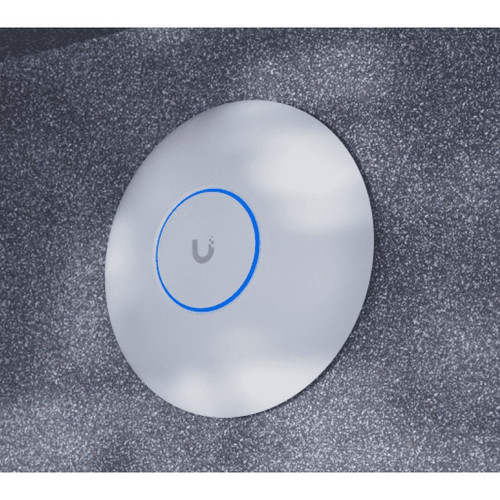
The Ubiquiti U7-LR-US is a dual-band Wi-Fi 7 (802.11be) access point operating on 2.4 GHz and 5 GHz with 5 spatial streams and backward compatibility across 802.11a/b/g/n/ac/ax/be. Antenna gain is listed in the specs as 'Gbps (BW160)' — this appears to be a data-entry error rather than a valid dBi figure, so no antenna gain number can be cited for the U7-LR-US. No aggregate throughput figure is provided in the supplied specifications.
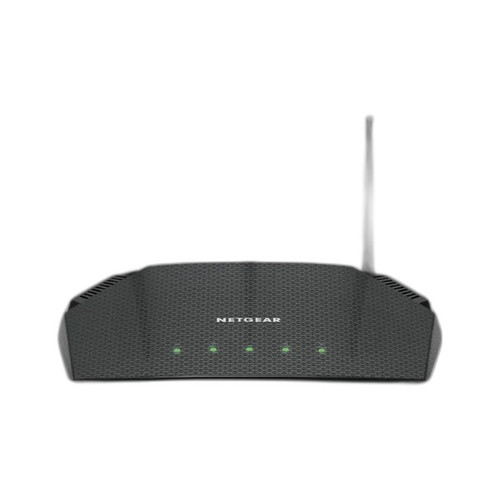
The NETGEAR WBE750-100NAS is a tri-band Wi-Fi 7 (802.11be) access point with an aggregate throughput of 18.4 Gbps as specified. Antenna gain is listed at 4.1 / 4.6 dBi. The addition of a third radio band gives the WBE750-100NAS a structural capacity advantage for environments running simultaneous voice, video, and IoT traffic, though no spatial stream count is provided in the supplied specs for direct comparison.
For buyers where radio count and aggregate throughput are primary criteria, the WBE750-100NAS's tri-band architecture and 18.4 Gbps rating are concrete differentiators. The U7-LR-US's 5-spatial-stream dual-band design may suit medium-density environments where a lower-power budget is required.
How do the uplink port speed and PoE power requirements compare between these two APs?
The Ubiquiti U7-LR-US provides a single 2.5 GbE RJ45 uplink port and accepts PoE 802.3af input at a rated power consumption of 14W and a voltage range of 42.5–57V DC. The 2.5 GbE uplink is adequate for many enterprise environments but can become a backhaul bottleneck in very high-density or high-throughput scenarios.
The NETGEAR WBE750-100NAS specifies a 10G Ethernet uplink port and requires PoE++ (802.3bt) input power. This combination — a 4× faster uplink versus the U7-LR-US and a higher-power PoE standard — is better matched to the 18.4 Gbps wireless throughput ceiling the unit advertises. However, PoE++ (802.3bt) requires a compatible switch or injector; existing 802.3af infrastructure cannot power the WBE750-100NAS without an upgrade.
The power-input difference is a meaningful deployment cost consideration: 802.3af switches are widespread and inexpensive, while 802.3bt switches carry a significant price premium. Buyers with existing 802.3af infrastructure will find the U7-LR-US a drop-in fit; the WBE750-100NAS may require switch replacement or PoE++ injectors.
How do management platform, certifications, and environmental ratings compare?
The Ubiquiti U7-LR-US is managed via the UniFi ecosystem (Ethernet management interface). It carries CE, FCC, and IC certifications, is confirmed NDAA compliant per the supplied specs, and is rated for operation from -30 to 50°C (-22 to 122°F). The enclosure is polycarbonate and aluminum alloy. No IP ingress-protection rating is provided in the specifications.
The NETGEAR WBE750-100NAS is managed through NETGEAR Insight Cloud with bandwidth management capability. Its housing is listed as plastic. Operating temperature is listed as 'Industrial' without a numeric range in the supplied specifications, so a direct temperature comparison cannot be made. No IP rating, regulatory certifications, or NDAA compliance status are present in the provided specs for this model.
Buyers standardized on UniFi will find the U7-LR-US integrates natively into existing UniFi Controller deployments. The WBE750-100NAS suits organizations already invested in or evaluating NETGEAR Insight. The U7-LR-US's explicit -30°C lower operating limit and NDAA compliance confirmation are concrete advantages for government, regulated, or cold-environment deployments where those credentials are required.
Which should you choose: the U7-LR-US or the WBE750-100NAS?
Our take: The U7-LR-US is the stronger choice when PoE infrastructure is 802.3af-only, budget is constrained, NDAA compliance is required, or the deployment is standardized on the UniFi management ecosystem. The WBE750-100NAS holds clear advantages on paper where raw throughput and backhaul capacity are paramount: its 18.4 Gbps tri-band Wi-Fi 7 aggregate versus no stated throughput figure for the U7-LR-US, its 10G uplink versus the U7-LR-US's 2.5 GbE port, and its PoE++ input supporting its higher-power radio architecture. However, that PoE++ requirement means the WBE750-100NAS cannot be powered by common 802.3af switches without infrastructure upgrades. The U7-LR-US's verified -30 to 50°C operating range and CE/FCC/IC/NDAA certifications give it a compliance and environmental edge the WBE750-100NAS's specs do not confirm. Choose the WBE750-100NAS for high-density, high-throughput environments with 802.3bt switching already in place; choose the U7-LR-US for PoE-constrained, NDAA-sensitive, or UniFi-managed deployments.
Side-by-Side Comparison
Spec-for-spec, from manufacturer data.
| Specification | Ubiquiti U7-LR-US | NETGEAR WBE750-100NAS |
|---|---|---|
| Wi-Fi Standard | Wi-Fi 7 (802.11be) | Wi-Fi 7 (802.11be) |
| Bands | Dual-band (2.4 GHz & 5 GHz) | Tri-band |
| Spatial Streams | 5 | — |
| Aggregate Throughput | — | 18.4 Gbps |
| Uplink Port | 1× 2.5 GbE RJ45 | 1× 10G Ethernet |
| PoE Input Standard | PoE 802.3af | PoE++ (802.3bt) |
| Power Consumption | 14W | — |
| Antenna Gain | — | 4.1 / 4.6 dBi |
| Form Factor | Compact ceiling-mount | Wall/Ceiling mount |
| Enclosure Material | Polycarbonate, aluminum alloy | Plastic |
| Operating Temp | -30 to 50°C (-22 to 122°F) | Industrial (no numeric range specified) |
| Management Platform | UniFi (Ethernet) | NETGEAR Insight Cloud |
| Backward Compatibility | 802.11a/b/g/n/ac/ax/be | — |
| NDAA Compliant | Yes | — |
| Certifications | CE, FCC, IC | — |
| Warranty | Manufacturer Warranty (term not specified) | 5 years |
Frequently Asked Questions
Which should you choose: the U7-LR-US or the WBE750-100NAS?
The U7-LR-US is the stronger choice when PoE infrastructure is 802.3af-only, budget is constrained, NDAA compliance is required, or the deployment is standardized on the UniFi management ecosystem. The WBE750-100NAS holds clear advantages on paper where raw throughput and backhaul capacity are paramount: its 18.4 Gbps tri-band Wi-Fi 7 aggregate versus no stated throughput figure for the U7-LR-US, its 10G uplink versus the U7-LR-US's 2.5 GbE port, and its PoE++ input supporting its higher-power radio architecture. However, that PoE++ requirement means the WBE750-100NAS cannot be powered by common 802.3af switches without infrastructure upgrades. The U7-LR-US's verified -30 to 50°C operating range and CE/FCC/IC/NDAA certifications give it a compliance and environmental edge the WBE750-100NAS's specs do not confirm. Choose the WBE750-100NAS for high-density, high-throughput environments with 802.3bt switching already in place; choose the U7-LR-US for PoE-constrained, NDAA-sensitive, or UniFi-managed deployments.
Can I power the NETGEAR WBE750-100NAS from a standard 802.3af PoE switch?
No. The WBE750-100NAS requires PoE++ (802.3bt) input per its specifications. Standard 802.3af switches and injectors are not compatible. The Ubiquiti U7-LR-US, by contrast, accepts PoE 802.3af and will operate from common 802.3af switches at up to 14W.
Is the Ubiquiti U7-LR-US or NETGEAR WBE750-100NAS better for high-density deployments with many concurrent users?
Based on the supplied specifications, the NETGEAR WBE750-100NAS has a structural advantage for high-density environments: it is tri-band Wi-Fi 7 with an aggregate throughput of 18.4 Gbps and a 10G uplink. The U7-LR-US is dual-band with 5 spatial streams; no aggregate throughput figure is provided in its specs. Buyers prioritizing concurrent capacity and backhaul headroom should consider the WBE750-100NAS, provided the required PoE++ infrastructure is in place.
Which access point is NDAA compliant and suitable for government or regulated installations?
The Ubiquiti U7-LR-US is confirmed NDAA compliant in the supplied specifications, holds CE, FCC, and IC certifications, and has a stated operating range of -30 to 50°C. The NETGEAR WBE750-100NAS specifications provided do not include NDAA compliance status, regulatory certifications, or a numeric operating temperature range. For government, federal, or regulated-sector installations where NDAA compliance must be verified, the U7-LR-US is the confirmable choice based on available data.
Get a Second Opinion on Your Camera Choice
Share your site layout, coverage goals, and budget. Our team will validate the camera selection, flag anything we would change, and recommend products that match the use case.