
Ubiquiti USW-PRO-HD-24-POE vs Allied Telesis AT-x530L-28GPX-901: Specification Comparison
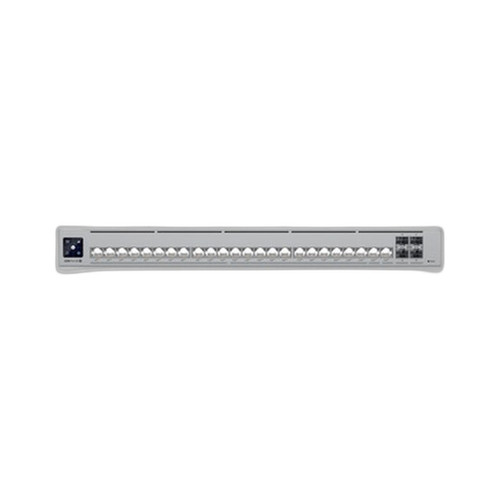
The USW-PRO-HD-24-POE and AT-x530L-28GPX-901 are both 1U rack-mount managed switches offering 24 PoE-capable copper ports and four SFP+ uplinks—a configuration commonly deployed in commercial IP security, wireless access, and enterprise edge applications. The Ubiquiti unit differentiates on port speed and PoE standard, delivering multi-gigabit copper and PoE++ (802.3bt). The Allied Telesis unit counters with a higher raw PoE power budget, a wider switching fabric on paper, and documented stacking capability. Both are genuine cross-shop candidates for installers sizing a 24-port PoE edge switch.
In This Guide
- Which switch delivers more per-port bandwidth and higher PoE power headroom?
- How do the two switches compare on switching fabric, forwarding rate, and latency?
- Which unit is better suited for constrained power environments, physical installation, and network management integration?
- Which should you choose: the USW-PRO-HD-24-POE or the AT-x530L-28GPX-901?
- Side-by-Side Specs
- FAQ
Which switch delivers more per-port bandwidth and higher PoE power headroom?
The USW-PRO-HD-24-POE provides 22× 2.5GbE ports plus 2× 10GbE copper ports, meaning every data port runs at a minimum of 2.5 Gbps. The four SFP+ slots run at 10G. Its PoE standard is 802.3bt (PoE++), which allows up to 60W per port, and the total PoE budget is 600W across all 24 ports—approximately 25W average simultaneous draw before hitting the ceiling.
The AT-x530L-28GPX-901 provides 24× 10/100/1000T copper ports; the spec sheet lists no 2.5G or 5G copper capability. Its four SFP+ uplinks support 1G/10G. PoE support tops out at PoE+ (30W per port, 802.3af/at); the spec explicitly shows no 60W or 90W PoE++ allocation. However, its total PoE budget is 740W—140W more than the Ubiquiti—meaning it can sustain more simultaneous 15.4W or 30W devices before throttling.
For deployments using WiFi 6E access points or multi-gig IP cameras requiring 2.5G links, only the Ubiquiti satisfies that requirement. For high-density 30W-class devices (PTZ cameras, thin clients) where standard Gigabit is sufficient, the Allied Telesis budget advantage is meaningful.
How do the two switches compare on switching fabric, forwarding rate, and latency?
The USW-PRO-HD-24-POE is rated at 230 Gbps switching capacity (aggregate) and 115 Gbps non-blocking throughput, with a forwarding rate of 171 Mpps. No latency figure is provided in the supplied specifications.
The AT-x530L-28GPX-901 is rated at 128 Gbps switching fabric and 95.2 Mpps forwarding rate. Latency is documented: 6.06µs at 100 Mbps, 3.98µs at 1 Gbps, and 1.63µs at 10 Gbps. No switching capacity figure beyond 128 Gbps fabric is provided in the supplied specs.
The Ubiquiti's 230 Gbps aggregate capacity and 171 Mpps forwarding rate exceed the Allied Telesis figures by roughly 80% and 80% respectively, reflecting the higher per-port speeds of the multi-gig architecture. The Allied Telesis provides concrete latency measurements the Ubiquiti spec sheet does not include, which matters for latency-sensitive applications such as real-time video analytics or VoIP. Direct latency comparison is not possible from the supplied Ubiquiti data.
Which unit is better suited for constrained power environments, physical installation, and network management integration?
The USW-PRO-HD-24-POE draws 60W at the switch itself (excluding PoE output) and includes an internal 660W AC/DC power supply. It also supports DC backup power input, providing redundancy on AC failure—a relevant feature for security installations where uptime is critical. Operating temperature is rated -5°C to 40°C. Enclosure is SGCC steel. Weight is 6.2 kg. Certifications listed are CE, FCC, IC, and Anatel. NDAA compliance is confirmed. Management includes Layer 2/3 routing, STP/RSTP, 802.1X, and 1,000 VLAN support.
The AT-x530L-28GPX-901 has a maximum power consumption of 890W (switch plus full PoE load) and a max heat dissipation of 3,037 BTU/h. Acoustic noise is rated at 42 dBA. Weight matches at 6.2 kg unpackaged. Dimensions are 441 × 421 × 44 mm versus the Ubiquiti's 442 × 400 × 44 mm—nearly identical footprint, though the Allied Telesis is 21 mm deeper. The spec sheet documents stacking ports (2×), enabling logical aggregation of multiple units. NDAA compliance status is not stated in the supplied specifications. Management platform details beyond 'managed switch with stacking support' are not included in the supplied specs.
The Ubiquiti's DC backup input and explicit NDAA compliance give it an edge in security-sector and government-adjacent installations. The Allied Telesis stacking capability is a meaningful differentiator for scalable campus or multi-floor deployments where a single logical switch spanning multiple physical units is required—a feature not mentioned in the Ubiquiti spec data.
Which should you choose: the USW-PRO-HD-24-POE or the AT-x530L-28GPX-901?
Our take: The USW-PRO-HD-24-POE is the stronger choice when per-port speed and PoE standard are the primary criteria—its 22× 2.5GbE copper ports and 802.3bt (60W) PoE++ capability are unavailable on the AT-x530L-28GPX-901, which tops out at Gigabit copper and 30W PoE+. The Ubiquiti also posts a higher forwarding rate (171 Mpps vs. 95.2 Mpps) and includes DC backup redundancy relevant to 24/7 security applications, plus confirmed NDAA compliance. Conversely, the AT-x530L-28GPX-901 delivers a 740W PoE budget (140W more than the Ubiquiti's 600W), documented stacking support for logical switch aggregation, and published latency figures the Ubiquiti spec sheet omits. Choose the Ubiquiti for multi-gig camera or WiFi 6 AP deployments on a UniFi-managed network needing PoE++ headroom. Choose the Allied Telesis where Gigabit suffices, maximum PoE wattage and stacking scalability outweigh per-port speed, and vendor-neutral management is preferred.
Side-by-Side Comparison
Spec-for-spec, from manufacturer data.
| Specification | Ubiquiti USW-PRO-HD-24-POE | Allied Telesis AT-x530L-28GPX-901 |
|---|---|---|
| Copper Port Count | 24 | 24 |
| Copper Port Speed | 22× 2.5GbE + 2× 10GbE | 24× 10/100/1000T (Gigabit) |
| SFP+ Uplink Ports | 4× 10G SFP+ | 4× 1G/10G SFP+ |
| PoE Standard (Max) | 802.3bt (PoE++, 60W/port) | 802.3at (PoE+, 30W/port) |
| Total PoE Budget | 600W | 740W |
| Switching Capacity | 230 Gbps aggregate | 128 Gbps fabric |
| Non-Blocking Throughput | 115 Gbps | — |
| Forwarding Rate | 171 Mpps | 95.2 Mpps |
| Latency (1 Gbps) | — | 3.98µs |
| Switch Power Draw (no PoE) | 60W | — |
| Max Total Power Consumption | 660W (internal PSU rated) | 890W |
| DC Backup Input | Yes | — |
| Stacking Support | — | Yes (2 stacking ports) |
| Form Factor | 1U rack-mount, 442×400×44 mm | 1U rack-mount, 441×421×44 mm |
| Weight (unpackaged) | 6.2 kg (13.7 lb) | 6.2 kg (13.67 lb) |
| NDAA Compliant | Yes | Not stated in supplied specs |
Frequently Asked Questions
Which should you choose: the USW-PRO-HD-24-POE or the AT-x530L-28GPX-901?
The USW-PRO-HD-24-POE is the stronger choice when per-port speed and PoE standard are the primary criteria—its 22× 2.5GbE copper ports and 802.3bt (60W) PoE++ capability are unavailable on the AT-x530L-28GPX-901, which tops out at Gigabit copper and 30W PoE+. The Ubiquiti also posts a higher forwarding rate (171 Mpps vs. 95.2 Mpps) and includes DC backup redundancy relevant to 24/7 security applications, plus confirmed NDAA compliance. Conversely, the AT-x530L-28GPX-901 delivers a 740W PoE budget (140W more than the Ubiquiti's 600W), documented stacking support for logical switch aggregation, and published latency figures the Ubiquiti spec sheet omits. Choose the Ubiquiti for multi-gig camera or WiFi 6 AP deployments on a UniFi-managed network needing PoE++ headroom. Choose the Allied Telesis where Gigabit suffices, maximum PoE wattage and stacking scalability outweigh per-port speed, and vendor-neutral management is preferred.
Is the USW-PRO-HD-24-POE or AT-x530L-28GPX-901 better for powering high-wattage PTZ cameras across all 24 ports?
The AT-x530L-28GPX-901 has a 740W total PoE budget versus the USW-PRO-HD-24-POE's 600W, so it can sustain more simultaneous 30W (PoE+) devices before hitting its ceiling. However, if any cameras require more than 30W—such as PTZ models with heaters rated above 30W—only the USW-PRO-HD-24-POE supports PoE++ (802.3bt, up to 60W per port). The right answer depends on the specific per-port wattage requirement of the cameras in use.
Can I stack multiple AT-x530L-28GPX-901 units, and does the USW-PRO-HD-24-POE support stacking?
The AT-x530L-28GPX-901 spec sheet lists 2 stacking ports, indicating stacking is supported. The supplied USW-PRO-HD-24-POE specifications do not mention stacking ports or stacking capability. Buyers requiring logical switch aggregation across multiple physical units should verify Ubiquiti's stacking support independently before specifying that model.
Which switch is compliant with NDAA Section 889 for government or federal security projects?
The USW-PRO-HD-24-POE spec confirms NDAA compliance. The supplied AT-x530L-28GPX-901 specifications do not state NDAA compliance status. Installers working on federally funded or government-adjacent projects should obtain formal NDAA documentation from Allied Telesis before specifying the AT-x530L-28GPX-901.
More Network Switch Comparisons
- Vivotek GEV-288A-370 vs Axis T8524
- Vivotek GEV-288A-370 vs Cradlepoint SW2400P-GN
- Vivotek GEV-288A-370 vs Allied Telesis AT-x530L-28GPX-901
- Vivotek GEV-288A-370 vs Ubiquiti USW-ENTERPRISE-24-POE
- Axis T8524 vs Cradlepoint SW2400P-GN
- Axis T8524 vs Allied Telesis AT-x530L-28GPX-901
Network Switch Buying Guides
Get a Second Opinion on Your Camera Choice
Share your site layout, coverage goals, and budget. Our team will validate the camera selection, flag anything we would change, and recommend products that match the use case.