
Sato WWCT04441-WDR vs Sato WWCT04241-NDR: Specification Comparison
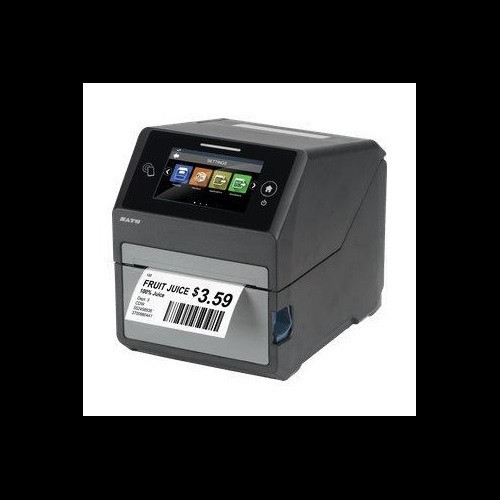
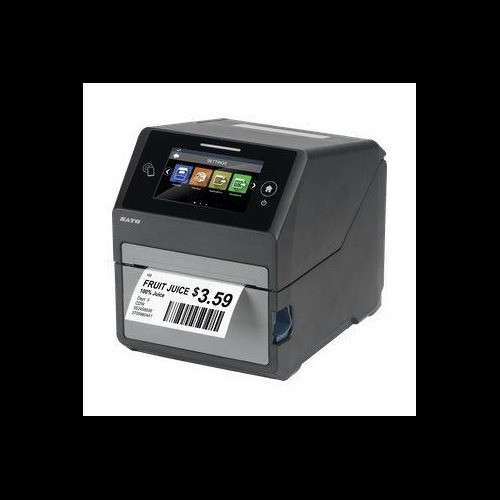
Both the WWCT04441-WDR and WWCT04241-NDR are Sato CT4-LX 305 dpi desktop thermal printers built for smart-label production. They share an identical physical chassis, print engine, connectivity suite, display, memory, and power supply. The single operative difference is RFID frequency band: the WWCT04441-WDR encodes HF/NFC tags at 13.56 MHz, while the WWCT04241-NDR encodes UHF tags at 860–960 MHz per EPC Class 1 Gen 2. Buyers cross-shopping these two are choosing which RFID ecosystem their labels must join.
In This Guide
- Which RFID frequency band does each printer support, and what does that mean for tag compatibility?
- Are print performance, media handling, and ribbon capacity identical across both models?
- Do the two models differ in connectivity, operating environment, physical footprint, or warranty terms?
- Which should you choose: the WWCT04441-WDR or the WWCT04241-NDR?
- Side-by-Side Specs
- FAQ
Which RFID frequency band does each printer support, and what does that mean for tag compatibility?
The WWCT04441-WDR operates at 13.56 MHz, covering HF and NFC inlay types. Sato lists a proprietary 'RF Analyze' function that auto-tunes the antenna for each inlay, which can reduce encoding errors when switching between HF/NFC label stocks. Read range for HF/NFC is typically short (centimeters), making it well suited to item-level tracking, access credentials, pharmaceutical serialization, and contactless payment labels where near-field precision is required.
The WWCT04241-NDR operates at 860–960 MHz under the EPC Class 1 Gen 2 (GS1 Gen2) standard, the dominant protocol for supply-chain, retail, and warehouse asset tracking. UHF read range extends to several meters under controlled conditions, enabling bulk or gate reads. The spec sheet notes 'intelligent antenna optimization' for this model but does not provide further detail on the mechanism. EPC C1G2 is the protocol mandated by most major retailers and logistics networks for pallet- and case-level labeling.
Neither printer's specifications list supported inlay part numbers or encoding throughput rates beyond the shared 8 ips print speed. Buyers should verify inlay compatibility with their tag supplier before committing to either model.
Are print performance, media handling, and ribbon capacity identical across both models?
Both printers share every print-engine specification in the provided data: 305 dpi resolution, 8 ips print speed, a maximum print width of 4.09 inches, and support for both Direct Thermal and Thermal Transfer methods. Media width range is 1 inch to 4.1 inches on both units, maximum roll outer diameter is 5 inches on both, and maximum ribbon length is 984 feet (300 m) on both.
Display, memory, and storage are also identical: a 4.3-inch full-color touchscreen, 4 GB Flash, 1 GB DDR3 RAM, and 2 GB user storage on each model. These shared specifications mean that label design, throughput, and media sourcing decisions are not differentiated between the two SKUs — the print engine itself is the same platform.
Do the two models differ in connectivity, operating environment, physical footprint, or warranty terms?
Connectivity is identical on both units: Ethernet, Wi-Fi, Bluetooth, and USB are all listed for the WWCT04441-WDR and the WWCT04241-NDR. No differences in supported network protocols or interface versions are documented in the provided specifications.
Physical dimensions are the same for both: 7.0 × 9.375 × 8.4375 inches. Weight is 7.3 lb (3.3 kg) on both. Operating temperature range is 32°F–104°F (0°C–40°C) on both. Power input is AC 100–240 V, 50/60 Hz on both, making each unit suitable for international deployment without a transformer.
Warranty terms are identical: each model carries a 1-year warranty per the provided specifications. Mount type is Desktop for both. No specification differences in form factor, environment, or support terms were found between the two SKUs.
Which should you choose: the WWCT04441-WDR or the WWCT04241-NDR?
Our take: The WWCT04441-WDR is the stronger choice when the deployment requires HF or NFC tag encoding — such as pharmaceutical serialization, access-card personalization, NFC-enabled consumer packaging, or any application where short read-range precision and NFC smartphone readability matter. The WWCT04241-NDR is the stronger choice when the deployment targets supply-chain, retail inventory, or warehouse asset tracking that relies on EPC Class 1 Gen 2 UHF infrastructure, where multi-meter read ranges and compliance with GS1/retail mandates are required. Every other specification is identical between the two models: 305 dpi, 8 ips, 4.09-inch max print width, 4 GB Flash, 4.3-inch touchscreen, identical connectivity, identical physical dimensions, and a shared 1-year warranty. The decision reduces entirely to which RFID ecosystem — 13.56 MHz HF/NFC or 860–960 MHz UHF EPC C1G2 — the buyer's tag infrastructure and reader network demand.
Side-by-Side Comparison
Spec-for-spec, from manufacturer data.
| Specification | Sato WWCT04441-WDR | Sato WWCT04241-NDR |
|---|---|---|
| SKU | WWCT04441-WDR | WWCT04241-NDR |
| Model Name | CT4-LX 305dpi HF RFID Desktop | CT4-LX 305dpi UHF RFID Desktop |
| RFID Frequency | 13.56 MHz (HF/NFC) | 860–960 MHz (UHF) |
| RFID Protocol | HF / NFC | EPC Class 1 Gen 2 (GS1 Gen2) |
| RFID Antenna Feature | RF Analyze auto-tuning | Intelligent antenna optimization |
| Print Resolution | 305 dpi | 305 dpi |
| Print Speed | 8 ips | 8 ips |
| Print Method | Direct Thermal / Thermal Transfer | Direct Thermal / Thermal Transfer |
| Max Print Width | 4.09 inches | 4.09 inches |
| Media Width Range | 1 inch to 4.1 inches | 1 inch to 4.1 inches |
| Max Roll Diameter | 5 inches | 5 inches |
| Max Ribbon Length | 984 feet (300 m) | 984 feet (300 m) |
| Connectivity | Ethernet, Wi-Fi, Bluetooth, USB | Ethernet, Wi-Fi, Bluetooth, USB |
| Display | 4.3-inch full-color touchscreen | 4.3-inch full-color touchscreen |
| Flash Memory | 4 GB | 4 GB |
| DDR3 Memory | 1 GB | 1 GB |
| User Storage | 2 GB | 2 GB |
| Dimensions (in) | 7.0 x 9.375 x 8.4375 | 7.0 x 9.375 x 8.4375 |
| Weight | 7.3 lb (3.3 kg) | 7.3 lb (3.3 kg) |
| Power Input | AC 100-240V, 50/60Hz | AC 100-240V, 50/60Hz |
| Operating Temperature | 32°F to 104°F (0°C to 40°C) | 32°F to 104°F (0°C to 40°C) |
| Form Factor | Desktop | Desktop |
| Warranty | 1-year | 1-year |
Frequently Asked Questions
Which should you choose: the WWCT04441-WDR or the WWCT04241-NDR?
The WWCT04441-WDR is the stronger choice when the deployment requires HF or NFC tag encoding — such as pharmaceutical serialization, access-card personalization, NFC-enabled consumer packaging, or any application where short read-range precision and NFC smartphone readability matter. The WWCT04241-NDR is the stronger choice when the deployment targets supply-chain, retail inventory, or warehouse asset tracking that relies on EPC Class 1 Gen 2 UHF infrastructure, where multi-meter read ranges and compliance with GS1/retail mandates are required. Every other specification is identical between the two models: 305 dpi, 8 ips, 4.09-inch max print width, 4 GB Flash, 4.3-inch touchscreen, identical connectivity, identical physical dimensions, and a shared 1-year warranty. The decision reduces entirely to which RFID ecosystem — 13.56 MHz HF/NFC or 860–960 MHz UHF EPC C1G2 — the buyer's tag infrastructure and reader network demand.
Can either printer encode both HF and UHF tags, or am I locked into one frequency?
Based on the provided specifications, the WWCT04441-WDR encodes only HF/NFC tags at 13.56 MHz and the WWCT04241-NDR encodes only UHF tags at 860–960 MHz EPC C1G2. Neither model is specified as dual-frequency. If your application requires both frequency types, two separate printer SKUs would be needed.
Is the WWCT04441-WDR or WWCT04241-NDR better for retail supply-chain compliance labeling?
The WWCT04241-NDR is the relevant model for retail supply-chain compliance. Major retailers and logistics networks that mandate RFID labeling at the pallet or case level almost universally require UHF EPC Class 1 Gen 2 (860–960 MHz), which is the standard supported by the WWCT04241-NDR. The WWCT04441-WDR's HF/NFC frequency is not the protocol used in mainstream retail RFID mandates.
Are there any differences in print speed, media capacity, or connectivity between the two models?
No. Per the provided specifications, print speed (8 ips), maximum print width (4.09 inches), media width range (1–4.1 inches), maximum roll diameter (5 inches), maximum ribbon length (984 feet), connectivity (Ethernet, Wi-Fi, Bluetooth, USB), display (4.3-inch color touchscreen), memory (4 GB Flash, 1 GB DDR3, 2 GB user storage), dimensions, weight, power input, and warranty are identical on both models. RFID frequency band is the only specified differentiator.
More Label Printer Comparisons
- Brother TD4550DNWB vs Sato WWCT04241-WCN
- Brother TD4550DNWB vs Sato WWCT04241-NDR
- Brother TD4550DNWB vs Sato WT212-404CW-EX1-2
- Brother TD4550DNWB vs Sato WWCT04441-WDR
- Brother TD4550DNWB vs Brother TD4420DNC
- Brother TD4550DNWB vs Brother TD4410D
Label Printer Buying Guides
Get a Second Opinion on Your Camera Choice
Share your site layout, coverage goals, and budget. Our team will validate the camera selection, flag anything we would change, and recommend products that match the use case.