
Sato WWCT04441-WAR vs Brother TD4550DNWB: Specification Comparison
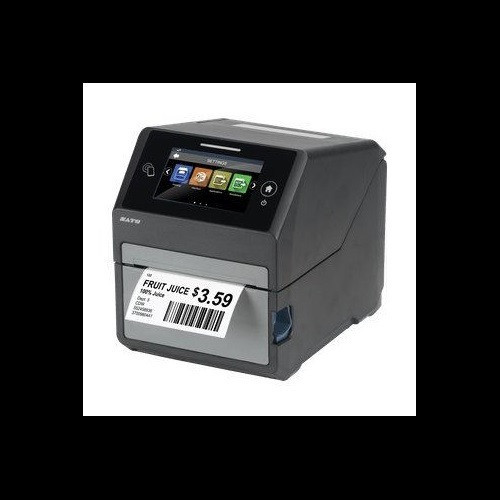
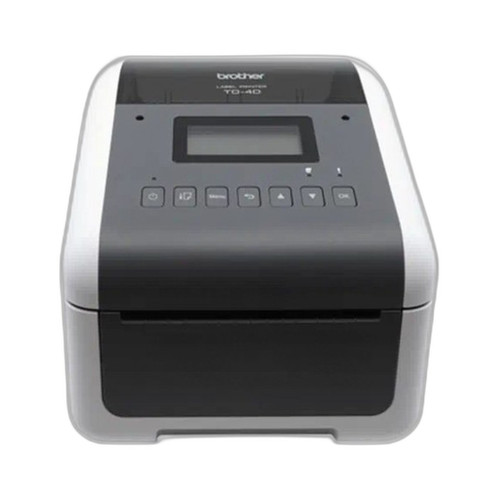
Both the Sato CT4-LX (WWCT04441-WAR) and the Brother TD4550DNWB are desktop direct thermal label printers targeting on-demand label, tag, and receipt production in commercial and industrial environments. Each supports wireless and wired connectivity, ships in a comparable footprint, and handles media widths exceeding four inches. The comparison centers on print method flexibility, RFID capability, memory and storage architecture, and throughput—dimensions that typically separate a general-purpose label printer from a purpose-built smart-label solution.
In This Guide
- How do print speed, resolution, and media handling differ between these two printers?
- Which printer offers more connectivity options and on-board intelligence for enterprise or smart-label deployments?
- How do the physical footprint, weight, power, and environmental ratings compare for deployment planning?
- Which should you choose: the WWCT04441-WAR or the TD4550DNWB?
- Side-by-Side Specs
- FAQ
How do print speed, resolution, and media handling differ between these two printers?
The Sato CT4-LX prints at 8 ips at 305 dpi, supporting both Direct Thermal and Thermal Transfer methods. Thermal Transfer capability means the CT4-LX can use ribbon-based printing for longer-lasting, solvent- and heat-resistant labels—relevant in warehouse, outdoor-tag, or cold-chain labeling scenarios. Maximum print width is 4.09 inches, and media width range spans 1 inch to 4.1 inches, with a maximum roll outer diameter of 5 inches and a maximum ribbon length of 984 feet.
The Brother TD4550DNWB is Direct Thermal only at 6 ips and 300 dpi. It cannot accept thermal transfer ribbon, limiting label durability to applications where DT output is sufficient. Its print width reaches 4.27 inches (spec-listed also as 4.3 inches), and paper width accommodates 0.75 inch to 4.65 inches—a wider media range than the Sato on both the narrow and wide ends. No ribbon capacity is specified, consistent with a DT-only design.
On throughput and resolution, the Sato holds a 2 ips and 5 dpi advantage. The Brother's broader media width range and lack of ribbon handling simplify consumable management in high-volume DT-only environments.
Which printer offers more connectivity options and on-board intelligence for enterprise or smart-label deployments?
The Sato CT4-LX provides Ethernet, Wi-Fi, Bluetooth, and USB. It also carries 4 GB Flash, 1 GB DDR3 RAM, and 2 GB user storage—substantial on-board resources for storing large format libraries, fonts, and label templates locally. A 4.3-inch touchscreen enables direct operator control. The CT4-LX's RFID subsystem (13.56 MHz HF/NFC with auto-antenna tuning) adds smart-label encoding as an integrated function, eliminating the need for a separate RFID encoder in HF/NFC tag workflows.
The Brother TD4550DNWB supports USB, Serial, Bluetooth BLE, WLAN, and LAN—adding a Serial port not present on the Sato, which matters for legacy POS or kiosk integration. Its programming language support (ZPL II, CPCL, Raster Graphics, Text) is explicitly specified, enabling drop-in compatibility with existing Zebra/Honeywell label software ecosystems. Memory is 64 MB Flash (40 MB template/database) and 256 MB SDRAM—significantly less than the Sato. A 4.3-inch LCD provides on-device setup. No RFID capability is listed for the TD4550DNWB.
For enterprise label-management platforms requiring ZPL II compatibility, the Brother's explicit language support is a concrete integration advantage. For smart-label or NFC tag encoding workflows, the Sato's integrated RFID is the differentiating feature. Serial port availability on the Brother addresses legacy interface requirements the Sato does not cover.
How do the physical footprint, weight, power, and environmental ratings compare for deployment planning?
The Sato CT4-LX measures 7.0" W × 9.375" D × 8.4375" H and weighs 7.3 lbs (3.3 kg). It operates on AC 100–240V, 50/60Hz universal input and is rated for 32°F to 104°F (0°C to 40°C) operating temperature. A 1-year warranty is specified.
The Brother TD4550DNWB measures 7.08" W × 8.82" D × 6.10" H and weighs 4.58 lbs. Power input and operating temperature range are not specified in the provided specs. Warranty is listed as 'Manufacturer Warranty' with no duration stated.
The Brother is notably lighter (4.58 lbs vs. 7.3 lbs) and shorter in height, which may matter in space-constrained counter or kiosk installations. The Sato's universal power input and explicit temperature rating provide documented environmental assurance the Brother's specs do not supply. Buyers requiring confirmed operating temperature ranges or international voltage compatibility should note this gap in the Brother's available specifications.
Which should you choose: the WWCT04441-WAR or the TD4550DNWB?
Our take: The WWCT04441-WAR is the stronger choice when the deployment requires integrated HF/NFC RFID encoding, thermal transfer ribbon support, higher throughput, or documented environmental ratings. Concretely: the CT4-LX prints 2 ips faster (8 vs. 6 ips), resolves at 305 vs. 300 dpi, and adds 13.56 MHz HF/NFC smart-label encoding with no equivalent on the TD4550DNWB. Its 4 GB Flash and 1 GB DDR3 dwarf the Brother's 64 MB Flash and 256 MB SDRAM for on-board template storage. The TD4550DNWB is the more practical choice for pure direct-thermal, ribbon-free environments where ZPL II/CPCL software compatibility, Serial port legacy integration, or a lighter 4.58 lb footprint matter—and where RFID encoding is not required. Buyers should note that the Brother's operating temperature and power input are not provided in available specifications.
Side-by-Side Comparison
Spec-for-spec, from manufacturer data.
| Specification | Sato WWCT04441-WAR | Brother TD4550DNWB |
|---|---|---|
| Print Method | Direct Thermal & Thermal Transfer | Direct Thermal only |
| Print Speed | 8 ips | 6 ips |
| Print Resolution | 305 dpi | 300 dpi |
| Max Print Width | 4.09" | 4.27" |
| Media Width Range | 1" – 4.1" | 0.75" – 4.65" |
| Max Media Roll OD | 5" | — |
| Max Ribbon Length | 984 ft | — (no ribbon) |
| RFID | HF/NFC 13.56 MHz with encoding | — |
| Connectivity | Ethernet, Wi-Fi, Bluetooth, USB | USB, Serial, Bluetooth BLE, WLAN, LAN |
| Programming Languages | — | ZPL II, CPCL, Raster Graphics, Text |
| Flash Memory | 4 GB | 64 MB (40 MB template/database) |
| RAM | 1 GB DDR3 | 256 MB SDRAM |
| User Storage | 2 GB | — |
| Display | 4.3" Touchscreen | 4.3" LCD |
| Dimensions (W×D×H) | 7.0" × 9.375" × 8.4375" | 7.08" × 8.82" × 6.10" |
| Weight | 7.3 lbs (3.3 kg) | 4.58 lbs |
| Power Input | AC 100–240V, 50/60Hz | — |
| Operating Temperature | 32°F – 104°F (0°C – 40°C) | — |
| Warranty | 1-year | Manufacturer Warranty (duration not specified) |
| Mount Type | Desktop | Desktop |
Frequently Asked Questions
Which should you choose: the WWCT04441-WAR or the TD4550DNWB?
The WWCT04441-WAR is the stronger choice when the deployment requires integrated HF/NFC RFID encoding, thermal transfer ribbon support, higher throughput, or documented environmental ratings. Concretely: the CT4-LX prints 2 ips faster (8 vs. 6 ips), resolves at 305 vs. 300 dpi, and adds 13.56 MHz HF/NFC smart-label encoding with no equivalent on the TD4550DNWB. Its 4 GB Flash and 1 GB DDR3 dwarf the Brother's 64 MB Flash and 256 MB SDRAM for on-board template storage. The TD4550DNWB is the more practical choice for pure direct-thermal, ribbon-free environments where ZPL II/CPCL software compatibility, Serial port legacy integration, or a lighter 4.58 lb footprint matter—and where RFID encoding is not required. Buyers should note that the Brother's operating temperature and power input are not provided in available specifications.
Does the WWCT04441-WAR or TD4550DNWB support RFID label encoding?
Only the Sato WWCT04441-WAR supports RFID encoding. It integrates a 13.56 MHz HF/NFC encoder with auto-antenna tuning, enabling direct smart-label programming at the printer. The Brother TD4550DNWB has no RFID capability listed in its specifications.
Can either printer use thermal transfer ribbon for longer-lasting labels?
Yes—the Sato CT4-LX supports both Direct Thermal and Thermal Transfer printing, accommodating up to 984 feet of ribbon for durable, chemical- and abrasion-resistant label output. The Brother TD4550DNWB is Direct Thermal only and cannot use ribbon; label durability is limited to what DT media provides.
Which printer is more compatible with existing Zebra or Honeywell label software?
The Brother TD4550DNWB explicitly lists ZPL II and CPCL among its supported programming languages, which are the native command sets for Zebra and many Honeywell/Intermec printers. This makes it a documented drop-in replacement in those software environments. The Sato CT4-LX's supported programming languages are not listed in the provided specifications, so ZPL II or CPCL compatibility cannot be confirmed from available data.
More Label Printer Comparisons
- Brother TD4550DNWB vs Sato WWCT04241-WCN
- Brother TD4550DNWB vs Sato WWCT04241-NDR
- Brother TD4550DNWB vs Sato WT212-404CW-EX1-2
- Brother TD4550DNWB vs Sato WWCT04441-WDR
- Brother TD4550DNWB vs Brother TD4420DNC
- Brother TD4550DNWB vs Brother TD4410D
Label Printer Buying Guides
Get a Second Opinion on Your Camera Choice
Share your site layout, coverage goals, and budget. Our team will validate the camera selection, flag anything we would change, and recommend products that match the use case.