
Sato WWCLPA001-WAR vs Sato WM8430231: Specification Comparison
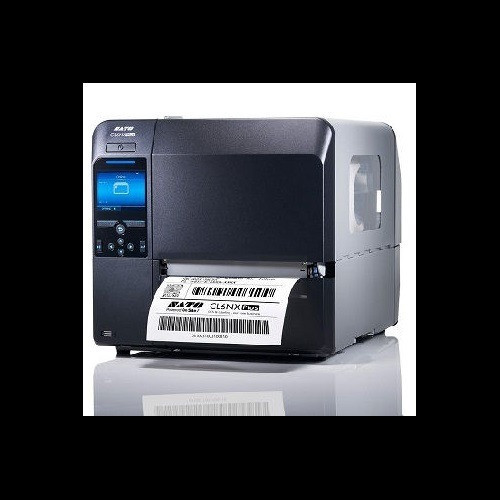
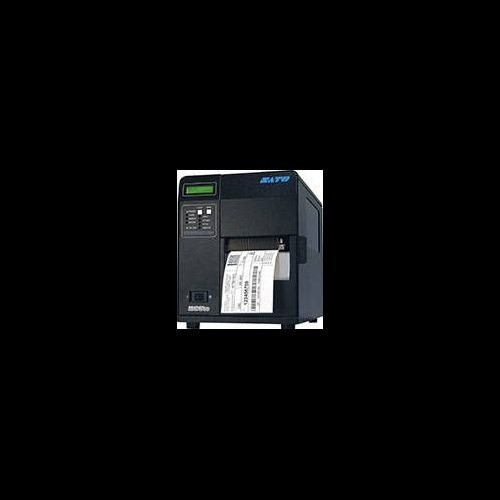
Both the Sato CL6NX Plus (WWCLPA001-WAR) and the Sato M84Pro (WM8430231) are industrial-grade 203 dpi thermal label printers supporting direct thermal and thermal transfer print modes, rated for the same operating temperature range, and sharing an 8.6" maximum media roll diameter. Buyers evaluating either unit are typically outfitting warehouse, manufacturing, or distribution environments that demand durable, network-connected label output at 4" width. The comparison turns on throughput, onboard memory architecture, and connectivity breadth.
In This Guide
- Which printer delivers faster throughput and wider print capability?
- Which printer has more onboard memory and storage for forms, fonts, and label data?
- Which printer offers broader connectivity for modern and legacy infrastructure?
- Which should you choose: the WWCLPA001-WAR or the WM8430231?
- Side-by-Side Specs
- FAQ
Which printer delivers faster throughput and wider print capability?
The CL6NX Plus (WWCLPA001-WAR) is rated at 14 ips, while the M84Pro (WM8430231) is rated at 10 ips — a 40% speed advantage for the CL6NX Plus on paper. Both units top out at virtually the same maximum print width: 4.09" for the CL6NX Plus versus 4.1" for the M84Pro, making print-width a non-differentiator.
Both printers resolve at 203 dpi and support dual print modes (direct thermal and thermal transfer), so label quality at standard resolution is comparable. The throughput gap becomes meaningful in high-volume batch print runs where the CL6NX Plus's 14 ips rating would complete a queue materially faster than the M84Pro's 10 ips.
Which printer has more onboard memory and storage for forms, fonts, and label data?
The CL6NX Plus (WWCLPA001-WAR) carries 2 GB Flash, 256 MB SDRAM, and 100 MB user storage. The M84Pro (WM8430231) carries 2 MB Flash, 16 MB SDRAM, and 2 MB user storage. The CL6NX Plus provides approximately 1,000× more Flash and 16× more SDRAM than the M84Pro.
This gap is operationally significant for environments storing large label libraries, custom fonts, graphics, or firmware updates locally on the device. The M84Pro's 2 MB Flash and 16 MB SDRAM constrain how much template and resource data can reside on the printer without a host connection, while the CL6NX Plus's 2 GB Flash positions it for standalone or minimally-tethered operation.
Which printer offers broader connectivity for modern and legacy infrastructure?
The CL6NX Plus (WWCLPA001-WAR) lists Ethernet, Wi-Fi, and USB as its connectivity interfaces. The M84Pro (WM8430231) lists USB 2.0, Ethernet, RS-232C, and Parallel — no Wi-Fi is specified in the provided specs.
The CL6NX Plus's inclusion of Wi-Fi enables wireless deployment without physical cable runs to the print station, which is advantageous in facilities where network drops are constrained or printers are repositioned frequently. The M84Pro's RS-232C and Parallel ports are a meaningful advantage in facilities running legacy host systems or older WMS platforms that still communicate over serial or parallel interfaces — connectivity types not listed for the CL6NX Plus. Wi-Fi support for the M84Pro is not specified in the provided data; buyers should confirm with Sato before assuming wireless capability.
The M84Pro's specs also reference Windows OS compatibility, which the CL6NX Plus specs do not address. Neither model's driver breadth (Linux, macOS, etc.) is detailed in the provided specifications.
Which should you choose: the WWCLPA001-WAR or the WM8430231?
Our take: The WWCLPA001-WAR (CL6NX Plus) is the stronger choice when throughput, onboard memory, and wireless flexibility are the primary decision criteria. It prints at 14 ips versus the M84Pro's 10 ips — a 40% speed advantage — carries 2 GB Flash versus 2 MB (a roughly 1,000× difference), and includes Wi-Fi where the M84Pro's provided specs list no wireless interface. These deltas favor the CL6NX Plus in high-volume, wireless warehouse deployments with large local label libraries. Conversely, the M84Pro (WM8430231) is the more appropriate selection for facilities requiring RS-232C or Parallel connectivity to legacy host systems, as those interfaces are not listed for the CL6NX Plus. The M84Pro is also heavier at 39.7 lbs versus 33 lbs. Both carry identical 1-year warranties and the same operating temperature range.
Side-by-Side Comparison
Spec-for-spec, from manufacturer data.
| Specification | Sato WWCLPA001-WAR | Sato WM8430231 |
|---|---|---|
| MPN / SKU | WWCLPA001-WAR | WM8430231 |
| Model | CL6NX Plus | M84Pro |
| Print Resolution | 203 dpi | 203 dpi |
| Print Speed | 14 ips | 10 ips |
| Max Print Width | 4.09" | 4.1" |
| Print Methods | Direct Thermal / Thermal Transfer | Direct Thermal / Thermal Transfer |
| Memory — Flash | 2 GB | 2 MB |
| Memory — SDRAM | 256 MB | 16 MB |
| User Storage | 100 MB | 2 MB |
| Connectivity | Ethernet, Wi-Fi, USB | USB 2.0, Ethernet, RS-232C, Parallel |
| Wi-Fi | Yes | Not specified |
| Display | 3.5" Full-Color LCD Touchscreen | 3.5" Color LCD |
| Day/Night Mode | Yes | Yes |
| Max Media Width | 4.09" | 4.5" |
| Min Media Width | Not specified | 1" |
| Max Roll Diameter | 8.6" | 8.6" |
| Max Ribbon Length | 1,968 ft | 1,968 ft (600 m) |
| Weight | 33 lbs | 39.7 lbs (11.0 kg) |
| Dimensions (W×D×H) | 10.66" × 17.99" × 12.63" | 15.0" × 10.6" × 11.6" |
| Operating Temperature | 41°F to 104°F | 41°F to 104°F (5°C to 40°C) |
| Power | AC 100–240V, 50/60Hz | AC 100–240V, 50/60Hz |
| Frame / Housing | Die-cast aluminum, corrosion-resistant metal | Not specified |
| Warranty | 1-year | 1-year |
Frequently Asked Questions
Which should you choose: the WWCLPA001-WAR or the WM8430231?
The WWCLPA001-WAR (CL6NX Plus) is the stronger choice when throughput, onboard memory, and wireless flexibility are the primary decision criteria. It prints at 14 ips versus the M84Pro's 10 ips — a 40% speed advantage — carries 2 GB Flash versus 2 MB (a roughly 1,000× difference), and includes Wi-Fi where the M84Pro's provided specs list no wireless interface. These deltas favor the CL6NX Plus in high-volume, wireless warehouse deployments with large local label libraries. Conversely, the M84Pro (WM8430231) is the more appropriate selection for facilities requiring RS-232C or Parallel connectivity to legacy host systems, as those interfaces are not listed for the CL6NX Plus. The M84Pro is also heavier at 39.7 lbs versus 33 lbs. Both carry identical 1-year warranties and the same operating temperature range.
Is the WWCLPA001-WAR or WM8430231 faster for high-volume label printing?
Based on the provided specifications, the WWCLPA001-WAR (CL6NX Plus) is rated at 14 ips versus 10 ips for the WM8430231 (M84Pro), giving the CL6NX Plus a 40% higher rated print speed. For sustained high-volume runs, this throughput difference is material.
Which printer is better suited for connecting to older legacy systems?
The WM8430231 (M84Pro) lists RS-232C and Parallel ports in its provided specifications, which the WWCLPA001-WAR (CL6NX Plus) does not. If your facility uses serial or parallel host communication — common in older WMS or manufacturing control systems — the M84Pro is the only option of the two with those interfaces documented.
Can either printer operate wirelessly without a network cable?
Only the WWCLPA001-WAR (CL6NX Plus) lists Wi-Fi in its provided specifications. The WM8430231 (M84Pro) specifications provided here list USB, Ethernet, RS-232C, and Parallel — no wireless interface is documented. Buyers requiring Wi-Fi on the M84Pro should verify with Sato directly, as the provided specs do not confirm that capability.
More Label Printer Comparisons
- Sato WM8430031 vs Zebra ZT62062-T210100Z
- Sato WM8430031 vs Sato WM8430231
- Sato WM8430031 vs Sato WM8430221
- Sato WM8430231 vs Sato WM8430221
- Sato WM8430221 vs Zebra ZT62062-T210100Z
- Sato WM8430021 vs Zebra ZT62062-T210100Z
Label Printer Buying Guides
Get a Second Opinion on Your Camera Choice
Share your site layout, coverage goals, and budget. Our team will validate the camera selection, flag anything we would change, and recommend products that match the use case.