
Sato WWCLPA001-WAR vs Sato WM8430031: Specification Comparison
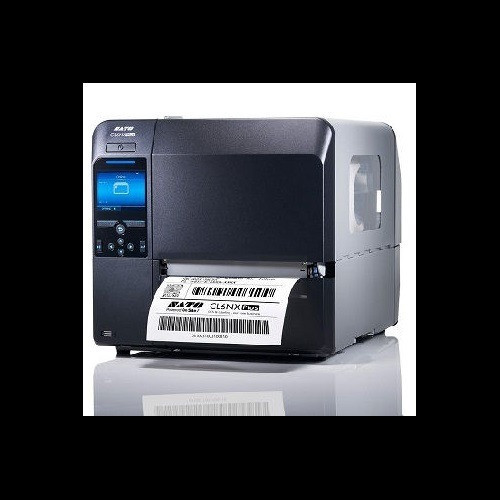
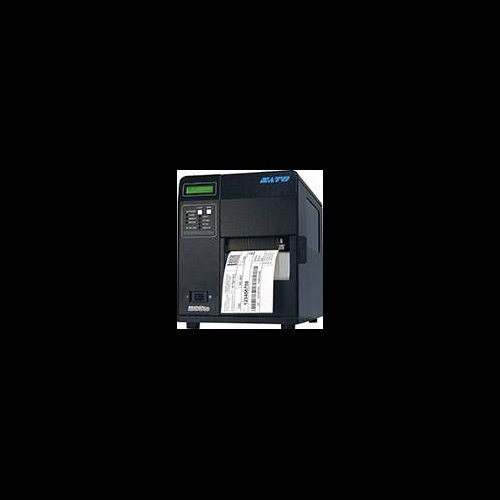
Both the Sato CL6NX Plus (WWCLPA001-WAR) and the Sato M84Pro (WM8430031) are industrial-grade, 203 dpi thermal label printers supporting both direct thermal and thermal transfer print modes, targeting warehouse, shipping, and manufacturing environments. They share the same print resolution, media roll capacity, ribbon length, and operating temperature range, making them genuine cross-shop candidates for buyers evaluating 4-inch-class industrial label printers on throughput, memory architecture, connectivity, and total deployment footprint.
In This Guide
- Which printer delivers faster throughput and wider media handling for high-volume label runs?
- How do the two printers compare on onboard memory, connectivity options, and operator interface?
- Which unit better fits the physical and environmental constraints of an industrial deployment?
- Which should you choose: the WWCLPA001-WAR or the WM8430031?
- Side-by-Side Specs
- FAQ
Which printer delivers faster throughput and wider media handling for high-volume label runs?
The CL6NX Plus (WWCLPA001-WAR) prints at 14 ips versus the M84Pro (WM8430031) at 10 ips — a 40% speed advantage that directly reduces cycle time in high-volume label runs. At 14 ips, a continuous shift produces meaningfully more labels per hour without changing consumables or operator intervention.
Max print width is nearly identical: 4.09 inches on the CL6NX Plus versus 4.1 inches on the M84Pro — a negligible difference in practice. Media width range tells a more meaningful story: the CL6NX Plus accepts media from 4.09 inches up to 6.59 inches, indicating it handles wider stock. The M84Pro supports media from 1 inch up to 4.5 inches, offering a broader minimum-width range for narrow labels such as 1-inch jewelry or specimen tags. Both accommodate the same 8.6-inch max roll diameter and 1,968 ft ribbon length, so unwind capacity is equivalent.
Both printers share 203 dpi resolution and dual direct thermal / thermal transfer modes, meaning barcode density and print quality at spec are identical on paper. Speed is the primary throughput differentiator.
How do the two printers compare on onboard memory, connectivity options, and operator interface?
Memory is where the two models diverge most sharply. The CL6NX Plus carries 2 GB Flash and 256 MB SDRAM with 100 MB user storage — a modern, large-capacity architecture suited to storing many label formats, fonts, and firmware images locally. The M84Pro lists 2 MB Flash, 16 MB SDRAM, and 2 MB user storage. That is a roughly 1,000× difference in flash capacity and a 16× difference in SDRAM, which directly limits the number of label templates and graphics that can reside on the M84Pro without a host connection.
Connectivity also diverges. The CL6NX Plus offers Ethernet, Wi-Fi, and USB. The M84Pro's datasheet bullet lists USB 2.0, Ethernet, RS-232C, and Parallel; Wi-Fi is not listed for the M84Pro. RS-232C and Parallel ports on the M84Pro are relevant for legacy PLC, scale, or host integration in older industrial lines where serial or parallel handshaking is still required — the CL6NX Plus does not list those interfaces.
Both printers include a 3.5-inch color LCD display. The CL6NX Plus specifies a full-color LCD touchscreen, enabling on-device menu navigation without a separate host. The M84Pro lists a color LCD; touch capability is not stated in the provided specs. The CL6NX Plus also lists an explicit operating system compatibility note for Windows on the M84Pro side, while the CL6NX Plus does not enumerate OS support in the provided specs.
Which unit better fits the physical and environmental constraints of an industrial deployment?
The two printers have notably different physical profiles. The CL6NX Plus measures 10.66 × 17.99 × 12.63 inches and weighs 33 lbs, with a die-cast aluminum frame and corrosion-resistant metal housing — materials explicitly specified for durability. The M84Pro measures 15.0 × 10.6 × 11.6 inches and is described as industrial metal housing; weight is listed as both 24.3 lbs (11.0 kg) and 39.7 lbs in separate spec fields, which is an internal inconsistency in the provided data — buyers should verify actual shipping weight with Sato before procurement.
Operating temperature is identical for both: 41°F to 104°F (5°C to 40°C), suitable for climate-controlled warehouses and light industrial spaces but not freezer or extreme-heat environments. Neither spec lists an IP or NEMA ingress-protection rating.
Both units are AC-powered at 100–240V, 50/60Hz, making them compatible with standard global power infrastructure without a step-down transformer. The CL6NX Plus explicitly lists its frame material (die-cast aluminum); the M84Pro lists industrial metal housing without further material detail. Both carry a 1-year warranty per the provided specs.
Which should you choose: the WWCLPA001-WAR or the WM8430031?
Our take: The WWCLPA001-WAR (CL6NX Plus) is the stronger choice when print throughput, onboard storage capacity, and wireless connectivity are the primary decision criteria. It prints at 14 ips versus the M84Pro's 10 ips — a 40% speed delta that compounds significantly across multi-shift operations. Its 2 GB Flash and 256 MB SDRAM dwarf the M84Pro's 2 MB Flash and 16 MB SDRAM, enabling far more label formats and fonts to reside locally without a persistent host connection. It also adds Wi-Fi, eliminating the need for fixed Ethernet drops on mobile print stations or reconfigurable lines. Conversely, the WM8430031 (M84Pro) is the better fit when legacy serial or parallel host integration is mandatory — it lists RS-232C and Parallel ports that the CL6NX Plus does not — or when narrow media down to 1 inch must be supported. Note: the M84Pro's weight spec contains an inconsistency (24.3 lbs vs. 39.7 lbs) that should be verified before ordering.
Side-by-Side Comparison
Spec-for-spec, from manufacturer data.
| Specification | Sato WWCLPA001-WAR | Sato WM8430031 |
|---|---|---|
| MPN | WWCLPA001-WAR | WM8430031 |
| Model | CL6NX Plus | M84Pro |
| Print Resolution | 203 dpi | 203 dpi |
| Print Speed | 14 ips | 10 ips |
| Print Methods | Direct Thermal, Thermal Transfer | Direct Thermal, Thermal Transfer |
| Max Print Width | 4.09 in | 4.1 in |
| Media Width Range | 4.09 in – 6.59 in | 1.0 in – 4.5 in |
| Max Roll Diameter | 8.6 in | 8.6 in |
| Max Ribbon Length | 1,968 ft | 1,968 ft |
| Memory Flash | 2 GB | 2 MB |
| Memory RAM/SDRAM | 256 MB SDRAM | 16 MB SDRAM |
| User Storage | 100 MB | 2 MB |
| Display | 3.5 in Full-Color LCD Touchscreen | 3.5 in Color LCD |
| Connectivity | Ethernet, Wi-Fi, USB | USB 2.0, Ethernet, RS-232C, Parallel |
| Frame / Housing | Die-cast aluminum, corrosion-resistant metal | Industrial metal |
| Weight | 33 lbs | 24.3 lbs / 39.7 lbs (spec inconsistency — verify) |
| Dimensions (W × D × H) | 10.66 × 17.99 × 12.63 in | 15.0 × 10.6 × 11.6 in |
| Operating Temperature | 41°F – 104°F | 41°F – 104°F (5°C – 40°C) |
| Power | AC 100–240V, 50/60Hz | AC 100–240V, 50/60Hz |
| Warranty | 1-year | 1-year |
Frequently Asked Questions
Which should you choose: the WWCLPA001-WAR or the WM8430031?
The WWCLPA001-WAR (CL6NX Plus) is the stronger choice when print throughput, onboard storage capacity, and wireless connectivity are the primary decision criteria. It prints at 14 ips versus the M84Pro's 10 ips — a 40% speed delta that compounds significantly across multi-shift operations. Its 2 GB Flash and 256 MB SDRAM dwarf the M84Pro's 2 MB Flash and 16 MB SDRAM, enabling far more label formats and fonts to reside locally without a persistent host connection. It also adds Wi-Fi, eliminating the need for fixed Ethernet drops on mobile print stations or reconfigurable lines. Conversely, the WM8430031 (M84Pro) is the better fit when legacy serial or parallel host integration is mandatory — it lists RS-232C and Parallel ports that the CL6NX Plus does not — or when narrow media down to 1 inch must be supported. Note: the M84Pro's weight spec contains an inconsistency (24.3 lbs vs. 39.7 lbs) that should be verified before ordering.
Is the WWCLPA001-WAR or WM8430031 better for high-volume warehouse label printing?
The WWCLPA001-WAR (CL6NX Plus) is better suited for high-volume runs. Its 14 ips print speed is 40% faster than the WM8430031's 10 ips, and its 2 GB Flash / 256 MB SDRAM memory architecture allows many more label templates to be stored locally, reducing host dependency during continuous production.
Does either printer support Wi-Fi for wireless network deployment?
Yes, but only the WWCLPA001-WAR (CL6NX Plus) lists Wi-Fi in its provided specifications. The WM8430031 (M84Pro) lists Ethernet and USB (plus RS-232C and Parallel) but Wi-Fi is not stated in the available spec data for that model.
Which printer should I choose if I need to connect to legacy PLC or host systems via serial or parallel interfaces?
The WM8430031 (M84Pro) is the appropriate choice for legacy integration. Its provided specifications list RS-232C and Parallel connectivity in addition to USB and Ethernet. The WWCLPA001-WAR (CL6NX Plus) does not list RS-232C or Parallel ports in its provided specifications.
More Label Printer Comparisons
- Sato WM8430031 vs Zebra ZT62062-T210100Z
- Sato WM8430031 vs Sato WM8430231
- Sato WM8430031 vs Sato WM8430221
- Sato WM8430231 vs Sato WM8430221
- Sato WM8430221 vs Zebra ZT62062-T210100Z
- Sato WM8430021 vs Zebra ZT62062-T210100Z
Label Printer Buying Guides
Get a Second Opinion on Your Camera Choice
Share your site layout, coverage goals, and budget. Our team will validate the camera selection, flag anything we would change, and recommend products that match the use case.