
Sato WWCLP1B01-WAR vs Sato WM8430231: Specification Comparison
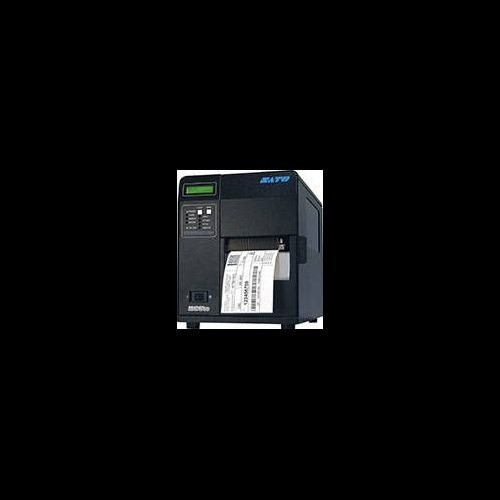
Both the Sato CL4NX Plus (WWCLP1B01-WAR) and the Sato M84Pro (WM8430231) are industrial-grade direct thermal and thermal transfer label printers operating at 203 dpi, sharing the same operating temperature range and ribbon capacity. Buyers evaluating either unit are typically selecting a production-floor label printer for high-volume labeling in warehousing, manufacturing, or logistics environments. The comparison centers on RFID capability, throughput speed, media handling range, and onboard compute resources—factors that determine fit for smart-label workflows versus standard label printing.
In This Guide
Which printer wins on RFID capability and print throughput?
The CL4NX Plus (WWCLP1B01-WAR) includes integrated HF RFID encoding at 13.56 MHz with SATO RF Analyze tuning, making it a direct fit for HF smart-label workflows such as healthcare, retail item-level tagging, or compliance labeling requiring ISO 15693 or ISO 14443 tag encoding. The M84Pro (WM8430231) has no RFID capability listed in its specifications.
On raw throughput, the CL4NX Plus prints at 14 ips versus the M84Pro's 10 ips—a 40% speed advantage. For operations running continuous print jobs at volume, this gap translates directly to higher label output per shift. The M84Pro's 10 ips is a competitive baseline for many production environments but will be a bottleneck where cycle time is constrained.
How do the two printers compare on media handling range and onboard compute resources?
The CL4NX Plus accepts media widths from 0.87" to 5.04" and rolls up to 10" OD. The M84Pro handles media from 1" to 4.5" wide on rolls up to 8.6" OD. The CL4NX Plus therefore supports a wider media envelope on both the narrow end (0.87" vs 1") and the wide end (5.04" vs 4.5"), and accommodates larger roll diameters, reducing changeover frequency in high-volume runs.
Onboard compute resources differ substantially. The CL4NX Plus carries 2 GB Flash, 256 MB SDRAM, and 100 MB user storage. The M84Pro is specified with 2 MB Flash, 16 MB SDRAM, and 2 MB user storage. This is a significant gap: the CL4NX Plus's memory headroom supports larger label formats, more resident fonts and graphics, complex RFID encoding logic, and firmware-intensive workflows. The M84Pro's memory profile is characteristic of a more constrained, task-specific print engine.
Which printer offers broader connectivity and integration options?
The CL4NX Plus specification lists Ethernet, Wi-Fi, and USB in the structured fields. The datasheet section additionally references Bluetooth and RS-232C. The M84Pro's structured fields list Ethernet and USB; the datasheet section adds RS-232C and Parallel port.
The CL4NX Plus's inclusion of Wi-Fi and Bluetooth (per datasheet) enables wireless deployment without a wired network drop—relevant for floor layouts where cabling is impractical. The M84Pro's Parallel port (per datasheet) provides a legacy integration path for older host systems still running parallel interfaces, which the CL4NX Plus does not list. Buyers with legacy parallel-connected hosts should verify M84Pro parallel compatibility against their host environment; buyers requiring wireless or RFID should look to the CL4NX Plus. Neither model lists a specific OS dependency in structured specs, though the M84Pro spec block notes Windows as the operating system.
Which should you choose: the WWCLP1B01-WAR or the WM8430231?
Our take: The WWCLP1B01-WAR is the stronger choice when the workflow requires HF RFID encoding, higher throughput, or larger media rolls. The CL4NX Plus delivers a 40% print-speed advantage (14 ips vs 10 ips), supports media up to 5.04" wide and 10" OD versus the M84Pro's 4.5" and 8.6" OD, and carries substantially more onboard memory (2 GB Flash / 256 MB SDRAM vs 2 MB / 16 MB)—critical for complex label formats and RFID encoding logic. Its integrated 13.56 MHz HF RFID is absent entirely on the M84Pro. The WM8430231 is a viable alternative for standard thermal label printing where RFID is not required, budgets are tighter, a Parallel interface is needed for legacy host compatibility, or the narrower media envelope (1"–4.5") covers all label sizes in use. Both share the same 203 dpi resolution, ribbon capacity, operating temperature range, and 1-year warranty.
Side-by-Side Comparison
Spec-for-spec, from manufacturer data.
| Specification | Sato WWCLP1B01-WAR | Sato WM8430231 |
|---|---|---|
| MPN | WWCLP1B01-WAR | WM8430231 |
| Model | CL4NX Plus | M84Pro |
| Print Resolution | 203 dpi | 203 dpi |
| Print Speed | 14 ips | 10 ips |
| Print Method | Direct Thermal / Thermal Transfer | Direct Thermal / Thermal Transfer |
| Max Print Width | 4.09" | 4.1" |
| Min Media Width | 0.87" | 1.0" |
| Max Media Width | 5.04" | 4.5" |
| Max Roll Diameter | 10" | 8.6" |
| Max Ribbon Length | 1,968 ft | 1,968 ft |
| RFID | HF 13.56 MHz | — |
| Flash Memory | 2 GB | 2 MB |
| SDRAM | 256 MB | 16 MB |
| User Storage | 100 MB | 2 MB |
| Connectivity | Ethernet, Wi-Fi, USB (+ Bluetooth, RS-232C per datasheet) | Ethernet, USB (+ RS-232C, Parallel per datasheet) |
| Display | 3.5" Full-Color LCD | 3.5" Color LCD |
| Operating Temperature | 41°F–104°F (5°C–40°C) | 41°F–104°F (5°C–40°C) |
| Power | AC 100–240V, 50/60Hz | AC 100–240V, 50/60Hz |
| Weight | 33 lb (15 kg) | 39.7 lb (11.0 kg noted in spec; 39.7 lb listed) |
| Warranty | 1-year | 1-year |
Frequently Asked Questions
Which should you choose: the WWCLP1B01-WAR or the WM8430231?
The WWCLP1B01-WAR is the stronger choice when the workflow requires HF RFID encoding, higher throughput, or larger media rolls. The CL4NX Plus delivers a 40% print-speed advantage (14 ips vs 10 ips), supports media up to 5.04" wide and 10" OD versus the M84Pro's 4.5" and 8.6" OD, and carries substantially more onboard memory (2 GB Flash / 256 MB SDRAM vs 2 MB / 16 MB)—critical for complex label formats and RFID encoding logic. Its integrated 13.56 MHz HF RFID is absent entirely on the M84Pro. The WM8430231 is a viable alternative for standard thermal label printing where RFID is not required, budgets are tighter, a Parallel interface is needed for legacy host compatibility, or the narrower media envelope (1"–4.5") covers all label sizes in use. Both share the same 203 dpi resolution, ribbon capacity, operating temperature range, and 1-year warranty.
Does the WWCLP1B01-WAR support RFID and does the WM8430231?
Yes. The WWCLP1B01-WAR (CL4NX Plus) includes integrated HF RFID encoding at 13.56 MHz. The WM8430231 (M84Pro) has no RFID capability listed in its specifications.
Which printer is faster—the WWCLP1B01-WAR or the WM8430231?
The WWCLP1B01-WAR prints at 14 ips; the WM8430231 prints at 10 ips. The CL4NX Plus is 40% faster at the same 203 dpi resolution.
Can the WM8430231 handle wider media or larger rolls than the WWCLP1B01-WAR?
No. The WWCLP1B01-WAR accepts media up to 5.04" wide on rolls up to 10" OD. The WM8430231 is rated to 4.5" wide on rolls up to 8.6" OD. The CL4NX Plus has the larger media envelope on both dimensions.
More Label Printer Comparisons
- Sato WM8430031 vs Zebra ZT62062-T210100Z
- Sato WM8430031 vs Sato WM8430231
- Sato WM8430031 vs Sato WM8430221
- Sato WM8430231 vs Sato WM8430221
- Sato WM8430221 vs Zebra ZT62062-T210100Z
- Sato WM8430021 vs Zebra ZT62062-T210100Z
Label Printer Buying Guides
Get a Second Opinion on Your Camera Choice
Share your site layout, coverage goals, and budget. Our team will validate the camera selection, flag anything we would change, and recommend products that match the use case.