
Sato WWCLP1501-NAN vs Sato WM8430031: Specification Comparison
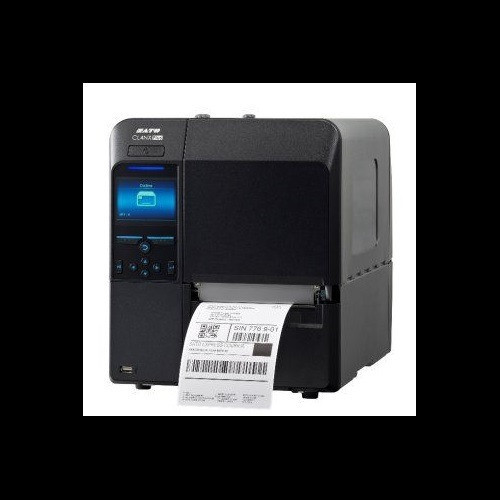
Both the Sato CL4NX Plus (WWCLP1501-NAN) and the Sato M84Pro (WM8430031) are industrial-grade 203 dpi thermal label printers supporting direct thermal and thermal transfer print modes, targeting warehouse, manufacturing, and shipping-label environments. This comparison evaluates the two on print performance and media handling, memory and storage architecture, and connectivity and physical build — the three dimensions most likely to drive a purchasing decision for industrial label printer deployments.
In This Guide
- Which printer delivers faster throughput and handles a wider range of media?
- Which printer has the memory and storage capacity for demanding label formats and font libraries?
- Which printer offers more flexible connectivity and a more durable physical platform?
- Which should you choose: the WWCLP1501-NAN or the WM8430031?
- Side-by-Side Specs
- FAQ
Which printer delivers faster throughput and handles a wider range of media?
The CL4NX Plus (WWCLP1501-NAN) prints at 14 ips versus the M84Pro (WM8430031) at 10 ips — a 40% speed advantage that becomes meaningful in high-volume label runs. Both share an identical 203 dpi resolution and an identical maximum ribbon length of 1,968 ft (600 m).
On media width, the CL4NX Plus accepts stock from 0.87" to 5.04" wide, while the M84Pro accepts 1.00" to 4.5" wide. The CL4NX Plus therefore handles both narrower specialty labels and slightly wider stock that the M84Pro cannot accommodate. Maximum roll diameter is 10" on the CL4NX Plus versus 8.6" on the M84Pro, meaning fewer roll changes per shift on the CL4NX Plus. Maximum print width is effectively equivalent: 4.09" (CL4NX Plus) versus 4.1" (M84Pro).
Which printer has the memory and storage capacity for demanding label formats and font libraries?
The CL4NX Plus carries 256 MB SDRAM and 2 GB flash memory with 100 MB of user-accessible storage. The M84Pro specifies 16 MB SDRAM and 2 MB flash memory with 2 MB of user storage. The CL4NX Plus has 16× more RAM, 1,000× more flash, and 50× more user storage.
For deployments running complex label formats, large embedded graphics, multiple font sets, or on-printer application logic, the CL4NX Plus's memory architecture is substantially more capable. The M84Pro's 2 MB flash and 16 MB RAM are characteristic of an older-generation platform and would constrain storing many label templates or large font libraries on the device itself.
Which printer offers more flexible connectivity and a more durable physical platform?
The CL4NX Plus lists Ethernet, Wi-Fi, USB, Bluetooth, and NFC in its connectivity specs — five interfaces covering both wired and wireless infrastructure. The M84Pro lists USB 2.0, Ethernet, RS-232C, and Parallel — four wired interfaces with no wireless capability specified.
For environments that require wire-free placement or mobile cart deployments, the CL4NX Plus's Wi-Fi and Bluetooth support is a clear differentiator. The M84Pro's RS-232C and Parallel ports serve legacy host systems that the CL4NX Plus does not natively list.
On physical build, the CL4NX Plus specifies a rigid cast aluminum frame with corrosion-resistant material and weighs 33 lbs (15 kg). The M84Pro specifies industrial metal housing and weighs 24.3 lbs (11.0 kg) by the kilogram spec, though its pound spec reads 39.7 lbs — an internal inconsistency in the provided data that buyers should verify with the manufacturer before purchasing. Both units operate from AC 100–240 V, 50/60 Hz and share the same 41°F–104°F (5°C–40°C) operating temperature range.
Which should you choose: the WWCLP1501-NAN or the WM8430031?
Our take: The WWCLP1501-NAN is the stronger choice when throughput, media flexibility, and on-printer storage capacity are priorities. It prints at 14 ips versus the WM8430031's 10 ips, accepts a wider media range (0.87"–5.04" vs. 1.00"–4.5"), and carries dramatically more memory: 256 MB SDRAM and 2 GB flash versus 16 MB SDRAM and 2 MB flash. It also adds Wi-Fi, Bluetooth, and NFC connectivity absent from the M84Pro. The WM8430031 is lighter (11.0 kg per its metric spec), includes RS-232C and Parallel ports for legacy host integration, and may suit environments already wired for serial or parallel communication. Buyers should independently verify the M84Pro's conflicting weight values (11.0 kg / 39.7 lbs) before finalizing a specification.
Side-by-Side Comparison
Spec-for-spec, from manufacturer data.
| Specification | Sato WWCLP1501-NAN | Sato WM8430031 |
|---|---|---|
| MPN | WWCLP1501-NAN | WM8430031 |
| Model Name | CL4NX Plus | M84Pro |
| Print Resolution | 203 dpi | 203 dpi |
| Print Speed | 14 ips | 10 ips |
| Max Print Width | 4.09" | 4.1" |
| Min Media Width | 0.87" | 1.0" |
| Max Media Width | 5.04" | 4.5" |
| Max Roll Diameter | 10" | 8.6" |
| Max Ribbon Length | 1,968 ft (600 m) | 1,968 ft (600 m) |
| Print Method | Direct Thermal / Thermal Transfer | Direct Thermal / Thermal Transfer |
| Display | 3.5" full-color LCD touchscreen | 3.5" color LCD |
| Memory RAM | 256 MB SDRAM | 16 MB SDRAM |
| Memory Flash | 2 GB | 2 MB |
| User Storage | 100 MB | 2 MB |
| Connectivity | Ethernet, Wi-Fi, USB, Bluetooth, NFC | USB 2.0, Ethernet, RS-232C, Parallel |
| Housing | Rigid cast aluminum, corrosion-resistant | Industrial metal |
| Weight | 33 lbs (15 kg) | 24.3 lbs (11.0 kg) — note: spec also states 39.7 lbs; verify with manufacturer |
| Operating Temperature | 41°F–104°F (5°C–40°C) | 41°F–104°F (5°C–40°C) |
| Power | AC 100–240 V, 50/60 Hz | AC 100–240 V, 50/60 Hz |
| Warranty | 1 year | 1 year |
Frequently Asked Questions
Which should you choose: the WWCLP1501-NAN or the WM8430031?
The WWCLP1501-NAN is the stronger choice when throughput, media flexibility, and on-printer storage capacity are priorities. It prints at 14 ips versus the WM8430031's 10 ips, accepts a wider media range (0.87"–5.04" vs. 1.00"–4.5"), and carries dramatically more memory: 256 MB SDRAM and 2 GB flash versus 16 MB SDRAM and 2 MB flash. It also adds Wi-Fi, Bluetooth, and NFC connectivity absent from the M84Pro. The WM8430031 is lighter (11.0 kg per its metric spec), includes RS-232C and Parallel ports for legacy host integration, and may suit environments already wired for serial or parallel communication. Buyers should independently verify the M84Pro's conflicting weight values (11.0 kg / 39.7 lbs) before finalizing a specification.
Is the WWCLP1501-NAN or WM8430031 better for high-volume label printing?
Based on the provided specs, the WWCLP1501-NAN prints at 14 ips versus the WM8430031's 10 ips, and supports a larger maximum roll diameter (10" vs. 8.6"), both of which reduce downtime in high-volume runs. For throughput-driven environments, the WWCLP1501-NAN has the spec advantage.
Can either printer connect wirelessly to a network?
The WWCLP1501-NAN specifies Wi-Fi, Bluetooth, and NFC connectivity in addition to Ethernet and USB. The WM8430031 specifies only wired interfaces — USB 2.0, Ethernet, RS-232C, and Parallel — with no wireless connectivity listed in the provided specs.
Which printer is better suited for legacy systems using serial or parallel connections?
The WM8430031 lists RS-232C and Parallel interfaces, which directly support legacy serial and parallel host systems. The WWCLP1501-NAN does not list RS-232C or Parallel in its provided specs. Buyers relying on legacy host connectivity should note this distinction and confirm interface support with Sato before purchasing.
More Label Printer Comparisons
- Sato WM8430031 vs Zebra ZT62062-T210100Z
- Sato WM8430031 vs Sato WM8430231
- Sato WM8430031 vs Sato WM8430221
- Sato WM8430231 vs Sato WM8430221
- Sato WM8430221 vs Zebra ZT62062-T210100Z
- Sato WM8430021 vs Zebra ZT62062-T210100Z
Label Printer Buying Guides
Get a Second Opinion on Your Camera Choice
Share your site layout, coverage goals, and budget. Our team will validate the camera selection, flag anything we would change, and recommend products that match the use case.