
Sato W2312-400CB-EX1 vs Sato WT302-403NN-EX1-2: Specification Comparison
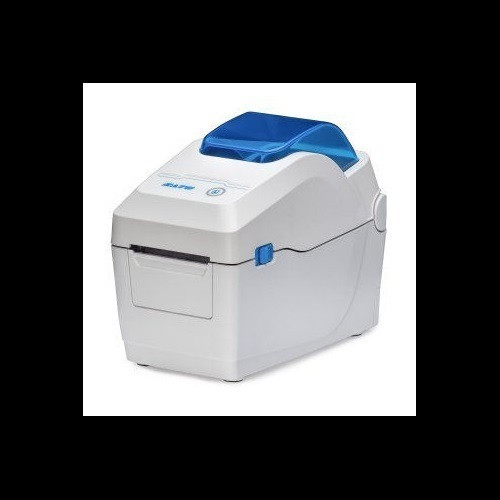
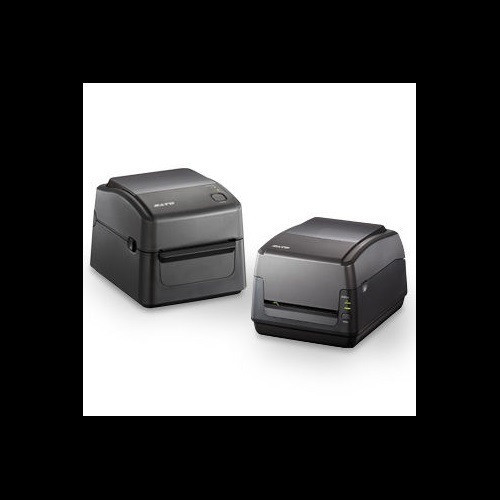
Both the Sato WS2 W2312-400CB-EX1 and the Sato WS4 WT302-403NN-EX1-2 are 300 dpi desktop direct-thermal label printers sharing the same connectivity suite—Ethernet, Wi-Fi, Bluetooth, and USB—and the same maximum media-roll diameter of 5 inches. The comparison centers on three practical axes that matter most when selecting a desktop label printer: print width and media versatility, print speed and memory resources, and physical footprint with operating environment specs.
In This Guide
- Which printer handles wider labels and more media types?
- Which printer is faster and better resourced for stored formats and fonts?
- Which printer provides more physical and environmental specification transparency?
- Which should you choose: the W2312-400CB-EX1 or the WT302-403NN-EX1-2?
- Side-by-Side Specs
- FAQ
Which printer handles wider labels and more media types?
The WT302-403NN-EX1-2 (WS4) supports a maximum print width of 4.09 inches and accepts media ranging from 1 inch to 4.65 inches wide, covering a broad range from small courier labels to wide shipping and compliance labels. It also supports both direct thermal and thermal transfer printing, so it can accept ribbon-based media (up to 984 ft ribbon length) for longer-lasting, smear-resistant output.
The W2312-400CB-EX1 (WS2) is limited to a maximum print width of 2.2 inches. Its spec sheet does not list a minimum media width or a thermal transfer/ribbon capability—it is specified as direct thermal only. For applications confined to narrow labels such as small parcel or jewelry tags, this is sufficient, but any workflow requiring labels wider than 2.2 inches or ribbon-based durability is outside its stated capability.
Which printer is faster and better resourced for stored formats and fonts?
The W2312-400CB-EX1 prints at 7 inches per second, one inch per second faster than the WT302-403NN-EX1-2's rated 6 ips. At high-volume throughput on narrow labels, this 17% speed advantage compounds meaningfully across thousands of print jobs per day.
On memory, the W2312-400CB-EX1 again leads significantly: 256 MB Flash and 128 MB SDRAM versus the WT302-403NN-EX1-2's 16 MB Flash, 32 MB SDRAM, and 16 MB user storage. Larger onboard memory accommodates more stored label formats, embedded fonts, and graphics without host-side dependency—relevant for distributed or standalone deployments. The WT302-403NN-EX1-2's memory figures are notably lower and may constrain format complexity or the number of resident templates.
Which printer provides more physical and environmental specification transparency?
The WT302-403NN-EX1-2 provides a complete physical profile: dimensions of 8.69 × 10.96 × 7.38 inches, weight of 5.46 lb (2.48 kg), power input of AC 100–240 V 50/60 Hz, and a rated operating temperature of 41°F to 104°F (5°C to 40°C). These figures allow direct rack-space, bench-space, and environmental planning.
The W2312-400CB-EX1 spec set does not include chassis dimensions, weight, power input specification, or a stated operating temperature range. Buyers needing those values for site planning or IT procurement documentation would need to consult the manufacturer's datasheet directly. The WS2 does specify a 2.4-inch color LCD display, a detail absent from the WS4 spec listing, which notes only 'LCD' without size.
Which should you choose: the W2312-400CB-EX1 or the WT302-403NN-EX1-2?
Our take: The W2312-400CB-EX1 is the stronger choice when the workflow is confined to labels up to 2.2 inches wide and demands maximum throughput and onboard storage capacity. It prints at 7 ips versus the WT302-403NN-EX1-2's 6 ips and carries 256 MB Flash and 128 MB SDRAM—16× and 4× the WS4's respective memory figures—supporting complex stored formats and high-volume standalone operation. Conversely, the WT302-403NN-EX1-2 is the correct choice when label width exceeds 2.2 inches (it reaches 4.09 inches), when thermal transfer ribbon output is required for durability, or when full physical and environmental specs are needed for procurement compliance. Both carry a 1-year warranty and identical connectivity. Buyers running narrow direct-thermal shipping labels at speed should favor the WS2; buyers needing wider media, dual print-mode flexibility, or fully documented physical specs should favor the WS4.
Side-by-Side Comparison
Spec-for-spec, from manufacturer data.
| Specification | Sato W2312-400CB-EX1 | Sato WT302-403NN-EX1-2 |
|---|---|---|
| SKU | W2312-400CB-EX1 | WT302-403NN-EX1-2 |
| Series | WS2 | WS4 |
| Print Method | Direct Thermal | Direct Thermal / Thermal Transfer |
| Resolution | 300 dpi | 300 dpi |
| Print Speed | 7 ips | 6 ips |
| Max Print Width | 2.2" | 4.09" |
| Media Width Range | — | 1" to 4.65" |
| Max Media Roll Diameter | 5" | 5" |
| Max Ribbon Length | — | 984 ft |
| Flash Memory | 256 MB | 16 MB |
| SDRAM | 128 MB | 32 MB |
| Display | 2.4" color LCD | LCD (size not specified) |
| Connectivity | USB 2.0, Ethernet, Wi-Fi, Bluetooth | USB, Ethernet, Wi-Fi, Bluetooth |
| Operating Temperature | — | 41°F to 104°F (5°C to 40°C) |
| Weight | — | 5.46 lb (2.48 kg) |
| Dimensions | — | 8.69" x 10.96" x 7.38" |
| Power Input | — | AC 100–240 V, 50/60 Hz |
| Warranty | 1-year | 1-year |
Frequently Asked Questions
Which should you choose: the W2312-400CB-EX1 or the WT302-403NN-EX1-2?
The W2312-400CB-EX1 is the stronger choice when the workflow is confined to labels up to 2.2 inches wide and demands maximum throughput and onboard storage capacity. It prints at 7 ips versus the WT302-403NN-EX1-2's 6 ips and carries 256 MB Flash and 128 MB SDRAM—16× and 4× the WS4's respective memory figures—supporting complex stored formats and high-volume standalone operation. Conversely, the WT302-403NN-EX1-2 is the correct choice when label width exceeds 2.2 inches (it reaches 4.09 inches), when thermal transfer ribbon output is required for durability, or when full physical and environmental specs are needed for procurement compliance. Both carry a 1-year warranty and identical connectivity. Buyers running narrow direct-thermal shipping labels at speed should favor the WS2; buyers needing wider media, dual print-mode flexibility, or fully documented physical specs should favor the WS4.
Can the W2312-400CB-EX1 or WT302-403NN-EX1-2 print thermal transfer labels using a ribbon?
Only the WT302-403NN-EX1-2 supports thermal transfer in addition to direct thermal; its spec lists a maximum ribbon length of 984 ft. The W2312-400CB-EX1 is specified as direct thermal only—no ribbon capability is listed in its specs.
Which printer is better suited for high-volume label printing in a busy shipping environment?
The W2312-400CB-EX1 runs at 7 ips versus the WT302-403NN-EX1-2's 6 ips, giving it a throughput edge. It also carries substantially more onboard memory (256 MB Flash / 128 MB SDRAM vs. 16 MB / 32 MB), which supports faster local format processing. However, if labels wider than 2.2 inches are required, the WT302-403NN-EX1-2 is the only option of the two.
Is the W2312-400CB-EX1 or WT302-403NN-EX1-2 better for an IT team that needs full physical specs for procurement documentation?
The WT302-403NN-EX1-2 provides dimensions (8.69" × 10.96" × 7.38"), weight (5.46 lb), power input (AC 100–240 V, 50/60 Hz), and operating temperature range (41°F–104°F). The W2312-400CB-EX1 spec set does not include those values; buyers would need to source them from the manufacturer datasheet before procurement.
More Label Printer Comparisons
- Sato WT302-403NN-EX1-2 vs Zebra ZT11143-D01000FZ
- Sato WT302-403NN-EX1-2 vs Sato W2312-400CN-EX1
- Sato WT302-403NN-EX1-2 vs Sato W2302-400DN-EX1
- Sato W2312-400CN-EX1 vs Zebra ZT11143-D01000FZ
- Sato W2312-400CN-EX1 vs Sato W2302-400DN-EX1
- Sato W2302-400DN-EX1 vs Zebra ZT11143-D01000FZ
Label Printer Buying Guides
Get a Second Opinion on Your Camera Choice
Share your site layout, coverage goals, and budget. Our team will validate the camera selection, flag anything we would change, and recommend products that match the use case.