
Pelco SRXV2-2V13-EBT-IR vs Pelco SRXV2-2V13-EBT-IRWL: Specification Comparison
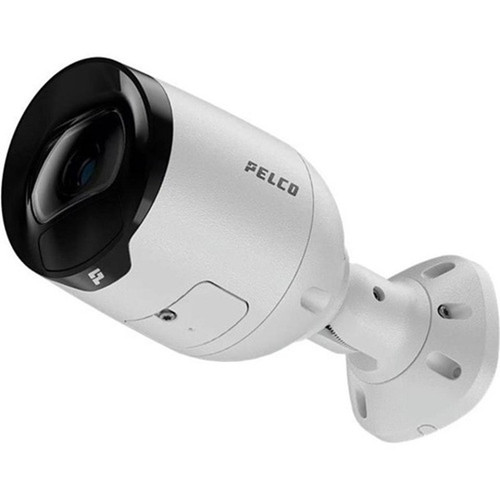
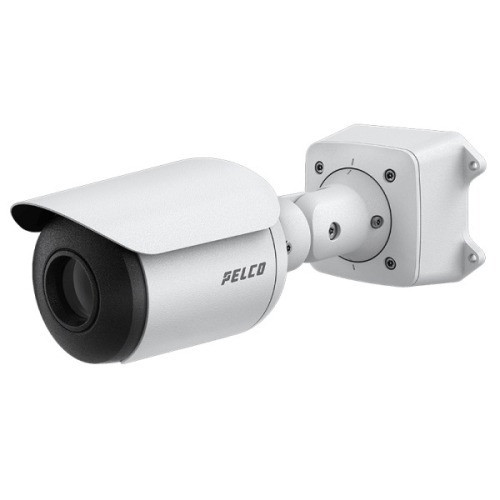
Both the Pelco SRXV2-2V13-EBT-IR and the SRXV2-2V13-EBT-IRWL are 2MP outdoor bullet cameras from the Sarix Value 2 Series, sharing the same sensor, lens range, compression, WDR, PoE class, ingress protection, and NDAA compliance. The sole specified differentiator is illumination mode: the -IR model ships with conventional 850 nm infrared only, while the -IRWL model adds a white-light illuminator alongside the IR, enabling switchable covert or color nighttime capture. Installers choosing between them are making a night-vision strategy decision, not a core imaging or integration trade-off.
In This Guide
How do the imaging specs compare?
Both cameras share an identical imaging core: a 1/2.8-inch progressive-scan CMOS sensor capturing 1920×1080 at up to 30 fps, a varifocal 2.7–13.5 mm lens with remote zoom, autofocus, and IR cut filter, an F1.4 aperture, and 120 dB Wide Dynamic Range. Minimum illumination is specified at 0.02 lux color and 0 lux in IR mode on both units. No specification distinguishes sensor performance, WDR, frame rate, or lens optics between the two models.
The single imaging-layer difference is the illumination complement. The SRXV2-2V13-EBT-IR is documented with 850 nm IR illumination and a Day/Night function. The SRXV2-2V13-EBT-IRWL is documented with dual 850 nm IR plus white-light illumination, enabling color imaging at night when white light is active. Neither datasheet specifies effective IR or white-light throw distance; buyers should confirm illumination range directly with Pelco before specifying either model for a defined detection or identification zone.
What about installation and environment?
Both models are rated IP66 for weatherproofing. The -IR model lists IK09 as its vandal-resistance rating. The -IRWL model lists IK09 in one spec field and IK10 in a second field (_Impact Rating); this discrepancy exists within the provided spec data and should be confirmed against the Pelco datasheet before specifying in high-vandal-risk environments. Both cameras operate from -40°C to +60°C and are intended for outdoor deployment.
Power input is PoE Class 3 (802.3af) on both units, with RJ-45 connectivity. Supported mount types are identical: wall, ceiling, pole, pendant, and corner. Housing color is white on both. Dimensions for the -IR model appear malformed in the provided spec data (listed as '512 x 2882560 x 1440 inches'), so physical size cannot be reliably compared; the -IRWL lists 191.4 mm × 84.9 mm (partial). Weight is listed identically at 636 g / 273 g / 540 g (multi-variant notation) on both models. Installers should pull confirmed dimensional data from the manufacturer datasheets.
Which fits your VMS and analytics better?
Integration characteristics are identical across both models. Both support ONVIF Profile S and Profile T, ensuring broad VMS compatibility. Video compression options are H.265, H.264, and Motion JPEG on both. Bandwidth management includes SmartCodec technology and Dynamic GOP on both units. Both cameras support HTTPS encryption and are NDAA Section 889 compliant.
Edge storage via microSD is listed on both. The spec data references SD card storage, FTP, email, text overlay, and HTTP generic event automation on both models. Neither model's provided specs document an audio input or output capability, a built-in microphone, or speaker—audio support is not confirmed from the supplied data for either unit. Analytics specifications beyond the camera automation list are not itemized in the provided data for either model.
Which should you choose: the SRXV2-2V13-EBT-IR or the SRXV2-2V13-EBT-IRWL?
Our take: The SRXV2-2V13-EBT-IRWL is the stronger choice when color identification at night is operationally required, since its white-light illuminator enables color nighttime imaging that the IR-only SRXV2-2V13-EBT-IR cannot deliver. In every other measurable spec—sensor size (1/2.8-inch CMOS), resolution (1920×1080 at 30 fps), WDR (120 dB), minimum illumination (0.02 lux color / 0 lux IR), lens range (2.7–13.5 mm varifocal), PoE class (3, 802.3af), operating temperature (-40°C to +60°C), compression (H.265/H.264/MJPEG), ONVIF profiles (S and T), and warranty (5 years)—the two cameras are specification-identical. Choose the -IR model for covert perimeter monitoring where invisible illumination is mandatory; choose the -IRWL where color nighttime evidence quality or white-light deterrence justifies the added illuminator. Confirm the IK09 vs IK10 discrepancy on the -IRWL before deploying in vandal-rated applications.
Side-by-Side Comparison
Spec-for-spec, from manufacturer data.
| Specification | Pelco SRXV2-2V13-EBT-IR | Pelco SRXV2-2V13-EBT-IRWL |
|---|---|---|
| Series | Sarix Value 2 | Sarix Value 2 |
| Camera Type | Bullet | Bullet |
| Resolution | 2MP / 1920×1080 | 2MP / 1920×1080 |
| Image Sensor | 1/2.8" Progressive Scan CMOS | 1/2.8" Progressive Scan CMOS |
| Lens / Focal Length | Varifocal 2.7–13.5 mm | Varifocal 2.7–13.5 mm |
| Aperture | F1.4 | F1.4 |
| Max Frame Rate | 30 fps | 30 fps |
| Min Illumination | 0.02 lux color / 0 lux IR | 0.02 lux color / 0 lux IR |
| Illumination | IR 850 nm | IR 850 nm + White Light |
| WDR | 120 dB | 120 dB |
| Video Compression | H.265; H.264; Motion JPEG | H.265; H.264; Motion JPEG |
| IP Rating | IP66 | IP66 |
| IK / Vandal Rating | IK09 | IK09 (spec) / IK10 (impact field) — verify with Pelco |
| Operating Temperature | -40°C to +60°C | -40°C to +60°C |
| Power Input / PoE Class | PoE Class 3 (802.3af) | PoE Class 3 (802.3af) |
| ONVIF Compliance | Profile S; Profile T | Profile S; Profile T |
| Edge Storage | microSD | microSD |
| HTTPS Encryption | Yes | Yes |
| NDAA Section 889 | Compliant | Compliant |
| Warranty | 5 years | 5 years |
Frequently Asked Questions
Which should you choose: the SRXV2-2V13-EBT-IR or the SRXV2-2V13-EBT-IRWL?
The SRXV2-2V13-EBT-IRWL is the stronger choice when color identification at night is operationally required, since its white-light illuminator enables color nighttime imaging that the IR-only SRXV2-2V13-EBT-IR cannot deliver. In every other measurable spec—sensor size (1/2.8-inch CMOS), resolution (1920×1080 at 30 fps), WDR (120 dB), minimum illumination (0.02 lux color / 0 lux IR), lens range (2.7–13.5 mm varifocal), PoE class (3, 802.3af), operating temperature (-40°C to +60°C), compression (H.265/H.264/MJPEG), ONVIF profiles (S and T), and warranty (5 years)—the two cameras are specification-identical. Choose the -IR model for covert perimeter monitoring where invisible illumination is mandatory; choose the -IRWL where color nighttime evidence quality or white-light deterrence justifies the added illuminator. Confirm the IK09 vs IK10 discrepancy on the -IRWL before deploying in vandal-rated applications.
Is the SRXV2-2V13-EBT-IR or SRXV2-2V13-EBT-IRWL better for low-light color imaging?
The SRXV2-2V13-EBT-IRWL is the only model of the two specified with white-light illumination, which is required to produce color images in true darkness. Both share identical 0.02 lux color and 0 lux IR minimum illumination figures, but without white light the -IR model renders in monochrome once the IR cut filter switches. If color nighttime imagery is a project requirement, the -IRWL is the indicated choice.
Can both cameras be used on the same PoE switch without an injector?
Yes. Both the SRXV2-2V13-EBT-IR and SRXV2-2V13-EBT-IRWL are specified as PoE Class 3 (802.3af), so a standard 802.3af-capable PoE switch port will power either camera without an inline injector. No additional power cabling is required for either model.
Do both cameras work with the same VMS and NVR platforms?
Yes. Both models share identical integration specs: ONVIF Profile S and Profile T compliance, H.265/H.264/Motion JPEG compression, and HTTPS encryption. Any VMS or NVR that is ONVIF Profile S or T certified will connect to either camera using the same driver and configuration workflow. There is no integration differentiation between the two models based on the provided specifications.
Get a Second Opinion on Your Camera Choice
Share your site layout, coverage goals, and budget. Our team will validate the camera selection, flag anything we would change, and recommend products that match the use case.