
Hanwha QNO-6022R1 vs i-PRO X15300-V3L: Specification Comparison
Both the Hanwha QNO-6022R1 and the i-PRO WV-X15300-V3L are 2MP (1920×1080) outdoor fixed bullet IP cameras aimed at 24/7 perimeter and area surveillance. They occupy the same resolution class and share the bullet form factor, making them genuine cross-shop candidates for integrators evaluating an entry-to-mid tier fixed outdoor camera. The comparison spans imaging capability, environmental hardening, power requirements, and analytics depth — areas where the two cameras diverge considerably despite sharing a resolution ceiling.
In This Guide
How do the imaging specs compare?
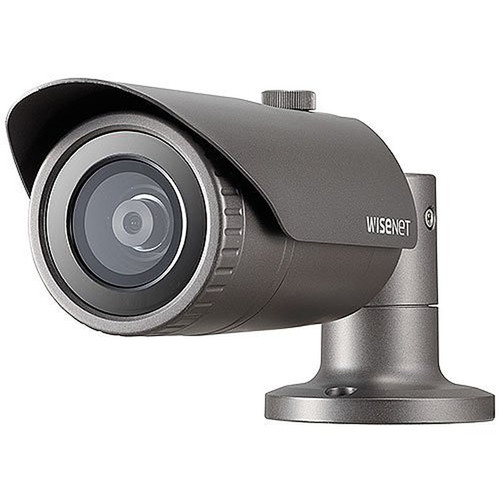
Both cameras use an approximately 1/2.8-inch CMOS sensor and deliver 1920×1080 resolution, but their imaging performance diverges sharply from there. The QNO-6022R1 is limited to 30 fps at 2MP and carries a fixed 4mm lens (F1.6, 88° horizontal FoV), while the WV-X15300-V3L reaches 60 fps at the same resolution and adds a motorized 3.1× optical zoom (2.9–9 mm, 37–117° horizontal at wide end) plus up to 9.3× digital extra zoom at reduced resolution. Low-light sensitivity also favors the i-PRO: color minimum illumination is 0.007 lux versus the Hanwha's 0.03 lux, and B&W sensitivity is 0.005 lux on the i-PRO compared to 0 lux only with IR assist on the Hanwha.
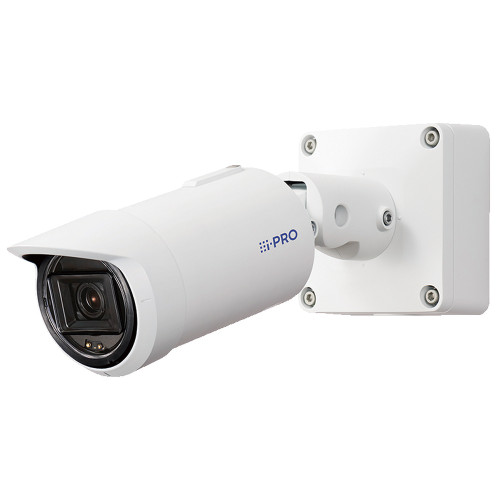
IR range is a major differentiator: the WV-X15300-V3L covers 70 m (230 ft) versus the QNO-6022R1's 25 m (82 ft). Wide dynamic range also separates them — the i-PRO specifies 144 dB (Super Dynamic on, level 31) while the Hanwha specifies 120 dB WDR. The i-PRO additionally provides a gyro-based image stabilizer and fog compensation, neither of which is specified for the QNO-6022R1. DORI figures at TELE on the i-PRO (Detect: 114.8 m) substantially exceed the Hanwha's fixed-lens DORI Detect of 40 m, though at WIDE the i-PRO's Detect of 23.5 m falls below the Hanwha's 40 m.
What about installation and environment?
Both cameras carry IP66 and IK10 ratings. The i-PRO WV-X15300-V3L extends further to IP67 (IEC 60529), Type 4X (UL50E), and NEMA 4X compliance, and it is UL-listed (UL62368-1 / CSA C22.2 No.62368-1) — certifications not specified for the QNO-6022R1. The i-PRO also specifies a wind resistance rating of up to 40 m/s (≈89 mph); no equivalent rating is listed for the Hanwha. Operating temperature ranges are nearly identical at the upper end (both to +55°C), but the i-PRO's storage-off lower limit is −40°C (power-on: −30°C) versus the Hanwha's −30°C operating lower limit.
Power requirements differ in PoE class: the QNO-6022R1 draws a maximum of 7 W via PoE IEEE 802.3af Class 3, and also accepts 12 VDC. The WV-X15300-V3L requires PoE+ (802.3at, 14 W) or DC 12 V, meaning existing 802.3af-only switches may not supply sufficient power without an injector or switch upgrade. The i-PRO is significantly larger and heavier (133×133×383 mm, ≈2.5 kg / 5.6 lb) compared to the Hanwha (ø70×246 mm, 700 g / 1.54 lb), a relevant factor for mounting hardware, conduit, and junction-box selection.
Which fits your VMS and analytics better?
Both cameras support ONVIF Profile S, G, and T. The i-PRO WV-X15300-V3L additionally supports ONVIF Profile M, which covers metadata streaming for AI-based analytics — a capability not listed for the QNO-6022R1. The i-PRO supports up to 14 simultaneous users versus the Hanwha's 6 unicast users. Edge storage capacity is higher on the i-PRO at up to 512 GB microSDXC, compared to 128 GB on the QNO-6022R1. Security credentials also differ: the i-PRO lists FIPS 140-2 Level 3, secure boot, and signed firmware; the Hanwha lists firmware encryption, device certificate, and 802.1X (EAP-TLS/LEAP/PEAP) but does not claim FIPS 140-2 or secure boot.
On analytics, the i-PRO carries an AI video detection suite that includes AI sound classification (gunshot, yell, vehicle horn, glass break), scene change detection, and audio detection in addition to VMD — with the product listing also citing facial recognition and people/vehicle detection. The QNO-6022R1 offers Hanwha WiseStream II smart codec, defocus detection, directional detection, enter/exit, virtual line, and tampering analytics, but does not list AI sound classification or facial recognition. Audio hardware is built into the i-PRO (3.5 mm stereo input and output jacks); the QNO-6022R1 specifies no audio input or output.
Which should you choose: the QNO-6022R1 or the X15300-V3L?
Our take: The QNO-6022R1 is the stronger choice when budget, PoE Class 3 switch infrastructure, and compact/lightweight installation are primary constraints — at 7 W on 802.3af and 700 g, it drops onto almost any existing infrastructure without hardware upgrades. However, on imaging capability the WV-X15300-V3L leads across every measured dimension: it delivers 60 fps versus 30 fps, a 70 m IR range versus 25 m, 144 dB versus 120 dB WDR, 0.007 lux versus 0.03 lux color minimum illumination, and 3.1× motorized optical zoom versus a fixed 4 mm lens. The i-PRO also adds FIPS 140-2 Level 3 security, ONVIF Profile M, 512 GB edge storage, built-in audio I/O, and AI sound classification. Choose the i-PRO WV-X15300-V3L where long-range detection, high-frame-rate capture, AI analytics depth, or hardened cybersecurity compliance (FIPS, secure boot) are required, and where PoE+ infrastructure is available.
Side-by-Side Comparison
Spec-for-spec, from manufacturer data.
| Specification | Hanwha QNO-6022R1 | i-PRO X15300-V3L |
|---|---|---|
| Resolution | 2 MP (1920×1080) | 2 MP (1920×1080) |
| Image Sensor | 1/2.8" CMOS | Approx. 1/2.8" CMOS |
| Lens / Focal Length | 4 mm fixed, F1.6 | 2.9–9 mm motorized, 3.1× optical zoom, F1.3 (wide)–F2.5 (tele) |
| Horizontal Field of View | 88° | 37°–117° (16:9) |
| Min. Illumination (Color) | 0.03 lux | 0.007 lux @ 30IRE |
| Min. Illumination (B&W) | 0 lux (IR on) | 0.005 lux (B&W) / 0 lux (IR on) |
| IR Range | 25 m (82 ft) | 70 m (230 ft) |
| Wide Dynamic Range | 120 dB | 144 dB (Super Dynamic on, level 31) |
| Max Frame Rate | 30 fps @ 2MP | 60 fps @ 2MP |
| Video Compression | H.265, H.264, MJPEG | H.265, H.264, MJPEG |
| IP Rating | IP66 | IP66 / IP67 / NEMA 4X / Type 4X |
| IK / Impact Rating | IK10 | IK10 |
| Operating Temperature | -30°C to +55°C | -40°C to +55°C (power-on: -30°C to +55°C) |
| Power Input / PoE Class | PoE 802.3af Class 3 / 12 VDC, max 7 W | PoE+ 802.3at / DC 12 V, 14 W |
| Edge Storage | microSD/SDHC/SDXC up to 128 GB | microSD/microSDHC/microSDXC up to 512 GB |
| Audio | — | 3.5 mm stereo input + 3.5 mm stereo output |
| ONVIF Profiles | S / G / T | G / S / T / M |
| AI Analytics | Rule-based (directional, enter/exit, virtual line, defocus, tampering) | AI video detection suite; AI sound classification (gunshot, yell, vehicle horn, glass break) |
| Security Certifications | Firmware encryption, device cert, 802.1X | FIPS 140-2 Level 3, HTTPS, device cert, 802.1X, secure boot, signed firmware |
| Weight | 700 g (1.54 lb) | Approx. 2.5 kg (5.6 lb) |
| Dimensions | ø70.0 × 246.0 mm | 133 × 133 × 383 mm |
| Warranty | 3-year | 5-year |
Frequently Asked Questions
Which should you choose: the QNO-6022R1 or the X15300-V3L?
The QNO-6022R1 is the stronger choice when budget, PoE Class 3 switch infrastructure, and compact/lightweight installation are primary constraints — at 7 W on 802.3af and 700 g, it drops onto almost any existing infrastructure without hardware upgrades. However, on imaging capability the WV-X15300-V3L leads across every measured dimension: it delivers 60 fps versus 30 fps, a 70 m IR range versus 25 m, 144 dB versus 120 dB WDR, 0.007 lux versus 0.03 lux color minimum illumination, and 3.1× motorized optical zoom versus a fixed 4 mm lens. The i-PRO also adds FIPS 140-2 Level 3 security, ONVIF Profile M, 512 GB edge storage, built-in audio I/O, and AI sound classification. Choose the i-PRO WV-X15300-V3L where long-range detection, high-frame-rate capture, AI analytics depth, or hardened cybersecurity compliance (FIPS, secure boot) are required, and where PoE+ infrastructure is available.
Is the QNO-6022R1 or WV-X15300-V3L better for low-light performance?
The WV-X15300-V3L is substantially better in low light by spec. It reaches 0.007 lux in color and 0.005 lux in B&W, versus 0.03 lux color on the QNO-6022R1 (B&W only reaches 0 lux with IR active on both). The i-PRO also provides 70 m of IR illumination compared to 25 m on the Hanwha, making it the clear choice for large dark areas or long-distance night monitoring.
Can I power both cameras from my existing 802.3af PoE switch?
The QNO-6022R1 is rated for IEEE 802.3af Class 3 (max 7 W) and will work with a standard 802.3af switch. The WV-X15300-V3L requires PoE+ (802.3at, 14 W); a standard 802.3af switch will not supply enough power unless an external PoE+ injector is used. Both also accept 12 VDC as an alternative.
Does either camera support AI analytics or audio detection out of the box?
The WV-X15300-V3L includes an AI analytics suite covering people/vehicle detection, facial recognition (per product listing), scene change detection, and AI sound classification (gunshot, yell, vehicle horn, glass break), along with built-in 3.5 mm audio input and output jacks. The QNO-6022R1 offers rule-based video analytics (directional detection, enter/exit, virtual line, defocus, tampering) but does not list AI sound classification, facial recognition, or any audio hardware.
Get a Second Opinion on Your Camera Choice
Share your site layout, coverage goals, and budget. Our team will validate the camera selection, flag anything we would change, and recommend products that match the use case.