
Hanwha L6082R vs i-PRO S1536LA-B: Specification Comparison
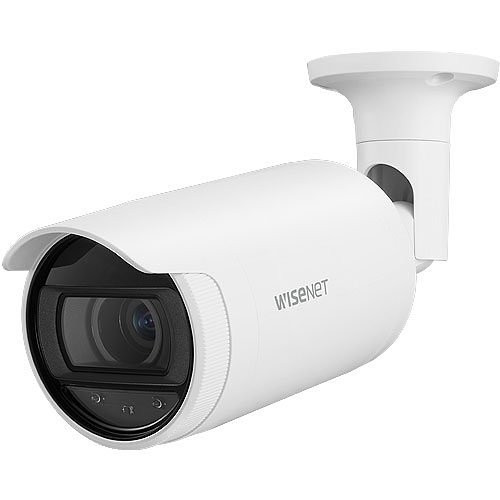
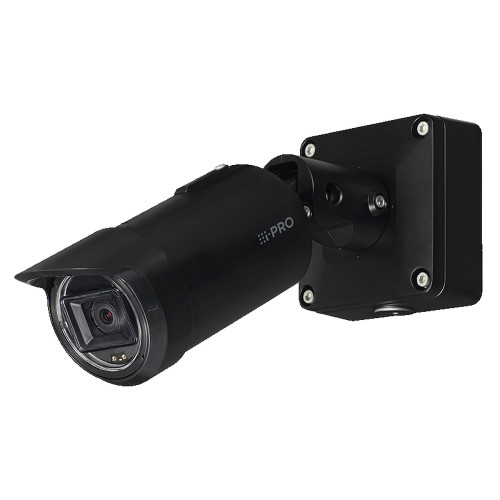
Both the Hanwha ANO-L6082R and i-PRO WV-S1536LA-B are 2MP (1920x1080) outdoor bullet IP cameras with motorized varifocal lenses targeting perimeter and general-purpose surveillance installations. This comparison examines how they differ across imaging performance, physical installation requirements, and VMS integration capabilities. The Hanwha is a cost-tier entry with Hanwha's WiseStream II compression, while the i-PRO carries a full AI analytics SoC, higher-grade enclosure, and a significantly longer warranty. Neither choice is universally superior; the right fit depends on deployment environment and analytics requirements.
In This Guide
How do the imaging specs compare?
Both cameras use a 1/2.8" CMOS sensor at 1920x1080, but their imaging ceilings diverge quickly. The ANO-L6082R is rated at 30fps, a minimum illumination of 0.03 lux in color and 0 lux with IR active, and delivers 850nm IR to 30m. The WV-S1536LA-B runs at 60fps (double the frame rate), reaches 0.007 lux color and 0.005 lux B&W before IR assist, and extends IR coverage to 70m at 30IRE or 50m at 50IRE. The i-PRO lens opens to F1.3 wide versus the Hanwha's F1.6, contributing directly to that lower lux floor.
WDR performance also separates the two: the ANO-L6082R is rated at 120dB, while the WV-S1536LA-B reaches 144dB with Super Dynamic enabled at Level 31. The i-PRO also supports a 4:3 aspect ratio mode at 2048x1536 for additional vertical coverage, which the Hanwha does not offer. DORI distances favor the Hanwha slightly at tele (identify 14.0m vs 11.5m for i-PRO), reflecting the longer IR throw and tighter tele aperture interaction, but the i-PRO's wider horizontal FOV (up to 117 degrees vs 106 degrees) provides broader scene coverage at wide end.
What about installation and environment?
The ANO-L6082R carries an IP66 rating and is constructed from plastic, weighing 390g. Operating temperature runs from -30°C to +55°C. It is PoE-only (IEEE 802.3af, Class 3, max 7.0W) with no DC power alternative. No IK impact rating is specified. Dimensions are 78 x 262mm, making it a compact and lightweight unit suited for standard bracket installations where physical abuse is not a primary concern.
The WV-S1536LA-B is rated IP66, Type 4X, and NEMA 4X, and adds IK10 impact resistance with wind resistance tested to 40 m/s (approximately 89 mph). Operating temperature extends from -40°C to +60°C (power-on from -30°C), with anti-condensation features including a Temish element, heater, and moisture absorption gel. It accepts both DC12V (710mA) and PoE (802.3af), providing wiring flexibility. The aluminum die-cast and resin construction adds to its 2.4 kg weight and 133 x 133 x 383mm footprint. It also includes a composite monitor output for on-site adjustment. The i-PRO's physical envelope is considerably heavier and larger, requiring more robust mounting hardware.
Which fits your VMS and analytics better?
Both cameras support ONVIF Profile S, G, and T, plus H.265/H.264 with CBR/VBR and MJPEG. The Hanwha adds ONVIF Profile S/G/T and uses its proprietary SUNAPI HTTP API, compatible with Hanwha Wisenet VMS and third-party platforms. It supports up to 6 unicast users across 3 stream profiles and includes basic video analytics: motion detection (4 zones), tampering, virtual area intrusion/enter/exit, and virtual line crossing. Edge storage tops out at 32GB via microSD. Audio input and output and alarm I/O are not specified in the provided specs.
The i-PRO WV-S1536LA-B adds ONVIF Profile M, runs on an Ambarella CV25M SoC, and delivers AI Video Analytics covering 8 event types plus AI Sound Classification for gunshot, yell, vehicle horn, and glass break. It supports up to 14 simultaneous users, 8 privacy zones (vs 6), and edge storage up to 512GB via microSDXC. It includes 3x alarm inputs, 1x alarm output, 1x AUX output, and full-duplex audio via 3.5mm stereo jacks with G.726, G.711, and AAC-LC compression. The i-PRO also supports MQTT, SFTP, LLDP, and DHCPv6, which the Hanwha does not list. Security certifications include FIPS 140-2 Level 3 on the i-PRO; the Hanwha relies on AES encryption and 802.1X without a FIPS certification listed.
Which should you choose: the L6082R or the S1536LA-B?
Our take: The WV-S1536LA-B is the stronger choice when environmental resilience, AI-driven analytics, or government/enterprise-grade cybersecurity compliance are required. Key spec deltas: the i-PRO's minimum illumination is 0.007 lux color versus 0.03 lux on the Hanwha (more than 4x more sensitive before IR), its IR range reaches 70m versus 30m, and its WDR ceiling is 144dB versus 120dB. It also adds IK10 impact protection, a -40°C cold-start threshold, FIPS 140-2 Level 3 certification, AI sound classification, and a 5-year warranty against the Hanwha's 3-year coverage. The ANO-L6082R remains a practical, lighter-weight option for standard indoor-adjacent or sheltered outdoor deployments within a Hanwha VMS ecosystem where AI analytics and impact resistance are not requirements and lower installed cost is the priority.
Side-by-Side Comparison
Spec-for-spec, from manufacturer data.
| Specification | Hanwha L6082R | i-PRO S1536LA-B |
|---|---|---|
| Resolution | 1920x1080 (2MP) | 1920x1080 (2MP); also 2048x1536 (4:3) |
| Sensor | 1/2.8" CMOS | Approx. 1/2.8" CMOS |
| Frame Rate | 30fps | 60fps |
| Min Illumination (Color) | 0.03 lux | 0.007 lux @ 30IRE |
| Min Illumination (B&W) | 0 lux (IR) | 0.005 lux / 0 lux (IR) |
| WDR | 120dB | 144dB (Super Dynamic Level 31) |
| IR Range | 30m (850nm) | 70m at 30IRE / 50m at 50IRE |
| Focal Length | 3.3–10.3mm (3.1x) motorized varifocal | 2.9–9mm (3.1x) motorized zoom/focus |
| Max Aperture | F1.6 (W) / F3.3 (T) | F1.3 (W) / F2.5 (T) |
| IP / IK Rating | IP66 / not specified | IP66, NEMA 4X / IK10 |
| Operating Temp | -30°C to +55°C | -40°C to +60°C (power-on -30°C) |
| Power | PoE 802.3af only (max 7.0W) | DC12V or PoE 802.3af (8.5–9.1W) |
| Edge Storage | microSD up to 32GB | microSDXC up to 512GB |
| Audio / Alarm I/O | Not specified | 3.5mm in/out + 3 alarm in / 1 alarm out |
| ONVIF Profiles | S, G, T | G, M, S, T |
| Warranty | 3-year | 5-year |
Frequently Asked Questions
Which should you choose: the L6082R or the S1536LA-B?
The WV-S1536LA-B is the stronger choice when environmental resilience, AI-driven analytics, or government/enterprise-grade cybersecurity compliance are required. Key spec deltas: the i-PRO's minimum illumination is 0.007 lux color versus 0.03 lux on the Hanwha (more than 4x more sensitive before IR), its IR range reaches 70m versus 30m, and its WDR ceiling is 144dB versus 120dB. It also adds IK10 impact protection, a -40°C cold-start threshold, FIPS 140-2 Level 3 certification, AI sound classification, and a 5-year warranty against the Hanwha's 3-year coverage. The ANO-L6082R remains a practical, lighter-weight option for standard indoor-adjacent or sheltered outdoor deployments within a Hanwha VMS ecosystem where AI analytics and impact resistance are not requirements and lower installed cost is the priority.
Can either camera work in extreme cold environments?
The i-PRO WV-S1536LA-B operates (and powers on) from -30°C and survives storage down to -40°C, with active anti-condensation heating. The Hanwha ANO-L6082R is rated to -30°C operating minimum but does not list a heater or condensation management system. For sub-zero deployments with temperature cycling, the i-PRO's thermal management is the more proven specification.
Which camera supports alarm inputs and audio for two-way communication?
Only the i-PRO WV-S1536LA-B provides documented alarm I/O (3 inputs, 1 output, 1 AUX) and full-duplex audio via 3.5mm stereo jacks with G.726, G.711, and AAC-LC support. The Hanwha ANO-L6082R does not list audio or alarm I/O in the provided specifications; verify with Hanwha documentation before assuming those interfaces exist on this model.
Does either camera fit a non-Hanwha or non-i-PRO VMS?
Both support ONVIF Profile S, G, and T, which covers live streaming, recording, and metadata on most enterprise VMSs. The i-PRO additionally supports ONVIF Profile M, which is required for metadata and AI event interoperability in newer VMS platforms such as Milestone XProtect 2022+ and Genetec Security Center 5.10+. The Hanwha's SUNAPI API is proprietary and primarily benefits Wisenet WAVE or SSM deployments.
Get a Second Opinion on Your Camera Choice
Share your site layout, coverage goals, and budget. Our team will validate the camera selection, flag anything we would change, and recommend products that match the use case.