
Pelco SRXP4-8V9-EBT-IR vs Pelco SRXV2-2V13-EBT-IRWL: Specification Comparison
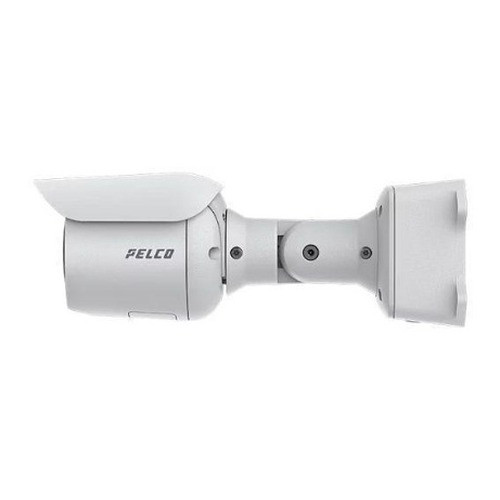
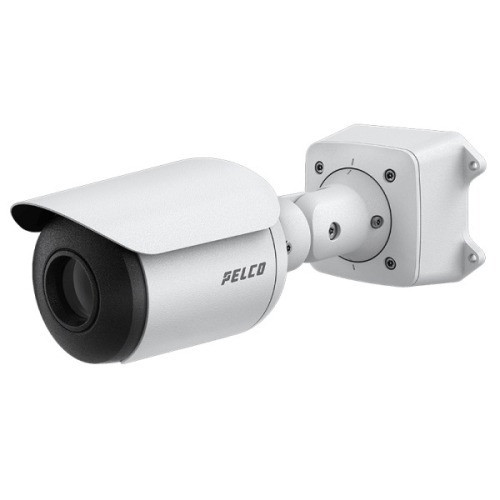
Both the Pelco SRXP4-8V9-EBT-IR (Sarix Pro 4) and the SRXV2-2V13-EBT-IRWL (Sarix Value 2) are 2MP outdoor bullet cameras sharing the same 1/2.8-inch progressive-scan CMOS sensor and PoE Class 3 power. This comparison addresses the meaningful differences between a professional-tier model emphasizing higher frame rate, deeper WDR, richer analytics, and broader ONVIF compliance versus a value-tier model that adds white-light illumination, a wider varifocal range, and an extended cold-weather temperature floor.
In This Guide
How do the imaging specs compare?
The SRXP4-8V9-EBT-IR delivers up to 60 fps at 1920×1080, while the SRXV2-2V13-EBT-IRWL is capped at 30 fps — a meaningful difference for capturing fast motion in retail loss-prevention or traffic applications. Wide dynamic range also favors the Pro 4 at 130 dB SureVision versus 120 dB on the Value 2, a 10 dB advantage that translates to better detail retention in high-contrast scenes such as entrance lobbies with bright backlighting. Minimum color illumination is 0.01 lux on the Pro 4 compared to 0.02 lux on the Value 2, giving the Pro 4 a marginal edge in near-dark color performance.
On optics, the Pro 4 carries a 4.4–9.3 mm motorized varifocal lens (32–109° HFOV) while the Value 2 uses a 2.7–13.5 mm varifocal with remote zoom, focus, and autofocus control. The Value 2's longer zoom range suits installations requiring tighter fields of view at distance. Both cameras provide IR illumination at 850 nm for zero-lux night operation; the Value 2 adds a white-light mode for color nighttime identification, a capability not listed for the Pro 4. Both share F1.4 aperture.
What about installation and environment?
Both models carry IP66 weatherproofing and IK09 vandal resistance per their primary specs, making them suitable for exposed outdoor mounting. The Pro 4 spec sheet also references IK10 impact rating in one field, though IK09 is the primary listed vandal rating; the same dual-field situation exists for the Value 2. Both are PoE Class 3 (802.3af), simplifying single-cable runs. The Pro 4's operating temperature range is listed as -10°C to +70°C, whereas the Value 2 is rated -40°C to +60°C — a significant cold-weather advantage of 30°C for the Value 2 in northern or high-altitude deployments.
Mounting options differ: the Pro 4 spec lists wall, ceiling, and pendant mounts, while the Value 2 adds pole and corner mounting options. The Pro 4 is heavier at up to 1.07 kg depending on configuration versus the Value 2's heaviest listed variant at 636 g. Both are white-housing outdoor bullet form factors.
Which fits your VMS and analytics better?
ONVIF compliance is broader on the Pro 4, which carries Profiles S, T, G, and M. The Value 2 is listed as Profile S and Profile T only — the absence of Profile G (on-camera recording/retrieval) and Profile M (metadata/analytics) on the Value 2 limits native interoperability with VMS platforms that rely on those profiles for edge recording access or analytics metadata streams.
Edge analytics are exclusive to the Pro 4, which specifies Smart Analytics including Person/Vehicle Detection, Directional Violation, Loitering, Beam Crossing, Crowd Detection, and Tamper Alert. No analytics are listed for the Value 2 beyond a generic 'Specifications' placeholder in that field. Both cameras support microSD edge storage and HTTPS encryption. Audio input (microphone support) is listed for the Pro 4; no audio specification is provided for the Value 2. The Pro 4 carries 1 GB RAM / 512 MB Flash versus 512 MB RAM / 256 MB Flash on the Value 2, which supports its analytics processing load. Video compression on the Pro 4 is H.264, H.265, and Smart Compression; the Value 2 adds Motion JPEG as a third codec option. The Value 2 carries NDAA Section 889 compliance; this approval is not listed for the Pro 4.
Which should you choose: the SRXP4-8V9-EBT-IR or the SRXV2-2V13-EBT-IRWL?
Our take: The SRXP4-8V9-EBT-IR is the stronger choice when frame rate, analytics depth, and VMS integration breadth are the primary decision factors. It delivers 60 fps versus the Value 2's 30 fps, 130 dB WDR versus 120 dB, and ONVIF Profiles S/T/G/M versus S/T only — all concrete spec advantages for motion-sensitive or analytics-driven deployments. It also adds edge analytics (person/vehicle, loitering, crowd detection) and microphone support not specified on the Value 2. Conversely, the SRXV2-2V13-EBT-IRWL is the better fit when the installation site drops below -10°C (its floor is -40°C versus the Pro 4's -10°C), when color identification under complete darkness is required (white-light illumination), when NDAA Section 889 compliance is mandated, or when a longer varifocal range (2.7–13.5 mm vs 4.4–9.3 mm) is needed. Choose the Pro 4 for analytics and VMS-rich environments; choose the Value 2 for cold climates, compliance mandates, or color night-ID requirements.
Side-by-Side Comparison
Spec-for-spec, from manufacturer data.
| Specification | Pelco SRXP4-8V9-EBT-IR | Pelco SRXV2-2V13-EBT-IRWL |
|---|---|---|
| Series | Sarix Professional 4 | Sarix Value 2 |
| Part Number | SRXP4-8V9-EBT-IR | SRXV2-2V13-EBT-IRWL |
| Resolution | 2MP (1920×1080) | 2MP (1920×1080) |
| Image Sensor | 1/2.8" Progressive Scan CMOS | 1/2.8" Progressive Scan CMOS |
| Aperture | F1.4 | F1.4 |
| Lens / Focal Length | 4.4–9.3 mm motorized varifocal | 2.7–13.5 mm varifocal (remote zoom/focus/autofocus) |
| Horizontal FOV | 32–109° | — |
| Max Frame Rate | 60 fps | 30 fps |
| Min Illumination (Color / IR) | 0.01 lux color / 0 lux IR | 0.02 lux color / 0 lux IR |
| IR Illumination | 850 nm | 850 nm + White Light |
| Wide Dynamic Range | 130 dB SureVision | 120 dB |
| Video Compression | H.264; H.265; Smart Compression | H.265; H.264; Motion JPEG |
| ONVIF Profiles | S, T, G, M | S, T |
| Edge Analytics | Person/Vehicle, Directional Violation, Loitering, Beam Crossing, Crowd Detection, Tamper Alert | — |
| IP Rating | IP66 | IP66 |
| Vandal / Impact Rating | IK09 (IK10 also referenced in spec) | IK09 (IK10 also referenced in spec) |
| Operating Temperature | -10°C to +70°C | -40°C to +60°C |
| Power Input / PoE Class | PoE Class 3 (802.3af) | PoE Class 3 (802.3af) |
| Edge Storage | microSD | microSD |
| Audio | Microphone supported | — |
| HTTPS Encryption | Yes | Yes |
| On-board Memory | 1 GB RAM / 512 MB Flash | 512 MB RAM / 256 MB Flash |
| NDAA Section 889 | — | Compliant |
| Mount Types | Wall; Ceiling; Pendant | Wall; Ceiling; Pole; Pendant; Corner |
| Housing Color | White | White |
| Warranty | 5-year | 5-year |
Frequently Asked Questions
Which should you choose: the SRXP4-8V9-EBT-IR or the SRXV2-2V13-EBT-IRWL?
The SRXP4-8V9-EBT-IR is the stronger choice when frame rate, analytics depth, and VMS integration breadth are the primary decision factors. It delivers 60 fps versus the Value 2's 30 fps, 130 dB WDR versus 120 dB, and ONVIF Profiles S/T/G/M versus S/T only — all concrete spec advantages for motion-sensitive or analytics-driven deployments. It also adds edge analytics (person/vehicle, loitering, crowd detection) and microphone support not specified on the Value 2. Conversely, the SRXV2-2V13-EBT-IRWL is the better fit when the installation site drops below -10°C (its floor is -40°C versus the Pro 4's -10°C), when color identification under complete darkness is required (white-light illumination), when NDAA Section 889 compliance is mandated, or when a longer varifocal range (2.7–13.5 mm vs 4.4–9.3 mm) is needed. Choose the Pro 4 for analytics and VMS-rich environments; choose the Value 2 for cold climates, compliance mandates, or color night-ID requirements.
Is the SRXP4-8V9-EBT-IR or SRXV2-2V13-EBT-IRWL better for low-light performance?
For near-dark color sensitivity, the Pro 4 has a slight edge at 0.01 lux color versus 0.02 lux on the Value 2. Both reach 0 lux with IR active. However, only the Value 2 offers white-light illumination, which enables full-color image capture in complete darkness — useful when color detail (clothing, vehicle color) is needed for identification rather than just motion detection.
Can either camera be used in extreme cold environments?
The Value 2 (SRXV2-2V13-EBT-IRWL) is rated down to -40°C, making it suitable for cold-storage facilities, northern climates, and high-altitude installations. The Pro 4 (SRXP4-8V9-EBT-IR) is specified to a minimum of -10°C. If the deployment site regularly falls below -10°C, the Value 2 is the only listed-spec option between these two.
Does either camera support edge analytics without a separate analytics server?
Yes — the SRXP4-8V9-EBT-IR (Sarix Pro 4) lists on-camera Smart Analytics including Person/Vehicle Detection, Directional Violation, Loitering, Beam Crossing, Crowd Detection, and Tamper Alert. No edge analytics are specified for the SRXV2-2V13-EBT-IRWL (Sarix Value 2), so that model would require a VMS or server-side analytics engine to perform those functions.
Get a Second Opinion on Your Camera Choice
Share your site layout, coverage goals, and budget. Our team will validate the camera selection, flag anything we would change, and recommend products that match the use case.