
Pelco SRXP4-8V9-EBT-IR vs Pelco SRXV2-2V13-EBT-IR: Specification Comparison
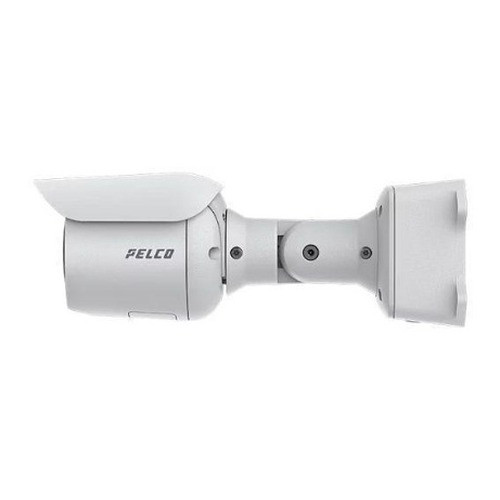
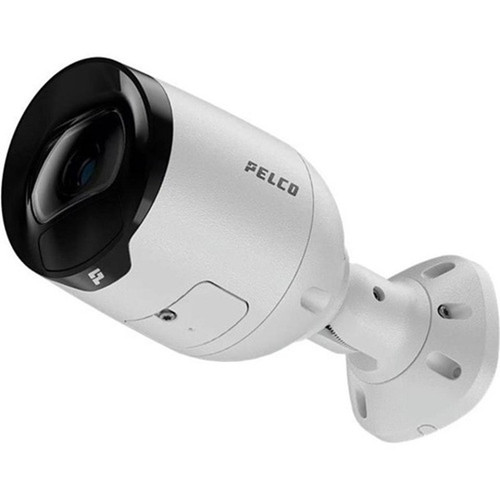
Both the Pelco SRXP4-8V9-EBT-IR (Sarix Pro 4) and the SRXV2-2V13-EBT-IR (Sarix Value 2) are 2MP outdoor IR bullet cameras sharing the same 1/2.8-inch progressive-scan CMOS sensor and PoE Class 3 power. A buyer evaluating either model is choosing between Pelco's professional-tier feature set and a value-tier offering within the same resolution class. This comparison covers imaging capability, installation and environmental ratings, and integration with VMS and analytics platforms.
In This Guide
How do the imaging specs compare?
The SRXP4-8V9-EBT-IR delivers a maximum frame rate of 60 fps versus 30 fps on the SRXV2-2V13-EBT-IR — a meaningful delta for applications capturing fast-moving subjects or requiring high-frame-rate recording modes. WDR is rated at 130 dB (SureVision) on the Pro 4 versus 120 dB on the Value 2, a 10 dB advantage that translates to greater dynamic-range headroom in high-contrast scenes such as entry lobbies or vehicle gate approaches. Minimum color illumination is 0.01 lux on the Pro 4 versus 0.02 lux on the Value 2; both drop to 0 lux in IR mode.
The lens architectures differ significantly. The Pro 4 carries a motorized varifocal lens with a specified range of 4.4–9.3 mm (HFOV 32–109°), enabling remote optical zoom and focus adjustment post-installation without physical access to the camera. The Value 2 spec sheet lists a focal-length control note of 'Remote Zoom and Focus, Autofocus, IR Cut Filter' alongside a referenced range of 2.7–13.5 mm varifocal, though the product title designates it as a 13 mm lens; buyers should confirm the exact fixed-versus-varifocal configuration with the datasheet before ordering. Aperture is F1.4 on both models.
What about installation and environment?
Both cameras share an IP66 ingress-protection rating and are specified for outdoor use. The Pro 4 lists an IK10 impact rating in its certifications field and IK09 in the vandal-rating field — these two values conflict in the provided specs, and buyers should verify against the official Pelco datasheet. The Value 2 lists IK09 in its vandal-rating field with no separate impact-rating conflict noted. Operating temperature is specified only for the Value 2 at -40°C to +60°C; no operating temperature range is provided in the supplied specs for the Pro 4.
Both cameras are PoE Class 3 powered over Ethernet. The Pro 4 specs list mounting options of wall, ceiling, and pendant; the Value 2 adds pole and corner mount options per the provided data. Both are white-housing bullet-form-factor units. The Pro 4 physical dimensions are stated as 294 mm × 126 mm × 104 mm with a weight of approximately 0.81 kg (camera unit). The Value 2 weight is listed as 636 g (camera unit); its dimensional field in the provided specs contains what appears to be a data-entry error and should not be relied upon — consult the Pelco datasheet.
Which fits your VMS and analytics better?
ONVIF compliance is broader on the Pro 4, which supports Profile S, Profile T, Profile G, and Profile M. The Value 2 is compliant with Profile S and Profile T only. Profile G adds on-camera recording and retrieval capability relevant to edge-storage workflows, and Profile M adds metadata streaming for analytics integration. Buyers using VMS platforms that leverage Profile G or Profile M should note this gap.
Edge analytics are present only on the Pro 4, which specifies Smart Analytics including Person/Vehicle Detection, Directional Violation, Loitering, Beam Crossing, Crowd Detection, and Tamper Alert. The Value 2 provides no edge-analytics capability in the supplied specifications. Both cameras support microSD on-board storage and HTTPS encryption. Audio support (microphone) is noted in the Pro 4 specs; no audio specification is provided for the Value 2. Video compression on both includes H.264 and H.265; the Value 2 additionally specifies Motion JPEG, while the Pro 4 specifies Smart Compression. Memory is 1 GB RAM / 512 MB Flash on the Pro 4 versus 512 MB RAM / 256 MB Flash on the Value 2.
Which should you choose: the SRXP4-8V9-EBT-IR or the SRXV2-2V13-EBT-IR?
Our take: The SRXP4-8V9-EBT-IR is the stronger choice when frame rate, WDR headroom, edge analytics, or broad ONVIF profile support are project requirements. Specifically: it delivers 60 fps versus 30 fps on the Value 2, 130 dB WDR versus 120 dB, and adds ONVIF Profile G and Profile M that the Value 2 lacks — profiles that matter for on-camera recording retrieval and metadata-driven VMS workflows. Its built-in Smart Analytics (Person/Vehicle Detection, Loitering, Beam Crossing, Crowd Detection) eliminate the need for server-side video analytics licensing on supported VMS platforms. The SRXV2-2V13-EBT-IR is appropriate where budget is the primary driver, analytics will be handled server-side, and the VMS requires only Profile S/T compliance. The Value 2's -40°C lower temperature floor is the one specified environmental advantage; the Pro 4 has no operating temperature listed in the provided specs, so cold-climate deployments require datasheet verification before specifying either unit.
Side-by-Side Comparison
Spec-for-spec, from manufacturer data.
| Specification | Pelco SRXP4-8V9-EBT-IR | Pelco SRXV2-2V13-EBT-IR |
|---|---|---|
| Series | Sarix Professional 4 | Sarix Value 2 |
| Resolution | 2MP (1920 × 1080) | 2MP (1920 × 1080) |
| Image Sensor | 1/2.8" Progressive Scan CMOS | 1/2.8" Progressive Scan CMOS |
| Aperture | F1.4 | F1.4 |
| Lens / Focal Length | 4.4–9.3 mm motorized varifocal | 2.7–13.5 mm varifocal (titled as 13 mm — verify datasheet) |
| HFOV | 32–109° | — |
| Max Frame Rate | 60 fps | 30 fps |
| WDR | 130 dB SureVision | 120 dB |
| Min Illumination (Color / IR) | 0.01 lux / 0 lux | 0.02 lux / 0 lux |
| Video Compression | H.265; H.264; Smart Compression | H.265; H.264; Motion JPEG |
| ONVIF Profiles | S, T, G, M | S, T |
| Edge Analytics | Person/Vehicle Detection, Directional Violation, Loitering, Beam Crossing, Crowd Detection, Tamper Alert | — |
| Audio | Microphone supported | — |
| IP Rating | IP66 | IP66 |
| IK / Impact Rating | IK09 (vandal field) / IK10 (certifications field — conflicting, verify datasheet) | IK09 |
| Operating Temperature | — | -40°C to +60°C |
| Power / PoE Class | PoE Class 3 | PoE Class 3 |
| On-Board Storage | microSD | microSD |
| HTTPS Encryption | Yes | Yes |
| NDAA Section 889 | — | Compliant |
| Memory | 1 GB RAM / 512 MB Flash | 512 MB RAM / 256 MB Flash |
| Weight (Camera) | ~0.81 kg | ~636 g |
| Dimensions | 294 mm × 126 mm × 104 mm | — (data error in provided specs — verify datasheet) |
| Warranty | 5-year | 5-year |
Frequently Asked Questions
Which should you choose: the SRXP4-8V9-EBT-IR or the SRXV2-2V13-EBT-IR?
The SRXP4-8V9-EBT-IR is the stronger choice when frame rate, WDR headroom, edge analytics, or broad ONVIF profile support are project requirements. Specifically: it delivers 60 fps versus 30 fps on the Value 2, 130 dB WDR versus 120 dB, and adds ONVIF Profile G and Profile M that the Value 2 lacks — profiles that matter for on-camera recording retrieval and metadata-driven VMS workflows. Its built-in Smart Analytics (Person/Vehicle Detection, Loitering, Beam Crossing, Crowd Detection) eliminate the need for server-side video analytics licensing on supported VMS platforms. The SRXV2-2V13-EBT-IR is appropriate where budget is the primary driver, analytics will be handled server-side, and the VMS requires only Profile S/T compliance. The Value 2's -40°C lower temperature floor is the one specified environmental advantage; the Pro 4 has no operating temperature listed in the provided specs, so cold-climate deployments require datasheet verification before specifying either unit.
Is the SRXP4-8V9-EBT-IR or SRXV2-2V13-EBT-IR better for low-light performance?
Both cameras operate at 0 lux in IR mode. In color (ambient light) mode, the SRXP4-8V9-EBT-IR is rated to 0.01 lux versus 0.02 lux for the SRXV2-2V13-EBT-IR — a one-stop difference favoring the Pro 4 in near-darkness color imaging. Both use the same 1/2.8-inch CMOS sensor and F1.4 aperture.
Can I adjust the lens remotely after installation on either camera?
The SRXP4-8V9-EBT-IR has a motorized varifocal lens (4.4–9.3 mm) that supports remote zoom and focus adjustment post-installation. The SRXV2-2V13-EBT-IR spec sheet references remote zoom, focus, and autofocus control, and lists a 2.7–13.5 mm varifocal range, though the product is marketed as a 13 mm fixed-lens unit — confirm the actual lens type against the Pelco datasheet before purchasing if remote adjustment is required.
Does either camera include built-in video analytics, or do I need server-side processing?
The SRXP4-8V9-EBT-IR includes on-camera Smart Analytics: Person/Vehicle Detection, Directional Violation, Loitering, Beam Crossing, Crowd Detection, and Tamper Alert — no additional server license is required for these functions. The SRXV2-2V13-EBT-IR has no edge analytics listed in the provided specifications; analytics would need to be handled by the VMS or a separate analytics server.
Get a Second Opinion on Your Camera Choice
Share your site layout, coverage goals, and budget. Our team will validate the camera selection, flag anything we would change, and recommend products that match the use case.