
Pelco SRXP4-5V10-EBT-IR vs Pelco SRXV2-2V13-EBT-IR: Specification Comparison
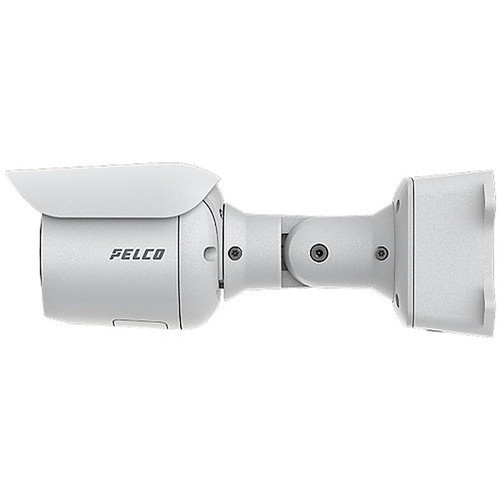
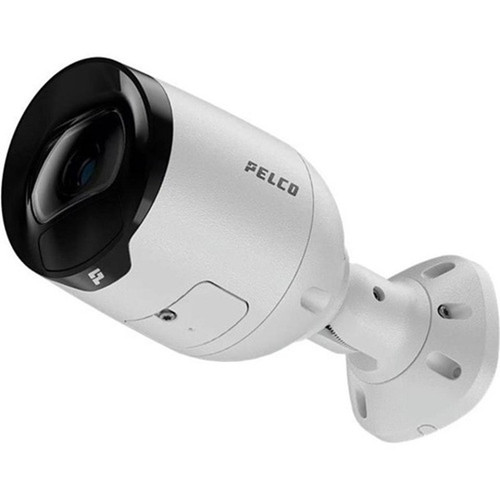
Both the Pelco SRXP4-5V10-EBT-IR (Sarix Pro 4) and the SRXV2-2V13-EBT-IR (Sarix Value 2) are 2MP outdoor bullet cameras with IR illumination, PoE power, IK09 vandal resistance, and IP66 ingress protection. A buyer evaluating perimeter or long-range surveillance coverage on a Pelco-compatible VMS would legitimately cross-shop these two models. The comparison centers on imaging capability, frame rate, lens flexibility, analytics depth, and platform integration level.
In This Guide
How do the imaging specs compare?
Both cameras share a 1/2.8-inch progressive scan CMOS sensor at 1920×1080 resolution, but their imaging envelopes diverge meaningfully. The SRXP4-5V10-EBT-IR delivers 60 fps versus 30 fps on the SRXV2-2V13-EBT-IR — a twofold advantage for capturing fast-moving subjects or satisfying high-frame-rate forensic requirements. Wide dynamic range is rated at 130 dB (SureVision) on the Pro 4 versus 120 dB on the Value 2, a 10 dB difference that translates to greater detail retention in scenes with simultaneous bright and shadowed zones. Minimum color illumination is 0.01 Lux on the Pro 4 compared to 0.02 Lux on the Value 2; both reach 0 Lux with IR active.
Lens configurations differ substantially. The SRXP4-5V10-EBT-IR uses a motorized varifocal lens spanning 4.4–9.3 mm (with a second stated range of 3.4–10.5 mm in additional spec fields) and covers a 32–109° horizontal field of view, enabling remote zoom and focus adjustment post-installation. The SRXV2-2V13-EBT-IR is specified with a varifocal range of 2.7–13.5 mm with remote zoom, autofocus, and IR cut filter control. The Value 2's longer reach at 13.5 mm concentrates pixels for identification at extended range; the Pro 4's wider minimum angle provides broader scene coverage. IR wavelength is 850 nm on both models; neither datasheet specifies a maximum IR throw distance.
What about installation and environment?
Both cameras carry IP66 ingress protection and IK09 vandal impact resistance, making them equally suited to exposed outdoor enclosures. Power is PoE Class 3 on both units, compatible with standard 802.3af switches. The SRXV2-2V13-EBT-IR specifies an operating temperature range of -40°C to +60°C. No operating temperature range is stated in the provided specifications for the SRXP4-5V10-EBT-IR; installers should consult the Pelco datasheet before deploying it in extreme-cold environments. The SRXP4-5V10-EBT-IR lists Wall, Ceiling, and Pendant mount types; the SRXV2-2V13-EBT-IR adds Pole and Corner mount options, giving it broader bracket compatibility out of the box.
Both units support microSD on-board edge storage and HTTPS encryption. The Pro 4 specifies 1 GB RAM and 512 MB Flash; the Value 2 specifies 512 MB RAM and 256 MB Flash. The SRXV2-2V13-EBT-IR includes an RJ-45 connector callout; connector type is not explicitly listed in the Pro 4 spec fields provided. The Value 2 also lists FTP, email, HTTP generic event, and white light as camera automation/event outputs; equivalent event-output specs are not enumerated in the Pro 4 fields provided.
Which fits your VMS and analytics better?
ONVIF compliance is broader on the SRXP4-5V10-EBT-IR: it supports Profile S, Profile T, Profile G, and Profile M. The SRXV2-2V13-EBT-IR is listed as Profile S and Profile T only. Profile G adds on-camera recording interoperability and Profile M adds metadata/analytics streaming — relevant for VMS platforms that leverage those profiles for event-driven recording or AI metadata ingestion.
Edge analytics are a clear differentiator. The SRXP4-5V10-EBT-IR specifies Pelco Smart Analytics including Person and Vehicle Detection, Directional Violation, Loitering, Beam Crossing, Crowd Detection, and Tamper Alert. The SRXV2-2V13-EBT-IR does not list any on-board analytics in the provided specifications. Both cameras note microphone support for audio in their respective spec fields, though neither lists a built-in speaker. The Pro 4 uses Pelco Smart Compression; the Value 2 uses Smart Codec with Dynamic GOP. The Value 2 additionally supports Motion JPEG compression, which the Pro 4 spec does not list. The SRXP4-5V10-EBT-IR operating modes include FullFeature, NoVideoAnalytics, and HighFramerate, providing flexibility when analytics processing is offloaded to the VMS.
Which should you choose: the SRXP4-5V10-EBT-IR or the SRXV2-2V13-EBT-IR?
Our take: The SRXP4-5V10-EBT-IR is the stronger choice when edge analytics, higher frame rates, or deeper ONVIF integration are required. Concretely: it delivers 60 fps versus 30 fps on the Value 2, 130 dB WDR versus 120 dB, and adds ONVIF Profile G and Profile M that the Value 2 lacks — meaningful for VMS platforms using metadata or on-camera recording profiles. Its built-in Smart Analytics (person/vehicle detection, loitering, directional violation) eliminate a separate analytics license or server load where the VMS does not provide equivalent edge processing. The SRXV2-2V13-EBT-IR is the more practical choice for long fixed-focal deployments requiring identification at extended range (13.5 mm reach versus 9.3 mm on the Pro 4) and for sites specifying -40°C cold-start capability, since the Pro 4's operating temperature range is not stated in the provided specs. Budget-constrained installations with basic recording requirements and no analytics mandate may find the Value 2 sufficient.
Side-by-Side Comparison
Spec-for-spec, from manufacturer data.
| Specification | Pelco SRXP4-5V10-EBT-IR | Pelco SRXV2-2V13-EBT-IR |
|---|---|---|
| Series | Sarix Professional 4 | Sarix Value 2 |
| Resolution | 2MP (1920×1080) | 2MP (1920×1080) |
| Image Sensor | 1/2.8" progressive scan CMOS | 1/2.8" progressive scan CMOS |
| Max Frame Rate | 60 fps | 30 fps |
| Lens / Focal Length | 4.4–9.3 mm motorized varifocal | 2.7–13.5 mm varifocal |
| Horizontal FOV | 32–109° | — |
| Aperture | F1.4 | F1.4 |
| Min Illumination (Color / IR) | 0.01 Lux / 0 Lux | 0.02 Lux / 0 Lux |
| IR Illumination | 850 nm | 850 nm |
| Wide Dynamic Range | 130 dB SureVision | 120 dB |
| Video Compression | H.265; H.264; Smart Compression | H.265; H.264; Motion JPEG |
| ONVIF Profiles | S, T, G, M | S, T |
| Edge Analytics | Person/Vehicle Detection, Loitering, Directional Violation, Beam Crossing, Crowd Detection, Tamper Alert | — |
| IP Rating | IP66 | IP66 |
| IK / Impact Rating | IK09 | IK09 |
| Operating Temperature | — | -40°C to +60°C |
| Power / PoE Class | PoE 802.3af / Class 3 | PoE 802.3af / Class 3 |
| Mount Types | Wall; Ceiling; Pendant | Wall; Ceiling; Pole; Pendant; Corner |
| Edge Storage | microSD | microSD |
| Audio | Microphone supported | Microphone supported |
| Memory | 1 GB RAM / 512 MB Flash | 512 MB RAM / 256 MB Flash |
| HTTPS Encryption | Yes | Yes |
| NDAA Section 889 | — | Compliant |
| Warranty | 5-year | 5-year |
Frequently Asked Questions
Which should you choose: the SRXP4-5V10-EBT-IR or the SRXV2-2V13-EBT-IR?
The SRXP4-5V10-EBT-IR is the stronger choice when edge analytics, higher frame rates, or deeper ONVIF integration are required. Concretely: it delivers 60 fps versus 30 fps on the Value 2, 130 dB WDR versus 120 dB, and adds ONVIF Profile G and Profile M that the Value 2 lacks — meaningful for VMS platforms using metadata or on-camera recording profiles. Its built-in Smart Analytics (person/vehicle detection, loitering, directional violation) eliminate a separate analytics license or server load where the VMS does not provide equivalent edge processing. The SRXV2-2V13-EBT-IR is the more practical choice for long fixed-focal deployments requiring identification at extended range (13.5 mm reach versus 9.3 mm on the Pro 4) and for sites specifying -40°C cold-start capability, since the Pro 4's operating temperature range is not stated in the provided specs. Budget-constrained installations with basic recording requirements and no analytics mandate may find the Value 2 sufficient.
Is the SRXP4-5V10-EBT-IR or SRXV2-2V13-EBT-IR better for low-light performance?
Both cameras reach 0 Lux with IR active at 850 nm. In color (non-IR) mode, the SRXP4-5V10-EBT-IR is rated to 0.01 Lux versus 0.02 Lux for the SRXV2-2V13-EBT-IR — a modest advantage for the Pro 4 in near-dark ambient conditions. The Pro 4 also provides 130 dB WDR compared to 120 dB on the Value 2, which benefits scenes with simultaneous bright and dark zones rather than purely low-light environments.
Does either camera include built-in video analytics, or do I need a separate license?
The SRXP4-5V10-EBT-IR includes Pelco Smart Analytics on-board: Person/Vehicle Detection, Directional Violation, Loitering, Beam Crossing, Crowd Detection, and Tamper Alert — no separate analytics server is specified as required by the provided specs. The SRXV2-2V13-EBT-IR does not list any on-board analytics in the provided specifications; analytics for that model would need to be handled by the VMS or a separate analytics platform.
Can I use either camera with a third-party VMS?
Both cameras support ONVIF, but the breadth differs. The SRXP4-5V10-EBT-IR supports ONVIF Profile S, T, G, and M. The SRXV2-2V13-EBT-IR supports Profile S and T only. Most mainstream VMS platforms integrate via Profile S or T, so both cameras are broadly compatible. However, VMS systems that rely on Profile G for on-camera recording management or Profile M for analytics metadata will only interoperate fully with the SRXP4-5V10-EBT-IR.
Get a Second Opinion on Your Camera Choice
Share your site layout, coverage goals, and budget. Our team will validate the camera selection, flag anything we would change, and recommend products that match the use case.