
Kantech ADVER30R5H3G vs Vivotek NR9581-V3: Specification Comparison
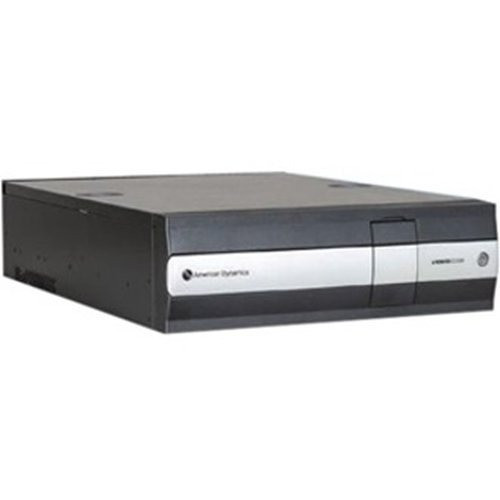
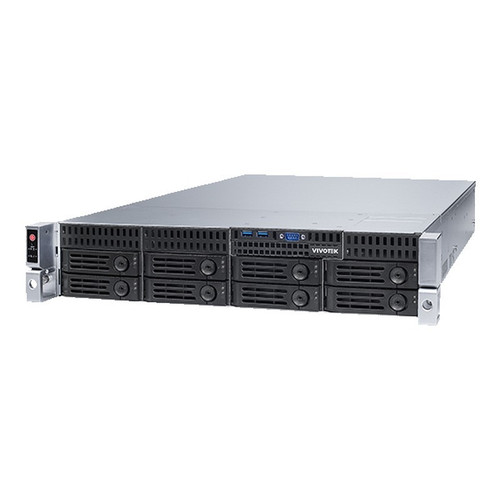
Both the Kantech ADVER30R5H3G and the Vivotek NR9581-V3 are 32-channel rack-mount network video recorders targeting mid-to-large surveillance deployments. The Kantech unit is a 3U hybrid recorder supporting simultaneous analog and IP channels on VideoEdge/openSUSE Linux, while the Vivotek is a purpose-built IP NVR running embedded Windows 10 with expandable channel licensing, dual 2.5G Ethernet, and a broad analytics suite. Both support H.265/H.264 compression and RAID storage, making them legitimate cross-shop candidates for integrators evaluating recorder infrastructure.
In This Guide
- How do channel capacity, storage architecture, and recording throughput compare?
- What are the display output capabilities and built-in analytics features of each unit?
- How do operating system, integration ecosystem, power, and environmental specs differ?
- Which should you choose: the ADVER30R5H3G or the NR9581-V3?
- Side-by-Side Specs
- FAQ
How do channel capacity, storage architecture, and recording throughput compare?
The ADVER30R5H3G is rated for 32 analog channels plus IP expansion, with 30TB of RAID-configured onboard storage already installed. Its compression support is listed as H.265 and H.264, but recording throughput in Mbps is not specified in the provided specs.
The NR9581-V3 ships with eight hot-swappable HDD bays but no pre-installed drives; total raw capacity depends on the buyer's HDD selection and is not stated in the provided specs. It supports RAID 0, 1, 5, 6, 10, 50, and 60. Recording throughput is specified at 512 Mbps, with remote client video delivery rated at 650 Mbps. Its base 32-channel license is expandable to 128 channels via software licensing, a capability not mentioned for the ADVER30R5H3G.
For buyers who need storage included at purchase, the ADVER30R5H3G delivers 30TB out of the box. For buyers who require higher throughput assurance, expandable channel counts, or flexible drive selection, the NR9581-V3's documented 512 Mbps figure and 8-bay hot-swap architecture are directly comparable data points; equivalent figures are absent from the Kantech spec sheet provided.
What are the display output capabilities and built-in analytics features of each unit?
The ADVER30R5H3G lists VGA (640×480) as its resolution output. No additional display output types (HDMI, DisplayPort, DVI) or multi-monitor support are documented in the provided specs.
The NR9581-V3 provides four simultaneous video outputs: HDMI (up to 4096×2160 / 4K), DisplayPort (up to 7680×4320 / 8K), DVI (1920×1200), and VGA (1920×1200), with dual-monitor support confirmed. Decoding capability reaches up to 7680×2560 via software decoding.
On analytics, the NR9581-V3 spec sheet enumerates Smart Search I & II, Deep Search, VCA counting, LPR, Smart VCA event search, fisheye dewarp (1O, 1P, 1R, 1O3R, 4R, 2P, 4R Pro, 1O8R), E-Map, PiP digital zoom, and metadata display. The ADVER30R5H3G spec sheet does not enumerate analytics or VCA features in the data provided. Buyers requiring 4K or higher local display, multi-monitor walls, or built-in analytics should note that only the NR9581-V3 documents these capabilities.
How do operating system, integration ecosystem, power, and environmental specs differ?
The ADVER30R5H3G runs VideoEdge OS built on openSUSE Linux and communicates via RS-232 and IP/Ethernet. It is noted as compatible with mid-to-large deployments and carries a 400W power supply rated 100–240VAC. Weight is 25 lb (approximately 11.3 kg). Country of origin is listed as US. Operating temperature and humidity are not specified in the provided data.
The NR9581-V3 runs embedded Windows 10 with hardware and software watchdog, automatic power-restoration restart, and redundant 100–220VAC power input rated at a maximum of 550W with 80 Plus Platinum efficiency certification. It weighs 15.8 kg without HDDs. Operating temperature is documented as 5°C–35°C (41°F–95°F) at 5%–95% humidity (non-condensing not stated). Safety certifications include CE, FCC, VCCI, C-Tick, UL, CB, BSMI, and BIS.
Integration-wise, the NR9581-V3 documents ONVIF Profile S, UPS integration, POS integration (ARCH), I/O box support (Advantech ADAM-6000, CHIYU CYT-133SC, MOXA E1210/E1212), 4,096 user accounts with Windows AD authentication, iViewer mobile app (iOS/Android), and VSS Pro/Shepherd software. The ADVER30R5H3G's ecosystem integrations beyond RS-232 and IP/Ethernet are not enumerated in the provided specs. Buyers running Kantech/VideoEdge VMS infrastructure should validate ADVER30R5H3G compatibility with their existing platform directly with Kantech documentation.
Which should you choose: the ADVER30R5H3G or the NR9581-V3?
Our take: The NR9581-V3 is the stronger choice when the priority is documented display fidelity, throughput assurance, and broad third-party integration on a standard Windows-based platform. Key spec deltas: the NR9581-V3 supports 4K HDMI and 8K DisplayPort outputs versus the ADVER30R5H3G's specified VGA (640×480); it documents a 512 Mbps recording throughput where the Kantech unit provides no equivalent figure; and it carries a six-mode RAID set (0/1/5/6/10/50/60) across eight hot-swap bays versus the ADVER30R5H3G's unspecified RAID configuration on pre-installed 30TB. Conversely, the ADVER30R5H3G is the stronger choice for sites already standardized on the Kantech/VideoEdge ecosystem needing hybrid analog-plus-IP recording with storage included at purchase, a US country of origin, and a lighter chassis (25 lb vs 15.8 kg without drives). Integrators should validate Kantech VMS compatibility and confirm RAID configuration details directly from the Kantech datasheet before specifying either unit.
Side-by-Side Comparison
Spec-for-spec, from manufacturer data.
| Specification | Kantech ADVER30R5H3G | Vivotek NR9581-V3 |
|---|---|---|
| Recording Channels (Base) | 32 analog + IP expansion | 32 channels |
| Max Channels (Licensed) | Not specified | 128 (via license) |
| Video Compression | H.265, H.264 | H.265, H.264, MPEG4, MJPEG |
| Recording Throughput | Not specified | 512 Mbps |
| Remote Delivery Throughput | Not specified | 650 Mbps |
| Installed Storage | 30TB RAID-configured | None (8 hot-swap bays, HDDs sold separately) |
| RAID Modes | RAID-configured (modes not specified) | RAID 0, 1, 5, 6, 10, 50, 60 |
| Video Outputs | VGA (640x480) | HDMI 4K, DisplayPort 8K, DVI 1920x1200, VGA 1920x1200 |
| Dual Monitor Support | Not specified | Supported |
| Operating System | VideoEdge OS (openSUSE Linux) | Embedded Windows 10 |
| Power Supply | 400W, 100–240VAC | Max 550W, 100–220VAC, Redundant, 80 Plus Platinum |
| Weight | 25 lb (~11.3 kg) | 15.8 kg (without HDD) |
| Form Factor | 3U Rackmount | Rackmount (dimensions: 89H x 437W x 647D mm) |
| ONVIF Support | Not specified | ONVIF Profile S |
| Safety Certifications | Not specified | CE, FCC, VCCI, C-Tick, UL, CB, BSMI, BIS |
| Country of Origin | US | Not specified |
Frequently Asked Questions
Which should you choose: the ADVER30R5H3G or the NR9581-V3?
The NR9581-V3 is the stronger choice when the priority is documented display fidelity, throughput assurance, and broad third-party integration on a standard Windows-based platform. Key spec deltas: the NR9581-V3 supports 4K HDMI and 8K DisplayPort outputs versus the ADVER30R5H3G's specified VGA (640×480); it documents a 512 Mbps recording throughput where the Kantech unit provides no equivalent figure; and it carries a six-mode RAID set (0/1/5/6/10/50/60) across eight hot-swap bays versus the ADVER30R5H3G's unspecified RAID configuration on pre-installed 30TB. Conversely, the ADVER30R5H3G is the stronger choice for sites already standardized on the Kantech/VideoEdge ecosystem needing hybrid analog-plus-IP recording with storage included at purchase, a US country of origin, and a lighter chassis (25 lb vs 15.8 kg without drives). Integrators should validate Kantech VMS compatibility and confirm RAID configuration details directly from the Kantech datasheet before specifying either unit.
Is the ADVER30R5H3G or NR9581-V3 better for larger deployments that may need to grow beyond 32 channels?
Based on the provided specs, the NR9581-V3 explicitly supports expansion to 128 channels via software licensing from its 32-channel base. The ADVER30R5H3G spec sheet does not document a channel-expansion path beyond its stated 32 analog plus IP expansion capability. Buyers anticipating significant channel growth should factor this licensing flexibility into their decision.
Which unit is ready to record on day one without buying additional drives?
The ADVER30R5H3G ships with 30TB of RAID-configured storage already installed, so it can record immediately after network and camera configuration. The NR9581-V3 has eight hot-swappable bays but ships without HDDs; drives must be purchased and installed separately, referencing the VIVOTEK supported HDD list.
Which NVR has better cybersecurity and user-management features?
The NR9581-V3 spec sheet documents cybersecurity management support, recording data encryption, watermarking, seamless recording, 4,096 user accounts, Windows Active Directory authentication, and failover support. The ADVER30R5H3G's provided specs do not enumerate equivalent cybersecurity, encryption, or user-management capabilities. Buyers with compliance or hardening requirements should request Kantech's security documentation separately.
Get a Second Opinion on Your Camera Choice
Share your site layout, coverage goals, and budget. Our team will validate the camera selection, flag anything we would change, and recommend products that match the use case.