
Vivotek NR9581-V3 vs Vivotek ND9542P: Specification Comparison
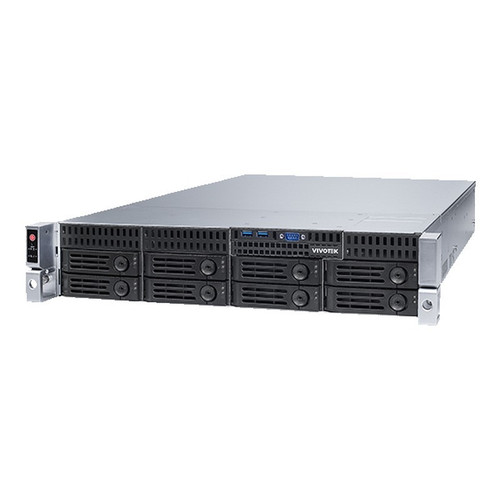
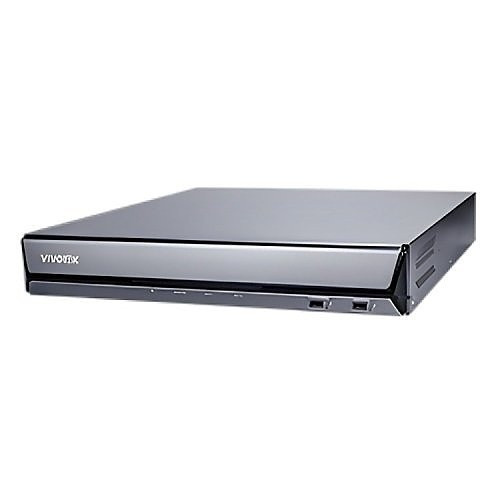
Both the Vivotek NR9581-V3 and ND9542P are 32-channel, 4K (8MP) H.265 network video recorders from the same manufacturer, targeting mid-to-large IP surveillance installations. The NR9581-V3 is a rack-mount unit built on embedded Windows 10 with an 8-bay hot-swap storage chassis, dual 2.5GbE, and enterprise RAID options. The ND9542P is a compact desktop/rack unit running embedded Linux with built-in PoE+ ports, a 4-bay HDD configuration, and hardware decoding. Buyers comparing these are typically choosing between a high-throughput enterprise recorder and an integrated PoE appliance.
In This Guide
- Which NVR delivers greater recording throughput, storage scalability, and channel capacity?
- How do the two units compare on power architecture, physical build, and operating environment?
- Which unit offers stronger integration, analytics, and management software capabilities?
- Which should you choose: the NR9581-V3 or the ND9542P?
- Side-by-Side Specs
- FAQ
Which NVR delivers greater recording throughput, storage scalability, and channel capacity?
The NR9581-V3 records at 512 Mbps and delivers up to 650 Mbps to remote clients, versus the ND9542P's 192 Mbps recording throughput and 224 Mbps combined network input/output. For large channel counts with high-resolution streams, the NR9581-V3's throughput advantage is substantial—nearly 2.7× the recording bandwidth of the ND9542P.
On storage, the NR9581-V3 supports eight hot-swappable 3.5" drive trays with RAID 0, 1, 5, 6, 10, 50, and 60 configurations. The ND9542P accommodates four internal 3.5" drives and supports only RAID 0, 1, and 5. The NR9581-V3 also supports iSCSI network storage expansion via its protocol stack; no iSCSI is listed for the ND9542P.
Both units support 32 live-view channels at up to 4K. However, the NR9581-V3 is expandable to 128 channels with licensing—both for live view and playback—while the ND9542P's spec lists no channel expansion beyond 32. The NR9581-V3 supports dual-stream recording per spec but lists 'Single' recording stream; the ND9542P explicitly supports dual-stream recording, which aids bandwidth management when recording and streaming simultaneously.
Decoding capability: the ND9542P uses hardware decoding at 3840×2160 @ 90 fps or 1920×1080 @ 360 fps. The NR9581-V3 uses software decoding with H.264 at 1920×1080 @ 360 fps and H.265 at 1920×1080 @ 180 fps—half the H.265 frame rate at 1080p compared to the hardware-decoded ND9542P.
How do the two units compare on power architecture, physical build, and operating environment?
The NR9581-V3 features redundant power supplies rated at up to 550 W with 80 Plus Platinum certification. It operates from 100–220V AC. The ND9542P draws a maximum of 300 W from 100–240V AC with no redundant power supply listed in its specifications.
A critical differentiator is the ND9542P's integrated PoE+ (802.3at) capability. The spec lists PoE Management as supported and an Alarm In of 16 / Alarm Out of 8, indicating it can power and manage cameras directly without a separate PoE switch. The NR9581-V3 has no PoE ports specified; it requires external switching infrastructure to power IP cameras.
Operating temperature range differs significantly. The ND9542P is rated from -10°C to 55°C (14°F–131°F), making it suitable for unconditioned or semi-industrial environments. The NR9581-V3 is rated only from 5°C to 35°C (41°F–95°F), requiring climate-controlled server room conditions.
Physical form differs as well. The NR9581-V3 measures 89 × 437 × 647 mm and weighs 15.8 kg without HDDs—a 2U-class rack appliance. The ND9542P is considerably smaller at 432 × 421 × 66 mm and 4.6 kg without HDDs, consistent with a 1U compact form factor. Both carry CE, FCC, VCCI, C-Tick, UL, CB, BSMI, and BIS safety certifications; the ND9542P additionally lists LVD certification not noted for the NR9581-V3.
Which unit offers stronger integration, analytics, and management software capabilities?
The NR9581-V3 provides broader video output options: HDMI (4096×2160), DisplayPort (7680×4320), DVI, and VGA—all four simultaneously with dual-monitor support. The ND9542P offers HDMI and VGA only, with a maximum display resolution of 3840×2160. For control-room deployments requiring 8K display or multiple independent monitors, the NR9581-V3 has a clear hardware advantage.
On analytics, both support VCA counting, Smart Search II, cybersecurity management, and ONVIF Profile S camera integration. The NR9581-V3 adds Smart Search I, Deep Search, LPR (license plate recognition), POS integration via ARCH, E-Map with drag-and-drop, Metadata Display (VCA, Data Magnet), and Fisheye Dewarp modes including 4R Pro and 2P not listed for the ND9542P. The ND9542P lists Trend Micro IoT Security and attribute-level object search (gender, age, clothing color, vehicle type/color) not specified for the NR9581-V3.
User management scales significantly on the NR9581-V3 to 4,096 accounts with Basic and Windows Active Directory authentication—relevant for enterprise AD environments. The ND9542P lists administrator and regular user levels only, with no AD integration noted. The NR9581-V3 also supports UPS integration, Failover, and the iViewer mobile app. The ND9542P extends mobile access to iViewer, VIVOCloud, and VORTEX, and adds multi-language UI (Czech, English, French, German, Italian, and more). Both support Shepherd and VSS (VAST Security Station) software.
I/O connectivity: the NR9581-V3 provides I/O Box integration via Advantech ADAM-6000, CHIYU, and MOXA modules, with external DI/O expansion. The ND9542P has 16 alarm inputs and 8 alarm outputs natively onboard, plus an RS-485 port (reserved). The NR9581-V3 has more USB ports overall (6 rear + 2 front vs. 1 rear USB 3.0 + 2 front USB 2.0 on the ND9542P).
Which should you choose: the NR9581-V3 or the ND9542P?
Our take: The NR9581-V3 is the stronger choice when deploying a high-channel, enterprise-grade recording infrastructure in a climate-controlled facility that already has PoE switching in place. Its 512 Mbps recording throughput is 2.7× the ND9542P's 192 Mbps, it scales to 128 channels via licensing versus the ND9542P's fixed 32, and its eight hot-swap drive bays with RAID 0/1/5/6/10/50/60 and iSCSI support far exceed the ND9542P's four-bay RAID 0/1/5 configuration. Conversely, the ND9542P is the stronger choice for compact, self-contained deployments: it integrates PoE+ camera power (eliminating a separate switch), hardware-decodes 4K at twice the H.265 frame rate of the NR9581-V3's software decoder, operates in environments down to -10°C without climate control, and weighs only 4.6 kg. Platform qualifier: organizations standardized on Windows AD authentication or requiring LPR, POS integration, or 8K DisplayPort output should select the NR9581-V3; edge or branch-office installations prioritizing PoE simplicity and temperature tolerance should select the ND9542P.
Side-by-Side Comparison
Spec-for-spec, from manufacturer data.
| Specification | Vivotek NR9581-V3 | Vivotek ND9542P |
|---|---|---|
| Channels (base / expandable) | 32 / 128 (licensed) | 32 / 32 |
| Operating System | Embedded Windows 10 | Embedded Linux |
| Recording Throughput | 512 Mbps | 192 Mbps |
| Network Throughput (total) | 650 Mbps (remote delivery) | 224 Mbps (input/output combined) |
| HDD Bays | 8 (hot-swappable) | 4 (internal) |
| RAID Support | RAID 0, 1, 5, 6, 10, 50, 60 | RAID 0, 1, 5 |
| Graphic Decoding | Software | Hardware |
| H.265 Decode @ 1080p | 180 fps | 360 fps |
| Video Outputs | HDMI, DisplayPort, DVI, VGA | HDMI, VGA |
| Max Display Resolution | 7680x4320 (DP) | 3840x2160 (HDMI) |
| Built-in PoE+ | Not specified | Supported (802.3at) |
| Ethernet Interfaces | 2.5 Gigabit x2 | 10/100/1000 Mbps x2 |
| Redundant Power | Supported (80 Plus Platinum) | Not specified |
| Max Power Draw | 550 W | 300 W |
| Operating Temperature | 5°C – 35°C | -10°C – 55°C |
| Weight (without HDD) | 15.8 kg | 4.6 kg |
Frequently Asked Questions
Which should you choose: the NR9581-V3 or the ND9542P?
The NR9581-V3 is the stronger choice when deploying a high-channel, enterprise-grade recording infrastructure in a climate-controlled facility that already has PoE switching in place. Its 512 Mbps recording throughput is 2.7× the ND9542P's 192 Mbps, it scales to 128 channels via licensing versus the ND9542P's fixed 32, and its eight hot-swap drive bays with RAID 0/1/5/6/10/50/60 and iSCSI support far exceed the ND9542P's four-bay RAID 0/1/5 configuration. Conversely, the ND9542P is the stronger choice for compact, self-contained deployments: it integrates PoE+ camera power (eliminating a separate switch), hardware-decodes 4K at twice the H.265 frame rate of the NR9581-V3's software decoder, operates in environments down to -10°C without climate control, and weighs only 4.6 kg. Platform qualifier: organizations standardized on Windows AD authentication or requiring LPR, POS integration, or 8K DisplayPort output should select the NR9581-V3; edge or branch-office installations prioritizing PoE simplicity and temperature tolerance should select the ND9542P.
Is the NR9581-V3 or ND9542P better for larger deployments that may grow beyond 32 cameras?
The NR9581-V3 supports expansion to 128 channels (live view and playback) through licensing, per its specifications. The ND9542P's specifications list no channel expansion beyond 32. If growth beyond 32 cameras is anticipated under a single recorder, the NR9581-V3 is the only option between these two that accommodates it.
Do I need a separate PoE switch if I buy the ND9542P instead of the NR9581-V3?
The ND9542P specifies built-in PoE+ (802.3at) with PoE Management supported, meaning it can power compatible IP cameras directly from the NVR. The NR9581-V3 has no PoE ports listed in its specifications, so an external PoE switch or injector would be required to power cameras connected to it.
Which NVR handles storage failure better in a critical-site installation?
The NR9581-V3 specifies redundant power supplies (80 Plus Platinum certified), hot-swappable drive trays, RAID levels up to RAID 60, seamless recording, and Failover support—all directly relevant to critical-site resilience. The ND9542P supports RAID 0, 1, and 5, adds HDD S.M.A.R.T. monitoring, but does not list redundant power, hot-swap trays, or Failover in its specifications. For maximum storage and power redundancy, the NR9581-V3 has the stronger specified feature set.
Get a Second Opinion on Your Camera Choice
Share your site layout, coverage goals, and budget. Our team will validate the camera selection, flag anything we would change, and recommend products that match the use case.