
Vivotek NR9581-V3 vs Hanwha XRN-3220B2: Specification Comparison
The Vivotek NR9581-V3 and Hanwha XRN-3220B2 are both rack-mount, 32-channel enterprise NVRs targeting mid-to-large physical-security deployments. Both support H.265 recording, ONVIF integration, and multi-drive storage with high recording throughput. This comparison evaluates them across recording capacity and throughput, storage and hardware architecture, and integration and cybersecurity capabilities — the three axes most relevant to installers and IT buyers selecting a 32-channel NVR platform.
In This Guide
- How do the NR9581-V3 and XRN-3220B2 compare on recording capacity, resolution ceiling, and throughput?
- How do the two NVRs differ in storage capacity, drive architecture, redundancy, and physical build?
- Which NVR offers stronger integration, cybersecurity features, and management software compatibility?
- Which should you choose: the NR9581-V3 or the XRN-3220B2?
- Side-by-Side Specs
- FAQ
How do the NR9581-V3 and XRN-3220B2 compare on recording capacity, resolution ceiling, and throughput?
The Vivotek NR9581-V3 supports 32 channels natively, expandable to 128 channels via licensing — a meaningful differentiator for staged deployments. Its recording throughput is rated at 512 Mbps, with remote client delivery rated at 650 Mbps. Decoding capability is specified at H.264: 1920×1080 @ 360 fps and H.265: 1920×1080 @ 180 fps, with a maximum decoding resolution of 7680×2560. Live view and playback both support 32 channels, expandable to 128 with license.
The Hanwha XRN-3220B2 is rated for 32-channel simultaneous recording at up to 32 MP, with a recording bandwidth of 520 Mbps in distributed mode and 300 Mbps in normal mode. Playback bandwidth is specified at 200 Mbps with multi-user simultaneous access. Maximum resolution support extends beyond 20 MP per the spec data, and the unit is marketed as an 8K-capable platform. The NR9581-V3's channel expandability to 128 is not matched by any stated expansion capability in the XRN-3220B2 spec data.
How do the two NVRs differ in storage capacity, drive architecture, redundancy, and physical build?
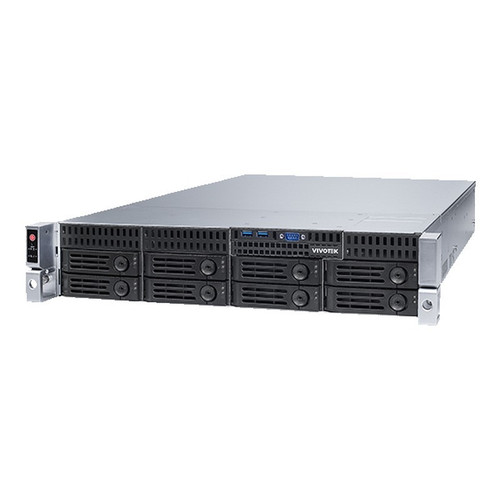
The Vivotek NR9581-V3 ships without drives and provides 8 hot-swappable HDD bays. It supports RAID 0, 1, 5, 6, 10, 50, and 60 — the broadest RAID configuration set in this comparison. Storage expansion is also possible via iSCSI over its dual 2.5 Gigabit Ethernet interfaces. Power is redundant (100–220V AC), rated at max 550 W, and holds an 80 Plus Platinum certification. The unit weighs 15.8 kg without HDDs and measures 89 × 437 × 647 mm. Backup options include USB (FAT format) and NAS (SMB/CIFS) for both manual and scheduled backup.
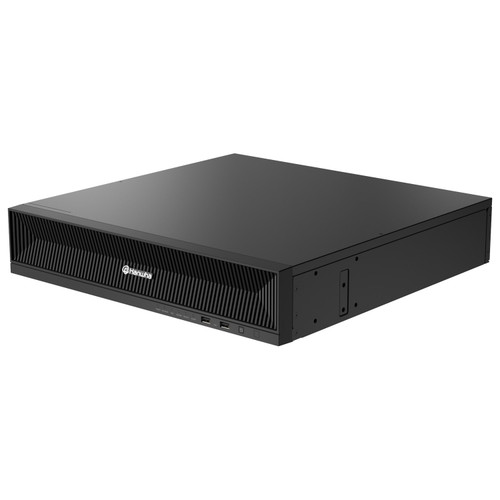
The Hanwha XRN-3220B2 ships as the XRN-3220B2-48TB SKU with 48 TB raw storage pre-installed across 8 SATA 3.5-inch HDD bays, expandable to a maximum of 80 TB. RAID support level is not specified in the provided data. Network connectivity uses three RJ-45 1 Gbps ports (LAN/WAN) rather than 2.5 Gbps interfaces. The unit weighs 16.09 kg (with HDDs noted as excluded in one spec entry, 16.1 lb noted separately — reviewers should confirm configured weight from the datasheet). The XRN-3220B2 lists a 12th-generation Intel processor; the NR9581-V3 specifies 'Intel Celeron or above' without generation detail. Redundant power supply status is not stated for the XRN-3220B2.
Which NVR offers stronger integration, cybersecurity features, and management software compatibility?
The Vivotek NR9581-V3 runs Embedded Windows 10 and supports ONVIF Profile S camera integration. User management scales to 4,096 accounts with Basic and Windows Active Directory authentication — a significant advantage in enterprise IT environments. Cybersecurity management is listed as supported, with recording data encryption, watermarking, and seamless recording all specified. The NR9581-V3 integrates with Vivotek's Shepherd and VSS Pro software, and the iViewer mobile app (iOS/Android). It also supports VCA counting, LPR, Smart Search I & II, Deep Search, fisheye dewarp (8 modes), failover, and UPS integration. I/O box integration is specified for Advantech ADAM-6000, CHIYU CYT-133SC, and MOXA E1210/E1212 devices.
The Hanwha XRN-3220B2 runs Embedded Linux and supports ONVIF, SUNAPI, P2P, and Wisenet Viewer/Wisenet Mobile. It carries NDAA compliance and TPM 2.0 hardware security — the only unit in this comparison with a stated hardware trust module. Analytics include Defocus, Audio, Dynamic Event, and User Event; WiseStream compression optimization is listed. VCA counting, LPR, Smart Search, and Deep Search are not specified in the XRN-3220B2 data. Windows Active Directory authentication is not listed. The XRN-3220B2 does not specify fisheye dewarp, failover support, or I/O box integration in the provided data.
Which should you choose: the NR9581-V3 or the XRN-3220B2?
Our take: The NR9581-V3 is the stronger choice when enterprise IT integration, channel scalability, and advanced analytics are the primary requirements. Its channel capacity is expandable from 32 to 128 via licensing — a concrete advantage the XRN-3220B2 does not match per available specs. The NR9581-V3's dual 2.5 Gbps Ethernet versus the XRN-3220B2's three 1 Gbps ports provides higher per-link throughput, and its 4,096-user account ceiling with Active Directory authentication directly targets IT-managed environments. The XRN-3220B2 counters with a higher per-channel resolution ceiling (32 MP versus 8 MP stated for the NR9581-V3), hardware-backed cybersecurity via TPM 2.0 and NDAA compliance, a longer 5-year warranty versus 3 years, and pre-installed 48 TB storage. Choose the XRN-3220B2 for Hanwha/Wisenet camera ecosystems, NDAA-sensitive deployments, or where maximum per-channel resolution matters. Choose the NR9581-V3 for mixed-vendor ONVIF sites requiring channel expansion, AD-integrated user management, or Vivotek VMS software.
Side-by-Side Comparison
Spec-for-spec, from manufacturer data.
| Specification | Vivotek NR9581-V3 | Hanwha XRN-3220B2 |
|---|---|---|
| Channels (base / expandable) | 32 / 128 (via license) | 32 / not specified |
| Max Per-Channel Resolution | 8 MP (per spec data) | 32 MP |
| Recording Throughput | 512 Mbps | 520 Mbps (distributed) / 300 Mbps (normal) |
| Remote / Playback Bandwidth | 650 Mbps remote delivery | 200 Mbps multi-user playback |
| Storage (included) | None (drives sold separately) | 48 TB (8× SATA, up to 80 TB) |
| HDD Bays | 8 hot-swappable | 8 SATA 3.5-inch |
| RAID Support | 0, 1, 5, 6, 10, 50, 60 | Not specified |
| Network Interfaces | 2× 2.5 Gigabit Ethernet | 3× RJ-45 1 Gbps (LAN/WAN) |
| Operating System | Embedded Windows 10 | Embedded Linux |
| Redundant Power | Yes (100–220V AC, 550 W max, 80+ Platinum) | Not specified |
| User Accounts / Auth | 4,096 accounts; Basic + Windows AD | Not specified |
| ONVIF | Profile S | Yes (profile not specified) |
| NDAA Compliance | Not specified | Yes |
| TPM / Hardware Security | Not specified | TPM 2.0 |
| Operating Temperature | 5°C to 35°C | 0°C to 40°C |
| Warranty | 3 years | 5 years |
Frequently Asked Questions
Which should you choose: the NR9581-V3 or the XRN-3220B2?
The NR9581-V3 is the stronger choice when enterprise IT integration, channel scalability, and advanced analytics are the primary requirements. Its channel capacity is expandable from 32 to 128 via licensing — a concrete advantage the XRN-3220B2 does not match per available specs. The NR9581-V3's dual 2.5 Gbps Ethernet versus the XRN-3220B2's three 1 Gbps ports provides higher per-link throughput, and its 4,096-user account ceiling with Active Directory authentication directly targets IT-managed environments. The XRN-3220B2 counters with a higher per-channel resolution ceiling (32 MP versus 8 MP stated for the NR9581-V3), hardware-backed cybersecurity via TPM 2.0 and NDAA compliance, a longer 5-year warranty versus 3 years, and pre-installed 48 TB storage. Choose the XRN-3220B2 for Hanwha/Wisenet camera ecosystems, NDAA-sensitive deployments, or where maximum per-channel resolution matters. Choose the NR9581-V3 for mixed-vendor ONVIF sites requiring channel expansion, AD-integrated user management, or Vivotek VMS software.
Is the NR9581-V3 or XRN-3220B2 better for larger deployments that may need more than 32 cameras?
The NR9581-V3 explicitly supports expansion to 128 channels via licensing, making it the documented choice for phased or large-scale deployments. The XRN-3220B2 spec data does not state any channel expansion capability beyond its base 32 channels.
Which NVR is better suited for government or NDAA-sensitive projects?
The Hanwha XRN-3220B2 is specified as NDAA-compliant and includes TPM 2.0 hardware security. The NR9581-V3 spec data does not state NDAA compliance or TPM. For federally regulated or NDAA-restricted deployments, the XRN-3220B2 has the stated certification; the NR9581-V3 does not.
Does the XRN-3220B2 include storage out of the box, and how does that compare to the NR9581-V3?
The XRN-3220B2 SKU reviewed (XRN-3220B2-48TB) ships with 48 TB of pre-installed storage across 8 SATA bays, expandable to 80 TB. The NR9581-V3 ships without drives — HDDs are purchased separately — but supports 8 hot-swappable bays with RAID 0, 1, 5, 6, 10, 50, and 60. RAID configuration options for the XRN-3220B2 are not specified in the available data.
Get a Second Opinion on Your Camera Choice
Share your site layout, coverage goals, and budget. Our team will validate the camera selection, flag anything we would change, and recommend products that match the use case.