
Honeywell 1990ISR-3-N vs Honeywell 3320GER-4: Specification Comparison
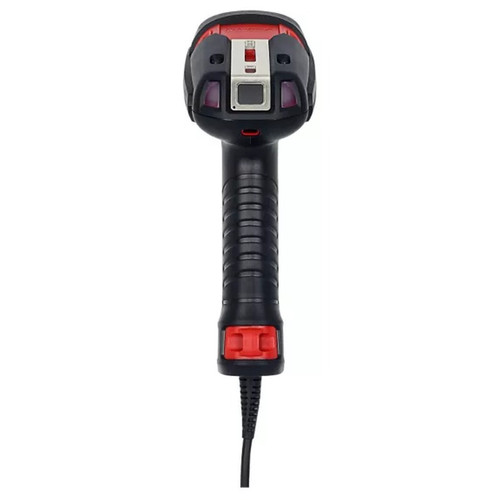
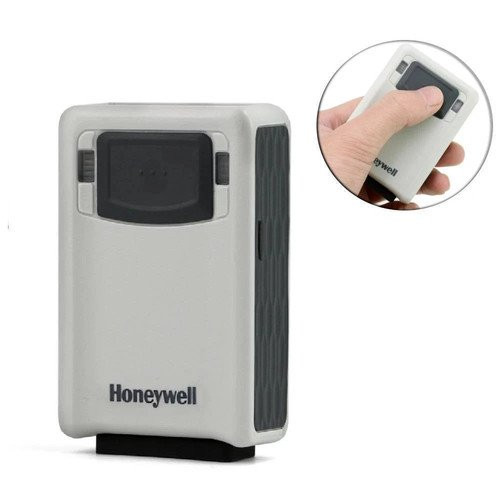
Both the Honeywell Granit XP 1990ISR-3-N and the Honeywell Vuquest 3320GER-4 are corded 1D/2D area-imager barcode scanners, making them legitimate cross-shop candidates for buyers evaluating wired scanning solutions. However, they are positioned for meaningfully different environments: the 1990ISR-3-N targets rugged industrial and warehouse deployments, while the 3320GER-4 is designed for retail point-of-sale presentation scanning. This comparison covers scan performance and working range, environmental and durability ratings, and connectivity plus physical form factor.
In This Guide
- How do the scan performance and working range differ between the 1990ISR-3-N and 3320GER-4?
- Which scanner offers stronger environmental and durability protection for the deployment site?
- How do connectivity options and physical form factor compare between the two models?
- Which should you choose: the 1990ISR-3-N or the 3320GER-4?
- Side-by-Side Specs
- FAQ
How do the scan performance and working range differ between the 1990ISR-3-N and 3320GER-4?
The 1990ISR-3-N uses a 1280×800 pixel area imager and covers a close-range working window of 5 to 80 cm (approximately 2 to 31.5 inches). This narrower range is optimized for handheld, directed scanning of individual items at close proximity — typical in warehouse picking, receiving docks, or manufacturing lines where the operator brings the scanner to the item.
The 3320GER-4 uses an 838×640 pixel area imager and covers a wider working range of 15 to 120 cm (6 to 48 inches). Its presentation-scanner design allows items to be passed in front of the scanner without the operator holding or aiming the device — a workflow match for retail checkout lanes. The 1990ISR-3-N has a higher pixel-array resolution (1280×800 vs. 838×640) per the provided specifications. Both models read 1D and 2D symbologies including PDF formats per their respective specs.
Which scanner offers stronger environmental and durability protection for the deployment site?
The 1990ISR-3-N is rated IP65, meaning it is fully dust-tight and protected against low-pressure water jets from any direction. It carries a 2.0 m drop rating and an operating temperature range of -40°C to 70°C. This combination makes it suitable for cold-storage warehouses, outdoor receiving areas, and harsh industrial floors where temperature extremes, dust, and accidental drops are routine hazards.
The 3320GER-4 specifications include an IP53 rating (per the _IP Rating field), indicating protection against dust ingress sufficient to prevent harmful deposits and against water spray up to 60° from vertical — a meaningful but lower level of protection than IP65. Its operating temperature range spans -20°C to 50°C per the _Operating Temperature field, though a separate spec field also lists 0°C to 40°C; the narrower 0°C–40°C figure should be treated as the conservative operating limit absent datasheet clarification. The ~tagline and card bullets reference IP42 and a 1.8 m drop spec, but the primary _IP Rating field states IP53 — buyers should verify against the manufacturer datasheet. For demanding or outdoor environments, the 1990ISR-3-N's IP65 and -40°C floor present a clear advantage.
How do connectivity options and physical form factor compare between the two models?
The 1990ISR-3-N supports both RS-232 and USB corded interfaces, providing compatibility with legacy serial-port systems (older POS terminals, industrial PLCs, serial-based inventory systems) as well as modern USB hosts. Its input voltage range is 4.0 VDC to 5.5 VDC per the provided specs.
The 3320GER-4 is USB-only (5 VDC ±0.25 V), which covers the vast majority of modern retail POS hardware but excludes RS-232 legacy systems. Its weight is specified at 77 g (2.7 oz) — a lightweight figure consistent with a stationary presentation scanner. No weight is provided in the 1990ISR-3-N specifications, so a direct weight comparison cannot be made. The 3320GER-4's presentation form factor is designed for fixed countertop mounting, whereas the 1990ISR-3-N is a handheld gun-grip scanner. Both carry a 3-year warranty.
Which should you choose: the 1990ISR-3-N or the 3320GER-4?
Our take: The 1990ISR-3-N is the stronger choice when the deployment demands rugged environmental tolerance and multi-interface flexibility, while the 3320GER-4 is the appropriate selection for stationary retail point-of-sale environments. Three concrete spec deltas drive this: first, IP rating — IP65 on the 1990ISR-3-N versus IP53 on the 3320GER-4, a meaningful gap in dust and water protection; second, operating temperature floor — -40°C versus -20°C (conservative) or 0°C (per alternate spec field), making the 1990ISR-3-N the only option for cold-storage or outdoor use; third, interface support — the 1990ISR-3-N adds RS-232 alongside USB, enabling legacy serial integration the 3320GER-4 cannot support. Buyers deploying in warehouse, logistics, or industrial settings should specify the 1990ISR-3-N. Retailers needing a lightweight, hands-free countertop presentation scanner with a longer 15–120 cm working range for checkout lanes will find the 3320GER-4 better suited to that workflow.
Side-by-Side Comparison
Spec-for-spec, from manufacturer data.
| Specification | Honeywell 1990ISR-3-N | Honeywell 3320GER-4 |
|---|---|---|
| Series / Family | Granit XP 199Xi | Vuquest 3320g |
| Part Number | 1990ISR-3-N | 3320GER-4 |
| Scan Type | Area Imager (1D/2D), handheld | Presentation Scanner (1D/2D), countertop |
| Pixel Array | 1280 x 800 | 838 x 640 |
| Working Range | 5 to 80 cm (close-range) | 15 to 120 cm (6 to 48 in) |
| IP Rating | IP65 | IP53 (primary spec field) |
| Drop Rating | 2.0 m | 1.8 m (per tagline/bullets; not in primary spec field) |
| Operating Temperature | -40°C to 70°C | -20°C to 50°C (primary field); 0°C to 40°C (secondary field) |
| Connectivity | RS-232 and USB (corded) | USB only (corded) |
| Input Voltage | 4.0 VDC to 5.5 VDC | 5 VDC ±0.25 V |
| Outdoor Ready | Yes (spec field) | — |
| Application | Industrial / warehouse | Retail point-of-sale |
| Weight | — | 77 g (2.7 oz) |
| Warranty | 3-year | 3-year |
| Symbologies | 1D and 2D | 1D, PDF, and 2D (per spec field) |
Frequently Asked Questions
Which should you choose: the 1990ISR-3-N or the 3320GER-4?
The 1990ISR-3-N is the stronger choice when the deployment demands rugged environmental tolerance and multi-interface flexibility, while the 3320GER-4 is the appropriate selection for stationary retail point-of-sale environments. Three concrete spec deltas drive this: first, IP rating — IP65 on the 1990ISR-3-N versus IP53 on the 3320GER-4, a meaningful gap in dust and water protection; second, operating temperature floor — -40°C versus -20°C (conservative) or 0°C (per alternate spec field), making the 1990ISR-3-N the only option for cold-storage or outdoor use; third, interface support — the 1990ISR-3-N adds RS-232 alongside USB, enabling legacy serial integration the 3320GER-4 cannot support. Buyers deploying in warehouse, logistics, or industrial settings should specify the 1990ISR-3-N. Retailers needing a lightweight, hands-free countertop presentation scanner with a longer 15–120 cm working range for checkout lanes will find the 3320GER-4 better suited to that workflow.
Is the 1990ISR-3-N or 3320GER-4 better for cold-storage or outdoor warehouse use?
The 1990ISR-3-N is the correct choice for cold-storage or outdoor warehouse environments. It is rated for operation down to -40°C and carries an IP65 dust-and-water-resistance rating. The 3320GER-4 has a minimum operating temperature of -20°C per its primary spec field (and as low as 0°C per a secondary field), and an IP53 rating — both lower thresholds that may not meet the demands of freezer warehouses or exposed outdoor receiving docks.
Can either scanner connect to an older RS-232 serial POS system?
Only the 1990ISR-3-N supports RS-232, in addition to USB. The 3320GER-4 is USB-only. If your existing POS terminals or industrial controllers use serial RS-232 ports, the 3320GER-4 is not compatible without an external USB-to-serial adapter; the 1990ISR-3-N connects natively.
Which scanner has the longer working range — the 1990ISR-3-N or the 3320GER-4?
The 3320GER-4 has the longer specified working range at 15 to 120 cm (6 to 48 inches), suited to presentation scanning where items pass at varying distances in front of a countertop unit. The 1990ISR-3-N is specified at 5 to 80 cm, optimized for close-range handheld directed scanning. Note that the 1990ISR-3-N's range starts closer (5 cm vs. 15 cm), which can be an advantage when scanning items held very near the scanner.
More Barcode Scanner Comparisons
- Zebra DS8108-SR vs Zebra DS8108-SR
- Zebra DS8108-SR vs Zebra DS8108-HC
- Datalogic 931061345 vs Datalogic 931024111-00053
- Datalogic 931061335 vs Datalogic 931061345
- Datalogic 931061335 vs Datalogic 931024111-00053
- Datalogic 957022201-00053 vs Datalogic 931061345
Barcode Scanner Buying Guides
Get a Second Opinion on Your Camera Choice
Share your site layout, coverage goals, and budget. Our team will validate the camera selection, flag anything we would change, and recommend products that match the use case.