
Honeywell 1960GSR-2EZ-N vs Honeywell 3320GER-4: Specification Comparison
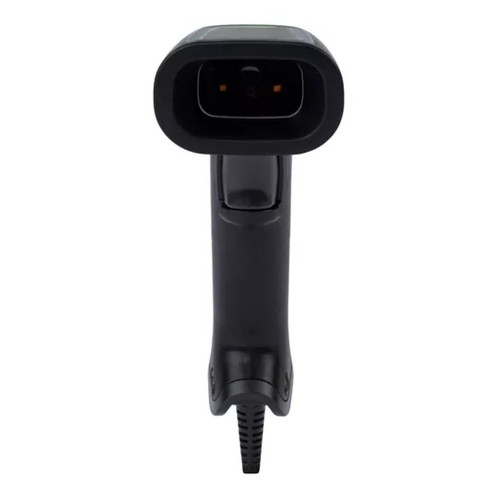
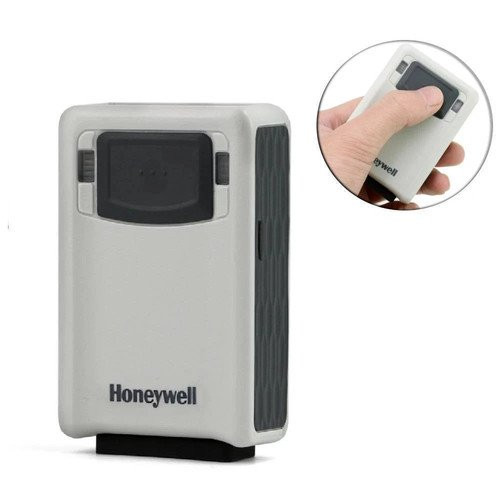
Both the Honeywell 1960GSR-2EZ-N (Xenon XP 1952g) and the Honeywell 3320GER-4 (Vuquest 3320g) are Honeywell 1D/2D area-imager barcode scanners in the same general product class. However, the 1960GSR-2EZ-N is a handheld wireless scanner designed for mobile, general-purpose use, while the 3320GER-4 is a corded presentation scanner optimized for fixed-point retail POS. These represent meaningfully different deployment modes — mobile versus stationary — which buyers in warehousing, retail, or logistics settings should weigh carefully before selecting.
In This Guide
- Which scanner covers the working range and scan modes your application demands?
- Which unit offers stronger environmental and physical protection for your deployment site?
- Which scanner's connectivity model fits your infrastructure — wireless mobile or wired fixed-point?
- Which should you choose: the 1960GSR-2EZ-N or the 3320GER-4?
- Side-by-Side Specs
- FAQ
Which scanner covers the working range and scan modes your application demands?
The 1960GSR-2EZ-N operates at a working range of 2.5 to 50.8 cm (1 to 20 in), suited to close-proximity handheld scanning of items held at varying distances. The 3320GER-4 offers a significantly wider working range of 15 to 120 cm (6 to 48 in), enabling hands-free presentation scanning where items are passed or hovered in front of the scanner from a greater distance.
Both devices support 1D and 2D barcode symbologies via area imaging. The 1960GSR-2EZ-N lists AI Detection analytics as part of its scan capability, a feature not specified for the 3320GER-4. The 3320GER-4's scan pattern is documented as an 838 x 640 pixel array; the 1960GSR-2EZ-N's pixel array specification is not provided in the supplied data. The 3320GER-4's presentation scan mode enables hands-free throughput at a POS counter, while the 1960GSR-2EZ-N requires operator-directed scanning.
Which unit offers stronger environmental and physical protection for your deployment site?
The 1960GSR-2EZ-N carries an IP65 ingress protection rating, meaning it is fully dust-tight and protected against low-pressure water jets — suitable for dusty warehouses or light-wash environments. It is drop-tested to 2.0 m per its specifications. The 3320GER-4 is rated IP53 per its structured specification field, meaning it is dust-protected (not fully sealed) and guarded against water spray. Note: the tilde-prefixed (~) marketing copy for the 3320GER-4 references IP42 and a 1.8 m drop specification, which conflicts with the structured IP53 field; the structured field (IP53) is treated as authoritative here, and no verified drop rating is confirmed from structured data.
Operating temperature ranges diverge at the cold end: the 1960GSR-2EZ-N is rated 0° to 50°C, while the 3320GER-4's structured spec lists -20° to 50°C, giving the Vuquest a wider cold-side tolerance. However, additional unstructured data for the 3320GER-4 lists an operating temperature of 0°C to 40°C, which contradicts the structured field; buyers should verify the applicable temperature range with the product datasheet before cold-environment deployment.
Which scanner's connectivity model fits your infrastructure — wireless mobile or wired fixed-point?
The 1960GSR-2EZ-N connects via Bluetooth 4.2 wireless, enabling untethered mobile scanning across a work area, with USB also listed as a connectivity option. This suits warehouse picking, inventory, or any workflow where operator mobility is required. The 3320GER-4 is corded USB only, with no wireless capability specified. Its fixed-point presentation scan mode is purpose-built for stationary POS counters where a cable run is acceptable.
The 1960GSR-2EZ-N weighs 0.32 lb as a handheld unit. The 3320GER-4 weighs 0.17 lb (77 g per unstructured data), reflecting its compact, stand-mounted form factor. The 1960GSR-2EZ-N's input voltage is not specified in the provided data; the 3320GER-4 operates at 5VDC ±0.25V via USB. Both carry a 3-year warranty. Optional accessories are documented for the 1960GSR-2EZ-N (cables 1960GSR-2-N, 1960GSR-2USB-2-N, CBL-500-300-S00); no bundle options are listed for the 3320GER-4.
Which should you choose: the 1960GSR-2EZ-N or the 3320GER-4?
Our take: The 1960GSR-2EZ-N is the stronger choice when operator mobility, higher ingress protection, and wireless connectivity are required; the 3320GER-4 is the appropriate choice for fixed, high-throughput retail POS scanning at longer presentation distances. The 1960GSR-2EZ-N's IP65 rating surpasses the 3320GER-4's IP53, and its 2.0 m verified drop rating provides documented ruggedization the 3320GER-4's structured specs do not confirm. Conversely, the 3320GER-4's working range of 15–120 cm nearly doubles the 1960GSR-2EZ-N's 2.5–50.8 cm, a decisive advantage for hands-free counter scanning. The 3320GER-4 also lists a cold-side operating floor of -20°C versus 0°C for the 1960GSR-2EZ-N, though that figure carries a data-conflict caveat. Buyers fitting mobile warehouse or field workflows should select the 1960GSR-2EZ-N; those deploying a fixed retail POS lane with USB infrastructure should select the 3320GER-4.
Side-by-Side Comparison
Spec-for-spec, from manufacturer data.
| Specification | Honeywell 1960GSR-2EZ-N | Honeywell 3320GER-4 |
|---|---|---|
| Series / Family | Xenon XP 1952g | Vuquest 3320g |
| Part Number | 1960GSR-2EZ-N | 3320GER-4 |
| Scan Mode | Handheld area imager | Presentation area imager |
| Barcode Types | 1D/2D | 1D/2D |
| Working Range | 2.5–50.8 cm (1–20 in) | 15–120 cm (6–48 in) |
| Connectivity | Bluetooth 4.2, USB | Corded USB only |
| IP Rating | IP65 | IP53 (structured spec) |
| Drop Rating | 2.0 m | Not confirmed in structured specs |
| Operating Temperature | 0° to 50°C | -20° to 50°C (structured; see caveat) |
| AI Detection | Yes | — |
| Scan Pixel Array | — | 838 x 640 pixels |
| Input Voltage | — | 5VDC ±0.25V |
| Weight | 0.32 lb | 0.17 lb (77 g) |
| Application | General purpose | Retail point-of-sale |
| Warranty | 3-year | 3-year |
| Optional Accessories Listed | Yes (cables, bases) | — |
Frequently Asked Questions
Which should you choose: the 1960GSR-2EZ-N or the 3320GER-4?
The 1960GSR-2EZ-N is the stronger choice when operator mobility, higher ingress protection, and wireless connectivity are required; the 3320GER-4 is the appropriate choice for fixed, high-throughput retail POS scanning at longer presentation distances. The 1960GSR-2EZ-N's IP65 rating surpasses the 3320GER-4's IP53, and its 2.0 m verified drop rating provides documented ruggedization the 3320GER-4's structured specs do not confirm. Conversely, the 3320GER-4's working range of 15–120 cm nearly doubles the 1960GSR-2EZ-N's 2.5–50.8 cm, a decisive advantage for hands-free counter scanning. The 3320GER-4 also lists a cold-side operating floor of -20°C versus 0°C for the 1960GSR-2EZ-N, though that figure carries a data-conflict caveat. Buyers fitting mobile warehouse or field workflows should select the 1960GSR-2EZ-N; those deploying a fixed retail POS lane with USB infrastructure should select the 3320GER-4.
Is the 1960GSR-2EZ-N or 3320GER-4 better for a warehouse environment?
The 1960GSR-2EZ-N is better suited to warehouse use. It carries an IP65 dust-tight and water-jet-resistant rating versus the 3320GER-4's IP53, and it is drop-tested to 2.0 m — a drop rating not confirmed in the 3320GER-4's structured specifications. Its Bluetooth 4.2 wireless connectivity also supports the mobile, untethered scanning typical of warehouse picking and inventory workflows.
Can the 3320GER-4 be used without an operator holding it, like at a checkout counter?
Yes. The 3320GER-4 is classified as a presentation scanner and is specifically listed for retail point-of-sale applications, designed for hands-free operation where items are presented to the scanner. Its working range of 15 to 120 cm supports this stationary, counter-mounted use. The 1960GSR-2EZ-N is a handheld scanner and does not specify a presentation scan mode.
Do both scanners carry the same warranty?
Yes. Both the 1960GSR-2EZ-N and the 3320GER-4 are specified with a 3-year warranty. No additional warranty terms or differences are noted in the provided specifications for either unit.
More Barcode Scanner Comparisons
- Zebra DS8108-SR vs Zebra DS8108-SR
- Zebra DS8108-SR vs Zebra DS8108-HC
- Datalogic 931061345 vs Datalogic 931024111-00053
- Datalogic 931061335 vs Datalogic 931061345
- Datalogic 931061335 vs Datalogic 931024111-00053
- Datalogic 957022201-00053 vs Datalogic 931061345
Barcode Scanner Buying Guides
Get a Second Opinion on Your Camera Choice
Share your site layout, coverage goals, and budget. Our team will validate the camera selection, flag anything we would change, and recommend products that match the use case.