
HID HID-920-PTNN vs HID 920NWNNEKE00BM: Specification Comparison
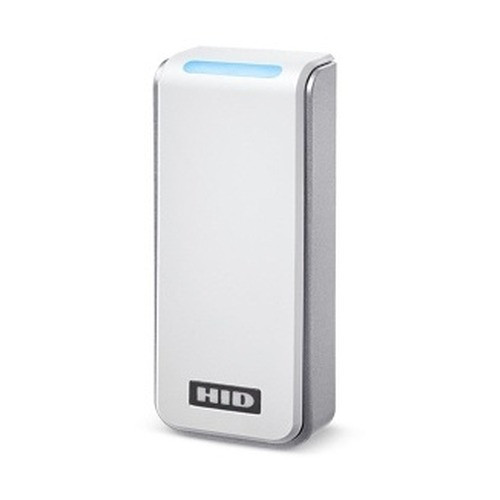
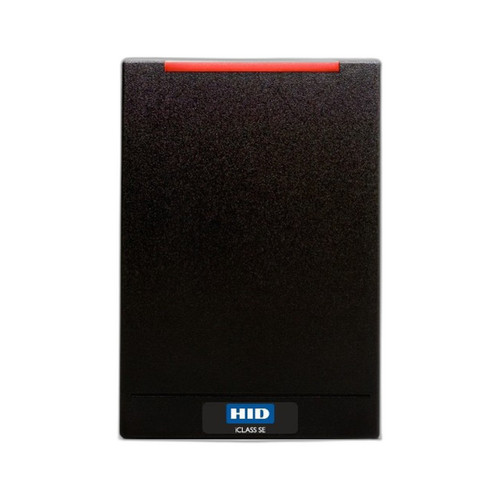
Both products are HID MultiCLASS wall-mount proximity readers designed to read dual-frequency credentials (HF and LF) in access control deployments. The HID-920-PTNN (RP40) and the 920NWNNEKE00BM (R40 Multiclass) occupy the same product class—multi-technology credential readers intended for phased migration environments where legacy 125 kHz and modern 13.56 MHz cards coexist. Buyers evaluating either unit are typically selecting a reader for a panel-based access control system that must support mixed card populations during a credential upgrade cycle.
In This Guide
- Which reader supports a broader range of credential technologies and output protocols?
- How do the two readers differ in panel integration approach and data security?
- What are the differences in power consumption, form factor, and mobile access capability?
- Which should you choose: the HID-920-PTNN or the 920NWNNEKE00BM?
- Side-by-Side Specs
- FAQ
Which reader supports a broader range of credential technologies and output protocols?
The HID-920-PTNN specifies dual-frequency support covering both 13.56 MHz (high frequency) and 125 kHz (low frequency) formats, including cards, fobs, and HID Mobile Access-compatible mobile devices. Its output protocol is OSDP (Open Supervised Device Protocol), a modern, bidirectional, encrypted communication standard increasingly required by enterprise and government access control panels.
The 920NWNNEKE00BM also targets dual-frequency (HF and LF) environments, explicitly listing iCLASS SE, HF SEOS/MIGR, and LF protocols. Its output is Wiegand 26-bit (100 µs pulse width, 1000 µs spacing), the legacy unidirectional standard. The unit ships factory-loaded with HF migration profile EVCF0113_ICE0282, which reduces field configuration time during iCLASS SE rollouts. Mobile credential support is not specified for the 920NWNNEKE00BM.
How do the two readers differ in panel integration approach and data security?
The HID-920-PTNN communicates over OSDP, enabling encrypted, supervised, bidirectional communication between reader and panel. This supports RS-485 bus topologies, remote configuration, and tamper detection signaling—capabilities that align with modern zero-trust physical security architectures and are required in some federal and high-security commercial deployments.
The 920NWNNEKE00BM uses Wiegand output, which is a unidirectional, unsupervised protocol with no native encryption at the wire level between reader and panel. However, it specifies iCLASS SE encrypted card data, meaning credential security is enforced at the card-reader layer. Wiegand's broad panel compatibility is an integration advantage in environments where the existing panel does not support OSDP. The factory-locked, migration-profile configuration reduces misconfiguration risk at deployment but limits field flexibility compared to a configurable OSDP reader.
What are the differences in power consumption, form factor, and mobile access capability?
The HID-920-PTNN specifies intelligent power management yielding up to 59% energy reduction versus a baseline (baseline not stated in provided specs). It is described as a wall-switch style form factor and carries Environmental Product Declaration and Green Circle certifications, relevant for sustainability-conscious procurement. It is configurable for HID Mobile Access, allowing smartphones to act as credentials without additional hardware.
The 920NWNNEKE00BM is specified as a wall-mount unit in black, with an optional color variant listed as black or white with silver trim baseplate. Power consumption figures are not provided in the available specifications. Mobile access capability is not stated. The keypad field in the provided spec data is ambiguous—listing 'No Yes (2 x 6 layout) No Yes (3 x 4 layout)'—suggesting multiple SKU variants or a data entry error; a keypad cannot be confirmed or denied for this specific SKU from the provided data.
Which should you choose: the HID-920-PTNN or the 920NWNNEKE00BM?
Our take: The HID-920-PTNN is the stronger choice when the deployment requires modern panel integration, mobile credentials, or measurable energy efficiency. It communicates over OSDP rather than Wiegand, delivering encrypted, bidirectional, supervised reader-panel communication that the 920NWNNEKE00BM—limited to Wiegand 26-bit output—cannot match. It adds HID Mobile Access compatibility, a feature absent from the 920NWNNEKE00BM's provided specifications. Its intelligent power management claims up to 59% energy reduction, while no power consumption data is provided for the 920NWNNEKE00BM. Conversely, the 920NWNNEKE00BM is the pragmatic choice for sites locked to Wiegand-only panels, particularly those mid-migration to iCLASS SE: its factory-loaded EVCF0113_ICE0282 migration profile and iCLASS SE encrypted card data support reduce field setup time on legacy infrastructure. Both carry a 2-year warranty and wall-mount black finish. Platform qualifier: specify OSDP panel support before ordering the 920-PTNN.
Side-by-Side Comparison
Spec-for-spec, from manufacturer data.
| Specification | HID HID-920-PTNN | HID 920NWNNEKE00BM |
|---|---|---|
| Product Type | Wall Switch Proximity Card Reader | Smart Card Reader (Wall Mount) |
| Reader Model | RP40 MultiCLASS SE | R40 Multiclass |
| HF Credential Support | 13.56 MHz (iCLASS SE, HID HF) | iCLASS SE, HF SEOS/MIGR |
| LF Credential Support | 125 kHz | 125 kHz LF protocols |
| Mobile Access | HID Mobile Access® configurable | Not specified |
| Output Protocol | OSDP (Open Supervised Device Protocol) | Wiegand 26-bit (100 µs pulse, 1000 µs spacing) |
| Communication Security | OSDP (encrypted, bidirectional, supervised) | iCLASS SE encrypted card data; Wiegand wire layer unsupervised |
| Factory Migration Profile | Not specified | EVCF0113_ICE0282 (HF MIGR, pre-loaded) |
| Configuration | Configurable (OSDP) | Factory-locked, migration profile pre-loaded |
| Power Management | Intelligent power management, up to 59% reduction | Not specified |
| Connectivity | Wired | Wired |
| Form Factor | Wall-switch style | Wall mount |
| Color / Finish | Black | Black (white with silver trim baseplate also listed) |
| Keypad | Not specified | Ambiguous in provided specs (multiple values listed; not confirmed) |
| Certifications | Environmental Product Declaration, Green Circle | Not specified |
| Warranty | 2-year | 2-year |
Frequently Asked Questions
Which should you choose: the HID-920-PTNN or the 920NWNNEKE00BM?
The HID-920-PTNN is the stronger choice when the deployment requires modern panel integration, mobile credentials, or measurable energy efficiency. It communicates over OSDP rather than Wiegand, delivering encrypted, bidirectional, supervised reader-panel communication that the 920NWNNEKE00BM—limited to Wiegand 26-bit output—cannot match. It adds HID Mobile Access compatibility, a feature absent from the 920NWNNEKE00BM's provided specifications. Its intelligent power management claims up to 59% energy reduction, while no power consumption data is provided for the 920NWNNEKE00BM. Conversely, the 920NWNNEKE00BM is the pragmatic choice for sites locked to Wiegand-only panels, particularly those mid-migration to iCLASS SE: its factory-loaded EVCF0113_ICE0282 migration profile and iCLASS SE encrypted card data support reduce field setup time on legacy infrastructure. Both carry a 2-year warranty and wall-mount black finish. Platform qualifier: specify OSDP panel support before ordering the 920-PTNN.
Can either reader work with my existing Wiegand access control panel?
The 920NWNNEKE00BM is designed specifically for Wiegand panels, outputting a standard 26-bit Wiegand signal (100 µs pulse, 1000 µs spacing) and will integrate directly with any Wiegand-compatible panel. The HID-920-PTNN communicates via OSDP; it is not specified as Wiegand-capable in the provided specs, so Wiegand panel compatibility cannot be confirmed for that model without consulting HID's full datasheet or product configurator.
Which reader supports smartphone or mobile credentials?
Only the HID-920-PTNN explicitly specifies HID Mobile Access compatibility, allowing mobile devices to be used as credentials. Mobile access support is not stated anywhere in the provided specifications for the 920NWNNEKE00BM.
If I am migrating from 125 kHz legacy cards to iCLASS SE, which reader is better suited?
Both readers support dual-frequency (HF 13.56 MHz and LF 125 kHz) operation during a migration period. However, the 920NWNNEKE00BM ships factory-loaded with migration profile EVCF0113_ICE0282 specifically targeting the iCLASS SE migration path, reducing field configuration effort. The HID-920-PTNN is configurable for HID Mobile Access and uses OSDP, but its migration profile pre-loading is not specified. For a Wiegand-panel iCLASS SE migration, the 920NWNNEKE00BM's factory configuration is a concrete deployment advantage.
More Access Control Reader Comparisons
- HID 920PHRNEK00203 vs Kantech KT-SG-MT-KP2
- HID 920PHRNEK00203 vs Kantech KT-SG-MT2
- HID 920PHRNEK00203 vs DMP USB
- HID 920PHRNEK00203 vs HID HID-920-PTNN
- HID 920PHRNEK00203 vs HID 920NWNNEKE00BM
- HID HID-920-PTNN vs Kantech KT-SG-MT-KP2
Access Control Reader Buying Guides
Get a Second Opinion on Your Camera Choice
Share your site layout, coverage goals, and budget. Our team will validate the camera selection, flag anything we would change, and recommend products that match the use case.