
HID 920PHRNEK00203 vs HID 920NWNNEKE00BM: Specification Comparison
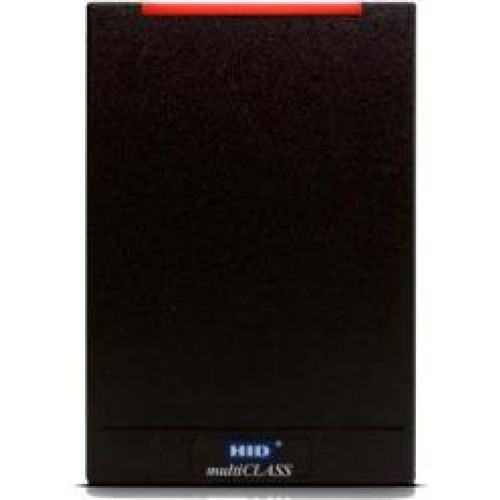
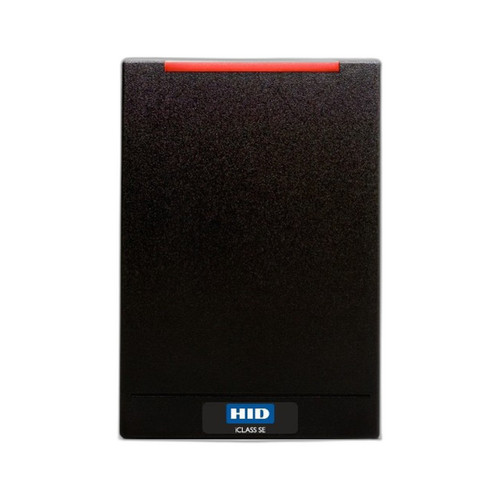
Both the HID 920PHRNEK00203 (RP40 Multiclass SE) and the HID 920NWNNEKE00BM (R40 Multiclass Wall Reader) are HID multi-technology access control readers designed to read legacy and modern credentials within a single housing. Buyers evaluating either unit are typically planning a credential migration strategy — moving from 125 kHz proximity or older iCLASS to higher-security formats — and need to determine which reader's protocol output, credential breadth, and security architecture best fits their panel infrastructure and phasing timeline.
In This Guide
- Which reader supports a broader credential stack for a phased migration?
- Which reader's output protocol and wiring configuration best fits existing panel infrastructure?
- Which reader offers stronger on-reader security and environmental durability?
- Which should you choose: the 920PHRNEK00203 or the 920NWNNEKE00BM?
- Side-by-Side Specs
- FAQ
Which reader supports a broader credential stack for a phased migration?
The 920PHRNEK00203 (RP40 Multiclass SE) is specified to read 125 kHz Prox, iCLASS, MIFARE, DESFire, SEOS, and NFC/13.56 MHz on a single unit — six distinct credential families spanning both low-frequency (125 kHz) and high-frequency (13.56 MHz) formats. This breadth allows a site to field-present virtually any credential type without swapping hardware mid-migration.
The 920NWNNEKE00BM (R40 Multiclass Wall Reader) is specified to support iCLASS SE, HF SEOS/MIGR, and LF protocols, with a factory-loaded HF MIGR profile (EVCF0113_ICE0282). The spec lists iCLASS SE, Wiegand, and PIG (Proprietary Intelligent Card) as credential types. MIFARE, DESFire, and NFC are not listed in the available specifications for Product B; buyers requiring those formats cannot confirm compatibility from the provided data.
For sites carrying a mixed credential population that includes MIFARE or DESFire cards — common in healthcare and higher-education environments — the 920PHRNEK00203's explicitly listed support for those formats is a concrete differentiator. The 920NWNNEKE00BM's factory-loaded migration profile is an operational convenience for iCLASS-to-iCLASS SE transitions but does not address non-HID HF card families based on available specs.
Which reader's output protocol and wiring configuration best fits existing panel infrastructure?
The 920PHRNEK00203 communicates via OSDP over RS-485 full-duplex (485FDX). OSDP is a bidirectional, supervised protocol that supports encrypted communications, reader health monitoring, and remote firmware updates over the same two-wire RS-485 bus. This requires a panel or controller with an OSDP-capable port; legacy Wiegand-only panels cannot natively consume OSDP without a converter.
The 920NWNNEKE00BM outputs Wiegand with a specified 100 µs pulse width and 1,000 µs inter-digit spacing at 26-bit format. Wiegand is unidirectional and unsupervised but is natively understood by the vast majority of installed access control panels without any additional configuration. The factory-locked, migration-profile-pre-loaded configuration further reduces field setup time.
The protocol choice is therefore a direct function of existing panel inventory. Sites running OSDP-capable controllers (Lenel, Software House, Mercury-based systems with OSDP ports) can exploit the 920PHRNEK00203's bidirectional supervision and remote update capability. Sites with legacy Wiegand panels — or where a Wiegand panel replacement is not in scope — will integrate the 920NWNNEKE00BM without panel-side changes. Neither unit's spec lists dual-protocol output, so protocol flexibility is fixed at time of purchase.
Which reader offers stronger on-reader security and environmental durability?
The 920PHRNEK00203 incorporates a Secure Element with FIPS 75-bit on-reader encryption, referenced in the specs as 'Secure Identity Object (SIO) encryption.' The Secure Element means cryptographic operations occur in tamper-resistant hardware on the reader itself, protecting key material even if the reader is physically attacked. IP65 ingress protection is explicitly specified, confirming resistance to dust ingress and low-pressure water jets — appropriate for covered outdoor or light industrial mounting locations.
The 920NWNNEKE00BM specifies 'iCLASS SE encrypted card data' as its encryption mechanism, meaning encryption is performed at the card level using iCLASS SE's AES-based credential structure. The spec does not state an IP rating, a Secure Element, or a FIPS classification for Product B. Buyers requiring a confirmed ingress-protection rating for outdoor or washdown-adjacent locations cannot verify that from the available data.
The 920PHRNEK00203 also specifies a Country of Origin of US and weighs 1 lb; no Country of Origin or weight is listed for the 920NWNNEKE00BM. For federal or DoD projects subject to NDAA Section 889 or TAA compliance requirements, the confirmed US origin of the 920PHRNEK00203 is a documentable procurement advantage; no equivalent claim can be made for the 920NWNNEKE00BM based on available specs.
Which should you choose: the 920PHRNEK00203 or the 920NWNNEKE00BM?
Our take: The 920PHRNEK00203 is the stronger choice when the deployment requires OSDP panel infrastructure, broad multi-technology credential coverage, and a confirmed environmental and security rating. It explicitly supports six credential families (125 kHz Prox, iCLASS, MIFARE, DESFire, SEOS, NFC/13.56 MHz) versus the 920NWNNEKE00BM's specified three (iCLASS SE, SEOS/MIGR, LF); it delivers OSDP over 485FDX versus the 920NWNNEKE00BM's Wiegand-only 26-bit output; and it carries a confirmed IP65 rating and FIPS 75-bit Secure Element versus no IP or FIPS classification stated for Product B. The 920NWNNEKE00BM is the pragmatic choice for sites locked to legacy Wiegand panels migrating specifically from LF or standard iCLASS to iCLASS SE, where its factory-loaded MIGR profile (EVCF0113_ICE0282) reduces field configuration steps and its native Wiegand output avoids panel upgrades. Both carry a 2-year warranty.
Side-by-Side Comparison
Spec-for-spec, from manufacturer data.
| Specification | HID 920PHRNEK00203 | HID 920NWNNEKE00BM |
|---|---|---|
| Model Family | RP40 Multiclass SE | R40 Multiclass Wall Reader |
| SKU | 920PHRNEK00203 | 920NWNNEKE00BM |
| Reader Technology | Multiclass SE (HF + LF) | Multiclass (HF + LF) |
| 125 kHz Prox Support | Yes (specified) | Yes — LF protocols (specified) |
| iCLASS SE Support | Yes (iCLASS listed) | Yes (specified) |
| MIFARE Support | Yes (specified) | Not listed in available specs |
| DESFire Support | Yes (specified) | Not listed in available specs |
| SEOS Support | Yes (specified) | Yes — HF SEOS/MIGR (specified) |
| NFC / 13.56 MHz Support | Yes (specified) | Not listed in available specs |
| Output Protocol | OSDP over RS-485 FDX | Wiegand 26-bit (100 µs pulse / 1,000 µs spacing) |
| On-Reader Encryption | Secure Element, FIPS 75-bit (SIO) | iCLASS SE encrypted card data (card-level AES) |
| IP Rating | IP65 | Not specified |
| Housing Color | Black | Black |
| Country of Origin | US | Not specified |
| Weight | 1 lb | Not specified |
| Warranty | 2-year | 2-year |
Frequently Asked Questions
Which should you choose: the 920PHRNEK00203 or the 920NWNNEKE00BM?
The 920PHRNEK00203 is the stronger choice when the deployment requires OSDP panel infrastructure, broad multi-technology credential coverage, and a confirmed environmental and security rating. It explicitly supports six credential families (125 kHz Prox, iCLASS, MIFARE, DESFire, SEOS, NFC/13.56 MHz) versus the 920NWNNEKE00BM's specified three (iCLASS SE, SEOS/MIGR, LF); it delivers OSDP over 485FDX versus the 920NWNNEKE00BM's Wiegand-only 26-bit output; and it carries a confirmed IP65 rating and FIPS 75-bit Secure Element versus no IP or FIPS classification stated for Product B. The 920NWNNEKE00BM is the pragmatic choice for sites locked to legacy Wiegand panels migrating specifically from LF or standard iCLASS to iCLASS SE, where its factory-loaded MIGR profile (EVCF0113_ICE0282) reduces field configuration steps and its native Wiegand output avoids panel upgrades. Both carry a 2-year warranty.
Can either reader handle both old 125 kHz proximity cards and newer MIFARE or DESFire credentials at the same door?
Yes for the 920PHRNEK00203 — its specs explicitly list 125 kHz Prox, MIFARE, and DESFire alongside iCLASS, SEOS, and NFC. The 920NWNNEKE00BM's available specs list iCLASS SE, SEOS/MIGR, and LF protocols but do not mention MIFARE or DESFire; buyers requiring those formats should not assume compatibility from the provided data.
Will either reader work with my existing Wiegand access control panel without buying a new controller?
The 920NWNNEKE00BM outputs native Wiegand (26-bit, 100 µs pulse, 1,000 µs spacing) and will connect directly to any standard Wiegand panel port. The 920PHRNEK00203 communicates exclusively over OSDP (RS-485 FDX) per its specifications; a Wiegand-only panel cannot natively receive its output without an OSDP-to-Wiegand converter.
Is either reader rated for outdoor or covered-exterior installation?
The 920PHRNEK00203 carries an explicit IP65 rating, confirming full dust exclusion and protection against low-pressure water jets — suitable for covered outdoor locations. No IP rating is stated in the available specifications for the 920NWNNEKE00BM; installers should verify environmental suitability with HID directly before placing it in an exposed or semi-exposed outdoor location.
More Access Control Reader Comparisons
- HID 920PHRNEK00203 vs Kantech KT-SG-MT-KP2
- HID 920PHRNEK00203 vs Kantech KT-SG-MT2
- HID 920PHRNEK00203 vs DMP USB
- HID 920PHRNEK00203 vs HID HID-920-PTNN
- HID HID-920-PTNN vs Kantech KT-SG-MT-KP2
- HID HID-920-PTNN vs Kantech KT-SG-MT2
Access Control Reader Buying Guides
Get a Second Opinion on Your Camera Choice
Share your site layout, coverage goals, and budget. Our team will validate the camera selection, flag anything we would change, and recommend products that match the use case.