
HID HID-920-PTNN vs Kantech KT-SG-MT2: Specification Comparison
Both the HID MultiCLASS SE RP40 (HID-920-PTNN) and the Kantech Gen 2 Multi-Technology Reader (KT-SG-MT2) are dual-frequency access control card readers supporting 125 kHz proximity and 13.56 MHz smart card credentials in a single unit. Installers and IT buyers evaluating either unit are typically selecting a wall-mount reader for mixed-credential environments, migration-phase deployments, or multi-standard campuses. This comparison examines credential breadth and encryption, communication protocol and integration flexibility, and form factor and power requirements — the three axes that most directly drive reader selection in commercial access control.
In This Guide
- Which reader supports a broader credential set and provides stronger data security?
- How do these readers integrate with access control panels and third-party systems?
- What are the physical installation requirements and power demands of each reader?
- Which should you choose: the HID-920-PTNN or the KT-SG-MT2?
- Side-by-Side Specs
- FAQ
Which reader supports a broader credential set and provides stronger data security?
Both readers handle the core dual-frequency pair: 125 kHz proximity (HID legacy prox, EM, etc.) and 13.56 MHz high-frequency smart cards (MIFARE, DESFire). The KT-SG-MT2 explicitly lists DESFire, MIFARE, HID, and NFC/13.56 MHz among its credential types, providing a more granular enumeration of supported smart card formats in its published specifications. The HID-920-PTNN specification states 13.56 MHz and 125 kHz credential support with card, fob, and mobile device capability, including configurable HID Mobile Access® — a mobile credential technology not listed for the KT-SG-MT2.
On encryption, the KT-SG-MT2 specifies AES-256 encryption in its published specs. The HID-920-PTNN specification does not state an encryption standard in the provided data. Buyers requiring a documented encryption specification for compliance or security-policy purposes should note this distinction.
How do these readers integrate with access control panels and third-party systems?
The HID-920-PTNN communicates via OSDP (Open Supervised Device Protocol), a bidirectional, RS-485-based open standard that supports supervised wiring, reader-to-panel encryption, and third-party panel compatibility. OSDP is the only communication protocol listed in the HID-920-PTNN specifications provided.
The KT-SG-MT2 supports three communication protocols: OSDP, Wiegand, and RS-485. Wiegand support is significant for retrofit and mixed-panel environments where legacy panels lack OSDP capability. A reader supporting both OSDP and Wiegand can be deployed against a wider installed base without panel replacement. Neither product's provided specs state supported Wiegand bit formats or OSDP version numbers, so buyers should confirm those details against full datasheets.
What are the physical installation requirements and power demands of each reader?
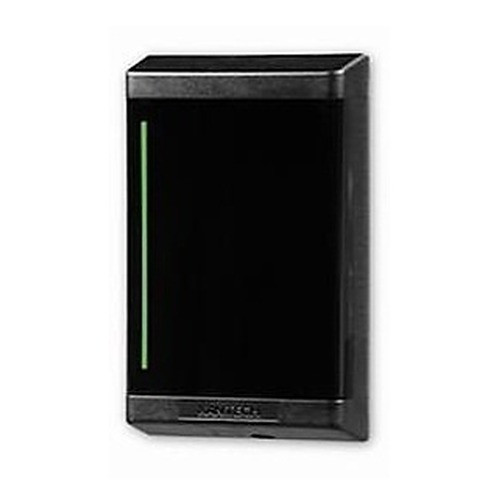
The KT-SG-MT2 is a single-gang mullion-form reader dimensioned at 4.56" × 1.76" × 0.97" (converted from the listed mm values), weighing 0.6 lb, and rated for single-gang electrical boxes in both North American and European configurations. It operates at 5 VDC input. Note: the spec sheet lists dimensions as 115.8" × 44.6" × 24.7" which appears to be a data-entry error, likely millimeter values mislabeled as inches; the width/height/depth fields of 4.56 × 1.76 × 0.97 are consistent with a standard mullion reader.
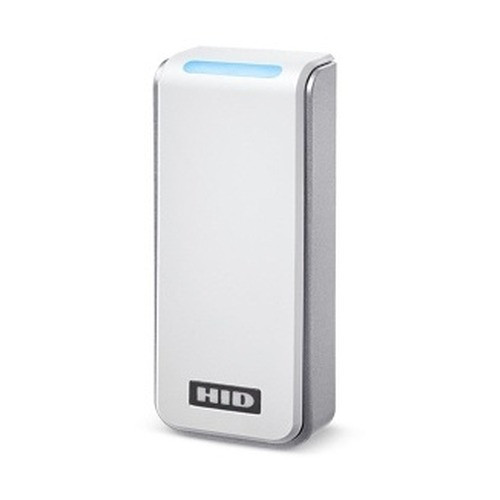
The HID-920-PTNN is described as a wall-switch form factor reader and specifies DC power input. The provided specifications do not state a specific input voltage level, physical dimensions, or weight. HID also states intelligent power management delivering up to 59% energy reduction, which is a differentiator for battery-backed or power-budget-constrained installations. Warranty terms differ: HID-920-PTNN carries a 2-year limited warranty; the KT-SG-MT2 carries a lifetime warranty per the provided specs.
Which should you choose: the HID-920-PTNN or the KT-SG-MT2?
Our take: The KT-SG-MT2 is the stronger choice when panel compatibility breadth, documented AES-256 encryption, and a lifetime warranty are the primary selection criteria — its three-protocol output (OSDP, Wiegand, RS-485) accommodates both legacy and modern panels without infrastructure changes, and its explicitly stated AES-256 encryption satisfies security-policy documentation requirements. The HID-920-PTNN is the stronger choice when mobile credential support and energy efficiency are priorities: it is the only unit in this comparison with stated HID Mobile Access® capability and documents up to 59% power reduction through intelligent power management, which matters in large deployments or low-power wiring runs. The KT-SG-MT2 also provides a defined physical footprint (single-gang mullion) and 5 VDC input, while the HID-920-PTNN's voltage and dimensions are unspecified in the provided data. Platform qualifier: Kantech-panel sites will benefit from the KT-SG-MT2's native integration; HID-ecosystem sites with mobile access rollouts align more naturally with the HID-920-PTNN.
Side-by-Side Comparison
Spec-for-spec, from manufacturer data.
| Specification | HID HID-920-PTNN | Kantech KT-SG-MT2 |
|---|---|---|
| Product Type | Wall Switch Proximity Card Reader | Multi-Technology Reader (Single Gang) |
| Form Factor | Wall switch style | Single-gang mullion |
| Credential Frequencies | 13.56 MHz & 125 kHz | 13.56 MHz & 125 kHz |
| Smart Card Formats | 13.56 MHz (not enumerated) | DESFire, MIFARE, HID, NFC |
| 125 kHz Prox Support | Yes | Yes |
| Mobile Access | HID Mobile Access® (configurable) | Not specified |
| Communication Protocols | OSDP | OSDP, Wiegand, RS-485 |
| Encryption | Not specified | AES-256 |
| Input Voltage | DC (voltage not specified) | 5 VDC |
| Power Efficiency | Up to 59% reduction (intelligent PM) | Not specified |
| Dimensions (W × H × D) | Not specified | 4.56" × 1.76" × 0.97" |
| Weight | Not specified | 0.6 lb |
| Mounting | Wall mount (wired) | Single-gang box, NA / Europe |
| Connectivity | Wired | Wired |
| Warranty | 2-year | Lifetime |
| Country of Origin | Not specified | US |
Frequently Asked Questions
Which should you choose: the HID-920-PTNN or the KT-SG-MT2?
The KT-SG-MT2 is the stronger choice when panel compatibility breadth, documented AES-256 encryption, and a lifetime warranty are the primary selection criteria — its three-protocol output (OSDP, Wiegand, RS-485) accommodates both legacy and modern panels without infrastructure changes, and its explicitly stated AES-256 encryption satisfies security-policy documentation requirements. The HID-920-PTNN is the stronger choice when mobile credential support and energy efficiency are priorities: it is the only unit in this comparison with stated HID Mobile Access® capability and documents up to 59% power reduction through intelligent power management, which matters in large deployments or low-power wiring runs. The KT-SG-MT2 also provides a defined physical footprint (single-gang mullion) and 5 VDC input, while the HID-920-PTNN's voltage and dimensions are unspecified in the provided data. Platform qualifier: Kantech-panel sites will benefit from the KT-SG-MT2's native integration; HID-ecosystem sites with mobile access rollouts align more naturally with the HID-920-PTNN.
Is the HID-920-PTNN or KT-SG-MT2 better for sites still running legacy Wiegand panels?
The KT-SG-MT2 is the better fit. Its specifications list Wiegand as a supported communication protocol alongside OSDP and RS-485, meaning it can connect directly to existing legacy panels without a protocol converter. The HID-920-PTNN specifications provided list only OSDP, so legacy Wiegand panel compatibility is not confirmed in the available spec data.
Which reader should I choose if my project requires documented encryption for a security audit or compliance review?
The KT-SG-MT2 specifies AES-256 encryption in its published specifications, giving you a concrete cipher standard to cite in documentation. The HID-920-PTNN specifications provided do not state an encryption algorithm, so you would need to obtain that detail from HID's full datasheet or technical support before making a compliance claim.
Can either of these readers support smartphone-based mobile credentials?
Based on the provided specifications, only the HID-920-PTNN explicitly supports mobile credentials — it is configurable for HID Mobile Access®, which enables NFC or Bluetooth-based smartphone credential presentation. The KT-SG-MT2 specifications provided do not mention mobile credential support, though the unit does list NFC/13.56 MHz among its credential types; buyers should confirm mobile credential compatibility with Kantech before specifying it for a mobile-access deployment.
More Access Control Reader Comparisons
- HID 920PHRNEK00203 vs Kantech KT-SG-MT-KP2
- HID 920PHRNEK00203 vs Kantech KT-SG-MT2
- HID 920PHRNEK00203 vs DMP USB
- HID 920PHRNEK00203 vs HID HID-920-PTNN
- HID 920PHRNEK00203 vs HID 920NWNNEKE00BM
- HID HID-920-PTNN vs Kantech KT-SG-MT-KP2
Access Control Reader Buying Guides
Get a Second Opinion on Your Camera Choice
Share your site layout, coverage goals, and budget. Our team will validate the camera selection, flag anything we would change, and recommend products that match the use case.